July 10, 2026
State Budget Update
The fiscal year (FY) 2026-2027 state budget passed the Michigan Legislature early on July 3, 2026. The budget totals $75.2 billion ($22.9 billion school omnibus and $52.3 billion general fund omnibus), not including the roughly $9 billion in state restricted and federal dollars for Medicaid.
The League’s policy analysts are taking a deeper dive into the state budget and, in the coming weeks, will provide their analysis of the state spending plan, including some of the highs and lows. Keep an eye on the League’s website for that analysis.
Legislative and Policy Update
- The Michigan Legislature passed SB 81 with bipartisan support, sending the bill to the governor’s desk for her signature or veto. This bill expands the scope of the Michigan Indigent Defense Commission to establish standards and start providing competent defense for justice-involved youth. The League supports this legislation.
- The Michigan Legislature passed SB 18 with strong bipartisan support, sending the bill to the governor’s desk for her signature or veto. This bill requires the Michigan Department of Health and Human Services to receive and hold certain federal benefits on behalf of eligible foster care children. The League supports this legislation.
- The Michigan House passed HB 5727 on party lines, which would weaken Michigan’s youth employment standards. The bill is now pending before the Michigan Senate Labor Committee. The League opposes this legislation.
May 22, 2026
State Budget Update
The state hosted its second Consensus Revenue Estimating Conference (CREC) of 2026 on May 15. Generally good news was reported, including a fairly stable economy and revenues that are coming in largely as expected. There were mild upward adjustments for the current year ($307.3 million total) and next year ($173.8 million total). Check out our blog for more information.
- There are some risks in the financial forecast, including geopolitical tensions, federal trade and fiscal policy, and inflation, along with the current and future impacts of the so-called “One Big, Beautiful Bill Act.”
- The state demographer also highlighted Michigan’s declining birth rates and aging population as some of the direct drivers of Michigan’s labor force.
- What was reported during CREC will hopefully help with budget negotiations and help lawmakers in getting a budget across the finish line by July 1. Now is the time for the League’s community partners to get in to talk to lawmakers about their priorities.
Budget bills to watch:
- HB 5619 (House general omnibus)
- HB 5630 (House education omnibus)
- SB 878 (Senate general omnibus)
- SB 860 (Senate education omnibus)
Legislative and Policy Update
- The Senate passed SB 757–760, also known as the Kids Over Clicks legislation, to provide deeper accountability for social media platforms that target kids. The League supports this legislation.
- The Senate Civil Rights, Judiciary and Public Safety Committee took testimony on SB 853–854, which would require licensure of firearms retailers/dealers. The League supports this legislation.
- The House Regulatory Reform Committee reported out HB 5558–5569, a package of bills on earned wage access services, which is a predatory lending program similar to payday lending. The League opposes this legislation.
- The House Government Operations Committee started taking testimony on HB 5872–5878 and HJR T. These bills would repeal the State Education Tax, the State Real Estate Transfer Tax, personal property taxes and the uncapping of taxable value for certain transfers of property. The League opposes this legislation.
May 8, 2026
State Budget Update
The Michigan Senate passed its $87 billion budget proposal, coming in slightly higher than the Michigan House of Representatives’ $76 billion budget proposal. The House and Senate each used two large omnibus budget bills to lay out their spending plans (HB 5630 and SB 860 are the school omnibus bills and HB 5619 and SB 878 are the General Fund omnibus bills).
At a high level, the budgets appear very similar. They include a similar revenue blend and about 80% or more of each budget funds the state’s three core areas: health and human services, education, and public safety. However, there are some significant items of difference, including the House’s proposed elimination of ongoing funding for RxKids and differences in school funding, that will need to be worked out following the May Consensus Revenue Estimating Conference (CREC).
As we reported in our previous update, the spring CREC is set for Friday, May 15 from 9 a.m. to noon. This will set the estimates for the General Fund and School Aid Fund that will be used to negotiate the final budget agreement. Early reports signify that policymakers want to meet the July 1 deadline.
Legislative and Policy Update
- The Senate passed SB 757–760, also known as the Kids Over Clicks legislation, to provide deeper accountability for social media platforms that target kids. The League supports this legislation.
- The Senate Civil Rights, Judiciary and Public Safety Committee took testimony on SB 853–854, which would require licensure of firearms retailers/dealers. The League supports this legislation.
- The House Regulatory Reform Committee reported out HB 5558–5569, a package of bills on earned wage access services, which is a predatory lending program similar to payday lending. The League opposes this legislation.
- The House Government Operations Committee started taking testimony on HB 5872–5878 and HJR T. These bills would repeal the State Education Tax, the State Real Estate Transfer Tax, personal property taxes and the uncapping of taxable value for certain transfers of property. The League opposes this legislation.
April 24, 2026
State Budget Update
The Michigan House of Representatives passed a $76 billion budget proposal on Wednesday, April 22 and the Michigan Senate’s budget is expected to be on the floor next week. The House did come in lower than the governor’s $88.1 billion budget proposal, even including the $9 billion in Medicaid funding that is included in contingency funds. And unlike the governor’s recommendation, neither budget will be based on any new or increased taxes. The League continues to be concerned about the state’s long-term revenue sufficiency, which needs to be addressed, especially now in the wake of the so-called “One Big, Beautiful Bill Act.”
The spring Consensus Revenue Estimating Conference (CREC) has been set for May 15. This will determine the revenue projections for final negotiations on the fiscal year 2026-2027 spending plan.
Legislative and Policy Update
- The Senate Civil Rights, Judiciary, and Public Safety Committee reported out SBs 508–510 and Resolution 86, which address sensitive locations where immigration enforcement is prohibited and require federal immigration enforcement officers to be properly uniformed. The League supports this legislation.
- The Senate Housing and Human Services Committee reported out SBs 735–736 — a bipartisan package that specifies that it’s not neglect to allow a child to walk to school or play outside independently. The League supports this legislation.
- The Senate Finance, Insurance, and Consumer Protection committee reported out SBs 757–760, more commonly referred to as the “Kids Over Clicks” legislative package. This package aims to protect children from threats associated with social media and AI. The League supports this legislation.
- The House Health Policy committee took testimony on HBs 5254–5255 and SBs 449–451. This is a bipartisan, bicameral package of bills to limit how creditors can go after people with medical debt as well as creating a standard hospital financial assistance program. The League supports this legislation.
- The House Judiciary committee took testimony on HBs 5492–5493. These bills would establish commonsense guardrails for automatic license plate readers so that Michiganders’ data is not leaked or abused. The League supports this legislation.
2026 QUARTER 1 RECAP
State Budget Update
At the January Consensus Revenue Estimating Conference (CREC), state fiscal experts adjusted anticipated revenues downward overall, driven largely by intentional tax changes made last year. These estimates form the basis for the governor’s budget, which was released in mid-February.
| Fiscal Year 2026 | Fiscal Year 2027 | Fiscal Year 2028 | |||
| Jan CREC | Change from May CREC | Jan CREC | Change from May CREC | Jan CREC | |
| General Fund/General Purpose | $14,134.1 million | $980.5 million | $14,074.6 million | $1,269.1 million | $14,484.2 million |
| School Aid Fund | $19,135.4 million | $201.1 million | $19,568.3 million | $169.7 million | $19,965.7 million |
| Combined | $33,269.5 million | $779.4 million | $33,642.9 million | $1,099.4 million | $34,449.9 million |
Based on these revenue projections, the governor released her budget proposal on Wednesday, February 11, 2026. Her $86.7 billion adjusted gross budget proposal includes a School Omnibus totaling $24.5 billion and a General Fund Omnibus totaling $62.2 billion. Here are some of the highlights:
- $400 million withdrawal from the state Rainy Day Fund;
- $800 million in new or increased revenues, including increased taxes on cigarettes and other tobacco products and a new tax on vape products;
- An additional shift of School Aid Fund revenues to shore up higher education funding;
- Largely flat funding across most departments, with small economic adjustments;
- Notable investments in: implementation of H.R. 1, the federal megabill enacted last year; literacy efforts; and out-of-school-time programs.
For more detailed information, please see our statement and our analysis.
The work now turns over to the House and the Senate to craft their own proposals of the fiscal year 2026-2027 budget. Subcommittees have been holding hearings about various issues and programs within their budget areas, and members have been making requests for Legislative Directed Spending Items (commonly referred to as “earmarks”) using the new process set in law last year. There is still a desire to get the budget done by the July 1, 2026 deadline, but it is expected to at least be completed by the October 1, 2026 budget year start date.
State Policy Update
The governor provided her eighth and last State of the State address on Wednesday, February 25, 2026. Her speech took a complete look at her legacy, including quintupling the Earned Income Tax Credit and expanding the Elliott-Larsen Civil Rights Act and road funding, while also looking forward. She focused on investments to expand housing access and, like her budget proposal, supported policies to reduce healthcare costs and medical debt and improve literacy and educational outcomes. The League’s statement on the State of the State address can be viewed here.
To date, only four bills have made it to the governor’s desk for her signature. Last year, a record low of 74 bills were signed into law, and a similar slow pace is expected this year. Here are some of the issues the League has weighed in on so far this year:
- The Michigan House Election Integrity Committee reported HB 4765, which would require strict proof of citizenship for voting, on party lines. The League opposes this legislation.
- The Michigan Senate Transportation and Infrastructure Committee took testimony on SBs 617–621, which would allow the state to issue mobile driver’s licenses or state identification cards. The League opposes this legislation.
- The Michigan Senate Labor Committee reported on party lines SB 145, which would prohibit employers from asking job applicants for their prior wage and benefits information. The bill currently sits on the Senate floor. The League provided testimony and published a column showing support for this bill.
- The Michigan Senate Finance, Insurance, and Consumer Protection Committee took testimony on SBs 757–760, a package of bills often referred to as Kids Over Clicks. The League supports this bill package.
- The Michigan House Regulatory Reform Committee took testimony on HBs 5558–5569, a package of bills to allow certain earned wage access services, which is another predatory lending practice similar to payday lending. The League opposes this bill package.
- The Senate Civil Rights, Judiciary and Public Safety Committee took testimony on Senate Joint Resolution F, which would place on the ballot a repeal of Michigan’s unenforceable constitutional prohibition on same-sex marriage. The League supports this measure.
- The Michigan House Regulatory Reform Committee took testimony on HBs 5368–5372, a package of bills to help keep tobacco out of the hands of kids by requiring tobacco retail licensing and eliminating ineffective purchase, use and possession penalties. The League supports this package.
Other Issues Being Monitored
As the state moves to implement the requirements of H.R. 1, the League is increasingly concerned about possible legislation that goes beyond what the federal law requires and/or implements those requirements in ways that harm Michiganders. We will continue to monitor these discussions, engage with key policymakers and members of the administration, and push back against changes that limit benefits or eligibility or those that simply intend to make it more difficult for Michiganders to access the services they need.
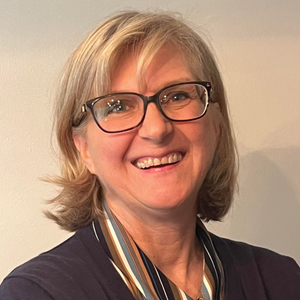 Betsy Zobl-Tar
  Jay Cutler joined the League in March 2026 as the Kids Count Senior Data Analyst, where he collects, analyzes, and prepares data for Kids Count in Michigan.
 Danielle Taylor-Basemore joined the League as the Development Data and Stewardship Coordinator in June 2025. She brings with her five years of nonprofit experience with a special focus on community engagement, data visualization and strategic programming. Prior to joining the League, Danielle served as the Business District, Safety, and Digital Manager at Jefferson East, Inc.
 Scott Preston is a Senior Policy Analyst with the Michigan League for Public Policy, where he leads the organization’s immigration and criminal justice reform portfolios. In the three years prior to joining the League, Scott facilitated the Southeast Michigan Refugee Collaborative and managed a small business economic development program at Global Detroit. His work included launching Michigan’s first Refugee Film Festival and building on a trusted connector model that linked marginalized communities with crucial resources. Scott’s work at the League is informed by his background in journalism and research. He spent four years covering the Syrian refugee crisis in the Middle East for publications such as The Economist, and later worked with unaccompanied refugee minors through Samaritas. Scott holds a master’s degree in international migration and public policy from the London School of Economics and Political Science.
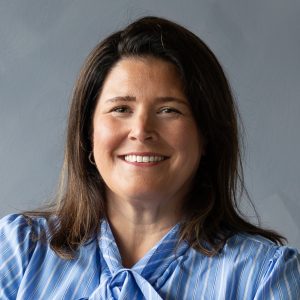 Kate Powers joined the League as the Chief Development Officer in February 2025. Prior to joining the League, Kate held leadership positions at many Michigan nonprofit organizations, most recently serving as the COO and Chief Development Officer of Ele’s Place. Kate has spent the bulk of her career in fundraising, with a short stint in the state Legislature as a legislative aide to members in both chambers. Kate is a graduate of Michigan State University’s James Madison College with a Bachelor of Arts in Social Relations and has a certificate in fundraising management from the Lilly Family School of Philanthropy at Indiana University. Additionally, Kate served on the East Lansing Public Schools Board of Education and is a past President of the Junior League of Lansing. In her free time, she enjoys traveling with her husband and her son and saving outfit of the day and home decor ideas on Pinterest.
  Nicholas Hess joined the League as the Fiscal Policy Analyst in September of 2024. In this role, Nicholas focuses on tax policy, government revenue, and their impact on working families and racial equity, including the effects of the Earned Income Tax Credit (EITC) and Child Tax Credit (CTC). Nicholas values the role that judicious fiscal policy can play in the improvement of people’s lives and the economy, alleviating inequities along the way.
 Audrey Matusz joined the League as the Visual Communications Specialist in September 2024. She supports the team with implementing social media strategies and brainstorming creative ways to talk about public policy. She brings with her nearly a decade of experience in producing digital products for evidence-based social justice initiatives.
  Jacob Kaplan
  Donald Stuckey
  Alexandra Stamm
 Amari Fuller
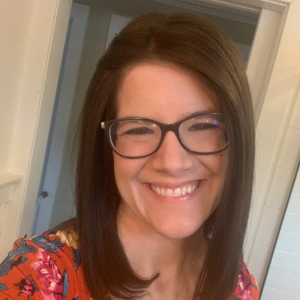 Mikell Frey is a communications professional with a passion for using the art of storytelling to positively impact lives. She strongly believes that positive social change can be inspired by the sharing of data-driven information coupled with the unique perspectives of people from all walks of life across Michigan, especially those who have faced extraordinary barriers.
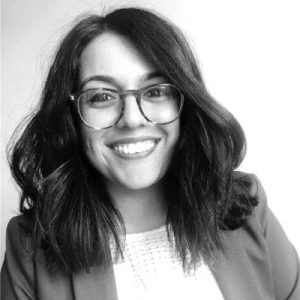


 Yona Isaacs (she/hers) is an Early Childhood Data Analyst for the Kids Count project. After earning her Bachelor of Science in Biopsychology, Cognition, and Neuroscience at the University of Michigan, she began her career as a research coordinator in pediatric psychiatry using data to understand the impacts of brain activity and genetics on children’s behavior and mental health symptoms. This work prompted an interest in exploring social determinants of health and the role of policy in promoting equitable opportunities for all children, families, and communities. She returned to the University of Michigan to complete her Masters in Social Work focused on Social Policy and Evaluation, during which she interned with the ACLU of Michigan’s policy and legislative team and assisted local nonprofit organizations in creating data and evaluation metrics. She currently serves as a coordinator for the Michigan Center for Youth Justice on a project aiming to increase placement options and enhance cultural competency within the juvenile justice system for LGBTQIA+ youth. Yona is eager to put her data skills to work at the League in support of data-driven policies that advocate for equitable access to healthcare, education, economic security, and opportunity for 0-5 year old children. In her free time, she enjoys tackling DIY house projects and trying new outdoor activities with her dog.
 Rachel Richards rejoined the League in December 2020 as the Fiscal Policy Director working on state budget and tax policies. Prior to returning to the League, she served as the Director of Legislative Affairs for the Michigan Department of Treasury, the tax policy analyst and Legislative Director for the Michigan League for Public Policy, and a policy analyst and the Appropriations Coordinator for the Democratic Caucus of the Michigan House of Representatives. She brings with her over a decade of experience in policies focused on economic opportunity, including workforce issues, tax, and state budget.
 Simon Marshall-Shah joined the Michigan League for Public Policy as a State Policy Fellow in August 2019. His work focuses on state policy as it relates to the budget, immigration, health care and other League policy priorities. Before joining the League, he worked in Washington, D.C. at the Association for Community Affiliated Plans (ACAP), providing federal policy and advocacy support to nonprofit, Medicaid health plans (Safety Net Health Plans) related to the ACA Marketplaces as well as Quality & Operations.

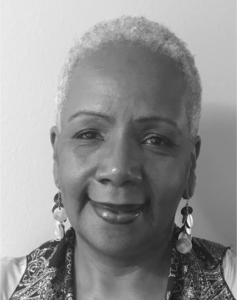 Renell Weathers, Michigan League for Public Policy (MLPP) Community Engagement Consultant. As community engagement consultant, Renell works with organizations throughout the state in connecting the impact of budget and tax policies to their communities. She is motivated by the belief that all children and adults deserve the opportunity to achieve their dreams regardless of race, ethnicity, religion or economic class.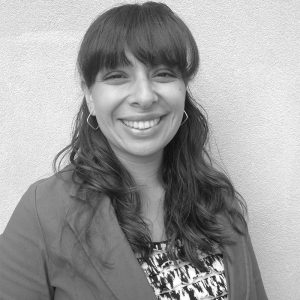
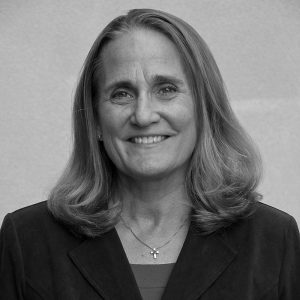


 Emily Jorgensen joined the Michigan League for Public Policy in July 2019. She deeply cares about the well-being of individuals and families and has a great love for Michigan. She is grateful that her position at the League enables her to combine these passions and work to help promote policies that will lead to better opportunities and security for all Michiganders.
 Megan Farnsworth joined the League’s staff in December 2022 as Executive Assistant. Megan is driven by work that is personally fulfilling, and feels honored to help support the work of an organization that pushes for more robust programming and opportunities for the residents of our state. She’s excited and motivated to gain overarching knowledge of the policies and agendas that the League supports.