2024 State Budget Analysis
We all know that students have the best chance to succeed when they are given the tools they need to access a quality education. However, decades of disinvestment has resulted in Michigan falling from being among the top states for educational outcomes to one of the lowest. In fact, in the most recent national Kids Count Data Book, Michigan ranked 42nd–in the bottom 10 of states–in educational outcomes. And between 2019 and 2022, the percentages of 4th graders not proficient in reading and 8th graders not proficient in math increased. The current year budget gave us a generational budget to grow from, and the 2023-24 budget targets funding toward equity and supports students and teachers in meaningful ways.
Relying on both higher-than-expected state revenues resulting in both a one-time surplus and ongoing increases, the Michigan Legislature has approved and the governor has signed spending bills for the state’s public schools for the 2023-2024 school year. The budget totals $21.5 billion, a 9.4% increase over the current year budget.
The final agreement includes many important investments for Michigan students including increases in per-pupil spending; a heavier weight in the school funding formula for students from low-income backgrounds, English-language learners, and students with disabilities; support for teacher recruitment and retention; investments in wraparound supports for students, with a focus on addressing opportunity gaps; and increased funding for transportation. The final budget also included a current year supplemental, which deposits—or in some cases, creates and deposits—available funding into various reserve funds, including a School Aid Rainy Day Fund ($450 million), the Michigan Public School Employees Retirement System (MPSERS) Reserve Fund (an additional $400 million), a School Meals Reserve Fund ($245 million), and a Great Start Readiness Program (GSRP) Reserve Fund ($200 million). Revenues in these Funds are used to spend on appropriate 2023-24 budget items.
Weighted School Funding Formula
Providing equal per-pupil payments to all school districts in the state does not guarantee educational equity, which is the goal of a weighted funding formula. The final budget, deviating from the current school funding formula, puts an increased focus on equitable school funding and sets long-term goals that will help reduce existing disparities. The final budget includes:
- An increase of $458 per-pupil, setting the foundation allowance at $9,608 for all schools, in alignment with the governor’s recommendation. The foundation allowance for cyber schools will be held at $9,150, higher than the governor’s recommendation of 80% of the foundation allowance amount.
- $125 million to provide payments to districts according to a formula based on bus riders per square mile. Districts will receive funding equal to the median transportation cost per rider or the district’s actual transportation cost per general education student, whichever is lesser. This recognizes that one key barrier to accessing education is transportation, and that limited transportation options, recently experienced by students in Detroit, can actually increase absenteeism in schools. This is new funding that was not included in the governor’s budget.
- A $310.3 million net increase in special education funding, more than the governor’s recommended increase of $228.7 million. Schools serving students with disabilities would receive 100% of the foundation allowance amount, up from 75% in the current year, for those students in addition to all statutorily required cost reimbursements.
- A $204.5 million increase in funding for economically disadvantaged students, totaling $952 million, significantly more than the governor’s recommended $64.7 million increase. Instead of maintaining the current weight of 11.5% of the foundation allowance, the budget makes history as Michigan becomes one of the first 10 states to enact an opportunity index. Schools with different concentrations of poverty will see a different weight, setting six bands of poverty concentrations and weights ranging between 35% and 47% of the foundation allowance amount, with a sliding weight in the first five bands as poverty concentrations increase. The budget continues to allow for proration if insufficient funding is appropriated, and in 2023-24, payments would be prorated to an estimated range of 11.5% to 15.3%.
- A $13.3 million (50%) increase—totaling $39.8 million—in funding for services for students learning English through the following tiered formula: $1,475 (up from $984) for students with the lowest English language proficiency scores (below 2.0); $1,019 (up from $679) for students with moderate English proficiency (between 2.0 and 2.9); and $167 (up from $111) for student with the greatest English language proficiency scores (3.0-3.9). The budget also includes legislative intent to increase these amounts until they reach 75%, 50% and 35% of the foundation allowance amount. The governor recommended a $1.4 million increase for English-language learners.
- A $2.2 million increase—to $11.1 million—for small, isolated schools and rural districts, more than four times the governor’s recommended increase of $443,000.
Academic Interventions and Support to Ensure Students are Reading at Grade Level
Third Grade Reading
The “Read by Grade Three” law was enacted in Michigan in 2016 to identify students who are struggling with reading and writing and to provide additional interventions and support to bring them up to grade level. Previously, students who were not reading at grade level by third grade were recommended for retention, with good cause exemptions provided. However, a bill that was passed by the Legislature and signed by the governor removed the automatic retention provision, as recent data by the Education Policy Innovation Collaborative at Michigan State University shows the stark disparities and inequities in the application of the law, with Black and economically disadvantaged students more likely to be retained than their white or wealthier peers. The final budget includes:
- $140 million—down from the governor’s recommendation of $300 million—in one-time funding for grants to districts and intermediate school districts (ISDs) based on PreK-5 pupil counts to improve literacy instructional practices.
- In alignment with the governor, a $10.5 million increase, to $42 million, to provide additional literacy coaches throughout the state.
- Maintains current year appropriation of $19.9 million—less than the governor’s recommended $34.4 million—for additional literacy instruction time grants to districts. The budget does revise the appropriation to allow it for pupils in grades PreK-5 rather than PreK-3.
- $94.4 million in a current year supplemental for literacy initiatives in Detroit Public Schools Community District to fulfill the state agreement in the Gary B. v. Whitmer settlement.
- In alignment with the governor, maintains funding at $6 million for ISDs to provide regional literacy coaches to support professional development for teachers.
- In alignment with the governor, maintains $5 million in one-time funding for the Michigan Education Corps for preschool and K-grade 3 reading programs.
- $10 million in one-time funding for LETRS professional learning for PreK-3 teachers, administrators and early literacy coaches.
- Maintains $1 million in one-time funding for districts and ISDs to purchase teacher trainings for children with dyslexia.
Wraparound Support to Help Address Learning Loss
Opportunity gaps have long existed in Michigan’s educational system. The unprecedented COVID-19 pandemic had wide ranging and disparate impacts on educational outcomes for kids of all ages, races and backgrounds, deepening these opportunity gaps. While we are starting to make improvements in growth and achievement, we still have a ways to go and some kids are still falling further behind. The final budget agreement provides the following in terms of wraparound support for students and teachers to address learning loss:
- $25 million in one-time funding—down from the governor’s recommended $30 million—to be spent over two fiscal years to provide grants to districts and ISDs to support math professional development, curriculum and training.
- $50 million—twice the governor’s recommendation—for out-of-school learning opportunities at before- and after-school programs. Funding would be provided to Clinton County Regional Educational Service Agency (CCRESA) to collaborate with the Michigan Department of Education (MDE) in providing funding to the programs. The budget would also establish an advisory committee in collaboration with the Michigan Afterschool Partnership to make recommendations on before- and after-care programs.
- $150 million—half of the governor’s recommendation—in a current year supplemental for the MI Kids Back on Track Program that would provide payments to districts, ISDs and the Michigan Schools for the Deaf and Blind based on students who are not proficient in math or reading to help with unfinished learning. CCRESA will work with the Michigan Association of Intermediate School Districts to determine eligible tutoring programs, provide assistance and report data.
Student Health & School Safety
Schools are not only tasked with educating our children, they also often provide important physical and mental health support and services, recognizing that kids cannot learn if they are sick, hungry, or feel anxious or unsafe. To help our schools provide these vital services, the final budget includes:
- $328 million in one-time funding for discretionary per-pupil payments for mental health and school safety improvements, with the intent that at least half of the funds be spent on mental health. The governor had recommended a total of $618 million to be spent over two years in funding to support student mental health ($300 million) and student safety ($318 million).
- The final budget also provides another $2 million in one-time funding for the School Safety and Mental Health Commission. In alignment with the governor’s budget recommendation, the final budget eliminates $25 million for schools, districts and ISDs to hire school resource officers. The final budget also includes $6 million in new one-time funding for districts and ISDs to purchase and implement tools to identify early behaviors that could require intervention to prevent abuse, self-harm or violence in schools as well as $3 million in new one-time funding for grants to districts and ISDs for a firearm detection software that integrates into existing security cameras.
- An increase of $24.4 million—slightly lower than the governor’s recommended $28.9 million—to support the mental health operations of ISDs. Additionally, increases ISD funding for administration of mental health programs by $4.5 million to $5 million total.
- Includes $15 million in new funding for districts, ISDs and institutions of higher education to implement the SMART internship grant program for students in graduate-level mental health professional programs.
- $45 million in one-time funds to provide grants, capped at $250,000, to school-based health centers for infrastructure improvements. This is more than the $25 million in the governor’s budget.
- In alignment with the governor’s budget, maintenance funding for school-based health centers ($33 million) and the network of child and adolescent health centers to place licensed master’s level behavioral health providers in schools ($14.3 million).
- One-time funding of $1 million for a pilot program for districts to distribute feminine hygiene products to eligible students.
- Increased access to nutritious food for school-aged children.
- The final budget includes $160 million—in alignment with the governor’s proposal—to provide free breakfast and lunch to all public school students. The final budget also includes $25 million in a current year supplemental for this purpose and $2.5 million to reimburse school districts that have forgiven all outstanding student meal debt (the governor had recommended $1 million for 2023-24). In passing a budget including this funding, Michigan becomes the seventh state in the nation to authorize universal school meals for all children.
- In addition, the final budget maintains funding for the Ten Cents a Meal program at $9.3 million, with $4.8 million of this one-time funding. This is a competitive grant program to support schools and child care centers in purchasing Michigan-grown produce. The program’s goals include improving daily nutrition and eating habits for children while investing in the state’s agricultural and related food business economy. The governor’s budget had recommended all funding to be ongoing rather than split between one-time and ongoing.
Teacher Recruitment and Retention
Many schools continue to deal with crisis-level teacher shortages, and some schools have had to fill open positions with long-term substitutes or increase class sizes simply to ensure all kids have access to an education. The final budget continues efforts to recruit, support and retain teachers by:
- Maintaining a $25 million investment in the MI Future Educator Fellowship, which helps offset tuition costs for college students earning their initial teacher certification by providing up to $10,000 awards per academic year. This is in alignment with the governor’s budget.
- In concurrence with the governor’s budget proposal, maintaining a $50 million investment in the MI Future Educator Student Teacher Stipend to allow institutions of higher education to pay student teachers up to $9,600 per semester. The final budget agreement also adds City Year corps members enrolled in an eligible educator preparation program as eligible recipients.
- Provides, as recommended by the governor’s budget, one-time funding of $15 million to pilot a rural educator credentialing hub to support prospective educators through certifications and career experiences.
- Creates a pilot program of $63.8 million for per-pupil payments to districts to increase educator compensation. This was not included in the governor’s budget. The budget also includes new one-time funding of $225 million for districts and ISDs to repay student loans of employees who work directly with students. Payments are capped at the actual loan payment or $200 per month, or up to $400 per month if the employee works in a district where at least 85% of the pupils are economically disadvantaged.
- Includes $50 million to cover five years of grants to districts for mentoring to support and retain new teachers, school counselors and administrators and improve instructional practices. The governor had recommended $25 million in her 2023-24 budget recommendation.
- Provides $10 million in one-time funding in the current year—less than the $25 million recommended by the governor—for per-pupil payments to ISDs to partner with an eligible nonprofit to support teacher recruitment and retention, teacher certification programs and school leader development programs. The final budget also includes $66.4 million in a current year supplemental for an apprenticeship model grow-your-own program as part of a consortia of at least 45 ISDs to provide a no-cost pathway for support staff to become certified teachers.
Flint Declaration of Emergency
The final budget maintains funding for the Flint water declaration of emergency including:
- Flat funding $8.1 million for the Flint water emergency, but removes the specific $2.0 million allocation for interventions for children aged 3-5 and $1.0 million allocation for universal GSRP. Instead, the allocation for interventions for K-12 students would be increased by $3.0 million. The budget boilerplate also expands authorized expenses.
- Continuation funding of $1.0 million for the Genesee Early Childhood Collaboration.
The final budget includes:
- The first significant increase to state-funded adult education programs in years, providing a $10 million (33%) increase in funding, totaling $40.5 million. This is less than the $15 million increase proposed by the governor.
- In alignment with the governor, a new $15 million in one-time funding to award competitive grants to districts, ISDs and other providers to provide programs to improve enrollment in and completion of adult basic education programs.
- One-time funding of $10 million—less than the governor’s request of $15 million—for districts to improve Free Application for Federal Student Aid (FAFSA) completion rates. Districts must use the funds for activities to drive FAFSA completion.

 Betsy Zobl-Tar
  Jay Cutler joined the League in March 2026 as the Kids Count Senior Data Analyst, where he collects, analyzes, and prepares data for Kids Count in Michigan.
 Danielle Taylor-Basemore joined the League as the Development Data and Stewardship Coordinator in June 2025. She brings with her five years of nonprofit experience with a special focus on community engagement, data visualization and strategic programming. Prior to joining the League, Danielle served as the Business District, Safety, and Digital Manager at Jefferson East, Inc.
 Scott Preston is a Senior Policy Analyst with the Michigan League for Public Policy, where he leads the organization’s immigration and criminal justice reform portfolios. In the three years prior to joining the League, Scott facilitated the Southeast Michigan Refugee Collaborative and managed a small business economic development program at Global Detroit. His work included launching Michigan’s first Refugee Film Festival and building on a trusted connector model that linked marginalized communities with crucial resources. Scott’s work at the League is informed by his background in journalism and research. He spent four years covering the Syrian refugee crisis in the Middle East for publications such as The Economist, and later worked with unaccompanied refugee minors through Samaritas. Scott holds a master’s degree in international migration and public policy from the London School of Economics and Political Science.
 Kate Powers joined the League as the Chief Development Officer in February 2025. Prior to joining the League, Kate held leadership positions at many Michigan nonprofit organizations, most recently serving as the COO and Chief Development Officer of Ele’s Place. Kate has spent the bulk of her career in fundraising, with a short stint in the state Legislature as a legislative aide to members in both chambers. Kate is a graduate of Michigan State University’s James Madison College with a Bachelor of Arts in Social Relations and has a certificate in fundraising management from the Lilly Family School of Philanthropy at Indiana University. Additionally, Kate served on the East Lansing Public Schools Board of Education and is a past President of the Junior League of Lansing. In her free time, she enjoys traveling with her husband and her son and saving outfit of the day and home decor ideas on Pinterest.
  Nicholas Hess joined the League as the Fiscal Policy Analyst in September of 2024. In this role, Nicholas focuses on tax policy, government revenue, and their impact on working families and racial equity, including the effects of the Earned Income Tax Credit (EITC) and Child Tax Credit (CTC). Nicholas values the role that judicious fiscal policy can play in the improvement of people’s lives and the economy, alleviating inequities along the way.
 Audrey Matusz joined the League as the Visual Communications Specialist in September 2024. She supports the team with implementing social media strategies and brainstorming creative ways to talk about public policy. She brings with her nearly a decade of experience in producing digital products for evidence-based social justice initiatives.
  Jacob Kaplan
  Donald Stuckey
  Alexandra Stamm
 Amari Fuller
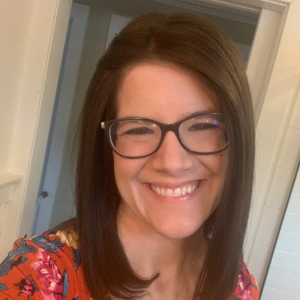 Mikell Frey is a communications professional with a passion for using the art of storytelling to positively impact lives. She strongly believes that positive social change can be inspired by the sharing of data-driven information coupled with the unique perspectives of people from all walks of life across Michigan, especially those who have faced extraordinary barriers.
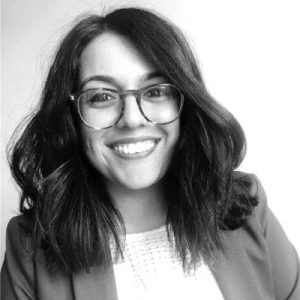


 Yona Isaacs (she/hers) is an Early Childhood Data Analyst for the Kids Count project. After earning her Bachelor of Science in Biopsychology, Cognition, and Neuroscience at the University of Michigan, she began her career as a research coordinator in pediatric psychiatry using data to understand the impacts of brain activity and genetics on children’s behavior and mental health symptoms. This work prompted an interest in exploring social determinants of health and the role of policy in promoting equitable opportunities for all children, families, and communities. She returned to the University of Michigan to complete her Masters in Social Work focused on Social Policy and Evaluation, during which she interned with the ACLU of Michigan’s policy and legislative team and assisted local nonprofit organizations in creating data and evaluation metrics. She currently serves as a coordinator for the Michigan Center for Youth Justice on a project aiming to increase placement options and enhance cultural competency within the juvenile justice system for LGBTQIA+ youth. Yona is eager to put her data skills to work at the League in support of data-driven policies that advocate for equitable access to healthcare, education, economic security, and opportunity for 0-5 year old children. In her free time, she enjoys tackling DIY house projects and trying new outdoor activities with her dog.
 Rachel Richards rejoined the League in December 2020 as the Fiscal Policy Director working on state budget and tax policies. Prior to returning to the League, she served as the Director of Legislative Affairs for the Michigan Department of Treasury, the tax policy analyst and Legislative Director for the Michigan League for Public Policy, and a policy analyst and the Appropriations Coordinator for the Democratic Caucus of the Michigan House of Representatives. She brings with her over a decade of experience in policies focused on economic opportunity, including workforce issues, tax, and state budget.
 Simon Marshall-Shah joined the Michigan League for Public Policy as a State Policy Fellow in August 2019. His work focuses on state policy as it relates to the budget, immigration, health care and other League policy priorities. Before joining the League, he worked in Washington, D.C. at the Association for Community Affiliated Plans (ACAP), providing federal policy and advocacy support to nonprofit, Medicaid health plans (Safety Net Health Plans) related to the ACA Marketplaces as well as Quality & Operations.

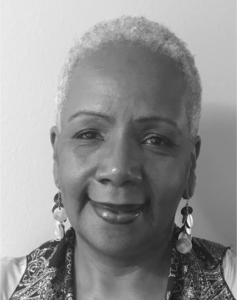 Renell Weathers, Michigan League for Public Policy (MLPP) Community Engagement Consultant. As community engagement consultant, Renell works with organizations throughout the state in connecting the impact of budget and tax policies to their communities. She is motivated by the belief that all children and adults deserve the opportunity to achieve their dreams regardless of race, ethnicity, religion or economic class.


 Emily Jorgensen joined the Michigan League for Public Policy in July 2019. She deeply cares about the well-being of individuals and families and has a great love for Michigan. She is grateful that her position at the League enables her to combine these passions and work to help promote policies that will lead to better opportunities and security for all Michiganders.
 Megan Farnsworth joined the League’s staff in December 2022 as Executive Assistant. Megan is driven by work that is personally fulfilling, and feels honored to help support the work of an organization that pushes for more robust programming and opportunities for the residents of our state. She’s excited and motivated to gain overarching knowledge of the policies and agendas that the League supports.