ACCESS TO HEALTH CARE
Having health care needs met begins with access to insurance and continues through all stages of development.
Health insurance
Nearly all children in Michigan – 97.4% as of 2022 – have some form of health insurance. Children with access to health insurance are more likely to have regular contact with a doctor, receive medical attention for injuries and have better outcomes following hospitalizations compared to uninsured children. Child health insurance rates have increased 6% since the turn of the century, a trend driven largely by the fact that the share of children insured by Medicaid has doubled in that time period.
Child Medicaid enrollment peaked during the pandemic, reaching approximately half of all children thanks to continuous enrollment, which prevented states from disenrolling people during the public health emergency. Medicaid insurance rates have since returned to pre-pandemic levels, covering nearly 1 million children in Michigan as of December 2024.
Children also benefit when their parents have access to health insurance. Improving access to health insurance for parents has benefits for kids through increased financial security, lower rates of infant mortality, higher birth-weight, and improved school and health outcomes for children.1
Medicaid expansion, which was signed into law by Gov. Rick Snyder in 2013, allowed adults with incomes up to 138% of the federal poverty level – $21,472 for a single adult or $44,367 for a family of four – to access public insurance, a policy change that drastically improved access to Medicaid for parents.
Prenatal care and healthy births
Babies have better outcomes when their mothers have access to health care throughout pregnancy, but nearly 1 in 3 women in Michigan receives less-than-adequate prenatal care, among whom a growing share received late or no prenatal care during their pregnancy. Care is considered “adequate” when it begins in the first trimester and includes one to two additional monthly visits, but about 14% of pregnant people report that they do not begin prenatal care as early as desired.2
Many of these mothers report facing systemic barriers, including a lack of transportation, inability to take time off from work or school, not having child care, and not being able to afford the cost. Hispanic, Black and American Indian moms are most likely to receive less-than-adequate prenatal care, but race and ethnicity is just one factor associated with disparate access. Survey data from Michigan’s 2022 Pregnancy Risk Assessment Monitoring System shows that mothers with less than a high school diploma and mothers insured by Medicaid are disproportionately likely to receive less-than-adequate prenatal care.3
Lack of access to prenatal care contributes to poor birth outcomes in Michigan. One in 10 babies in Michigan is born preterm, and the share of babies born with a low birth-weight has increased 18% over the past 30 years. Black newborns are twice as likely as white newborns to be born with a low birth-weight, a disparity that has persisted despite medical advances, in part because of structural and societal factors within and beyond the health care system. These adverse birth outcomes put newborns at a higher risk for physical and developmental delays that hinder growth and school readiness.
Geography also presents a barrier. In 2024, 18 of Michigan’s 83 counties were considered maternity care deserts, which are defined as counties with zero hospitals or birth centers offering obstetric care and zero obstetric clinicians.4
The number of births has been declining nationally for years, with the total number of babies born in Michigan falling below 100,000 for the first time in 2023. The decline in Michigan’s birth rate has largely been concentrated among mothers in their teens and twenties; meanwhile the birth rate among women in their 30s and 40s has been rising. Since 1990, Michigan has seen an 82% decline in births to moms in their teens, but a 134% increase in births to moms ages 40-44.
The decline in births to teen mothers should be celebrated, as teen pregnancy is associated with a large number of negative outcomes for both mothers and their babies. Teen parents are more likely to drop out of high school and more likely to live below the poverty line. The children of teen mothers are more likely to grow up in poverty and have lower earnings into adulthood.
Preventive care
Dental care
Children enrolled in Medicaid have access to dental services, although typically fewer than half of enrolled children see a dentist each year. Preventive dental visits among Medicaid-enrolled children fell in nearly every county from 2018 to 2023. Delayed dental care can cause issues, including tooth decay, to become worse. In Michigan, over 100 avoidable hospitalizations of children every year result from dental problems.5
One of the most efficient and cost-effective strategies communities across the country have adopted to improve oral health is water fluoridation, which has been shown to reduce tooth decay by 25% in kids and adults.6 In Michigan, over 90% of individuals served by community water systems have fluoridated water.7
Immunizations
Vaccinations are a crucial defense for the health of the communities and economy in our state and have saved millions of lives. Herd immunity – ranging from about 80% of a population for polio to as high as 95% of a population for measles – can prevent the spread of infection and save lives.⁸ A rise in vaccine skepticism and misinformation as well as disruptions to routine health visits during the pandemic have all contributed to a decline in vaccinations, threatening the health and safety of our most vulnerable residents, including babies who are not yet old enough to be vaccinated themselves.
Mental health
Three in 10 high school students in Michigan report having poor mental health, with higher rates for girls and LGBTQ+ students.9 An increase in children and teens experiencing anxiety and depression during the pandemic points to a need for better access to mental health services.
Although Michigan passed legislation in 2024 requiring insurers to cover mental health and substance use disorders at the same level as physical health services, access is limited by the fact that Michigan has just one mental health provider for every 300 residents. School psychologists play an important role in addressing student mental health needs, but Michigan has just one school psychologist for every 1,354 students, more than double the recommended ratio of one psychologist to 500 students.10
Social media and cell phone use has also been linked to poor mental health among teens, gaining increased attention since the U.S. surgeon general recommended warning labels and age restrictions to address the harms to young people. As of May 2025, 26 states and the District of Columbia have implemented restrictions or bans on student cell phone use in schools, although Michigan is not one of them.11
Reducing teen
tobacco use
Smoking can have harmful, long-term consequences, but more than 1 in 7 high school students in Michigan report regularly smoking cigarettes or using electronic vapor products.12 Most e-cigarettes contain nicotine, which is harmful to brain development in youth and young adults, particularly affecting the parts of the brain responsible for attention, memory and impulse control.13
Although added flavors are not permitted in regular cigarettes, e-cigarettes often contain sweet, kid-friendly flavors. The 2024 National Youth Tobacco Survey found that among middle and high school students who currently use vaping products, 88% were using flavored e-cigarettes with flavors based on fruits, candy and desserts.14 As of January 2025, six states and a handful of localities – including several in Illinois, Minnesota and Ohio – restrict the sale of flavored tobacco products.15

End Notes
1 Adam Searing and Aubrianna Osorio. “How Covering Adults Through Medicaid Expansion Helps Children.” Georgetown University Center for Children and Families, November 2024. https://ccf.georgetown.edu/2024/11/19/how-covering-adults-through-medicaid-expansion-helps-children/.
2 “2022 Birth Year: Michigan PRAMS Maternal and Infant Health Summary Tables.” Michigan Pregnancy Risk Assessment Monitoring System (PRAMS), June 2024. https://www.michigan.gov/mdhhs/adult-child-serv/childrenfamilies/prams/reports.
3 Ibid.
4 Ashley Stoneburner, Ripley Lucas, Jazmin Fontenot, Christina Brigance, Erin Jones and Andrea L. DeMaria. “Nowhere to Go: Maternity Care Deserts Across the US.” March of Dimes, 2024. https://www.marchofdimes.org/maternity-care-deserts-report.
5 “Ambulatory Care Sensitive Hospitalizations by Selected Age Groups, Michigan Residents, Under 18 Years.” Michigan Department of Health and Human Services Vital Statistics. Accessed May 9, 2025. https://vitalstats.michigan.gov/osr/index.asp?Id=15.
6 The Pew Charitable Trusts. “Promoting Community Water Fluoridation,” February 3, 2015. https://www.pewtrusts.org/en/research-and-analysis/articles/2015/01/promoting-community-water-fluoridation.
7 “2022 Water Fluoridation Statistics.” Centers for Disease Control and Prevention (CDC), June 6, 2024. https://www.cdc.gov/fluoridation/php/statistics/2022-water-fluoridation-statistics.html.
8 Carrie MacMillan. “Herd Immunity: Will We Ever Get There?” Yale Medicine, May 3, 2021. https://www.yalemedicine.org/news/herd-immunity.
9 “1991-2023 High School Youth Risk Behavior Survey Data.” Centers for Disease Control and Prevention (CDC). Accessed May 16, 2025. http://yrbs-explorer.services.cdc.gov/.
10 “State Shortages Data Dashboard.” National Association of School Psychologists, February 2025. https://www.nasponline.org/about-school-psychology/state-shortages-data-dashboard.
11 Arianna Prothero, Lauraine Langreo, and Alyson Klein. “Which States Ban or Restrict Cellphones in Schools?” Education Week, June 28, 2024, sec. Technology, Ed-Tech Policy. https://www.edweek.org/technology/which-states-ban-or-restrict-cellphones-in-schools/2024/06.
12 “1991-2023 High School Youth Risk Behavior Survey Data.” Centers for Disease Control and Prevention (CDC). Accessed May 16, 2025. http://yrbs-explorer.services.cdc.gov/.
13 “E-Cigarette Use Among Youth and Young Adults: A Report of the Surgeon General.” Centers for Disease Control and Prevention (CDC), 2016. https://www.ncbi.nlm.nih.gov/books/NBK538680/.
14 “Results from the Annual National Youth Tobacco Survey.” FDA, January 22, 2025. https://www.fda.gov/tobacco-products/youth-and-tobacco/results-annual-national-youth-tobacco-survey.
15 “States & Localities That Have Restricted the Sale of Flavored Tobacco Products.” Campaign for Tobacco-Free Kids. https://assets.tobaccofreekids.org/factsheets/0398.pdf.

 Betsy Zobl-Tar
  Jay Cutler joined the League in March 2026 as the Kids Count Senior Data Analyst, where he collects, analyzes, and prepares data for Kids Count in Michigan.
 Danielle Taylor-Basemore joined the League as the Development Data and Stewardship Coordinator in June 2025. She brings with her five years of nonprofit experience with a special focus on community engagement, data visualization and strategic programming. Prior to joining the League, Danielle served as the Business District, Safety, and Digital Manager at Jefferson East, Inc.
 Scott Preston is a Senior Policy Analyst with the Michigan League for Public Policy, where he leads the organization’s immigration and criminal justice reform portfolios. In the three years prior to joining the League, Scott facilitated the Southeast Michigan Refugee Collaborative and managed a small business economic development program at Global Detroit. His work included launching Michigan’s first Refugee Film Festival and building on a trusted connector model that linked marginalized communities with crucial resources. Scott’s work at the League is informed by his background in journalism and research. He spent four years covering the Syrian refugee crisis in the Middle East for publications such as The Economist, and later worked with unaccompanied refugee minors through Samaritas. Scott holds a master’s degree in international migration and public policy from the London School of Economics and Political Science.
 Kate Powers joined the League as the Chief Development Officer in February 2025. Prior to joining the League, Kate held leadership positions at many Michigan nonprofit organizations, most recently serving as the COO and Chief Development Officer of Ele’s Place. Kate has spent the bulk of her career in fundraising, with a short stint in the state Legislature as a legislative aide to members in both chambers. Kate is a graduate of Michigan State University’s James Madison College with a Bachelor of Arts in Social Relations and has a certificate in fundraising management from the Lilly Family School of Philanthropy at Indiana University. Additionally, Kate served on the East Lansing Public Schools Board of Education and is a past President of the Junior League of Lansing. In her free time, she enjoys traveling with her husband and her son and saving outfit of the day and home decor ideas on Pinterest.
  Nicholas Hess joined the League as the Fiscal Policy Analyst in September of 2024. In this role, Nicholas focuses on tax policy, government revenue, and their impact on working families and racial equity, including the effects of the Earned Income Tax Credit (EITC) and Child Tax Credit (CTC). Nicholas values the role that judicious fiscal policy can play in the improvement of people’s lives and the economy, alleviating inequities along the way.
 Audrey Matusz joined the League as the Visual Communications Specialist in September 2024. She supports the team with implementing social media strategies and brainstorming creative ways to talk about public policy. She brings with her nearly a decade of experience in producing digital products for evidence-based social justice initiatives.
  Jacob Kaplan
  Donald Stuckey
  Alexandra Stamm
 Amari Fuller
 Mikell Frey is a communications professional with a passion for using the art of storytelling to positively impact lives. She strongly believes that positive social change can be inspired by the sharing of data-driven information coupled with the unique perspectives of people from all walks of life across Michigan, especially those who have faced extraordinary barriers.



 Yona Isaacs (she/hers) is an Early Childhood Data Analyst for the Kids Count project. After earning her Bachelor of Science in Biopsychology, Cognition, and Neuroscience at the University of Michigan, she began her career as a research coordinator in pediatric psychiatry using data to understand the impacts of brain activity and genetics on children’s behavior and mental health symptoms. This work prompted an interest in exploring social determinants of health and the role of policy in promoting equitable opportunities for all children, families, and communities. She returned to the University of Michigan to complete her Masters in Social Work focused on Social Policy and Evaluation, during which she interned with the ACLU of Michigan’s policy and legislative team and assisted local nonprofit organizations in creating data and evaluation metrics. She currently serves as a coordinator for the Michigan Center for Youth Justice on a project aiming to increase placement options and enhance cultural competency within the juvenile justice system for LGBTQIA+ youth. Yona is eager to put her data skills to work at the League in support of data-driven policies that advocate for equitable access to healthcare, education, economic security, and opportunity for 0-5 year old children. In her free time, she enjoys tackling DIY house projects and trying new outdoor activities with her dog.
 Rachel Richards rejoined the League in December 2020 as the Fiscal Policy Director working on state budget and tax policies. Prior to returning to the League, she served as the Director of Legislative Affairs for the Michigan Department of Treasury, the tax policy analyst and Legislative Director for the Michigan League for Public Policy, and a policy analyst and the Appropriations Coordinator for the Democratic Caucus of the Michigan House of Representatives. She brings with her over a decade of experience in policies focused on economic opportunity, including workforce issues, tax, and state budget.
 Simon Marshall-Shah joined the Michigan League for Public Policy as a State Policy Fellow in August 2019. His work focuses on state policy as it relates to the budget, immigration, health care and other League policy priorities. Before joining the League, he worked in Washington, D.C. at the Association for Community Affiliated Plans (ACAP), providing federal policy and advocacy support to nonprofit, Medicaid health plans (Safety Net Health Plans) related to the ACA Marketplaces as well as Quality & Operations.

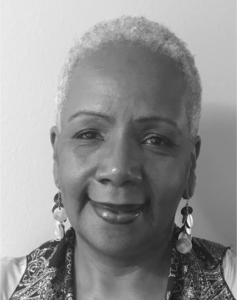 Renell Weathers, Michigan League for Public Policy (MLPP) Community Engagement Consultant. As community engagement consultant, Renell works with organizations throughout the state in connecting the impact of budget and tax policies to their communities. She is motivated by the belief that all children and adults deserve the opportunity to achieve their dreams regardless of race, ethnicity, religion or economic class.
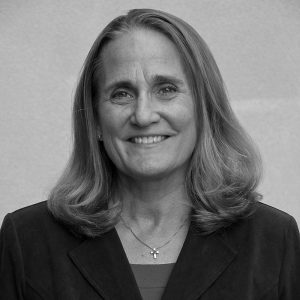


 Emily Jorgensen joined the Michigan League for Public Policy in July 2019. She deeply cares about the well-being of individuals and families and has a great love for Michigan. She is grateful that her position at the League enables her to combine these passions and work to help promote policies that will lead to better opportunities and security for all Michiganders.
 Megan Farnsworth joined the League’s staff in December 2022 as Executive Assistant. Megan is driven by work that is personally fulfilling, and feels honored to help support the work of an organization that pushes for more robust programming and opportunities for the residents of our state. She’s excited and motivated to gain overarching knowledge of the policies and agendas that the League supports.