WEALTH TAX
RETHINKING TAX IN AN ERA OF GROWING INEQUALITY
Updated April 2026 | Nicholas Hess, Fiscal Policy Analyst

-
- Michigan has no current wealth taxes, with the estate tax last collected in 2005. Wealth taxes in the U.S. are seldom used and remain politically divisive despite their revenue potential.
- The tax code currently favors wealth over income, with loopholes and special carveouts that allow taxpayers to build up an exorbitant amount of wealth and pass it along to their heirs.
- However, there are many policy options for Michigan to reinvest this wealth into working families to help make the economy grow and work for everyone.

-
- Policymakers should raise the capital gains tax rate higher than the income tax and remove the stepped-up basis to prevent higher-income households from dodging taxes. The favorability of capital income in the tax code contributes to inequality because richer households disproportionately benefit from capital gains.
- Michigan should expand its real estate transfer tax and install a progressive mansion tax rate from its one-term rate. Real estate wealth is heavily concentrated in the top 10% and has the potential to be an impactful source of revenue.
- Michigan should decouple from the federal estate tax and implement either an inheritance or estate tax to curb intergenerational wealth transfers that contribute to rising inequality and declining social mobility.

As opposed to income — which is money earned over a specified period of time, like your salary from your job — wealth is a person’s assets minus their debt obligations. Income is what you earn; wealth is what you own. Take a recently graduated physician with a starting salary of $200,000 per year, no assets to their name, but with a mountain of student loan debt of $250,000. The physician will be considered “high income” but not wealthy because their debt obligations are more than their assets.
Both income and wealth inequality have increased significantly in the last four decades, driven by large fundamental shifts in the economy. One of these fundamental shifts is how policymakers have favored taxing income over taxing wealth — and thus labor over capital. Michigan’s only direct tax on wealth is the estate tax, which has not been collected since 2005.
Although income inequality has increased in the last few decades, wealth inequality has soared in comparison and is far more inequitable. In 2024, the top 10% held 67% of the nation’s wealth, while the bottom 50% held 2.5% of the total wealth. In contrast, the top 10% make up just under 50% of total income.[1] The source of this wealth also differs between households with low, middle and high incomes. The differences between income and wealth inequality are even more pronounced along racial lines.
Due to decades of discrimination in financial practices and public policy as well as pervasive personal bias, the racial wealth gap has continued to grow. On average, the wealth of Black and Hispanic families is 20% that of the wealth of white families.[2] In fact, the wealth gap between white and Black households is larger, and has grown at a faster rate, than total household wealth has for Black families.[3] Since 1989, average Black household wealth has grown 120%, but the wealth gap between Black and white households has grown by 160%.
The source of this wealth also differs between households with low, middle and high incomes. For households that are considered low or middle income (the bottom 90%), the biggest source of wealth comes from housing, while assets in businesses are the biggest source of wealth for the top 10%.[4] Stock market booms largely benefit a fraction of all households, and the last couple of recessions have devastated household balance sheets for the bottom 90%. The lower tax rate for capital also shifted how executives are compensated, by shifting their compensation to income generated from capital gains versus income.

Capital gains taxes are paid when a person sells a capital asset at a higher price than when they bought it, thus the tax is paid on the “gains” of the asset. A capital asset can be anything that people invest money in, like a house or a company stock. When you sell a capital asset you “realize” it, so the capital gains tax is paid on a realized asset. A capital asset can increase in value while you hold onto it (like a house), but those gains are unrealized until it is sold. There are currently no tax systems that tax unrealized capital gains, though there have been proposals to tax unrealized gains.
The federal government and some states tax long-term capital gains (gains that have happened over more than a year) at a lower rate than short-term capital gains (gains obtained over at most a year), which are often taxed at the same rate as income. Michigan does not distinguish between short-term and long-term capital gains, taxing both at 4.25%. Forty-one states tax capital gains, with most of them (including Michigan) treating them as income, eight taxing long-term capital gains lower than income, and two states (Washington and Minnesota) taxing capital gains more than income.[5] Tax equity suggests that capital gains should not distinguish between the duration of investments and ought to be taxed all the same.[6]
The top 1% of households earn nearly 40% of their income via capital gains, thus the favoring of capital over labor increases economic inequality.[7] The lower tax rate heavily favors millionaires and billionaires.[8] Proponents claim that favoring capital gains in the tax code increases incentive to invest, particularly in long-term assets. However, the evidence for this claim is weak, as the preference can encourage tax shelters, not investments. Furthermore, a lot of resources are spent delineating between which tax rate should be applied to which capital asset upon realization.[9] In 1986, the lower tax rate for long-term capital gains boosted revenue, but only for a short period. The long-run impact on favoring capital gains is negligible towards growth, tax revenue and aggregate investment.[10][11][12]
There are other ways to maximize revenue from capital gains apart from raising the tax rate, such as removing the stepped-up basis, which allows holders of capital to pass along their assets to beneficiaries posthumously without paying the tax, even if they have unrealized gains. This “stepped-up basis at death” is estimated to have cost the federal government $100-200 billion dollars in tax revenue over the last ten years.
Treating income from wages and capital the same is a good start, but Michigan can make its tax system more equitable by removing this stepped-up basis in addition to taxing capital more than labor. Minnesota, for example, levies an additional 1% tax on net investment exceeding $1 million, where this additional revenue is used to pay for schools. Michigan can levy a progressive tax of our own while also removing some of the previous favoritisms for capital gains.
Not only can Michigan tax the stock of wealth, but Michigan can also tax the proceeds that come from wealth such as trusts and rents, or what the IRS calls “passive income.” The federal government instituted a tax on wealth proceeds in 2013 called the Net Investment Income Tax (NIIT). Seventy-four percent of the federal NIIT falls on households with incomes of $1 million or more, with the other 26% falling on households earning between $200,000 and $1 million. If Michigan were to implement a 4% NIIT, the state could raise $689 million annually. If Michigan adopts an enhanced NIIT (which covers certain kinds of capital gains not subject to the federal NIIT), then Michigan could raise $903 million annually.[13]

In most states, when real property, such as a home or a vacation property, is sold, sellers pay what is known as a real estate transfer tax. This tax is levied both by the state — at $3.75 for every $500 in property value or 0.75% — and by the county in which the property is located — generally at $0.55 per every $500 in value. Unlike the capital gains tax, which excludes the first $250,000 from home sales, the transfer tax does not have the same type of deductions, so it is more effective at taxing wealth.[14] Additionally, there are exemptions, including transfers between parents and their children, court-ordered transfers and transfers between an LLC and its members. The revenues collected under the state real estate transfer tax get deposited in the state School Aid Fund, and those levied by the county get deposited into the county’s General Fund.
Currently, Michigan’s transfer tax is a proportional tax, where every transfer in that community is taxed at the same rate, but mansion taxes are progressive transfer taxes on high-value homes. There are seven states as well as Washington, D.C. which implement mansion taxes with different approaches.
For example, a state’s mansion tax can kick in if any home is valued above $1 million upon sale (absolute mansion tax) or the state’s mansion tax kicks in if any home is in the top 10% of home values in the state (relative mansion tax). The benefit from pricing it on the relative value, rather than absolute, is that transfer taxes will always be levied on the priciest homes, while absolute price thresholds can shift and change because they are set by a hard number.
Additionally, the tax can either be applied on the full price of the property or only applied to any property above a specified price point. For example, if the mansion tax limit is $1 million and a home is sold at $2.5 million, we could tax the full price of $2.5 million, or we exempt the first $1 million and only tax the additional $1.5 million. Taxing at the full price leads to more revenue, and it reduces the likelihood of sellers undervaluing their home to reduce their tax liability. Other concerns to weigh is whether to exclude property transfers between businesses. Including business property transfers will greatly increase revenue.
According to the State Mansion Tax Estimator from the Institute on Taxation and Economic Policy, if Michigan were to institute a mansion tax on the percentile of home sales — 1% on the top 20%, 1.5% on the top 10%, 2% of the top 5%, 2.5% of the top 1%, and 3% of the top 0.1% — it would yield about $450 million of tax revenue. If we include business properties, the total revenue would yield $894 million.[15]

The estate tax — a tax paid by the estate of a person who has died — is Michigan’s only tax on wealth, but has not been collected since 2005, despite still being on the books. Taxes on inherited wealth have been one of the federal and state governments’ most effective tools to establish equity in the U.S. tax system. Latest estimates find that a little over a third of all wealth in the U.S. is inherited, with transferable wealth totaling 424% of U.S. GDP as of 2021.[16] Not only does this represent an opportunity to boost both state and federal revenues, but these are great tools to combat wealth inequality.[17]
Before 2001, estates could claim a credit for state estate taxes paid (up to a certain limit) when they filed their federal forms. Most states set their estate tax at this limit, allowing states to “pick up” a portion of the estate tax without increasing tax liabilities for its residents. In short, the pick-up tax allowed redirected federal estate taxes to states. Since most states tied their own estate tax to the federal one, this meant that most states’ estate taxes went away after 2001.[18] As a result, Michigan does not have effective ways of taxing these transfers of wealth which perpetuate inequality.
One of the ways Michigan can start collecting the estate tax is to decouple from the federal estate tax entirely, as many other states have done. For example, Minnesota and Massachusetts have resorted back to the pre-2001 estate tax threshold of $675,000. If Michigan were to decouple from the federal estate tax and include any estate worth more than $3.5 million, the state could raise $270 million annually.[19]
Similar to the estate tax, an inheritance tax is a tax that is applied to the heir, rather than the donor. As of 2024, 16 states tax either an estate or an inheritance, with only Maryland taxing both. For example, say a person has three heirs, and bequeaths their estate worth $30 million to their heirs in equal amounts ($10 million each). The estate tax would tax the $30 million upon death, but an inheritance tax will tax each of the heirs’ inheritances. An inheritance tax is less politically fraught, because we tax a person’s heir as opposed to taxing the deceased individual. Optically speaking, it is less controversial. Additionally, research posits that inheritance taxes are more effective at actually taxing the estate and applies to a larger tax base than an estate tax would.[21]
The One Big Beautiful Bill Act of 2025 permanently set the estate tax exemption threshold to $15 million for single filers and $30 million to joint filers, and indexing both to inflation. As a result of this campaign to increasingly exempt more and more from the estate tax, very few Michigan estates are actually subject to it. Even before the harmful changes made by the 2017 Tax Cuts and Jobs Act, only 2 out of 1,000 estates nationally paid the tax. And when the estate tax is paid, the effective tax has shrunk to less than 20% of their total estate’s worth.[22] Critics of the estate tax overestimate the reach of it, but even at its height, the tax only applied to a fraction of very rich taxpayers.[23] Now, thanks to the changes made by both big tax bills from 2017 and 2025, the “death tax” has all but died.
Buy, Borrow and Die
This is part of a common method for the ultra-wealthy to avoid paying taxes: buy, borrow and die.[24] A person can buy a capital asset, borrow money while using said asset as collateral and deducting the interest payment against their taxes, all to bequeath their assets to their heirs upon death, never paying the tax, all the while their net wealth increases. Eliminating the stepped-up basis is an effective tool to break this cycle. Taxing inheritances, whether or not they are capital assets, is an effective way to redistribute the wealth we all create, lowering inequality.
There are ways to close this loophole with the tax code, though it remains a question of how much ability Michigan has to do so. One option is to treat borrowing itself as a form of realization, levying a capital gains tax whenever an ultra-wealthy individual borrows against their assets. Another option is to levy a small annual excise tax on a person’s total loan balance, like 0.5%. So instead of taxing every time a person takes out a loan, we instead tax their total loan balance.[25] All these taxes will apply to those who exceed a certain net worth threshold, like $100 million, so we are talking about the very ultra wealthy.
It’s important to know that the effectiveness of these different tax proposals to close this loophole greatly depends on the administrative costs to enforce them. Unlike income taxes, wealth taxes are easier for the ultra-wealthy to avoid because wealth can be transferred. It also depends on how that wealth is assessed by tax authorities. This makes a wealth tax, especially on unrealized gains, very difficult to enforce.

1. Michigan should raise the tax on capital gains so that it is taxed at a higher rate than income tax, and continue to make no tax preference between long-term and short-term gains. In addition to raising the capital gains tax and to avoid any “lock-in” effects, Michigan should also eliminate the stepped-up basis and close this loophole so holders of capital assets pay what they owe.
2. Capital gains taxes can exempt a substantial amount when real estate is transferred or sold. Michigan should institute a mansion tax by implementing a progressive real estate transfer tax. This can bring in a substantial amount of revenue to the state and can be used to fund the development of affordable housing as well as education, as it is done in many other states.
3. To reduce the propensity of inherited wealth and increase social mobility, Michigan should decouple from the federal estate tax and/or institute an inheritance tax of its own. One of the biggest drivers in wealth inequality is the lack of effective wealth taxes in Michigan, particularly the virtual elimination of the estate tax, both in its reach and impact on inherited wealth transfers.
4. Michigan can follow Minnesota’s lead by implementing a tax on wealth proceeds, or net investment income. The federal government already taxes this kind of income, so Michigan can couple with the federal standards. Michigan can raise a significant amount of money that will fall on high-income households.

[1] York, Erica. 2024. “Summary of the Latest Federal Income Tax Data, 2025 Update.” Tax Foundation. November 19, 2024.
https://taxfoundation.org/data/all/federal/latest-federal-income-tax-data-2025/
[2] Kent, Ana Hernández, and Lowell R. Ricketts. 2024. “The State of U.S. Wealth Inequality.” Federal Reserve Bank of St. Louis. October 22, 2024.
https://www.stlouisfed.org/community-development-research/the-state-of-us-wealth-inequality
[3] Perry, Andre M., Hannah Stephens, and Manann Donoghoe. 2024. “Black Wealth Is Increasing, but so Is the Racial Wealth Gap.” Brookings. January 9, 2024.
https://www.brookings.edu/articles/black-wealth-is-increasing-but-so-is-the-racial-wealth-gap/
[4] “Income and Wealth Inequality in America, 1949–2016.” Opportunity & Inclusive Growth Institute, Minneapolis Fed.
https://www.minneapolisfed.org/research/institute-working-papers/income-and-wealth-inequality-in-america-1949-2016
[5] “State Tax Rates on Long-Term Capital Gains, 2024.” Tax Foundation. March 27, 2025.
https://taxfoundation.org/data/all/state/state-capital-gains-tax-rates-2024
[6] Auten, Gerald. “Capital Gains Taxation.” Urban Institute.
https://www.urban.org/sites/default/files/publication/71031/1000519-Capital-Gains-Taxation.PDF
[7] Peterson Foundation. 2024. “What Is a Wealth Tax, and Should the United States Have One?” September 11, 2024.
https://www.pgpf.org/article/what-is-a-wealth-tax-and-should-the-united-states-have-one/
[8] Dolan, Ed. 2020. “It Is Time to Rethink the Capital Gains Tax Preference.” Niskanen Center. June 10, 2020.
https://www.niskanencenter.org/it-is-time-to-rethink-the-capital-gains-tax-preference/
[9] Tax Policy Center. January 2024. “What Is the Effect of a Lower Tax Rate for Capital Gains?”
https://taxpolicycenter.org/briefing-book/what-effect-lower-tax-rate-capital-gains
[10] Agersnap, Ole, and Owen Zidar. 2020. “The Tax Elasticity of Capital Gains and Revenue-Maximizing Rates.” SSRN.
https://doi.org/10.2139/ssrn.3675257
[11] Gleckman, Howard. 2019. “How Should We Tax the Rich?” Tax Policy Center. September 10, 2019.
https://taxpolicycenter.org/taxvox/how-should-we-tax-rich
[12] Ricco, John. 2019. “The Revenue-Maximizing Capital Gains Tax Rate.” Penn Wharton Budget Model.
https://budgetmodel.wharton.upenn.edu/issues/2019/12/4/the-revenue-maximizing-capital-gains-tax-rate-with-and-without-stepped-up-basis-at-death
[13] Austin, Sarah, and Carl Davis. “The Wealth Proceeds Tax.” Institute on Taxation and Economic Policy. October 30, 2025.
https://itep.org/wealth-proceeds-tax-net-investment-income-tax/
[14] Waxman, Samantha, Carl Davis, and Erika Frankel. 2024. “States Should Enact, Expand Mansion Taxes.” CBPP & ITEP. June 26, 2024.
https://www.cbpp.org/research/state-budget-and-tax/states-should-enact-expand-mansion-taxes-to-advance-fairness-and
[15] “State Mansion Tax Estimator.” Institute on Taxation and Economic Policy. 2025.
https://itep.org/state-mansion-tax-estimator/
[16] Sabelhaus, John, Oliver Hall, and William G. Gale. 2025. “Taxing the Great Wealth Transfer.” Brookings.
https://www.brookings.edu/wp-content/uploads/2024/12/20241209_TPC_Galeetal_GreatWealthTransfer.pdf
[17] McNichol, Elizabeth, and Samantha Waxman. 2021. “Review of State Taxes on Inherited Wealth.” Center on Budget and Policy Priorities. June 17, 2021.
https://www.cbpp.org/research/state-budget-and-tax/state-taxes-on-inherited-wealth
[18] Wiehe, Meg. 2014. “State Estate and Inheritance Taxes.” Institute on Taxation and Economic Policy. July 21, 2014.
https://itep.org/state-estate-and-inheritance-taxes-1/
[19] McNichol, Elizabeth, and Samantha Waxman. Review of State Taxes on Inherited Wealth.
[20] McNichol, Elizabeth, and Samantha Waxman. Review of State Taxes on Inherited Wealth.
[21] Gale, William G., Oliver Hall, and John Sabelhaus. 2025. “Follow the Money: Tax Inheritances, Not Estates.” Brookings. January 23, 2025.
https://www.brookings.edu/articles/follow-the-money-tax-inheritances-not-estates/
[22] Huang, Chye-Ching, and Chloe Cho. 2017. “Ten Facts You Should Know about the Federal Estate Tax.” Center on Budget and Policy Priorities. October 30, 2017.
https://www.cbpp.org/research/ten-facts-you-should-know-about-the-federal-estate-tax
[23] Hanauer, Amy. 2024. “The Estate Tax Should Help to Level the Playing Field.” Institute on Taxation and Economic Policy. March 26, 2024.
https://itep.org/estate-tax-letting-rich-get-richer/
[24] “How Wealthy Households Use a Buy-Borrow-Die Strategy.” DC Fiscal Policy Institute.
https://www.dcfpi.org/all/how-wealthy-households-use-a-buy-borrow-die-strategy-to-avoid-taxes-on-their-growing-fortunes/
[25] “‘Buy-Borrow-Die’: Options for Reforming the Tax Treatment of Borrowing against Appreciated Assets.” Budget Lab at Yale. 2025.
https://budgetlab.yale.edu/research/buy-borrow-die-options-reforming-tax-treatment-borrowing-against-appreciated-assets

 Betsy Zobl-Tar
  Jay Cutler joined the League in March 2026 as the Kids Count Senior Data Analyst, where he collects, analyzes, and prepares data for Kids Count in Michigan.
 Danielle Taylor-Basemore joined the League as the Development Data and Stewardship Coordinator in June 2025. She brings with her five years of nonprofit experience with a special focus on community engagement, data visualization and strategic programming. Prior to joining the League, Danielle served as the Business District, Safety, and Digital Manager at Jefferson East, Inc.
 Scott Preston is a Senior Policy Analyst with the Michigan League for Public Policy, where he leads the organization’s immigration and criminal justice reform portfolios. In the three years prior to joining the League, Scott facilitated the Southeast Michigan Refugee Collaborative and managed a small business economic development program at Global Detroit. His work included launching Michigan’s first Refugee Film Festival and building on a trusted connector model that linked marginalized communities with crucial resources. Scott’s work at the League is informed by his background in journalism and research. He spent four years covering the Syrian refugee crisis in the Middle East for publications such as The Economist, and later worked with unaccompanied refugee minors through Samaritas. Scott holds a master’s degree in international migration and public policy from the London School of Economics and Political Science.
 Kate Powers joined the League as the Chief Development Officer in February 2025. Prior to joining the League, Kate held leadership positions at many Michigan nonprofit organizations, most recently serving as the COO and Chief Development Officer of Ele’s Place. Kate has spent the bulk of her career in fundraising, with a short stint in the state Legislature as a legislative aide to members in both chambers. Kate is a graduate of Michigan State University’s James Madison College with a Bachelor of Arts in Social Relations and has a certificate in fundraising management from the Lilly Family School of Philanthropy at Indiana University. Additionally, Kate served on the East Lansing Public Schools Board of Education and is a past President of the Junior League of Lansing. In her free time, she enjoys traveling with her husband and her son and saving outfit of the day and home decor ideas on Pinterest.
  Nicholas Hess joined the League as the Fiscal Policy Analyst in September of 2024. In this role, Nicholas focuses on tax policy, government revenue, and their impact on working families and racial equity, including the effects of the Earned Income Tax Credit (EITC) and Child Tax Credit (CTC). Nicholas values the role that judicious fiscal policy can play in the improvement of people’s lives and the economy, alleviating inequities along the way.
 Audrey Matusz joined the League as the Visual Communications Specialist in September 2024. She supports the team with implementing social media strategies and brainstorming creative ways to talk about public policy. She brings with her nearly a decade of experience in producing digital products for evidence-based social justice initiatives.
  Jacob Kaplan
  Donald Stuckey
  Alexandra Stamm
 Amari Fuller
 Mikell Frey is a communications professional with a passion for using the art of storytelling to positively impact lives. She strongly believes that positive social change can be inspired by the sharing of data-driven information coupled with the unique perspectives of people from all walks of life across Michigan, especially those who have faced extraordinary barriers.



 Yona Isaacs (she/hers) is an Early Childhood Data Analyst for the Kids Count project. After earning her Bachelor of Science in Biopsychology, Cognition, and Neuroscience at the University of Michigan, she began her career as a research coordinator in pediatric psychiatry using data to understand the impacts of brain activity and genetics on children’s behavior and mental health symptoms. This work prompted an interest in exploring social determinants of health and the role of policy in promoting equitable opportunities for all children, families, and communities. She returned to the University of Michigan to complete her Masters in Social Work focused on Social Policy and Evaluation, during which she interned with the ACLU of Michigan’s policy and legislative team and assisted local nonprofit organizations in creating data and evaluation metrics. She currently serves as a coordinator for the Michigan Center for Youth Justice on a project aiming to increase placement options and enhance cultural competency within the juvenile justice system for LGBTQIA+ youth. Yona is eager to put her data skills to work at the League in support of data-driven policies that advocate for equitable access to healthcare, education, economic security, and opportunity for 0-5 year old children. In her free time, she enjoys tackling DIY house projects and trying new outdoor activities with her dog.
 Rachel Richards rejoined the League in December 2020 as the Fiscal Policy Director working on state budget and tax policies. Prior to returning to the League, she served as the Director of Legislative Affairs for the Michigan Department of Treasury, the tax policy analyst and Legislative Director for the Michigan League for Public Policy, and a policy analyst and the Appropriations Coordinator for the Democratic Caucus of the Michigan House of Representatives. She brings with her over a decade of experience in policies focused on economic opportunity, including workforce issues, tax, and state budget.
 Simon Marshall-Shah joined the Michigan League for Public Policy as a State Policy Fellow in August 2019. His work focuses on state policy as it relates to the budget, immigration, health care and other League policy priorities. Before joining the League, he worked in Washington, D.C. at the Association for Community Affiliated Plans (ACAP), providing federal policy and advocacy support to nonprofit, Medicaid health plans (Safety Net Health Plans) related to the ACA Marketplaces as well as Quality & Operations.

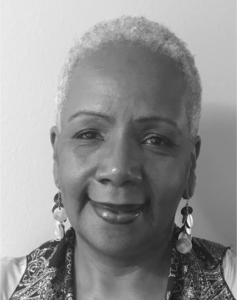 Renell Weathers, Michigan League for Public Policy (MLPP) Community Engagement Consultant. As community engagement consultant, Renell works with organizations throughout the state in connecting the impact of budget and tax policies to their communities. She is motivated by the belief that all children and adults deserve the opportunity to achieve their dreams regardless of race, ethnicity, religion or economic class.



 Emily Jorgensen joined the Michigan League for Public Policy in July 2019. She deeply cares about the well-being of individuals and families and has a great love for Michigan. She is grateful that her position at the League enables her to combine these passions and work to help promote policies that will lead to better opportunities and security for all Michiganders.
 Megan Farnsworth joined the League’s staff in December 2022 as Executive Assistant. Megan is driven by work that is personally fulfilling, and feels honored to help support the work of an organization that pushes for more robust programming and opportunities for the residents of our state. She’s excited and motivated to gain overarching knowledge of the policies and agendas that the League supports.