PROPERTY TAX
FUNDING THE ESSENTIAL NEEDS OF MICHIGAN’S LOCAL COMMUNITIES
Updated April 2-26 | Nicholas Hess, Fiscal Policy Analyst

-
- Property taxes are one of the only revenue raisers available at the local level in Michigan.
- Two important constitutional amendments, the Headlee Amendment and Proposal A, introduced tax limitations that today make it difficult for local governments to raise sufficient revenue.
- The Homestead Property Tax Credit provides property tax relief for families with low incomes whose property taxes surpass a certain percentage of their household resources.

-
- Michigan should modify the interactions between the Headlee Amendment and Proposal A to safeguard revenue at the local level.
- Legislators should reform the state’s revenue-sharing system to ensure local governments have sufficient revenue without increasing pressure on inequitable property taxes.

Since 1893, property taxes have been the main source of revenue for local governments, including townships, local school districts, cities, villages and counties. Compared to other taxes such as corporate and personal income taxes, property taxes are a more reliable and less volatile form of revenue, even during economic recessions. However, the uniqueness of Michigan’s assessment system made it difficult for local property revenues to recover after the 2008 recession, a particularly bad time for local budgets.[1]
Property taxes are expressed in mills, a term that is familiar to most voters. A mill is one-tenth of one cent ($0.001), meaning a tax rate of one mill will raise $1 for every $1,000 of a property’s taxable value. In Michigan, a millage rate above 15 mills generally must be approved by voters, up to a limit of 50 mills, excluding taxes for debt service payments.[2] In 2023, the average millage rate across the state for a household’s principal residence was 35.04.[3]

Passed in 1978, the Headlee Amendment is a constitutional amendment instituting a levy limit, which restricts the growth of a jurisdiction’s tax revenue. The amendment requires voter approval to adopt a new tax or increase the rate of an existing tax above 1978 levels. It also restricts tax revenue growth at the jurisdiction level to the rate of inflation.
Under Headlee, if the tax base increases by more than the rate of inflation, excluding new construction, then local governments must introduce a rollback, or tax rate reduction. Headlee applies only to the overall growth of a jurisdiction, meaning increases in valuation for individual properties will not force a rollback if offset by decreases in property values elsewhere within the jurisdiction. However, if a municipality experiences an overall surge in home values, the rollback mechanism will come into play.

While the intention of Headlee was to address citizen concerns about soaring property tax rates, continued frustration over high and unpredictable tax bills from individual property owners led to the adoption of Prop A. Passed in 1994, this constitutional amendment introduced an assessment limit, establishing a ceiling for annual assessment increases at the individual level. Before Prop A, taxable value (TV) was not the basis for constructing property taxes which caused, admittedly, fluctuations in tax revenue. Contrary to a Headlee rollback, Headlee “roll-ups” allowed municipalities to increase millages up to the original millage.
Unlike Headlee, which sets limits at the jurisdiction level, Prop A specifically protects individual property owners, for whom taxable values cannot increase by more than the rate of inflation. Instead, taxable value will only “pop up” at the time of sale or transfer. At this point, the property’s TV is reset to the state equalized value (SEV), representing half of the property’s assessed value.[4] Prop A thus creates horizontal inequity by levying different tax rates on properties that are otherwise equivalent in value. Horizontal equity is the idea that households in the same circumstances should be treated the same way.[5] Giving a discount based on how long someone has held a property violates horizontal equity. A recent analysis highlighting horizontal inequity in Detroit found that low-priced properties were overassessed, while high-priced properties were underassessed.[6]

Headlee rollbacks in particular have had damaging effects on municipal finance, especially following the Great Recession. Research from the Citizens Research Council suggests Prop A actually had a mitigating effect following the Great Recession — in other words, property taxes likely would have fallen more dramatically if not for Prop A. Headlee, on the other hand, exacerbated the effects of the recession on municipal finance by limiting local revenue growth during recovery. However, taken together, both Prop A and Headlee limit the ability for local governments to collect inflation-adjusted property tax revenue, with Prop A limiting the growth of valuation for individual property and Headlee limiting the growth for the jurisdiction.[7]
Aside from the harmful effects on municipal finance, these laws increase racial and economic inequality by constraining localities’ ability to provide services to residents. A 2017 study found the benefits of property tax limits went overwhelmingly to white households, who saw 89% of the total tax savings.[8] Meanwhile, the “savings” come from reduced funding for public services, including public safety, parks and libraries, and local economic development. And while property taxes are assessed on the taxable values of homes, a study out of Indiana University finds that Black and Hispanic homeowners face a 10-13% higher tax burden while also having their homes undervalued by an average of 20% compared to their white counterparts.[9],[10]

In addition to Headlee and Prop A, local governments lose out on revenues through a number of tax abatement programs — amongst them, Renaissance Zones, Neighborhood Enterprise Zones and the Industrial Property Tax Abatement. They also lose out on revenue growth from projects in tax increment financing districts, like Downtown Development Authorities, which capture property tax revenue growth from the overall tax base.[11] Most recently, a national wave of tax gifts to data centers have gutted local revenues.[12] This is part of a larger trend with municipalities giving tax breaks to businesses to encourage development and investment using what is called tax increment financing (TIF). The hope is that diverting property taxes in the short-term will pay off in the long-term. However, the evidence on the ground suggests that TIF often does not lead to increased tax revenue in the long-term and leaves the locality worse off. Despite unconvincing evidence, local officials still engage in TIF. The property tax reductions enabled by these programs fall heavily on local governments, who have few other means to make up the revenue losses, especially in Michigan with constitutional limitations imposed on localities.
More specifically in Michigan, one big tax break that businesses take advantage of is called the “dark store” loophole. It allows “big box” stores (large chain retailers) to appeal property taxes assessed by municipalities to the Michigan Tax Tribunal, a legal body. The argument proposed by these retailers is that because the property loses so much value upon resale due to their “unique” business design, the assessors should equate the property’s TV to a vacant store (a dark store) in the same area.[13] In short, unlike other property assessments which take into account the investments and purchasing price of the property to assess its TV, the TV of big box stores should be equated to similar vacant stores in the area. Because this lowers the store’s TV, it hurts local finances. It is also a tax code which favors large corporations at the expense of smaller — and more locally tied — businesses, estimated to have cost Michigan’s local economies $2 billion since 2013.[14]

Although property taxes are a stable and consistent source of revenue, inequities exist within our property tax system. Property taxes are less regressive than sales taxes, but Black households, Hispanic/Latino households, and households with lower incomes do face a disproportionate burden.[15] Additionally, the dissociation between SEV and TV over time creates inequity in the tax system. Because TV is only reassessed at the time of sale, neighbors living in identical houses may find they pay taxes on substantially different tax bases.
The opaque property tax assessment process, which establishes SEV, also contributes to racial inequities through assessment discrimination and housing segregation, resulting in higher tax rates for neighborhoods with lower wealth. Discriminatory assessments occur when the local government over-assesses property values owned by Black families. Historically, over-valuations are attributed to a failure to account for the drop in property values when neighborhoods transitioned from white to Black through segregation and white flight. Today, problems persist in cities like Detroit, which failed to sufficiently reduce assessed values in the wake of the Great Recession.[16],[17] In both cases, Black homeowners who could not pay their taxes often lost their homes and, in turn, their largest source of family wealth. As of 2025, advocacy groups in Detroit are still fighting for reparations for overtaxed property owners.

One of the methods that local governments use to reduce inequities in property taxes is what’s called “circuit breakers,” tax credits that are given to overtaxed households. Most states, including Michigan, offer circuit breakers to promote affordability. Michigan’s statewide circuit breaker is the Homestead Property Tax Credit, a refundable credit to support Michigan households paying high property taxes relative to their household resources (HHR). Households are generally eligible if total HHR falls below $69,700 and the primary residence has a taxable value of less than $160,700 as of 2025. For homeowners, the credit is equal to 60% of the amount by which property taxes exceed 3.2% of HHR, while for renters, the credit amounts to 23% of gross rent paid. The maximum credit is $1,800.[18] The tax credit thereby acts as a circuit breaker to provide relief for households with low incomes. Household resources limits, taxable value limits, and maximum credit amounts are indexed to inflation, thereby ensuring the value of the credit does not lose value over time.
Vertical equity is when taxpayers with different levels of income should pay different amounts in taxes, such as the progressive tax. Achieving both horizontal and vertical equity is an essential goal when constructing any tax system. The bottom line is that it reduces inefficiencies while making the tax system more equitable. Tax credits like the Homestead Property Tax Credit promotes vertical equity.

Property taxes can discourage investments into property, and such costs can hurt a local economy if not drafted diligently. One novel method to collect taxes on tangible property is to simply tax the land that the property sits on. Property taxes are levied on the “market value” of the property as well as the land that property sits on, while a land value tax (LVT) excludes the property and simply taxes the land. Another form of a land value tax is called a split-rate tax which levies a higher tax on land and a lower tax on properties, conceived as a way to encourage development. Pittsburgh is the largest U.S. city to implement a split-rate tax, and there is promising evidence that it encouraged development.[19] Detroit’s uniquely problematic combination of higher-than-normal property taxes, declining population and high number of speculated properties compelled lawmakers to look for a better tax system for these circumstances. Some promising research posits that a split-rate tax can lead to increased business formation and less foreclosures.[20] Michigan lawmakers debated a split-rate tax for the city of Detroit in the 2023-2024 legislative cycle, but the model’s novel and untested nature made advocates and lawmakers pause.[21]
Land value taxes are also theorized to incur zero economic inefficiencies because the supply of land cannot be altered, while the supply of property and property investments can be altered by the costs of property taxes. In theory, an LVT can replace the property tax while encouraging development; this makes the LVT a seemingly beneficial alternative with virtually zero negatives. However, the real world differs much from the theoretical one. Just as property taxes can create inequities, land value taxes have the potential to favor some property owners over others, namely owners of large, expensive properties.[22] Homeowners are obligated to pay the same tax as a big-time developer on similar-sized properties. Proponents of a land value tax hope that revenues will fully replace property taxes, but to take such a gamble may be too risky for policymakers. Indeed, the uncertainties and potential political ramifications make land value taxes difficult to advocate for, let alone implement successfully. A split-rate tax can be a newer and better property tax system but both legal and political barriers can make it difficult for such a transition to occur.

[1] Lupher, Eric. “The Slow Recovery of Property Values in Counties Hit Hardest by the Great Recession.” Citizens Research Council of Michigan, June 7, 2024. https://crcmich.org/webdocs/2024/June_7_2024.pdf.
[2] Elizabeth Pratt. “Property Tax Millage Limitations in Michigan.” State Notes. Senate Fiscal Agency, Spring 2016. https://www.senate.michigan.gov/sfa/Publications/Notes/2016Notes/NotesSpr16lp.pdf.
[3] 2023-2024 Annual Report of the Michigan State Treasurer. Michigan State Treasury, n.d.
[4] Eric Walcott. “A Refresher on Proposal A and Local Property Taxes.” Michigan State University Extension (blog), July 25, 2016. https://www.canr.msu.edu/news/a_refresher_on_proposal_a_and_local_property_taxes.
[5] Fano, Arianna. “Equity in the U.S. Tax Code: Understanding Fairness in Taxation.” Bipartisan Policy Center, August 23, 2024. https://bipartisanpolicy.org/explainer/equity-in-the-u-s-tax-code-understanding-fairness-in-taxation/.
[6] Harris School of Public Policy. “An Analysis of Property Tax Assessments in Detroit.” University of Chicago, March 20, 2024. https://bpb-us-w2.wpmucdn.com/voices.uchicago.edu/dist/1/1010/files/2024/03/Detroit-Sales-Ratio-Study-03-20-2024-34400db655df648a.pdf.
[7] “Michigan’s Overlapping Property Tax Limitations Create an Unsustainable Municipal Finance System.” Citizens Research Council of Michigan, August 2021. http://crcmich.org/PUBLICAT/2020s/2021/memo1167-property_tax_limitations-2021.pdf.
[8] Iris J. Lav and Michael Leachman. “State Limits on Property Taxes Hamstring Local Services and Should Be Relaxed or Repealed.” Center on Budget and Policy Priorities, July 18, 2018. https://www.cbpp.org/research/state-budget-and-tax/state-limits-on-property-taxes-hamstring-local-services-and-should-be.
[9] Avenancio-Leon, Carlos, and Troup Howard. “The Assessment Gap: Racial Inequalities in Property Taxation.” The Quarterly Journal of Economics 137, no. 3 (2022): 1383–434. https://doi.org/https://doi.org/10.1093/qje/qjac009.
[10] Christine MacDonald. “Detroit Homeowners Overtaxed $600 Million.” The Detroit News, January 9, 2020, sec. Housing. https://www.detroitnews.com/story/news/local/detroit-city/housing/2020/01/09/detroit-homeowners-overtaxed-600-million/2698518001/.
[11] Drew Krogulecki. “Tax Increment Financing in Michigan.” State Notes. Senate Fiscal Agency, Winter 2016. https://www.senate.michigan.gov/SFA/Publications/Notes/2016Notes/NotesWin16dk.pdf.
[12] Schiller, Zach. “Indefensible Tax Breaks for Data Centers Will Cost Ohio.” Policy Matters Ohio, January 7, 2025. https://policymattersohio.org/research/indefensible-tax-breaks-for-data-centers-will-cost-ohio/.
[13] Nanayakkara, Ishara. “Dark Store Theory: How States Are Addressing Retail Property Taxes.” The Council of State Governments, October 18, 2022. https://www.csg.org/2022/10/18/dark-store-theory-how-states-are-addressing-retail-property-taxes/.
[14] LeBlanc, Beth. “Lawmakers Hope to Make a Lame Duck Run at ‘dark Store’ Tax Loophole.” The Detroit News, December 24, 2024. https://www.detroitnews.com/story/news/politics/2024/11/24/lawmakers-hope-to-make-a-lame-duck-run-at-dark-store-tax-loophole/76485768007/.
[15] Avenancio-Leon, Carlos and Troup Howard. “The Assessment Gap.”
[16] Rothwell, Jonathan, and Andre Perry. “How Racial Bias in Appraisals Affects the Devaluation of Homes in Majority-Black Neighborhoods.” Brookings Institution, December 5, 2022. https://www.brookings.edu/articles/how-racial-bias-in-appraisals-affects-the-devaluation-of-homes-in-majority-black-neighborhoods/.
[17] Michael Leachman, Michael Mitchell, Nicholas Johnson and Erica Williams. “Advancing Racial Equity With State Tax Policy.” Center on Budget and Policy Priorities, November 15, 2018. https://www.cbpp.org/research/state-budget-and-tax/advancing-racial-equity-with-state-tax-policy.
[18] “Michigan Taxpayer’s Guide for the 2024 Tax Year.” Michigan State Legislature, January 1, 2025. https://legislature.mi.gov/Publications/TaxpayerGuide.pdf.
[19] Kepner, Elizabeth, and Rick Mattoon. “Land Value Taxes—What They Are and Where They Come From.” Federal Reserve Bank of Chicago, November 2023. https://www.chicagofed.org/publications/chicago-fed-letter/2023/489.
[20] Anderson, John, and Nick Allen. “Split-Rate Property Taxation in Detroit: Findings and Recommendations.” Lincoln Institute of Land Policy, April 2022. https://www.lincolninst.edu/app/uploads/legacy-files/pubfiles/summary_for_policymakers_0.pdf.
[21] “The Land Value Tax Plan.” City of Detroit, City of Detroit, 20 Nov. 2023, https://detroitmi.gov/departments/office-chief-financial-officer/land-value-tax-plan.
[22] Hohman, James M. “What to Know about the Land Value Tax Proposal.” Mackinac Center. Accessed January 9, 2026. https://www.mackinac.org/blog/2023/what-to-know-about-the-land-value-tax-proposal.

 Betsy Zobl-Tar
  Jay Cutler joined the League in March 2026 as the Kids Count Senior Data Analyst, where he collects, analyzes, and prepares data for Kids Count in Michigan.
 Danielle Taylor-Basemore joined the League as the Development Data and Stewardship Coordinator in June 2025. She brings with her five years of nonprofit experience with a special focus on community engagement, data visualization and strategic programming. Prior to joining the League, Danielle served as the Business District, Safety, and Digital Manager at Jefferson East, Inc.
 Scott Preston is a Senior Policy Analyst with the Michigan League for Public Policy, where he leads the organization’s immigration and criminal justice reform portfolios. In the three years prior to joining the League, Scott facilitated the Southeast Michigan Refugee Collaborative and managed a small business economic development program at Global Detroit. His work included launching Michigan’s first Refugee Film Festival and building on a trusted connector model that linked marginalized communities with crucial resources. Scott’s work at the League is informed by his background in journalism and research. He spent four years covering the Syrian refugee crisis in the Middle East for publications such as The Economist, and later worked with unaccompanied refugee minors through Samaritas. Scott holds a master’s degree in international migration and public policy from the London School of Economics and Political Science.
 Kate Powers joined the League as the Chief Development Officer in February 2025. Prior to joining the League, Kate held leadership positions at many Michigan nonprofit organizations, most recently serving as the COO and Chief Development Officer of Ele’s Place. Kate has spent the bulk of her career in fundraising, with a short stint in the state Legislature as a legislative aide to members in both chambers. Kate is a graduate of Michigan State University’s James Madison College with a Bachelor of Arts in Social Relations and has a certificate in fundraising management from the Lilly Family School of Philanthropy at Indiana University. Additionally, Kate served on the East Lansing Public Schools Board of Education and is a past President of the Junior League of Lansing. In her free time, she enjoys traveling with her husband and her son and saving outfit of the day and home decor ideas on Pinterest.
  Nicholas Hess joined the League as the Fiscal Policy Analyst in September of 2024. In this role, Nicholas focuses on tax policy, government revenue, and their impact on working families and racial equity, including the effects of the Earned Income Tax Credit (EITC) and Child Tax Credit (CTC). Nicholas values the role that judicious fiscal policy can play in the improvement of people’s lives and the economy, alleviating inequities along the way.
 Audrey Matusz joined the League as the Visual Communications Specialist in September 2024. She supports the team with implementing social media strategies and brainstorming creative ways to talk about public policy. She brings with her nearly a decade of experience in producing digital products for evidence-based social justice initiatives.
  Jacob Kaplan
  Donald Stuckey
  Alexandra Stamm
 Amari Fuller
 Mikell Frey is a communications professional with a passion for using the art of storytelling to positively impact lives. She strongly believes that positive social change can be inspired by the sharing of data-driven information coupled with the unique perspectives of people from all walks of life across Michigan, especially those who have faced extraordinary barriers.



 Yona Isaacs (she/hers) is an Early Childhood Data Analyst for the Kids Count project. After earning her Bachelor of Science in Biopsychology, Cognition, and Neuroscience at the University of Michigan, she began her career as a research coordinator in pediatric psychiatry using data to understand the impacts of brain activity and genetics on children’s behavior and mental health symptoms. This work prompted an interest in exploring social determinants of health and the role of policy in promoting equitable opportunities for all children, families, and communities. She returned to the University of Michigan to complete her Masters in Social Work focused on Social Policy and Evaluation, during which she interned with the ACLU of Michigan’s policy and legislative team and assisted local nonprofit organizations in creating data and evaluation metrics. She currently serves as a coordinator for the Michigan Center for Youth Justice on a project aiming to increase placement options and enhance cultural competency within the juvenile justice system for LGBTQIA+ youth. Yona is eager to put her data skills to work at the League in support of data-driven policies that advocate for equitable access to healthcare, education, economic security, and opportunity for 0-5 year old children. In her free time, she enjoys tackling DIY house projects and trying new outdoor activities with her dog.
 Rachel Richards rejoined the League in December 2020 as the Fiscal Policy Director working on state budget and tax policies. Prior to returning to the League, she served as the Director of Legislative Affairs for the Michigan Department of Treasury, the tax policy analyst and Legislative Director for the Michigan League for Public Policy, and a policy analyst and the Appropriations Coordinator for the Democratic Caucus of the Michigan House of Representatives. She brings with her over a decade of experience in policies focused on economic opportunity, including workforce issues, tax, and state budget.
 Simon Marshall-Shah joined the Michigan League for Public Policy as a State Policy Fellow in August 2019. His work focuses on state policy as it relates to the budget, immigration, health care and other League policy priorities. Before joining the League, he worked in Washington, D.C. at the Association for Community Affiliated Plans (ACAP), providing federal policy and advocacy support to nonprofit, Medicaid health plans (Safety Net Health Plans) related to the ACA Marketplaces as well as Quality & Operations.


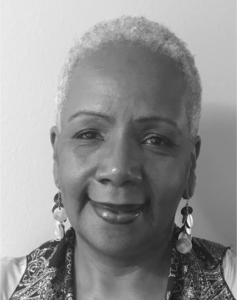 Renell Weathers, Michigan League for Public Policy (MLPP) Community Engagement Consultant. As community engagement consultant, Renell works with organizations throughout the state in connecting the impact of budget and tax policies to their communities. She is motivated by the belief that all children and adults deserve the opportunity to achieve their dreams regardless of race, ethnicity, religion or economic class.



 Emily Jorgensen joined the Michigan League for Public Policy in July 2019. She deeply cares about the well-being of individuals and families and has a great love for Michigan. She is grateful that her position at the League enables her to combine these passions and work to help promote policies that will lead to better opportunities and security for all Michiganders.
 Megan Farnsworth joined the League’s staff in December 2022 as Executive Assistant. Megan is driven by work that is personally fulfilling, and feels honored to help support the work of an organization that pushes for more robust programming and opportunities for the residents of our state. She’s excited and motivated to gain overarching knowledge of the policies and agendas that the League supports.