CORPORATE TAX
JUST 14% OF MICHIGAN BUSINESSES PAY A CORPORATE INCOME TAX
Updated April 2026 | Nicholas Hess, Fiscal Policy Analyst

-
- Since 2012, Michigan has had a flat corporate income tax of 6% on business income.
- The vast majority (86%) of Michigan businesses are not subject to the Corporate Income Tax because they are organized as a flow-through entity. Instead, they pay the income tax of 4.25%.
- Tax revenue from businesses to General Fund/General Purpose (GF/GP) has fallen dramatically over the years and today only account for 5.7% of GF/GP, dramatically down from the 20.9% in the years prior to the 2011 reforms.

-
- Michigan should enact a minimum corporate tax, which institutes a floor on corporate taxes so that, no matter what, corporations are required to pay a tax. The Inflation Reduction Act of 2022, for example, included a minimum corporate tax of 15%.[1] In addition to direct tax credits that allow corporations to reduce their tax liabilities, state policy actually allows international corporations to shift profits to avoid paying taxes on activity. This will be covered later in this section.
- Michigan should establish neutrality with regards to corporate income taxation, ensuring flow-through businesses pay the same tax rate as traditional corporations. The disparity between the two types of businesses contributes to inequality, widens racial inequities and costs the state significant revenue.[2]

For over 30 years, Michigan’s Single Business Tax (SBT) used a modified value-added tax (VAT), similar to that which is used in every advanced economy except the U.S. One strength of the SBT was its “benefits-received” principle, which recognizes that all businesses, regardless of profitability, benefit from government services. Despite providing a stable revenue stream for the state, recurring fights over deduction rules and subsequent court battles led to its phase-out and ultimate repeal.[3] Its replacement, the Michigan Business Tax (MBT), prioritized the ability to pay while also maintaining a stable revenue source for the state. Although the MBT was effective from a revenue-raising perspective, it was unpopular (due in part to its complexity) and thus was short-lived, eventually leading to its replacement in 2011.[4],[5]
Public Act 38 largely eliminated the MBT, replacing it with the Corporate Income Tax (CIT). Unlike its predecessors, the CIT is levied only on traditional corporations, exempting flow-through entities like partnerships or LLCs.[6] An estimated 95,000 businesses that were paying taxes under the SBT and MBT were no longer subjected to corporate taxes after the 2011 reforms. These businesses are now taxed at lower rates because they qualify as flow-through entities. The CIT has yielded some improvements, such as a simplified flat tax and the elimination of many complex credits. However, the narrower base generates significantly less revenue for the state.
One of the negative outcomes of Public Act 38 was that it made up for losses in business tax revenue by eliminating several exemptions and credits allowed under the personal income tax. Notably, the law increased taxes for Michiganders earning the lowest wages by reducing the Earned Income Tax Credit (EITC) from 20% to 6%. Effectively, the 2011 legislation gave businesses a break while asking more of families with low incomes. Thankfully, this change was reversed when Public Act 4 of 2023 increased the EITC from 6% to 30%, which helped taxpayers with low and middle incomes by giving them more autonomy as well as putting more money back into local communities.[7]

To answer the question: No, tax breaks for big businesses are very much not a thing of the past.
The 2011 tax reforms not only lowered taxes for businesses, but also reduced the use of corporate tax credits. However, many of the large tax breaks provided through MBT live on today, as businesses receiving credits under MBT can continue to file under the old system. MBT credits amounted to $661.9 million in lost revenue in 2019, and up to an additional $4.6 billion in refunds is estimated from 2021-2032.[8] Corporate tax credits are both costly for taxpayers and contribute to inefficiencies by encouraging rent-seeking behaviors, distorting economic activity, and undermining market capitalism.[9] In spite of the large number and size of MBT credits, net business taxes totaled $1.2 billion, 8.5% of GF/GP revenue, in 2024 largely due to a growing Michigan economy.[10]
Evidence largely shows that tax cuts have mixed results on local economic growth, labor market growth and wages. Corporate tax breaks can help in local firm creation and investment, but they largely benefit top income earners and business owners, as well as cost taxpayers billions while diminishing investments to public amenities.[11] Corporate tax revenues across the country have fallen as a share of state revenue in the last 20 years despite a multi-decade increase in profits.[12]
According to an analysis from the Institute on Taxation and Economic Policy, the most consistently profitable Fortune 500 firms saw a reduction of their tax responsibilities by 16% while their profits rose 44% following the passage of the Tax Cuts and Jobs Act (TCJA). The 2017 tax cuts were up for expiration on Dec. 31, 2025, but the One Big Beautiful Bill Act of 2025 (OBBBA) extended them indefinitely. Additionally OBBBA passed a slew of favorable business tax deductions that benefit a select few industries and high-income households.[13] Michigan was able to decouple from the federal deductions in 2024 to preserve hundreds of millions of dollars in revenue for the state.
In addition to intentional breaks through the tax code, businesses are legally able to avoid paying taxes by shifting profits to different states or even different countries, like Delaware or the Cayman Islands.[14] Businesses are able to achieve this by registering intellectual property (a brand name for example) in low-tax jurisdictions, and charging its subsidiaries in other locations a royalty fee. The subsidiaries pay royalty fees to the location in that low-tax haven, reducing their profits everywhere else, thus their taxes everywhere else.
Because the CIT only taxes profits, this can reduce the taxes owed to Michigan by large corporations.[15] Several states, including Michigan, implement “water’s edge” combined reporting where the profits earned within the geographic boundaries of the United States are reported, but international profits by foreign subsidiaries are still not accounted for. So, a company that has their intellectual property registered in Delaware is not able to avoid paying taxes on their profits in Michigan, but a large corporation can shift their profits to international low-tax havens, thus avoiding the CIT. So far, no state has implemented Worldwide Combined Reporting (WWCR), which will account for international profit shifting.
Not only does profit shifting erode Michigan’s tax base, but it presents an unlevel playing field for local small businesses, who do not have the luxury to shift profits elsewhere. WWCR can account for large multinational corporations that shift profits to low-tax jurisdictions, and bring that money into the Michigan economy and level the playing field.

Another trend affecting state tax policy is the rise of flow-through entities. A flow-through entity (often called a pass-through entity) is a business where income flows through directly to owners or investors so that income is treated as personal rather than corporate income.[16] Preferential treatment of flow-through entities, both within Michigan and at the federal level, encourages businesses to use workarounds in order to obtain a lower tax rate despite benefitting from the same public services as traditional corporations.[17] As a result, flow-through tax reductions contribute to inequality and eat away at the revenue base at both the state and federal levels.
Flow-through entities have become by far the dominant organizational structure amongst Michigan businesses — today there are six times as many businesses filing as flow-through entities than those filing as traditional corporations in our state. Under the CIT, these entities take advantage of lower tax rates at the individual level where they pay a rate of only 4.25% compared to the corporate tax rate of 6%. Evidence shows that increasing taxes on pass-through businesses is borne mostly by business owners and shareholders, not consumers. In contrast, the tax savings borne by business owners of these flow-through entities do not trickle down to consumers nor their employees in lower costs and higher pay, respectively.[18] Michigan can improve the business tax structure by leveling the playing field for all businesses, as the SBT and MBT did.
Michigan should institute a minimum corporate tax to ensure businesses are not exploiting loopholes in order to pay no tax while workers and families make up the difference. Corporate taxes are paid by top income earners of such corporations and do not fall onto rank-and-file workers.[19] Thirteen states have already implemented minimum corporate taxes, ranging from $20 in Idaho to $800 in California. A minimum will ensure greater sufficiency and equity in the tax system, while also raising revenue for public amenities that these same corporations use.
Michigan should establish neutrality between flow-through businesses and traditional corporations, taxing both at the 6% rate and evening the playing field. Because flow-through entities pay a lower rate than corporations, and the owners of said businesses profit the most, this discrepancy increases inequality and reduces the capacity to collect revenue. Raising such a tax will help pay for programs that help Michigan families, because the incidence of such a tax is borne largely by high-income individuals, business owners and shareholders. In other words, it is paid for by those with the most to give.

[1] “Corporate Alternative Minimum Tax.” Internal Revenue Service, 24 Oct. 2025. https://www.irs.gov/inflation-reduction-act-of-2022/corporate-alternative-minimum-tax.
[2] Marr, Chuck. 2024. “The Pass-through Deduction Is Skewed to the Rich, Costly, and Failed to Deliver on Its Promises.” Center on Budget and Policy Priorities. June 6, 2024. https://cbpp.org/research/federal-tax/the-pass-through-deduction-is-skewed-to-the-rich-costly-and-failed-to-deliver.
[3] “Background and History: Michigan’s Single Business Tax.” House Fiscal Agency, November 2003. https://www.house.mi.gov/hfa/Archives/PDF/Alpha/singlebusinesstax.pdf.
[4] “A Summary of House Bills 4361 & 4362 as Introduced 3-1-11.” House Fiscal Agency, March 8, 2011. https://www.house.mi.gov/hfa/archives/pdf/summaries/11h4361_4362s2.pdf.
[5] Hines, James. 2002. “Michigan’s Flirtation with the Single Business Tax.” https://www.bus.umich.edu/otpr/WP2003-1paper.pdf.
[6] Review of Michigan Corporate Income Tax. Michigan Economic Development Corporation. 2015. https://www.michiganbusiness.org/4a8165/globalassets/documents/reports/fact-sheets/mi-cit.pdf.
[7] “Legislative Analysis: Income Tax Act Changes.” Accessed January 21, 2025. https://legislature.mi.gov/documents/2023-2024/billanalysis/House/pdf/2023-HLA-4001-92F63454.pdf.
[8] “MEGA and Other Certificated Credits 2021 Annual Report.” Michigan Strategic Fund, Nov. 4, 2021. https://www.michigan.gov/documents/treasury/Sec._94112_MEGA_and_Other_Certificated_Credits_2021_Annual_Report_743179_7.pdf.
[9] Veronique de Rugy and Tad DeHaven. “Corporate Welfare: Beyond the Budgetary Cost.” Mercatus Center. March 2020. https://www.mercatus.org/publications/corporate-welfare/corporate-welfare-beyond-budgetary-cost.
[10] “General Fund/General Purpose Revenue: FY 1978-79 to Estimated FY 2025-2026.” April 23, 2025. https://sfa.senate.michigan.gov/Revenue/GFGPRevDollars.PDF.
[11] “How Do Corporate Taxes Affect Economic Activity?” National Bureau of Economic Research. https://www.nber.org/reporter/2023number3/how-do-corporate-taxes-affect-economic-activity.
[12] Barkai, Simcha, and Seth G. Benzell. 2024. “70 Years of US Corporate Profits.” Journal of Corporate Finance 87 (Aug.): 102622. https://doi.org/10.1016/j.jcorpfin.2024.102622.
[13] Brosy, Thomas. “A Review and Assessment of the Main Business Tax Provisions of the 2025 Reconciliation Act.” Tax Policy Center, August 22, 2025. https://taxpolicycenter.org/briefs/review-and-assessment-main-business-tax-provisions-2025-reconciliation-act.
[14] Tax Justice Network. “What Is Profit Shifting?” https://taxjustice.net/faq/what-is-profit-shifting.
[15] Mazerov, Michael. 2024. “States Can Fight Corporate Tax Avoidance by Requiring Worldwide Combined Reporting.” Center on Budget and Policy Priorities. June 27, 2024. https://www.cbpp.org/research/state-budget-and-tax/states-can-fight-corporate-tax-avoidance-by-requiring-worldwide-0.
[16] Tax Policy Center. “What Are Pass-through Businesses?” Accessed Sept. 13, 2021. https://www.taxpolicycenter.org/briefing-book/what-are-pass-through-businesses.
[17] Michael Cooper, John McClelland, James Pearce, Richard Prisinzano, Joseph Sullivan, Danny Yagan, Owen Zidar, and Eric Zwick. “Business in the United States: Who Owns It, and How Much Tax Do They Pay?” Tax Policy and the Economy 30, no. 1 (2016): 91–128. https://doi.org/10.1086/685594.
[18] Marr, Chuck. 2024. “The Pass-through Deduction Is Skewed to the Rich, Costly, and Failed to Deliver on Its Promises.” Center on Budget and Policy Priorities. June 6, 2024. https://www.cbpp.org/research/federal-tax/the-pass-through-deduction-is-skewed-to-the-rich-costly-and-failed-to-deliver.
[19] Gale, William, and Samuel Thorpe. “Rethinking the Corporate Income Tax: The Role of Rent Sharing.” Tax Policy Center, May 1, 2022. https://taxpolicycenter.org/sites/default/files/publication/163857/rethinking_the_corporate_income_tax_-_the_role_of_rent_sharing.pdf.

 Betsy Zobl-Tar
  Jay Cutler joined the League in March 2026 as the Kids Count Senior Data Analyst, where he collects, analyzes, and prepares data for Kids Count in Michigan.
 Danielle Taylor-Basemore joined the League as the Development Data and Stewardship Coordinator in June 2025. She brings with her five years of nonprofit experience with a special focus on community engagement, data visualization and strategic programming. Prior to joining the League, Danielle served as the Business District, Safety, and Digital Manager at Jefferson East, Inc.
 Scott Preston is a Senior Policy Analyst with the Michigan League for Public Policy, where he leads the organization’s immigration and criminal justice reform portfolios. In the three years prior to joining the League, Scott facilitated the Southeast Michigan Refugee Collaborative and managed a small business economic development program at Global Detroit. His work included launching Michigan’s first Refugee Film Festival and building on a trusted connector model that linked marginalized communities with crucial resources. Scott’s work at the League is informed by his background in journalism and research. He spent four years covering the Syrian refugee crisis in the Middle East for publications such as The Economist, and later worked with unaccompanied refugee minors through Samaritas. Scott holds a master’s degree in international migration and public policy from the London School of Economics and Political Science.
 Kate Powers joined the League as the Chief Development Officer in February 2025. Prior to joining the League, Kate held leadership positions at many Michigan nonprofit organizations, most recently serving as the COO and Chief Development Officer of Ele’s Place. Kate has spent the bulk of her career in fundraising, with a short stint in the state Legislature as a legislative aide to members in both chambers. Kate is a graduate of Michigan State University’s James Madison College with a Bachelor of Arts in Social Relations and has a certificate in fundraising management from the Lilly Family School of Philanthropy at Indiana University. Additionally, Kate served on the East Lansing Public Schools Board of Education and is a past President of the Junior League of Lansing. In her free time, she enjoys traveling with her husband and her son and saving outfit of the day and home decor ideas on Pinterest.
  Nicholas Hess joined the League as the Fiscal Policy Analyst in September of 2024. In this role, Nicholas focuses on tax policy, government revenue, and their impact on working families and racial equity, including the effects of the Earned Income Tax Credit (EITC) and Child Tax Credit (CTC). Nicholas values the role that judicious fiscal policy can play in the improvement of people’s lives and the economy, alleviating inequities along the way.
 Audrey Matusz joined the League as the Visual Communications Specialist in September 2024. She supports the team with implementing social media strategies and brainstorming creative ways to talk about public policy. She brings with her nearly a decade of experience in producing digital products for evidence-based social justice initiatives.
  Jacob Kaplan
  Donald Stuckey
  Alexandra Stamm
 Amari Fuller
 Mikell Frey is a communications professional with a passion for using the art of storytelling to positively impact lives. She strongly believes that positive social change can be inspired by the sharing of data-driven information coupled with the unique perspectives of people from all walks of life across Michigan, especially those who have faced extraordinary barriers.



 Yona Isaacs (she/hers) is an Early Childhood Data Analyst for the Kids Count project. After earning her Bachelor of Science in Biopsychology, Cognition, and Neuroscience at the University of Michigan, she began her career as a research coordinator in pediatric psychiatry using data to understand the impacts of brain activity and genetics on children’s behavior and mental health symptoms. This work prompted an interest in exploring social determinants of health and the role of policy in promoting equitable opportunities for all children, families, and communities. She returned to the University of Michigan to complete her Masters in Social Work focused on Social Policy and Evaluation, during which she interned with the ACLU of Michigan’s policy and legislative team and assisted local nonprofit organizations in creating data and evaluation metrics. She currently serves as a coordinator for the Michigan Center for Youth Justice on a project aiming to increase placement options and enhance cultural competency within the juvenile justice system for LGBTQIA+ youth. Yona is eager to put her data skills to work at the League in support of data-driven policies that advocate for equitable access to healthcare, education, economic security, and opportunity for 0-5 year old children. In her free time, she enjoys tackling DIY house projects and trying new outdoor activities with her dog.
 Rachel Richards rejoined the League in December 2020 as the Fiscal Policy Director working on state budget and tax policies. Prior to returning to the League, she served as the Director of Legislative Affairs for the Michigan Department of Treasury, the tax policy analyst and Legislative Director for the Michigan League for Public Policy, and a policy analyst and the Appropriations Coordinator for the Democratic Caucus of the Michigan House of Representatives. She brings with her over a decade of experience in policies focused on economic opportunity, including workforce issues, tax, and state budget.
 Simon Marshall-Shah joined the Michigan League for Public Policy as a State Policy Fellow in August 2019. His work focuses on state policy as it relates to the budget, immigration, health care and other League policy priorities. Before joining the League, he worked in Washington, D.C. at the Association for Community Affiliated Plans (ACAP), providing federal policy and advocacy support to nonprofit, Medicaid health plans (Safety Net Health Plans) related to the ACA Marketplaces as well as Quality & Operations.

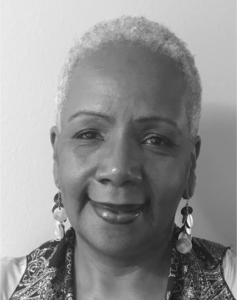 Renell Weathers, Michigan League for Public Policy (MLPP) Community Engagement Consultant. As community engagement consultant, Renell works with organizations throughout the state in connecting the impact of budget and tax policies to their communities. She is motivated by the belief that all children and adults deserve the opportunity to achieve their dreams regardless of race, ethnicity, religion or economic class.
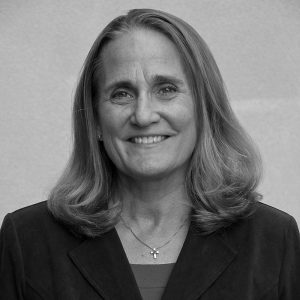


 Emily Jorgensen joined the Michigan League for Public Policy in July 2019. She deeply cares about the well-being of individuals and families and has a great love for Michigan. She is grateful that her position at the League enables her to combine these passions and work to help promote policies that will lead to better opportunities and security for all Michiganders.
 Megan Farnsworth joined the League’s staff in December 2022 as Executive Assistant. Megan is driven by work that is personally fulfilling, and feels honored to help support the work of an organization that pushes for more robust programming and opportunities for the residents of our state. She’s excited and motivated to gain overarching knowledge of the policies and agendas that the League supports.