My favorite superheroes don’t often connect with my work as a health policy analyst. I, along with Marvel fans worldwide, eagerly awaited the release of the third installment of the Deadpool live-action series, Deadpool and Wolverine. Deadpool and Wolverine are my favorite superheroes in the Marvel universe and I knew the movie would be amazing. I refused to watch trailers and attended a midnight showing the Thursday before the release so I wouldn’t see any spoilers.
Deadpool and Wolverine was not only iconic, but reminded me of my work at the Michigan League for Public Policy. The connection happened during a pivotal scene, in which Deadpool (Wade Wilson) admits to Wolverine (Logan/James Howlett) that he made an “educated wish.”
While talking to my colleague, I said that policy work is basically the same as making an educated wish.
We research and use data to make policy recommendations on topics like education, economic security and immigration. We also provide budget analysis, testimony, community engagement, policy briefs and more–all to support our policy goals. The analysis that we use to develop our policy recommendations is the educated part of our wish.
Our work is a “wish” since we cannot guarantee that our policy goals will be funded and implemented into state law. We fight, just like Deadpool and Wolverine did in the film, to make our policy recommendations into reality. Although we are not superhero mutants with special abilities, we still work hard to build equity and opportunity for all Michiganders.
Here at the League, our team has used their analytic abilities to explain our current educated wishes:
Ashya Smith, Health Policy Analyst

As a health policy analyst, my current educated wish is for continuous coverage for children and adults with Medicaid. Michigan should submit a Section 1115 demonstration waiver to provide multi-year continuous Medicaid/CHIP coverage for children ages 0 to 6 and 12-month continuous Medicaid coverage for all adults.
Monique Stanton, President and CEO
 When my grandfather had to enter home hospice care many years ago, I was fortunate to have an employer that allowed me to take paid time away to care for him. He was one of the people I loved most in this world—he stepped up to care for me as a child when I needed him most—and I was able to be there for him at the end, when he needed me most. But my story is unique. As of 2022, 75% of civilian workers did not have access to paid leave in the U.S., and, here in Michigan, 63.3% of Michiganders are ineligible or unable to afford 12 weeks of unpaid leave. My educated wish is for Michigan to implement a statewide paid leave program so that all workers can support their loved ones during life’s most challenging and precious times.
Anne Kuhnen, Kids Count in Michigan Policy Director

My educated wish is for Michigan to become the 16th state with a Child Tax Credit. The 2021 federal Child Tax Credit expansion contributed to a historic drop in child poverty, but legislators allowed it to expire. In light of its proven anti-poverty impact, Michigan’s leaders should take action to adopt a kids credit at the state level.
Julie Cassidy, Senior Policy Analyst
 My educated wish is for the Michigan Legislature to strengthen tenant rights and protections before the end of the year. We’re working with the Michigan Coalition Against Homelessness and the Rent is Too Damn High Coalition to pass a package of bills, known as the Housing Homestretch, to curb housing discrimination, protect families from the harm of eviction, and ensure health, safety, and owner accountability in rental housing. This legislation has made significant progress and, with the right amount of political will, we can get it over the finish line soon!
Mikell Frey, Messaging Specialist
 My educated wish is for Michigan to join the 13 other states that have paid family and medical leave. It’s the right thing to do for working Michiganders, and healthy work environments and economies are dependent on workers that feel supported and are able to take care of their own and their loved ones’ health. The actuarial analysis recently commissioned by the state shows that a state paid leave program is affordable and achievable, and the majority of Michiganders have spoken and they want–and deserve–paid leave.
Laura Ross, Communications Director
 My educated wish is for Michigan to focus on raising revenues to make sure every resident has what they need to live a fulfilling life. That includes safe housing, vibrant neighborhoods, strong schools, healthy foods and access to care. A more equitable tax system can help us build a state where all Michiganders—regardless of their ZIP code, their age, their abilities, their gender or their race and ethnicity—can flourish. All of us share the responsibility of paying taxes to keep the state moving forward, but right now, the highest effective tax rate falls on the lowest income earners. A graduated income tax would mean that Michigan’s wealthiest residents would pay a fairer share of their income in taxes, and a minimum corporate tax would prevent big corporations from using loopholes to get out of paying taxes. We can make this wish a reality—check out Fund MI Future to learn how.
Kelli Bowers, Kids Count Data Analyst
 My educated wish would be to permanently expand universal breakfast and lunch not just in Michigan but at the federal level. The fiscal year 2024-2025 state budget invested $200 million to continue offering public schools the option to provide free breakfast and lunch to all students, and this should be made permanent. If we are wishing here, I would love to see this expanded to reach all U.S. children, federally. Kids should be provided the proper nutrition to be able to focus on learning during their school days. Ensuring adequate nutrition should be a top priority in addressing and preventing a range of physical and behavioral health issues that children face.
Rachel Richards, Fiscal Policy and Government Relations Director
 One of the things that law school taught me was that having competent representation can make a huge difference throughout every level of the legal system for justice-involved individuals. Because of this, I almost went into private practice after becoming licensed as an attorney. After getting introduced to public policy, I quickly discovered the power it had to right wrongs and decrease inequities for all Michiganders. Last year, the state enacted a sweeping package of bills to support young Michiganders connected to the justice system; however, we left one crucial piece behind. My educated wish is for the state to pass House Bill 4630, sponsored by Rep. Sarah Lightner, and to fund the Michigan Indigent Defense Commission, to ensure the constitutional right to competent and quality legal support for children caught up in the justice system, the same as we provide for adults. It makes absolutely no sense that the state provides legal services for adults, but not for our most vulnerable children.
Alexandra Stamm, Education Policy Analyst
 I hemmed and hawed about my educated wish because I didn’t want it to seem too big or out of reach, but it’s a wish after all! My educated wish is that our public schools are provided with the funding necessary to adequately educate all of our students. As a graduate of public schools and a former public school teacher, I have seen the power that our public schools can have. However, it’s also clear that we aren’t doing enough to meet the needs of our students. Like many of my fellow Leaguers, I see the need for increased revenue, specifically for our public schools, so that we can ensure that all of our students receive the education they deserve.
Amber Bellazaire, Senior Policy Analyst
 May I have two? One of my educated wishes is the submission and federal approval of Michigan’s Section 1115 Reentry Services Waiver, which would allow Medicaid to cover health services for eligible incarcerated youth and adults during the 90 days before their release. This would help to improve health outcomes, ease reintegration and reduce recidivism. As of August 2024, 11 states have been approved to provide pre-release health services, and 12 additional states plus D.C. have similar waivers pending review at the Centers for Medicaid and Medicare Services. My second educated wish is continued state investment in programs that support immigrants and foster immigrant-inclusive economic development. Such efforts are essential to addressing Michigan’s population challenges and ensuring future economic growth because they recognize and help to retain the vital contributions of immigrants in Michigan.
Jayme Vosovic, Community Engagement Director
 As a former waitress, my educated wish is to see every server earn the actual minimum wage on top of their tips! Many people don’t realize that while the minimum wage will be $12.50 starting early next year, the actual minimum wage for tipped workers is always 38% of that amount. While high-end restaurant servers may do well with their higher food bills, not every server makes good money on tips. So if you’re stuck with a lunch shift with low traffic and low turnover, you may walk away with very little money. Servers deserve to, at the very least, make the actual minimum that every other worker is guaranteed.
Emily Jorgensen, Communications Coordinator
 The League hosts a Public Policy Forum every year, and this past spring, our keynote speakers were Dr. Mona Hanna-Attisha and Dr. Luke Schafer. They explained how families have the least money at childbirth, as income and earnings go down and expenses rise. Enter the superhero: their program Rx Kids. It’s already making a huge difference in the lives of Flint families, and it’s wonderful to see that the program is set to expand to Kalamazoo next year! My educated wish is for the program to keep growing, and for Michigan to explore other options for guaranteed income. After all, poverty is a policy choice. I wish for policies to eradicate poverty for good.


 Betsy Zobl-Tar
  Jay Cutler joined the League in March 2026 as the Kids Count Senior Data Analyst, where he collects, analyzes, and prepares data for Kids Count in Michigan.
 Danielle Taylor-Basemore joined the League as the Development Data and Stewardship Coordinator in June 2025. She brings with her five years of nonprofit experience with a special focus on community engagement, data visualization and strategic programming. Prior to joining the League, Danielle served as the Business District, Safety, and Digital Manager at Jefferson East, Inc.
 Scott Preston is a Senior Policy Analyst with the Michigan League for Public Policy, where he leads the organization’s immigration and criminal justice reform portfolios. In the three years prior to joining the League, Scott facilitated the Southeast Michigan Refugee Collaborative and managed a small business economic development program at Global Detroit. His work included launching Michigan’s first Refugee Film Festival and building on a trusted connector model that linked marginalized communities with crucial resources. Scott’s work at the League is informed by his background in journalism and research. He spent four years covering the Syrian refugee crisis in the Middle East for publications such as The Economist, and later worked with unaccompanied refugee minors through Samaritas. Scott holds a master’s degree in international migration and public policy from the London School of Economics and Political Science.
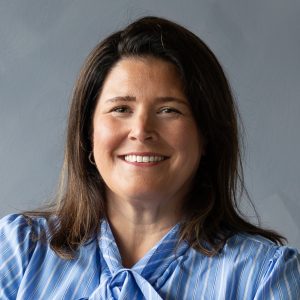 Kate Powers joined the League as the Chief Development Officer in February 2025. Prior to joining the League, Kate held leadership positions at many Michigan nonprofit organizations, most recently serving as the COO and Chief Development Officer of Ele’s Place. Kate has spent the bulk of her career in fundraising, with a short stint in the state Legislature as a legislative aide to members in both chambers. Kate is a graduate of Michigan State University’s James Madison College with a Bachelor of Arts in Social Relations and has a certificate in fundraising management from the Lilly Family School of Philanthropy at Indiana University. Additionally, Kate served on the East Lansing Public Schools Board of Education and is a past President of the Junior League of Lansing. In her free time, she enjoys traveling with her husband and her son and saving outfit of the day and home decor ideas on Pinterest.
  Nicholas Hess joined the League as the Fiscal Policy Analyst in September of 2024. In this role, Nicholas focuses on tax policy, government revenue, and their impact on working families and racial equity, including the effects of the Earned Income Tax Credit (EITC) and Child Tax Credit (CTC). Nicholas values the role that judicious fiscal policy can play in the improvement of people’s lives and the economy, alleviating inequities along the way.
 Audrey Matusz joined the League as the Visual Communications Specialist in September 2024. She supports the team with implementing social media strategies and brainstorming creative ways to talk about public policy. She brings with her nearly a decade of experience in producing digital products for evidence-based social justice initiatives.
  Jacob Kaplan
  Donald Stuckey
  Alexandra Stamm
 Amari Fuller
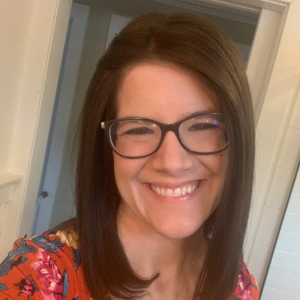 Mikell Frey is a communications professional with a passion for using the art of storytelling to positively impact lives. She strongly believes that positive social change can be inspired by the sharing of data-driven information coupled with the unique perspectives of people from all walks of life across Michigan, especially those who have faced extraordinary barriers.



 Yona Isaacs (she/hers) is an Early Childhood Data Analyst for the Kids Count project. After earning her Bachelor of Science in Biopsychology, Cognition, and Neuroscience at the University of Michigan, she began her career as a research coordinator in pediatric psychiatry using data to understand the impacts of brain activity and genetics on children’s behavior and mental health symptoms. This work prompted an interest in exploring social determinants of health and the role of policy in promoting equitable opportunities for all children, families, and communities. She returned to the University of Michigan to complete her Masters in Social Work focused on Social Policy and Evaluation, during which she interned with the ACLU of Michigan’s policy and legislative team and assisted local nonprofit organizations in creating data and evaluation metrics. She currently serves as a coordinator for the Michigan Center for Youth Justice on a project aiming to increase placement options and enhance cultural competency within the juvenile justice system for LGBTQIA+ youth. Yona is eager to put her data skills to work at the League in support of data-driven policies that advocate for equitable access to healthcare, education, economic security, and opportunity for 0-5 year old children. In her free time, she enjoys tackling DIY house projects and trying new outdoor activities with her dog.
 Rachel Richards rejoined the League in December 2020 as the Fiscal Policy Director working on state budget and tax policies. Prior to returning to the League, she served as the Director of Legislative Affairs for the Michigan Department of Treasury, the tax policy analyst and Legislative Director for the Michigan League for Public Policy, and a policy analyst and the Appropriations Coordinator for the Democratic Caucus of the Michigan House of Representatives. She brings with her over a decade of experience in policies focused on economic opportunity, including workforce issues, tax, and state budget.
 Simon Marshall-Shah joined the Michigan League for Public Policy as a State Policy Fellow in August 2019. His work focuses on state policy as it relates to the budget, immigration, health care and other League policy priorities. Before joining the League, he worked in Washington, D.C. at the Association for Community Affiliated Plans (ACAP), providing federal policy and advocacy support to nonprofit, Medicaid health plans (Safety Net Health Plans) related to the ACA Marketplaces as well as Quality & Operations.

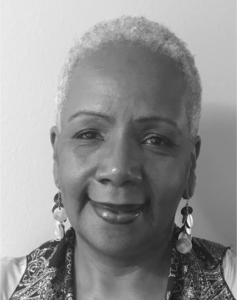 Renell Weathers, Michigan League for Public Policy (MLPP) Community Engagement Consultant. As community engagement consultant, Renell works with organizations throughout the state in connecting the impact of budget and tax policies to their communities. She is motivated by the belief that all children and adults deserve the opportunity to achieve their dreams regardless of race, ethnicity, religion or economic class.


 Emily Jorgensen joined the Michigan League for Public Policy in July 2019. She deeply cares about the well-being of individuals and families and has a great love for Michigan. She is grateful that her position at the League enables her to combine these passions and work to help promote policies that will lead to better opportunities and security for all Michiganders.
 Megan Farnsworth joined the League’s staff in December 2022 as Executive Assistant. Megan is driven by work that is personally fulfilling, and feels honored to help support the work of an organization that pushes for more robust programming and opportunities for the residents of our state. She’s excited and motivated to gain overarching knowledge of the policies and agendas that the League supports.