This post originally appeared in the Alpena News.
Now that the election is over, hopefully we all can put our political differences aside and return our focus to what unites us, not what divides us.
For me and my colleagues at the Michigan League for Public Policy, we’ve got our eyes squarely on the lame-duck legislative session that begins after Thanksgiving and runs through the end of the year. And, in particular, we are making a final push to see the bipartisan Raise the Age legislation passed to start treating Michigan 17-year-old kids as kids in our criminal justice system, instead of as adults. We need to align Michigan with the 46 other states that already do so, and lame duck is our last chance this year.
 “Lame duck” is so named because it is when legislators who are term-limited or have lost their elections make their final mark on Michigan public policy before walking out of the Capitol doors. Lame duck has a bad rap, and most of it has been earned. I worked in the Michigan Senate for nearly a decade, and over the course of five lame-duck sessions, I was literally on the Senate floor for some of the more heated and partisan policy debates our state has ever seen.
But it is also a time when departing lawmakers rise to give farewell speeches, wax nostalgic about their time in office, and think deliberately about the legacy they are leaving.
Raising the age of juvenile jurisdiction from 17 to 18 years old is a golden opportunity for all lawmakers to leave a positive and lasting imprint on Michigan’s kids, families, communities and economy, regardless of their political affiliation.
Why should Michigan raise the age?
For starters,we don’t treat 17-year-olds as adults anywhere else in our state law. They can’t vote, serve in the military, go to casinos or buy lottery tickets. But they can be sentenced to adult prisons–often for stupid things we all did at that age–doing irreparable harm instead of rehabilitating, and ruining these kids’ lives instead of reforming them.
Prosecuting youth as adults is harmful to these children and their rehabilitation, threatening public safety and increasing costs to taxpayers. Youth incarcerated in adult facilities are more likely to be physically attacked and sexually assaulted and more likely to attempt suicide than young people in the juvenile justice system. National research also found that youth exiting the adult system are 34 percent more likely to re-offend, re-offend sooner, and escalate to more violent offenses than their counterparts in the juvenile justice system.
Raising the age will also enable 17-year-olds to access education and age-appropriate services. Juvenile courts offer highly effective diversion and community-based programs not accessible in adult court. Because the majority of 17-year-olds have non-violent charges, they would likely respond well to community-based options that are designed to keep kids in school, address underlying treatment needs, and engage the whole family. In addition, 17-year-olds incarcerated in the adult criminal justice system lose 682 educational hours–around five and a half months’ worth–each year.
The reasons to support raise the age are innumerable and universal. Nearly everyone agrees on this, from the Democrats and Republicans who have cosponsored the bills to judges and law enforcement to former offenders. It’s just the right thing to do.
But perhaps the greatest and most important reason is this: The legislation is primed to move and has already started to progress through the legislative process, and failure to act before the end of the year means the process will have to start all over. Any bills not signed by the governor by the end of each two-year legislative term have to be reintroduced in the next term.
The Raise the Age legislation has bipartisan support, including many bill sponsors from both sides. It has already had two productive hearings earlier this fall in the state House Law and Justice Committee and could be taken up as soon as lawmakers return on Nov. 27. And it will likely have bipartisan support–and pass–on the House and Senate floors if the bills can get there.
A lot can–and will–happen in lame duck. But lawmakers have a real opportunity to make sure some good comes out of it. The Raise the Age legislation already passed the full state House last session, but failed to get out of the Senate.
It’s been delayed once before, and we cannot let the latest progress on Raise the Age be squandered in another lame-duck session –kids’ lives depend on it. The chance to raise the age and do something this good, and this far-reaching, is something Michigan legislators should not miss.
For more information on raise the age and how you can help move these bills, go to raisetheagemi.org/take-action.
Alex Rossman is communications director for the Michigan League for Public Policy.


 Betsy Zobl-Tar
  Jay Cutler joined the League in March 2026 as the Kids Count Senior Data Analyst, where he collects, analyzes, and prepares data for Kids Count in Michigan.
 Danielle Taylor-Basemore joined the League as the Development Data and Stewardship Coordinator in June 2025. She brings with her five years of nonprofit experience with a special focus on community engagement, data visualization and strategic programming. Prior to joining the League, Danielle served as the Business District, Safety, and Digital Manager at Jefferson East, Inc.
 Scott Preston is a Senior Policy Analyst with the Michigan League for Public Policy, where he leads the organization’s immigration and criminal justice reform portfolios. In the three years prior to joining the League, Scott facilitated the Southeast Michigan Refugee Collaborative and managed a small business economic development program at Global Detroit. His work included launching Michigan’s first Refugee Film Festival and building on a trusted connector model that linked marginalized communities with crucial resources. Scott’s work at the League is informed by his background in journalism and research. He spent four years covering the Syrian refugee crisis in the Middle East for publications such as The Economist, and later worked with unaccompanied refugee minors through Samaritas. Scott holds a master’s degree in international migration and public policy from the London School of Economics and Political Science.
 Kate Powers joined the League as the Chief Development Officer in February 2025. Prior to joining the League, Kate held leadership positions at many Michigan nonprofit organizations, most recently serving as the COO and Chief Development Officer of Ele’s Place. Kate has spent the bulk of her career in fundraising, with a short stint in the state Legislature as a legislative aide to members in both chambers. Kate is a graduate of Michigan State University’s James Madison College with a Bachelor of Arts in Social Relations and has a certificate in fundraising management from the Lilly Family School of Philanthropy at Indiana University. Additionally, Kate served on the East Lansing Public Schools Board of Education and is a past President of the Junior League of Lansing. In her free time, she enjoys traveling with her husband and her son and saving outfit of the day and home decor ideas on Pinterest.
  Nicholas Hess joined the League as the Fiscal Policy Analyst in September of 2024. In this role, Nicholas focuses on tax policy, government revenue, and their impact on working families and racial equity, including the effects of the Earned Income Tax Credit (EITC) and Child Tax Credit (CTC). Nicholas values the role that judicious fiscal policy can play in the improvement of people’s lives and the economy, alleviating inequities along the way.
 Audrey Matusz joined the League as the Visual Communications Specialist in September 2024. She supports the team with implementing social media strategies and brainstorming creative ways to talk about public policy. She brings with her nearly a decade of experience in producing digital products for evidence-based social justice initiatives.
  Jacob Kaplan
  Donald Stuckey
  Alexandra Stamm
 Amari Fuller
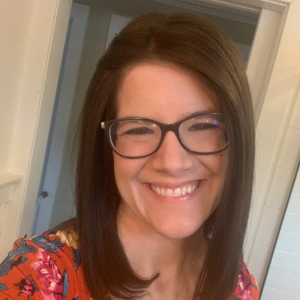 Mikell Frey is a communications professional with a passion for using the art of storytelling to positively impact lives. She strongly believes that positive social change can be inspired by the sharing of data-driven information coupled with the unique perspectives of people from all walks of life across Michigan, especially those who have faced extraordinary barriers.



 Yona Isaacs (she/hers) is an Early Childhood Data Analyst for the Kids Count project. After earning her Bachelor of Science in Biopsychology, Cognition, and Neuroscience at the University of Michigan, she began her career as a research coordinator in pediatric psychiatry using data to understand the impacts of brain activity and genetics on children’s behavior and mental health symptoms. This work prompted an interest in exploring social determinants of health and the role of policy in promoting equitable opportunities for all children, families, and communities. She returned to the University of Michigan to complete her Masters in Social Work focused on Social Policy and Evaluation, during which she interned with the ACLU of Michigan’s policy and legislative team and assisted local nonprofit organizations in creating data and evaluation metrics. She currently serves as a coordinator for the Michigan Center for Youth Justice on a project aiming to increase placement options and enhance cultural competency within the juvenile justice system for LGBTQIA+ youth. Yona is eager to put her data skills to work at the League in support of data-driven policies that advocate for equitable access to healthcare, education, economic security, and opportunity for 0-5 year old children. In her free time, she enjoys tackling DIY house projects and trying new outdoor activities with her dog.
 Rachel Richards rejoined the League in December 2020 as the Fiscal Policy Director working on state budget and tax policies. Prior to returning to the League, she served as the Director of Legislative Affairs for the Michigan Department of Treasury, the tax policy analyst and Legislative Director for the Michigan League for Public Policy, and a policy analyst and the Appropriations Coordinator for the Democratic Caucus of the Michigan House of Representatives. She brings with her over a decade of experience in policies focused on economic opportunity, including workforce issues, tax, and state budget.
 Simon Marshall-Shah joined the Michigan League for Public Policy as a State Policy Fellow in August 2019. His work focuses on state policy as it relates to the budget, immigration, health care and other League policy priorities. Before joining the League, he worked in Washington, D.C. at the Association for Community Affiliated Plans (ACAP), providing federal policy and advocacy support to nonprofit, Medicaid health plans (Safety Net Health Plans) related to the ACA Marketplaces as well as Quality & Operations.


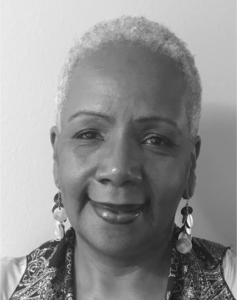 Renell Weathers, Michigan League for Public Policy (MLPP) Community Engagement Consultant. As community engagement consultant, Renell works with organizations throughout the state in connecting the impact of budget and tax policies to their communities. She is motivated by the belief that all children and adults deserve the opportunity to achieve their dreams regardless of race, ethnicity, religion or economic class.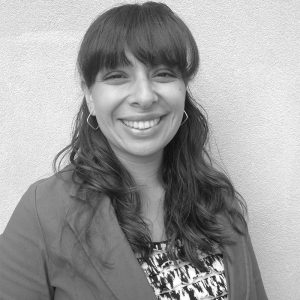
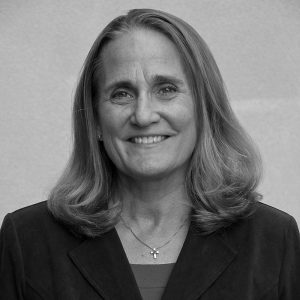


 Emily Jorgensen joined the Michigan League for Public Policy in July 2019. She deeply cares about the well-being of individuals and families and has a great love for Michigan. She is grateful that her position at the League enables her to combine these passions and work to help promote policies that will lead to better opportunities and security for all Michiganders.
 Megan Farnsworth joined the League’s staff in December 2022 as Executive Assistant. Megan is driven by work that is personally fulfilling, and feels honored to help support the work of an organization that pushes for more robust programming and opportunities for the residents of our state. She’s excited and motivated to gain overarching knowledge of the policies and agendas that the League supports.