
A version of this column originally appeared in Michigan Advance.
America’s immigration system is dysfunctional and, in the words of one federal judge, second only to the tax code in its complexity. For decades, presidential administrations and members of bipartisan congresses have failed to reform our outdated immigration system, despite clear, workable reforms. The result is disrupted family and community stability, constrained economic growth, and diminished public trust in the government’s ability to administer immigration law fairly and effectively. It doesn’t have to be this way.
But current White House policies reinforce these challenges, restricting lawful channels and weakening the institutions that sustain them while fixating on enforcement and removal. And the evidence shows that the plan will backfire, increasing the undocumented population and rendering enforcement less effective.
The most effective immigration systems pair interior enforcement and border security with sufficient legal pathways. Frameworks that rely on a “deterrence-only” approach attempt to suppress migration while ignoring the country’s economic and humanitarian needs and values. This funnels people into unsafe, unvetted, and informal entry and increases the number of alleged immigration violations the state must investigate, adjudicate and pay for.
Legal pathways, representing about three-quarters of long-term immigration to the United States, were already severely constrained before the current presidential term. But the country admits far fewer permanent immigrants per capita than many peer nations. Canada, for example, grants permanent residence at roughly three times the U.S. rate. Available pathways are hobbled by insufficient administrative capacity, restrictive numerical limits, and an extraordinarily convoluted legal code.
Family-based immigration accounts for 63% of permanent legal immigration to the United States and is by far the most common legal route. Applicants still wait decades for their cases to move forward. For siblings of U.S. citizens originating from Mexico, the government is now reviewing green card applications going back to 2001; a 25-year wait.
Employment-based immigration is also expensive, slow and unpredictable. Securing permanent residence through employment takes an average of nearly three and a half years and imposes substantial costs on both workers and the private sector, weakening the country’s global competitiveness. A system that cannot adjudicate cases on a reasonable timeline cannot function as either a credible deterrent or a viable pathway. Instead, it produces a significant population in prolonged limbo.
Current federal policy has deepened these longstanding failures by further restricting lawful immigration for those seeking to come to the United States “the right way.” After accounting for the decline in immigration that began under the Biden administration, this White House has actually done more to reduce legal immigration than unauthorized immigration.
Among the most sweeping of these restrictions are the indefinite travel ban imposed on 39 countries and a visa freeze for 75 countries. Additionally, companies must now pay a $100,000 fee for foreign talent, pricing out universities, start-ups, and other important economic contributors. The administration has also worked to shut down legal humanitarian immigration, imperiling some of the world’s most vulnerable populations.
Refugees and asylees, who account for only 16% of U.S. immigration, were also restricted. On day one, refugee admissions, among the most deeply vetted immigrant populations, were suspended for all but white South African populations. A new system of fees prevents people with legitimate asylum claims from seeking protection in the U.S. Additionally, the administration tried to terminate a lifeline for about one million individuals in the United States known as Temporary Protected Status. These include Syrian TPS holders, of which nearly 30% reside in Michigan.
Together with other fundamental changes, such as forced deportation to third countries (including Venezuelans that were sent to a torture facility in El Salvador), the current administration appears to be pursuing a policy of deterrence for both unauthorized and legal immigrants.
The record of enforcement-only deterrence policies is costly and inconsistent. Enforcement-only strategies have repeatedly failed to eliminate demand for migration at the national level. They may redirect migration toward different routes, encourage repeated entry attempts, or force temporary and seasonal migration into permanent unauthorized settlement.
Most Americans support legal pathways for immigration and the majority support allowing undocumented immigrants to obtain citizenship if they meet a set of requirements. Federal policy now is both extreme and self-defeating. Dismantling lawful channels while leaving the forces that drive migration in place may increase unauthorized immigration, add pressure to immigration courts and federal agencies, separate families, and constrain economic growth.
An effective system should make accessible, reliable legal pathways the foundation of immigration policy rather than treating them as a limited exception to an enforcement-driven approach.


 Maisha Massey is a Detroit native, educator, researcher and advocate committed to creating more equitable experiences for young people and the communities that support them. She currently teaches 11th-grade English Language Arts in Detroit Public Schools Community District and serves as a TeachMichigan Michigan Education Policy Fellow. Maisha holds a master’s degree in Educational Leadership and is currently pursuing her Ed.D. in Educational Leadership and Policy Studies at Wayne State University, where her research centers the experiences of Black girls in schools. Her work is grounded in the belief that meaningful policy should be informed by the voices and lived experiences of the students, educators and communities most impacted by it.
 Betsy Zobl-Tar
 Jay Cutler joined the League in March 2026 as the Kids Count Senior Data Analyst, where he collects, analyzes, and prepares data for Kids Count in Michigan.
 Danielle Taylor-Basemore joined the League as the Development Data and Stewardship Coordinator in June 2025. She brings with her five years of nonprofit experience with a special focus on community engagement, data visualization and strategic programming. Prior to joining the League, Danielle served as the Business District, Safety, and Digital Manager at Jefferson East, Inc.
 Scott Preston is a Senior Policy Analyst with the Michigan League for Public Policy, where he leads the organization’s immigration and criminal justice reform portfolios. In the three years prior to joining the League, Scott facilitated the Southeast Michigan Refugee Collaborative and managed a small business economic development program at Global Detroit. His work included launching Michigan’s first Refugee Film Festival and building on a trusted connector model that linked marginalized communities with crucial resources. Scott’s work at the League is informed by his background in journalism and research. He spent four years covering the Syrian refugee crisis in the Middle East for publications such as The Economist, and later worked with unaccompanied refugee minors through Samaritas. Scott holds a master’s degree in international migration and public policy from the London School of Economics and Political Science.
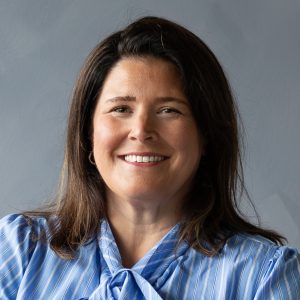 Kate Powers joined the League as the Chief Development Officer in February 2025. Prior to joining the League, Kate held leadership positions at many Michigan nonprofit organizations, most recently serving as the COO and Chief Development Officer of Ele’s Place. Kate has spent the bulk of her career in fundraising, with a short stint in the state Legislature as a legislative aide to members in both chambers. Kate is a graduate of Michigan State University’s James Madison College with a Bachelor of Arts in Social Relations and has a certificate in fundraising management from the Lilly Family School of Philanthropy at Indiana University. Additionally, Kate served on the East Lansing Public Schools Board of Education and is a past President of the Junior League of Lansing. In her free time, she enjoys traveling with her husband and her son and saving outfit of the day and home decor ideas on Pinterest.
 Nicholas Hess joined the League as the Fiscal Policy Analyst in September of 2024. In this role, Nicholas focuses on tax policy, government revenue, and their impact on working families and racial equity, including the effects of the Earned Income Tax Credit (EITC) and Child Tax Credit (CTC). Nicholas values the role that judicious fiscal policy can play in the improvement of people’s lives and the economy, alleviating inequities along the way.
 Audrey Matusz joined the League as the Visual Communications Specialist in September 2024. She supports the team with implementing social media strategies and brainstorming creative ways to talk about public policy. She brings with her nearly a decade of experience in producing digital products for evidence-based social justice initiatives.
 Jacob Kaplan
 Donald Stuckey
 Alexandra Stamm

 Amari Fuller
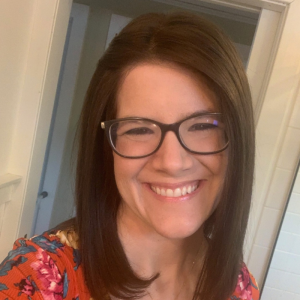 Mikell Frey is a communications professional with a passion for using the art of storytelling to positively impact lives. She strongly believes that positive social change can be inspired by the sharing of data-driven information coupled with the unique perspectives of people from all walks of life across Michigan, especially those who have faced extraordinary barriers.




 Yona Isaacs (she/hers) is an Early Childhood Data Analyst for the Kids Count project. After earning her Bachelor of Science in Biopsychology, Cognition, and Neuroscience at the University of Michigan, she began her career as a research coordinator in pediatric psychiatry using data to understand the impacts of brain activity and genetics on children’s behavior and mental health symptoms. This work prompted an interest in exploring social determinants of health and the role of policy in promoting equitable opportunities for all children, families, and communities. She returned to the University of Michigan to complete her Masters in Social Work focused on Social Policy and Evaluation, during which she interned with the ACLU of Michigan’s policy and legislative team and assisted local nonprofit organizations in creating data and evaluation metrics. She currently serves as a coordinator for the Michigan Center for Youth Justice on a project aiming to increase placement options and enhance cultural competency within the juvenile justice system for LGBTQIA+ youth. Yona is eager to put her data skills to work at the League in support of data-driven policies that advocate for equitable access to healthcare, education, economic security, and opportunity for 0-5 year old children. In her free time, she enjoys tackling DIY house projects and trying new outdoor activities with her dog.
 Rachel Richards rejoined the League in December 2020 as the Fiscal Policy Director working on state budget and tax policies. Prior to returning to the League, she served as the Director of Legislative Affairs for the Michigan Department of Treasury, the tax policy analyst and Legislative Director for the Michigan League for Public Policy, and a policy analyst and the Appropriations Coordinator for the Democratic Caucus of the Michigan House of Representatives. She brings with her over a decade of experience in policies focused on economic opportunity, including workforce issues, tax, and state budget.
 Simon Marshall-Shah joined the Michigan League for Public Policy as a State Policy Fellow in August 2019. His work focuses on state policy as it relates to the budget, immigration, health care and other League policy priorities. Before joining the League, he worked in Washington, D.C. at the Association for Community Affiliated Plans (ACAP), providing federal policy and advocacy support to nonprofit, Medicaid health plans (Safety Net Health Plans) related to the ACA Marketplaces as well as Quality & Operations.


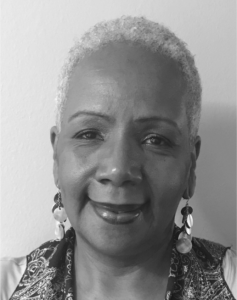 Renell Weathers, Michigan League for Public Policy (MLPP) Community Engagement Consultant. As community engagement consultant, Renell works with organizations throughout the state in connecting the impact of budget and tax policies to their communities. She is motivated by the belief that all children and adults deserve the opportunity to achieve their dreams regardless of race, ethnicity, religion or economic class.

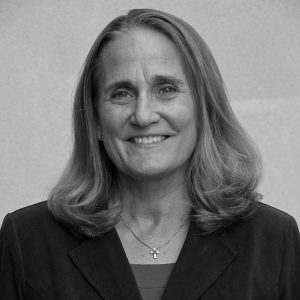


 Emily Jorgensen joined the Michigan League for Public Policy in July 2019. She deeply cares about the well-being of individuals and families and has a great love for Michigan. She is grateful that her position at the League enables her to combine these passions and work to help promote policies that will lead to better opportunities and security for all Michiganders.

 Megan Farnsworth joined the League’s staff in December 2022 as Executive Assistant. Megan is driven by work that is personally fulfilling, and feels honored to help support the work of an organization that pushes for more robust programming and opportunities for the residents of our state. She’s excited and motivated to gain overarching knowledge of the policies and agendas that the League supports.