
A version of this column originally appeared in The Alpena News.
For over 60 years, Head Start has provided comprehensive education and health services for families struggling to make ends meet. Right here in Michigan, Head Start serves 27,000 children growing up in households with low incomes while also helping their parents pursue educational and employment opportunities.
Despite Head Start’s proven success in boosting educational attainment and fighting intergenerational poverty, the U.S. Department of Health and Human Services is proposing rule changes that will undermine the program’s core components, ultimately reducing access to children and families who would benefit most. The proposed rule changes would be especially disruptive for families in rural areas.
The Northeast Michigan Community Service Agency (NEMCSA) serves over 2,000 families through Head Start programs in 22 counties across the northeast lower peninsula. For Tricia Grifka, Early Childhood Services Coordinator for NEMCSA, “Weakening the standards hurts our community’s most vulnerable children and puts them at a disadvantage academically, socially and physically.”
Part of what sets Head Start apart from other preschool programs is its whole-family approach to services. NEMCSA, like all Head Start programs, works with the entire family to make sure needs are met. From goal-setting to service referrals, no other federal program is so comprehensive.
One area where the proposed rule seeks to weaken standards is in access and referrals to health services, including mental health, dental care, and developmental screenings. In 2025, Head Start programs in Michigan ensured over 23,000 children had a dental home where they could access oral health preventative care and treatment.
Many rural counties in Michigan have a shortage of dental health providers, but Head Start programs track children’s access to oral health care and make referrals when needed. Robyn Hart, Family Services Coordinator with NEMCSA, worries the rule change could reduce access to care, with negative long-term effects. “A child experiencing dental pain can’t learn.”
And Robyn understands the needs of Head Start families; she herself was first connected to Head Start as a parent of four children, all of whom participated in the program. Her role as a parent leader deepened her passion for the work and inspired her to join NEMCSA as a member of staff after completing her degree. She has now been with the organization for 35 years, helping families address their immediate needs while empowering them to set goals for their futures.
The proposed rules also significantly weaken standards for early care and education services. Head Start is often celebrated as the gold standard for the quality of its early education programs, but the proposed rules would remove regulations governing staffing ratios, group sizes and teacher credentials. If reduced standards cause program quality to deteriorate, families in rural counties will have few alternatives as child care deserts are often prevalent, meaning three or more children are competing for each licensed childcare slot.
NEMCSA’s Policy Council, a committee of parents and community members who help lead and make decisions about the program’s activities based on local needs, has also been reviewing the proposed changes with concern. The proposals to require all instruction to be in English and remove additional services for children with disabilities stood out to the council as deeply unfair.
Statewide, Head Start provides services to over 3,600 dual-language learners. Across NEMCSA’s service area, 23% of enrolled children have Individualized Education Plans (IEPs), which provide access to specialized services, allowing them to fully participate in all aspects of the Head Start program. If the proposed changes are adopted, developmentally appropriate education for these children and crucial services for their families will be woefully inadequate.
In rural communities, Head Start’s flexibility to tailor services that address community-specific needs is especially important. In NEMCSA’s service area, lack of transportation is often a major barrier to accessing programs. Robyn, who oversees home visits, quantified the challenge: “Just a one-way trip to visit a family can be 30 miles, so 60 miles round-trip.”
If adopted, the department’s analysis estimates savings of up to $2.2 billion a year, but these savings come from weakening standards and eliminating essential services. The proposed rule would cut program costs by having fewer teachers, shorter program days, fewer home visits and reduced health supports. The long-term consequences to children, families and communities are not factored into the cost estimates.
The proposed rule changes are still under consideration and open to public comment through October 6. The department will review and respond to comments before issuing a final rule.


 Maisha Massey is a Detroit native, educator, researcher and advocate committed to creating more equitable experiences for young people and the communities that support them. She currently teaches 11th-grade English Language Arts in Detroit Public Schools Community District and serves as a TeachMichigan Michigan Education Policy Fellow. Maisha holds a master’s degree in Educational Leadership and is currently pursuing her Ed.D. in Educational Leadership and Policy Studies at Wayne State University, where her research centers the experiences of Black girls in schools. Her work is grounded in the belief that meaningful policy should be informed by the voices and lived experiences of the students, educators and communities most impacted by it.
 Betsy Zobl-Tar
 Jay Cutler joined the League in March 2026 as the Kids Count Senior Data Analyst, where he collects, analyzes, and prepares data for Kids Count in Michigan.
 Danielle Taylor-Basemore joined the League as the Development Data and Stewardship Coordinator in June 2025. She brings with her five years of nonprofit experience with a special focus on community engagement, data visualization and strategic programming. Prior to joining the League, Danielle served as the Business District, Safety, and Digital Manager at Jefferson East, Inc.
 Scott Preston is a Senior Policy Analyst with the Michigan League for Public Policy, where he leads the organization’s immigration and criminal justice reform portfolios. In the three years prior to joining the League, Scott facilitated the Southeast Michigan Refugee Collaborative and managed a small business economic development program at Global Detroit. His work included launching Michigan’s first Refugee Film Festival and building on a trusted connector model that linked marginalized communities with crucial resources. Scott’s work at the League is informed by his background in journalism and research. He spent four years covering the Syrian refugee crisis in the Middle East for publications such as The Economist, and later worked with unaccompanied refugee minors through Samaritas. Scott holds a master’s degree in international migration and public policy from the London School of Economics and Political Science.
 Kate Powers joined the League as the Chief Development Officer in February 2025. Prior to joining the League, Kate held leadership positions at many Michigan nonprofit organizations, most recently serving as the COO and Chief Development Officer of Ele’s Place. Kate has spent the bulk of her career in fundraising, with a short stint in the state Legislature as a legislative aide to members in both chambers. Kate is a graduate of Michigan State University’s James Madison College with a Bachelor of Arts in Social Relations and has a certificate in fundraising management from the Lilly Family School of Philanthropy at Indiana University. Additionally, Kate served on the East Lansing Public Schools Board of Education and is a past President of the Junior League of Lansing. In her free time, she enjoys traveling with her husband and her son and saving outfit of the day and home decor ideas on Pinterest.
 Nicholas Hess joined the League as the Fiscal Policy Analyst in September of 2024. In this role, Nicholas focuses on tax policy, government revenue, and their impact on working families and racial equity, including the effects of the Earned Income Tax Credit (EITC) and Child Tax Credit (CTC). Nicholas values the role that judicious fiscal policy can play in the improvement of people’s lives and the economy, alleviating inequities along the way.
 Audrey Matusz joined the League as the Visual Communications Specialist in September 2024. She supports the team with implementing social media strategies and brainstorming creative ways to talk about public policy. She brings with her nearly a decade of experience in producing digital products for evidence-based social justice initiatives.
 Jacob Kaplan
 Donald Stuckey
 Alexandra Stamm

 Amari Fuller
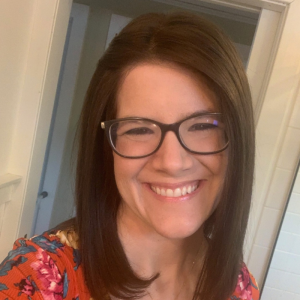 Mikell Frey is a communications professional with a passion for using the art of storytelling to positively impact lives. She strongly believes that positive social change can be inspired by the sharing of data-driven information coupled with the unique perspectives of people from all walks of life across Michigan, especially those who have faced extraordinary barriers.

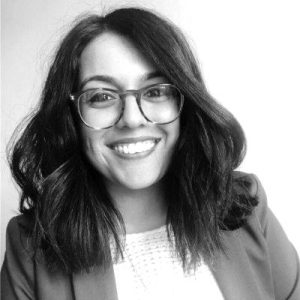


 Yona Isaacs (she/hers) is an Early Childhood Data Analyst for the Kids Count project. After earning her Bachelor of Science in Biopsychology, Cognition, and Neuroscience at the University of Michigan, she began her career as a research coordinator in pediatric psychiatry using data to understand the impacts of brain activity and genetics on children’s behavior and mental health symptoms. This work prompted an interest in exploring social determinants of health and the role of policy in promoting equitable opportunities for all children, families, and communities. She returned to the University of Michigan to complete her Masters in Social Work focused on Social Policy and Evaluation, during which she interned with the ACLU of Michigan’s policy and legislative team and assisted local nonprofit organizations in creating data and evaluation metrics. She currently serves as a coordinator for the Michigan Center for Youth Justice on a project aiming to increase placement options and enhance cultural competency within the juvenile justice system for LGBTQIA+ youth. Yona is eager to put her data skills to work at the League in support of data-driven policies that advocate for equitable access to healthcare, education, economic security, and opportunity for 0-5 year old children. In her free time, she enjoys tackling DIY house projects and trying new outdoor activities with her dog.
 Rachel Richards rejoined the League in December 2020 as the Fiscal Policy Director working on state budget and tax policies. Prior to returning to the League, she served as the Director of Legislative Affairs for the Michigan Department of Treasury, the tax policy analyst and Legislative Director for the Michigan League for Public Policy, and a policy analyst and the Appropriations Coordinator for the Democratic Caucus of the Michigan House of Representatives. She brings with her over a decade of experience in policies focused on economic opportunity, including workforce issues, tax, and state budget.
 Simon Marshall-Shah joined the Michigan League for Public Policy as a State Policy Fellow in August 2019. His work focuses on state policy as it relates to the budget, immigration, health care and other League policy priorities. Before joining the League, he worked in Washington, D.C. at the Association for Community Affiliated Plans (ACAP), providing federal policy and advocacy support to nonprofit, Medicaid health plans (Safety Net Health Plans) related to the ACA Marketplaces as well as Quality & Operations.


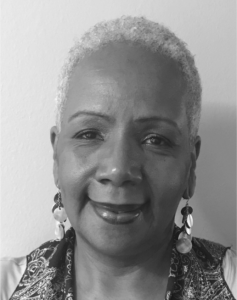 Renell Weathers, Michigan League for Public Policy (MLPP) Community Engagement Consultant. As community engagement consultant, Renell works with organizations throughout the state in connecting the impact of budget and tax policies to their communities. She is motivated by the belief that all children and adults deserve the opportunity to achieve their dreams regardless of race, ethnicity, religion or economic class.

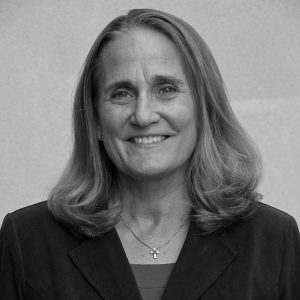


 Emily Jorgensen joined the Michigan League for Public Policy in July 2019. She deeply cares about the well-being of individuals and families and has a great love for Michigan. She is grateful that her position at the League enables her to combine these passions and work to help promote policies that will lead to better opportunities and security for all Michiganders.

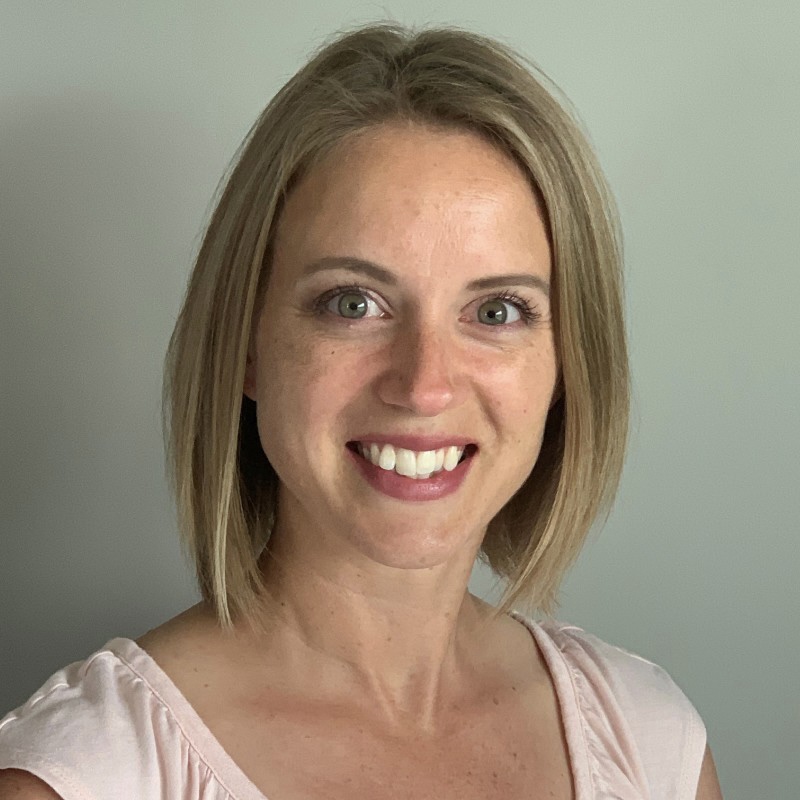 Megan Farnsworth joined the League’s staff in December 2022 as Executive Assistant. Megan is driven by work that is personally fulfilling, and feels honored to help support the work of an organization that pushes for more robust programming and opportunities for the residents of our state. She’s excited and motivated to gain overarching knowledge of the policies and agendas that the League supports.