
THE LOST WORKERS
In July 2017, Michigan’s monthly unemployment rate dropped to 3.7%. This was the lowest jobless rate since 2000, the state’s best economic year in several decades according to most measures. While falling unemployment is certainly something to celebrate, using the unemployment rate alone to gauge Michigan’s economic recovery ignores important long-term trends in Michigan’s employment situation.
The unemployment rate is defined as the percent of the civilian labor force that is unemployed. Two other measures, when added to the unemployment rate, tell a more comprehensive story of the attrition of workers from Michigan’s job market: the labor force participation rate, which measures the percent of the civilian population 16 years old and over that is in the labor force (that is, working or looking for work), and the employment-population ratio, which measures the percent of the population that is actually employed (and will directly reflect the relationship between the unemployment rate and the labor force participation rate).
 Workers drop out of a state’s labor force in several ways: physically leaving the state, death, institutionalization (i.e., incarceration), or stopping both work and the search for work (i.e., retirement, disability, staying home with children, etc.). Michigan’s labor force, after nearly two decades of steadily climbing, reached its numerical peak of 5.16 million in 2000. During the severe economic downturn in the decade that followed, that number fell to as low as 4.7 million in 2011-12 and has risen slightly in the years since then. The size of Michigan’s labor force is now where it was in the mid-1990s, but well below its peak in 2000. In 2016, Michigan had a net loss of 326,000 workers since 2000 (Figure 1).
 While changes in the actual size of the labor force tell a modest story, far more illuminating is Michigan’s labor force participation rate, which for several years has been at a historic low. As seen in Figure 2, even during the severe recession during the early 1980s when the state’s unemployment rate reached as high as 15%, the labor force participation rate remained steady at around 64% before gradually rising to a peak of nearly 69% in 2000. With the economic downturn of the 2000s, the rate fell to a low of 60% in 2011 and 2000. At 61.4% in 2016, it has not significantly moved since then despite the improving unemployment rate.
In the same way, while Michigan’s 2016 employment-population ratio shows clear improvement since 2011 concurrent with falling unemployment, it is below where it was during the economically difficult years of the early and mid-2000s and the 20 years prior. The unemployment rate tells us the short-term story that more people who are looking for work are finding it. It masks the longer-term story that a smaller share of people in the state are working or looking for work.
 Using Michigan’s peak employment year of 2000 as a baseline, we can measure the number of net “lost” workers against the number of currently unemployed workers in a given year. As mentioned earlier, Michigan in 2016 had 326,000 fewer workers in its labor force than in 2000, and these lost workers outnumbered the 238,000 unemployed workers that year. Between 2009 and 2011, a jaw-dropping 219,000 workers dropped out of Michigan’s labor force, and the number of lost workers has exceeded the number of currently unemployed workers in each year since then (Figure 3).

In Michigan’s three largest counties, which comprise roughly one-third of the total state population, the net number of workers lost from the labor force since 2000 is considerably higher than the number of currently unemployed workers (Figure 4). And in the sparsely-populated Upper Peninsula, the workforce continues to shrink while the number of lost workers continues to rise (Figure 5).
For a table of the unemployed and lost workers in each county in Michigan, please see the appendix.
MICHIGAN’S GRAYING LABOR FORCE
Not only has Michigan’s labor force shrunk over time, its composition has begun to shift toward older workers. From 1979 (the earliest year data on worker ages is available) to 1982, the share of Michigan’s labor force that was 55 years of age or older was between 12% and 13.2%, leveling out at 10-12% from 1983 to 2000. Following 2000, however, this age group began comprising a steadily larger share of the workforce, and in 2016 their share (22.2%) nearly doubled that in 2000, while the portion in prime working age decreased from 70.4% to 62.3%. Younger workers, those from age 16-24, comprised a moderately smaller share of the workforce in 2016 (15.4%) than in 2000 (17.9%) but considerably smaller than in 1979, when they accounted for more than a quarter of the workforce (Figure 6).
 To understand Michigan’s shrinking labor force and the shift in its composition, it is helpful to look at the labor force participation rate of each of the three age groups. In recent years, a larger percentage of Michigan residents 55 years and older are participating in the workforce than before. In 1995, participation by this age group was at its ebb (26%), but has risen fairly steadily since then and by 2016, nearly 37% of residents 55 and older were in the workforce either employed or looking for work (Figure 7). The lack of a “big dip” in the participation rate of older workers suggests that the decline in the labor force was not driven significantly by unemployed workers choosing to retire early.
 The higher labor force participation rate for workers 55 years old and over is likely driven by a number of reasons. According to one study, factors include: rule changes in Social Security and pensions that incentivize later retirement, improved longevity, higher levels of education, less physically demanding jobs and the decline of retiree health insurance.1
YOUNGER MICHIGAN RESIDENTS ARE NOT JOINING THE WORKFORCE AS BEFORE
A moderately smaller percentage of prime working-age residents are in the workforce compared to 2000, but the most significant change in labor force participation is with younger workers. In keeping with the pattern of the previous 20 years, 72% of residents aged 16-24 were either working or looking for work in 2000, but that percentage took a sharp and steady plunge over the following decade. By 2011, only a bit more than half of all 16-24-year-olds in Michigan were in the workforce. The percentage has gone up in fits and starts since then, but at 63% remains significantly lower than in any year prior to 2006.
It is quite telling to compare the younger workforce during the Great Recession of the late 2000s with that during previous recessions, particularly the deep recession of the early 1980s. While the employment-population ratio for young people in 1982 plunged to just under 51% and took several years to rebound, the labor force participation rate dipped only slightly (as reflected in the high unemployment rate during those years). The same was true in the milder recession of the early 1990s.
 In the years following 2000, the labor force participation rate for young workers began a startlingly different pattern from previous economic downturns. Not only did the employment-population ratio for young people go down steadily to record lows over the next decade, but so did the labor force participation rate, which fell from 72% in 2000 to 55% in 2011. That year saw a record low of only 45% of Michigan residents age 16-24 employed, and fewer than half employed during the six years from 2008 to 2013, yet the recorded unemployment rate for those years was considerably lower than in the early 1980s (16-19% compared to 21-26%) due to the very low workforce participation (Figure 8).
Michigan is not unique; the declining participation rate mirrors the trend for younger workers nationally. The Bureau of Labor Statistics reports that the age group with the largest decrease in labor force participation since 2000 is teenagers age 16-19, with white teenagers being the racial group with the largest decrease and Black teenagers with the smallest. Among teenagers, the most often cited reason for not working was school attendance. However, while teenagers not enrolled in school are generally more likely to participate in the labor force than those enrolled in school, the labor force participation rate of out-of-school teenagers also fell. The participation rate for adults age 20-24 has also fallen nationally since 2000, but less steeply than that of teenagers.2
For the portion of younger residents who are deferring entering the workforce due to enrolling in postsecondary education, it can be assumed that their foregone wages from not working now will be more than offset by higher wages after completing their education. Younger people not working, looking for work or going to school, on the other hand, are gaining neither educational credentials nor work experience that could help them in the job market. The cause for this lower labor participation rate among young people not in school is not clearly established, but according to the Bureau of Labor Statistics, could include a lack of desire to enter the workforce due to stagnant wages and to competition from low-skilled workers in other age groups.
POLICY SOLUTIONS FOR WORKERS OF ALL AGES
A significant factor, but not the only factor, in the shrinking of Michigan’s labor force is the lower likelihood of residents age 16-24 to participate in it, particularly those under 20. Although a higher portion of older individuals are remaining in the workforce, as they retire there are fewer younger workers to replace them.
The participation rate of younger workers remains low, but it is slowly rebounding. While there may not be easily identifiable policy strategies to encourage more young workers to enter the workforce, Michigan can undertake the following actions to help both younger individuals who are not yet in the workforce and older individuals who are choosing to stay employed at a later age:
- Make college education less expensive by lowering tuition and increasing financial aid, which will help cut down on student debt;
- Encourage universities to offer more academically relevant work-study for students with low incomes so that they may gain meaningful work experience;
- Make postsecondary training for “middle skills credentials” (a short-term or two-year credential such as a license, certificate or associate degree) more accessible to young people, especially those who live in areas with high unemployment and poverty and few available jobs;
- Provide support services to young single mothers that encourage them to participate in postsecondary education or training and facilitate their completion and success; and
- Retain Medicaid expansion in order to help provide healthcare for older workers earning lower wages.
ENDNOTES
- Munnel, A.H., The Average Retirement Age—An Update, Center for Retirement Research at Boston College, March 2015. (http://crr.bc.edu/wp-content/uploads/2015/03/IB_15-4_508_rev.pdf, accessed on August 7, 2017)
- U.S. Department of Labor Bureau of Labor Statistics, Labor Force Participation: What Has Happened Since the Peak?, Monthly Review, September 2016. (https://www.bls.gov/opub/mlr/2016/article/labor-force-participation-what-has-happened-since-the-peak.htm, accessed on August 7, 2017.)


 Betsy Zobl-Tar
  Jay Cutler joined the League in March 2026 as the Kids Count Senior Data Analyst, where he collects, analyzes, and prepares data for Kids Count in Michigan.
 Danielle Taylor-Basemore joined the League as the Development Data and Stewardship Coordinator in June 2025. She brings with her five years of nonprofit experience with a special focus on community engagement, data visualization and strategic programming. Prior to joining the League, Danielle served as the Business District, Safety, and Digital Manager at Jefferson East, Inc.
 Scott Preston is a Senior Policy Analyst with the Michigan League for Public Policy, where he leads the organization’s immigration and criminal justice reform portfolios. In the three years prior to joining the League, Scott facilitated the Southeast Michigan Refugee Collaborative and managed a small business economic development program at Global Detroit. His work included launching Michigan’s first Refugee Film Festival and building on a trusted connector model that linked marginalized communities with crucial resources. Scott’s work at the League is informed by his background in journalism and research. He spent four years covering the Syrian refugee crisis in the Middle East for publications such as The Economist, and later worked with unaccompanied refugee minors through Samaritas. Scott holds a master’s degree in international migration and public policy from the London School of Economics and Political Science.
 Kate Powers joined the League as the Chief Development Officer in February 2025. Prior to joining the League, Kate held leadership positions at many Michigan nonprofit organizations, most recently serving as the COO and Chief Development Officer of Ele’s Place. Kate has spent the bulk of her career in fundraising, with a short stint in the state Legislature as a legislative aide to members in both chambers. Kate is a graduate of Michigan State University’s James Madison College with a Bachelor of Arts in Social Relations and has a certificate in fundraising management from the Lilly Family School of Philanthropy at Indiana University. Additionally, Kate served on the East Lansing Public Schools Board of Education and is a past President of the Junior League of Lansing. In her free time, she enjoys traveling with her husband and her son and saving outfit of the day and home decor ideas on Pinterest.
  Nicholas Hess joined the League as the Fiscal Policy Analyst in September of 2024. In this role, Nicholas focuses on tax policy, government revenue, and their impact on working families and racial equity, including the effects of the Earned Income Tax Credit (EITC) and Child Tax Credit (CTC). Nicholas values the role that judicious fiscal policy can play in the improvement of people’s lives and the economy, alleviating inequities along the way.
 Audrey Matusz joined the League as the Visual Communications Specialist in September 2024. She supports the team with implementing social media strategies and brainstorming creative ways to talk about public policy. She brings with her nearly a decade of experience in producing digital products for evidence-based social justice initiatives.
  Jacob Kaplan
  Donald Stuckey
  Alexandra Stamm
 Amari Fuller
 Mikell Frey is a communications professional with a passion for using the art of storytelling to positively impact lives. She strongly believes that positive social change can be inspired by the sharing of data-driven information coupled with the unique perspectives of people from all walks of life across Michigan, especially those who have faced extraordinary barriers.



 Yona Isaacs (she/hers) is an Early Childhood Data Analyst for the Kids Count project. After earning her Bachelor of Science in Biopsychology, Cognition, and Neuroscience at the University of Michigan, she began her career as a research coordinator in pediatric psychiatry using data to understand the impacts of brain activity and genetics on children’s behavior and mental health symptoms. This work prompted an interest in exploring social determinants of health and the role of policy in promoting equitable opportunities for all children, families, and communities. She returned to the University of Michigan to complete her Masters in Social Work focused on Social Policy and Evaluation, during which she interned with the ACLU of Michigan’s policy and legislative team and assisted local nonprofit organizations in creating data and evaluation metrics. She currently serves as a coordinator for the Michigan Center for Youth Justice on a project aiming to increase placement options and enhance cultural competency within the juvenile justice system for LGBTQIA+ youth. Yona is eager to put her data skills to work at the League in support of data-driven policies that advocate for equitable access to healthcare, education, economic security, and opportunity for 0-5 year old children. In her free time, she enjoys tackling DIY house projects and trying new outdoor activities with her dog.
 Rachel Richards rejoined the League in December 2020 as the Fiscal Policy Director working on state budget and tax policies. Prior to returning to the League, she served as the Director of Legislative Affairs for the Michigan Department of Treasury, the tax policy analyst and Legislative Director for the Michigan League for Public Policy, and a policy analyst and the Appropriations Coordinator for the Democratic Caucus of the Michigan House of Representatives. She brings with her over a decade of experience in policies focused on economic opportunity, including workforce issues, tax, and state budget.
 Simon Marshall-Shah joined the Michigan League for Public Policy as a State Policy Fellow in August 2019. His work focuses on state policy as it relates to the budget, immigration, health care and other League policy priorities. Before joining the League, he worked in Washington, D.C. at the Association for Community Affiliated Plans (ACAP), providing federal policy and advocacy support to nonprofit, Medicaid health plans (Safety Net Health Plans) related to the ACA Marketplaces as well as Quality & Operations.


 Renell Weathers, Michigan League for Public Policy (MLPP) Community Engagement Consultant. As community engagement consultant, Renell works with organizations throughout the state in connecting the impact of budget and tax policies to their communities. She is motivated by the belief that all children and adults deserve the opportunity to achieve their dreams regardless of race, ethnicity, religion or economic class.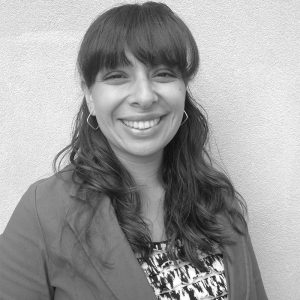
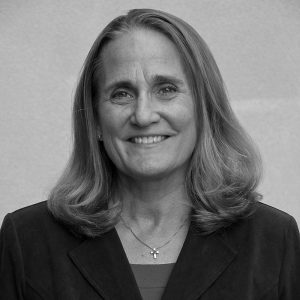


 Emily Jorgensen joined the Michigan League for Public Policy in July 2019. She deeply cares about the well-being of individuals and families and has a great love for Michigan. She is grateful that her position at the League enables her to combine these passions and work to help promote policies that will lead to better opportunities and security for all Michiganders.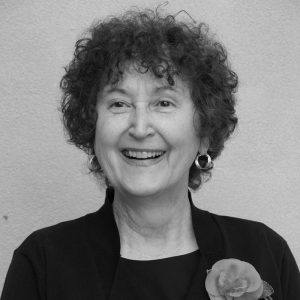
 Megan Farnsworth joined the League’s staff in December 2022 as Executive Assistant. Megan is driven by work that is personally fulfilling, and feels honored to help support the work of an organization that pushes for more robust programming and opportunities for the residents of our state. She’s excited and motivated to gain overarching knowledge of the policies and agendas that the League supports.