
Michigan has long been home to thousands of immigrants from all over the world. Immigrants in Michigan are neighbors, students, workers and Main Street business owners. They help our state maintain a strong, modern economy and they enrich our communities.
Michigan has seen a significant increase in the number of immigrants in our state over the past several decades. Between 2000 and 2015, the immigrant population in Michigan increased by almost a quarter (24.5%), and has nearly doubled since 1990. The majority of immigrants in Michigan (51.4%) arrived to the state before 2000, with only 20.8% having arrived since 2010.1 Michigan’s immigrant population is high among other small states in the country, but still smaller than many large states like Illinois. Furthermore, the rate of growth of the immigrant population in Michigan remains outpaced by growth at the national level.2 About half of immigrants in Michigan are naturalized citizens (51.1%) while some maintain some form of legal status such as a temporary visa or permanent residency. As of 2014, 97,000 immigrants in Michigan were undocumented or had no form of legal status.3
MICHIGAN IMMIGRANTS HAVE VARIED ORIGINS AND EXPERIENCES
From Latin America to South Asia, immigrants in Michigan come from regions all over the world, helping to enrich the Great Lakes state. Almost half of Michigan immigrants (48.4%) arrived from Asian countries, making it the most common world region of origin for immigrants in the state. The top Asian countries of origin are: India, Iraq, China, Korea and Lebanon. Among the other top four regions of origin for Michigan immigrants were: Europe (21.7%), followed by Latin America (18.9%) and Africa (4.3%).
Immigrants who come from the same world region can have vastly different experiences in the United States due to race, socioeconomic status and level of English language proficiency. Immigrants of color, in particular, are more likely to experience discrimination and barriers to opportunity than their White counterparts. These barriers often take the form of residential segregation, limited access to well-paying quality jobs, and poorly funded schools in their communities among others. Public policies that address racial inequalities in health and economic well-being are needed to ensure that more families of color, both immigrant and U.S.-born, can thrive.
A GROWING GENERATION OF YOUNG IMMIGRANTS
Children of Immigrants
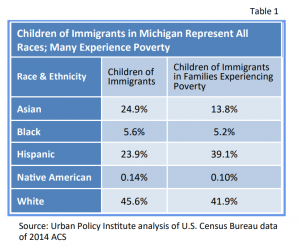
In Michigan, among all native-born children under age 6, 6.9% (51,112) have at least one immigrant parent, and 14.9% (4,846) of children with at least one immigrant parent are immigrants themselves. Like the rest of Michigan children, children of immigrants also need access to healthy food, a stable home and a quality education to succeed. Many children of immigrants, however, face a higher risk of having poor health and economic outcomes if their parents are experiencing poverty or are undocumented.4 Among children of immigrants in Michigan, 14.8% were experiencing poverty and struggling to get by in 2014 (the most recent year available).5 As Table 1 shows, Hispanic children of immigrants are disproportionately more likely to experience poverty than other non-White racial and ethnic groups. Furthermore, more than half of all children of immigrants in Michigan are children of color who are more likely to face barriers to success that stem from structural racism. These longstanding disadvantages impact everything from the quality of education in schools to access to health institutions and community resources.
Many children with immigrant parents also live with the constant fear of separation from loved ones due to immigration status. As of 2014, approximately 28,000 undocumented immigrant parents with at least one U.S.-citizen child under the age of 18 lived in Michigan.6 Research shows that children who are permanently separated from parents can experience long-term psychological trauma and economic hardship. Therefore, policies that enable families with mixed legal status to stay together are imperative for ensuring child well-being.
Young Adult Immigrants
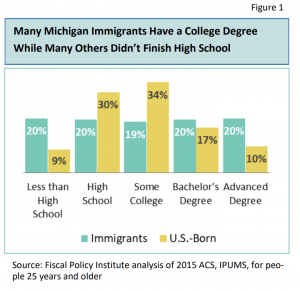
Many children of immigrants who have grown up in Michigan are now enrolling in college or entering the workforce. Their contributions as students and workers are vital for maintaining a healthy economy. When it comes to educational outcomes, immigrants in Michigan are more likely to have both an advanced college degree and a bachelor’s degree than U.S.-born state residents. However, some immigrants in Michigan are also much less likely to have completed a high school education than their U.S.-born counterparts. Figure 1 provides an overview of educational outcomes among all immigrants in the state. This disparity in educational outcomes demonstrates that while some immigrants have made gains in accessing higher education (though some also arrive with higher education degrees from their countries of origin), many others still face barriers to completing high school and obtaining a college degree.
A subset of the young adult population is known as the “Dreamers”—immigrants who were brought to this country as children and identify as Americans in every sense of the word, but do not have legal status. In 2012, the federal Deferred Action for Childhood Arrivals (DACA) program granted temporary reprieve from deportation and a renewable two-year work permit to beneficiaries and became a vital policy for enabling this group of young immigrants to succeed in this country. Approximately 6,430 young undocumented immigrants in Michigan are currently enrolled in the DACA program.7 Several studies have confirmed that the DACA program has enabled many beneficiaries to pursue educational and professional dreams, contribute to their family’s household income, and make their first big purchases such as buying a car or a home.8
On Sept. 5, 2017, the U.S. Justice Department, under the direction of President Donald Trump, announced the end of the DACA program. Under new instructions set forth by the administration, the Justice Department announced it would no longer consider new applicants for the program, but would consider renewals for those beneficiaries whose permits expire before March 5, 2018, so long as they submitted renewal applications by Oct. 5, 2017.9 The end of the DACA program has left young immigrants feeling uncertain about their futures in this country. Not only does the end of DACA mean harm to thousands of immigrant students and professionals in our state, it also negatively affects local communities and the state’s economy.
MICHIGAN IMMIGRANTS AND THE ECONOMY
As workers and business owners, immigrants can make regional economies competitive, improving the employment prospects and wages for all workers. From 2006 to 2010, immigrant business owners in Michigan generated $1.8 billion in net business income.10 In 2015, immigrants contributed 9% of the total state GDP in Michigan, and made up 11% of all business owners in the state.11 Michigan immigrants also contribute millions in tax revenue each year, and in doing so help pay for important public programs and infrastructure in the state. In 2015 for example, undocumented immigrants in Michigan paid approximately $86.6 million in state and local taxes.12 Young undocumented immigrants also contribute their share in taxes. In 2015, DACA-eligible immigrants contributed approximately $15 million in state and local taxes.13While Michigan immigrants should not be valued solely for their economic contributions, it is important to recognize the countless ways in which they help strengthen our state and our local communities.
IMMIGRANTS IN THE LABOR FORCE
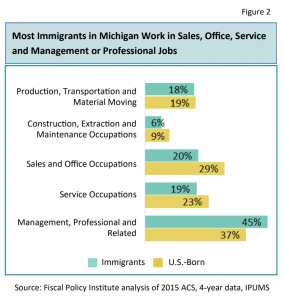
As workers, Michigan immigrants are highly engaged in the labor force, working in a variety of occupations. In 2016, the employment rate among Michigan immigrants 16 years and older was almost identical to that of their U.S.-born counterparts, and had improved from the previous year. In the same year, 57.9% of Michigan immigrants were employed compared to 57.3% of native-born residents and 57.3% of all Michigan residents.14 Michigan immigrants are also less likely to be unemployed than U.S.-born residents. In 2015, the unemployment rate among Michigan immigrants was 4.7% (the most recent year available), compared to 6.7% among U.S.-born residents. Michigan immigrants also work in a diverse number of industries and occupations in our state. Many serve as teachers, nurses, agricultural workers and more. Figure 2 provides an overview of the occupations held by Michigan immigrants as of 2015. Most Michigan immigrants worked in sales, office, service, and management or professional jobs as of 2015.
CREATING A WELCOMING STATE FOCUSED ON INCLUSION NOT EXCLUSION: POLICY RECOMMENDATIONS
When Michigan immigrants succeed, we all succeed. Policymakers can immediately address the lack of policies in place to support our immigrant neighbors. While many immigrants in our state have been able to thrive post-recession, many more are still struggling to make ends meet for their families. Here are some of the ways state and federal policymakers can strengthen Michigan immigrant outcomes:
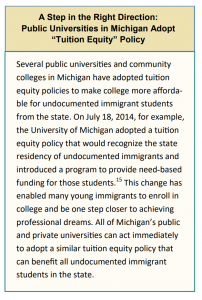
- In-State Tuition. The high cost of a college degree continues to be a barrier to higher education for many immigrants, particularly undocumented immigrant students. Most Michigan universities consider undocumented students “out-of-state” residents and require them to pay out-of-state tuition, despite the fact that many have lived in Michigan long enough to otherwise qualify as state residents. Granting in-state tuition to these aspiring students would require a change to our state constitution. A more feasible solution could be that public and private universities adopt tuition equity policies.
- Access to Occupational and Professional Licenses. Policymakers can also strengthen outcomes among young undocumented immigrants by making them eligible for occupational and professional licenses. In Michigan, no state law has been passed that specifies DACA beneficiaries as a category of non-citizens eligible for obtaining occupational and professional licenses.
- Pathway to Citizenship. Legal status allows immigrants to focus on their careers and families without having to worry about the potential separation from loved ones due to deportation. Providing a pathway to citizenship for thousands of undocumented immigrants in Michigan is a critical step in helping immigrants achieve positive outcomes for their families.
- Leaving Behind Policies of Exclusion. The most recent wave of anti-immigrant legislation in our state presents a serious threat to immigrant families and undermines American values of justice and equality. Certain bills, like a proposal to make English the official state language, are introduced for purely symbolic purposes that only serve to divide our communities. Other proposals, like cracking down on sanctuary cities, carry more dangerous implications for undocumented immigrant families. Research shows that inclusive policy is the best way forward for all Michiganians.16 Members of Congress and state legislators can act immediately to abandon policies of exclusion and introduce policies that eliminate barriers to success for Michigan’s immigrant families.
Unless otherwise noted, all state-level data comes from the Census Bureau’s 2011-2015 American Community Survey. “Immigrant” generally describes a foreign-born person living in the U.S., regardless of their immigration status or whether they have become a U.S. citizen.
ENDNOTES
- 2000 estimate comes from the Census Bureau’s 2000 Decennial Census.
- Doyle, K., & Guthrie, E. (2017, August). Michigan’s Foreign-Born Population and Workforce. (Rep.). Department of Technology, Management & Budget and Bureau of Labor Market Information and Strategic Initiatives. Retrieved September 20, 2017, from http://milmi.org/Portals/137/publications/Articles/MI-Foreign-Born.pdf.
- Migration Policy Institute (MPI) analysis of U.S. Census Bureau data from the 2014 American Community Survey (ACS), 2010-2014 ACS pooled, and the 2008 Survey of Income and Program Participation (SIPP) by James Bachmeier of Temple University and Jennifer Van Hook of The Pennsylvania State University, Population Research Institute.
- Capps, R., Koball, H., Campetella, A., Perreira, K., Hooker, S., & Pedroza, J. M. (2015). Implications of Immigration Enforcement Activities for the Well-Being of Children in Immigrant Families: A Review of the Literature (Rep.). Washington, D.C.: Migration Policy Institute.
- Urban Policy Institute analysis of U.S. Census Bureau data of 2014 ACS.
- Op.cit.
- Number of Form I-821D, Consideration of Deferred Action for Childhood Arrivals, by Fiscal Year, Quarter, Intake, Biometrics and Case Status Fiscal Year 2012-2017. (2017, March 31). Retrieved September 6, 2017. Web.
- Wong, T. K., A. S. Garcia, M. Abrajano, D. Fitzgerald, K. Ramakrishnan, & S. Le. Undocumented No More: A Nationwide Analysis of Deferred Action for Childhood Arrivals, or DACA. Rep. Washington, D.C.: Center for American Progress, 2013. Web.
- Deferred Action for Childhood Arrivals 2017 Announcement. (2017, September 5). United States Citizenship and Immigration Services. Retrieved September 8, 2017, from https://www.uscis.gov/daca2017.
- New Americans in Michigan: The Political and Economic Power of Immigrants, Latinos, and Asians in the Great Lakes State. (2015, January 1). Washington, D.C.: American Immigration Council.
- Ibid.
- Gee, L. C., Gardner, M., Hill, M. E., & Wiehe, M. (2017, March). Undocumented Immigrants’ State & Local Tax Contributions (Rep.). Institute on Taxation and Economic Policy.
- Hill, M. E., & Wiehe, M. State & Local Tax Contributions of Young Undocumented Immigrants. Rep. Institute on Taxation and Economic Policy. (2017, April).
- 2016 ACS, 1-year data.
- In-State Tuition Policy. (2017, March 16). Retrieved September 6, 2017, from http://uleadnet.org/map/michigan-policy.
- Williams, E., Leachman, M., Wallace, M., & Albares, N. (2015, October 29). For States, Inclusive Approach to Unauthorized Immigrants Can Help Build Better Economies. (Rep.). Center on Budget and Policy Priorities.


 Betsy Zobl-Tar
  Jay Cutler joined the League in March 2026 as the Kids Count Senior Data Analyst, where he collects, analyzes, and prepares data for Kids Count in Michigan.
 Danielle Taylor-Basemore joined the League as the Development Data and Stewardship Coordinator in June 2025. She brings with her five years of nonprofit experience with a special focus on community engagement, data visualization and strategic programming. Prior to joining the League, Danielle served as the Business District, Safety, and Digital Manager at Jefferson East, Inc.
 Scott Preston is a Senior Policy Analyst with the Michigan League for Public Policy, where he leads the organization’s immigration and criminal justice reform portfolios. In the three years prior to joining the League, Scott facilitated the Southeast Michigan Refugee Collaborative and managed a small business economic development program at Global Detroit. His work included launching Michigan’s first Refugee Film Festival and building on a trusted connector model that linked marginalized communities with crucial resources. Scott’s work at the League is informed by his background in journalism and research. He spent four years covering the Syrian refugee crisis in the Middle East for publications such as The Economist, and later worked with unaccompanied refugee minors through Samaritas. Scott holds a master’s degree in international migration and public policy from the London School of Economics and Political Science.
 Kate Powers joined the League as the Chief Development Officer in February 2025. Prior to joining the League, Kate held leadership positions at many Michigan nonprofit organizations, most recently serving as the COO and Chief Development Officer of Ele’s Place. Kate has spent the bulk of her career in fundraising, with a short stint in the state Legislature as a legislative aide to members in both chambers. Kate is a graduate of Michigan State University’s James Madison College with a Bachelor of Arts in Social Relations and has a certificate in fundraising management from the Lilly Family School of Philanthropy at Indiana University. Additionally, Kate served on the East Lansing Public Schools Board of Education and is a past President of the Junior League of Lansing. In her free time, she enjoys traveling with her husband and her son and saving outfit of the day and home decor ideas on Pinterest.
  Nicholas Hess joined the League as the Fiscal Policy Analyst in September of 2024. In this role, Nicholas focuses on tax policy, government revenue, and their impact on working families and racial equity, including the effects of the Earned Income Tax Credit (EITC) and Child Tax Credit (CTC). Nicholas values the role that judicious fiscal policy can play in the improvement of people’s lives and the economy, alleviating inequities along the way.
 Audrey Matusz joined the League as the Visual Communications Specialist in September 2024. She supports the team with implementing social media strategies and brainstorming creative ways to talk about public policy. She brings with her nearly a decade of experience in producing digital products for evidence-based social justice initiatives.
  Jacob Kaplan
  Donald Stuckey
  Alexandra Stamm
 Amari Fuller
 Mikell Frey is a communications professional with a passion for using the art of storytelling to positively impact lives. She strongly believes that positive social change can be inspired by the sharing of data-driven information coupled with the unique perspectives of people from all walks of life across Michigan, especially those who have faced extraordinary barriers.
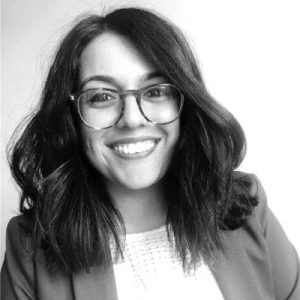


 Yona Isaacs (she/hers) is an Early Childhood Data Analyst for the Kids Count project. After earning her Bachelor of Science in Biopsychology, Cognition, and Neuroscience at the University of Michigan, she began her career as a research coordinator in pediatric psychiatry using data to understand the impacts of brain activity and genetics on children’s behavior and mental health symptoms. This work prompted an interest in exploring social determinants of health and the role of policy in promoting equitable opportunities for all children, families, and communities. She returned to the University of Michigan to complete her Masters in Social Work focused on Social Policy and Evaluation, during which she interned with the ACLU of Michigan’s policy and legislative team and assisted local nonprofit organizations in creating data and evaluation metrics. She currently serves as a coordinator for the Michigan Center for Youth Justice on a project aiming to increase placement options and enhance cultural competency within the juvenile justice system for LGBTQIA+ youth. Yona is eager to put her data skills to work at the League in support of data-driven policies that advocate for equitable access to healthcare, education, economic security, and opportunity for 0-5 year old children. In her free time, she enjoys tackling DIY house projects and trying new outdoor activities with her dog.
 Rachel Richards rejoined the League in December 2020 as the Fiscal Policy Director working on state budget and tax policies. Prior to returning to the League, she served as the Director of Legislative Affairs for the Michigan Department of Treasury, the tax policy analyst and Legislative Director for the Michigan League for Public Policy, and a policy analyst and the Appropriations Coordinator for the Democratic Caucus of the Michigan House of Representatives. She brings with her over a decade of experience in policies focused on economic opportunity, including workforce issues, tax, and state budget.
 Simon Marshall-Shah joined the Michigan League for Public Policy as a State Policy Fellow in August 2019. His work focuses on state policy as it relates to the budget, immigration, health care and other League policy priorities. Before joining the League, he worked in Washington, D.C. at the Association for Community Affiliated Plans (ACAP), providing federal policy and advocacy support to nonprofit, Medicaid health plans (Safety Net Health Plans) related to the ACA Marketplaces as well as Quality & Operations.

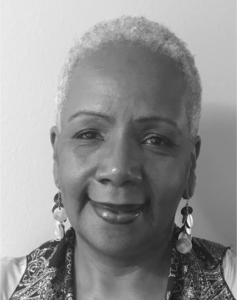 Renell Weathers, Michigan League for Public Policy (MLPP) Community Engagement Consultant. As community engagement consultant, Renell works with organizations throughout the state in connecting the impact of budget and tax policies to their communities. She is motivated by the belief that all children and adults deserve the opportunity to achieve their dreams regardless of race, ethnicity, religion or economic class.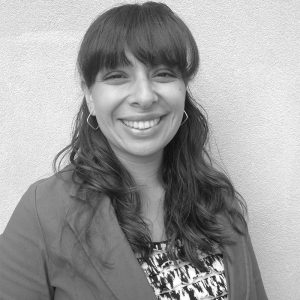

 Emily Jorgensen joined the Michigan League for Public Policy in July 2019. She deeply cares about the well-being of individuals and families and has a great love for Michigan. She is grateful that her position at the League enables her to combine these passions and work to help promote policies that will lead to better opportunities and security for all Michiganders.
 Megan Farnsworth joined the League’s staff in December 2022 as Executive Assistant. Megan is driven by work that is personally fulfilling, and feels honored to help support the work of an organization that pushes for more robust programming and opportunities for the residents of our state. She’s excited and motivated to gain overarching knowledge of the policies and agendas that the League supports.