For Immediate Release
May 9, 2019
Contact:
Alex Rossman
arossman@mlpp.org
517-487-5436
City’s residents face high housing-cost burden, modern policies continue legacy of racism and exclusion in African American homeownership
LANSING—As Detroit continues to experience an economic comeback and a new development boom, the benefits have not reached all residents, with dramatically high housing costs as a share of income and the continued disenfranchisement of the city’s African American residents. A new report released by the Michigan League for Public Policy, Detroit: The evolution of a housing crisis, combines data and historical context to illustrate the past and ongoing hurdles to owning a home—and subsequently building wealth—that African Americans have faced. An executive summary of the report is also available.
“Detroit’s history and identity is so entwined with African American people and culture, but amidst the many points of pride, there is a history of harmful policies that have held residents of color back,” said Karen Holcomb-Merrill, Chief Operating Officer for the Michigan League for Public Policy. “This is especially true when it comes to housing, as Detroit has unfortunately become a stark example of how past racist housing policies are driving residential segregation, poor health and poverty today.”
The report examines the constant barriers to homeownership African Americans in Detroit have faced, from discriminatory deed restrictions and redlining to the subprime mortgage industry and illegal tax foreclosures. White migration to the suburbs sparked decades of disinvestment in the city, and now a resurgence of White residents are fueling big-ticket investments and inflated housing costs. As a result, African Americans have been relegated to substandard rental housing and neighborhoods that offer little in the way of health, education and employment.
Median income in the city of Detroit is $27,838 per year—roughly half of the state median income—and the poverty rate in the city is twice the state rate. Paired with rising housing costs, Detroiters are spending a larger share of their income on housing than people living in many other Michigan communities. This means they have less money in their budgets for other necessities like food, healthcare and transportation. Renters—now the majority of the city’s households—are particularly burdened, having to spend nearly half of their income on housing. In the larger metro area, affordable units are available for fewer than 1 in 3 renter families with extremely low incomes.
Unaffordable housing costs, dangerous building conditions and evictions lead to frequent moves and homelessness, with serious consequences for health and economic security. Low-income housing or rentals are less likely to be inspected or up to code, and poor housing conditions can contribute to Detroit’s exceptionally high rates of childhood lead poisoning, asthma, and infant and maternal mortality. The city’s water shutoffs are also part of the housing crisis, as outstanding water bill debts are rolled into unpaid property taxes and increase the risk of tax foreclosure.
Detroit kids are also adversely affected by unstable housing situations. In the 2015-16 school year, 58 percent of all Detroit students were enrolled in more than one school, compared to only 26 percent of their suburban peers. One in 3 of the city’s elementary students change schools every single year, constantly leaving friends, trusted teachers and other school staff and having to establish new relationships and routines in an unfamiliar environment. When children change schools, academic achievement suffers at both the individual and classroom levels, and the negative impact grows with each subsequent move, including a diminished likelihood of graduating high school on time and lifetime earnings as adults. Children experiencing multiple moves, homelessness and other forms of housing instability experience worse health, more hospitalizations and greater developmental risks than their counterparts with stable housing.
“The impact of low-quality housing options is pervasive and profound,” said Holcomb-Merrill. “Housing struggles affect economic standing, public health, education and more. Just as we have been saying about Michigan as a whole, economic recovery is only beneficial if it reaches all people, and there are many state and local policies that can help alleviate Detroit’s housing crisis and improve living options for African Americans.”
The League’s report hinges on two big, key ideas: Explicit and ongoing discussion of past racism is key to addressing it, and Detroit’s economic turnaround is the ideal time to make changes that distribute its benefits to all of the city’s residents. The report offers up several specific policy recommendations regarding improved housing affordability and reduced racial disparities:
- Focus more affordable housing efforts on the households with the very lowest incomes.
- Strengthen the community benefits ordinance to ensure that the Detroit residents subsidizing developers benefit from the ensuing economic development.
- Establish water shutoff protections and income-based bills for households with low incomes to protect their health and help stabilize their housing situation.
- Provide for eviction expungement so struggling families or those wronged by unethical landlords aren’t indefinitely blacklisted from rental housing.
- Strengthen consumer protections in land contracts to ensure that unscrupulous sellers can’t cheat buyers out of the return on their investment.
Detroit: The evolution of a housing crisis, is part of the League’s Home, Health, Hope series on Michigan’s affordable housing crisis. Housing needs are also addressed in the League’s people-driven policy agenda, the Owner’s Manual for Michigan.
###
The Michigan League for Public Policy, www.mlpp.org, is a nonprofit policy institute focused on economic opportunity for all. It is the only state-level organization that addresses poverty in a comprehensive way.


 Betsy Zobl-Tar
  Jay Cutler joined the League in March 2026 as the Kids Count Senior Data Analyst, where he collects, analyzes, and prepares data for Kids Count in Michigan.
 Danielle Taylor-Basemore joined the League as the Development Data and Stewardship Coordinator in June 2025. She brings with her five years of nonprofit experience with a special focus on community engagement, data visualization and strategic programming. Prior to joining the League, Danielle served as the Business District, Safety, and Digital Manager at Jefferson East, Inc.
 Scott Preston is a Senior Policy Analyst with the Michigan League for Public Policy, where he leads the organization’s immigration and criminal justice reform portfolios. In the three years prior to joining the League, Scott facilitated the Southeast Michigan Refugee Collaborative and managed a small business economic development program at Global Detroit. His work included launching Michigan’s first Refugee Film Festival and building on a trusted connector model that linked marginalized communities with crucial resources. Scott’s work at the League is informed by his background in journalism and research. He spent four years covering the Syrian refugee crisis in the Middle East for publications such as The Economist, and later worked with unaccompanied refugee minors through Samaritas. Scott holds a master’s degree in international migration and public policy from the London School of Economics and Political Science.
 Kate Powers joined the League as the Chief Development Officer in February 2025. Prior to joining the League, Kate held leadership positions at many Michigan nonprofit organizations, most recently serving as the COO and Chief Development Officer of Ele’s Place. Kate has spent the bulk of her career in fundraising, with a short stint in the state Legislature as a legislative aide to members in both chambers. Kate is a graduate of Michigan State University’s James Madison College with a Bachelor of Arts in Social Relations and has a certificate in fundraising management from the Lilly Family School of Philanthropy at Indiana University. Additionally, Kate served on the East Lansing Public Schools Board of Education and is a past President of the Junior League of Lansing. In her free time, she enjoys traveling with her husband and her son and saving outfit of the day and home decor ideas on Pinterest.
  Nicholas Hess joined the League as the Fiscal Policy Analyst in September of 2024. In this role, Nicholas focuses on tax policy, government revenue, and their impact on working families and racial equity, including the effects of the Earned Income Tax Credit (EITC) and Child Tax Credit (CTC). Nicholas values the role that judicious fiscal policy can play in the improvement of people’s lives and the economy, alleviating inequities along the way.
 Audrey Matusz joined the League as the Visual Communications Specialist in September 2024. She supports the team with implementing social media strategies and brainstorming creative ways to talk about public policy. She brings with her nearly a decade of experience in producing digital products for evidence-based social justice initiatives.
  Jacob Kaplan
  Donald Stuckey
  Alexandra Stamm
 Amari Fuller
 Mikell Frey is a communications professional with a passion for using the art of storytelling to positively impact lives. She strongly believes that positive social change can be inspired by the sharing of data-driven information coupled with the unique perspectives of people from all walks of life across Michigan, especially those who have faced extraordinary barriers.



 Yona Isaacs (she/hers) is an Early Childhood Data Analyst for the Kids Count project. After earning her Bachelor of Science in Biopsychology, Cognition, and Neuroscience at the University of Michigan, she began her career as a research coordinator in pediatric psychiatry using data to understand the impacts of brain activity and genetics on children’s behavior and mental health symptoms. This work prompted an interest in exploring social determinants of health and the role of policy in promoting equitable opportunities for all children, families, and communities. She returned to the University of Michigan to complete her Masters in Social Work focused on Social Policy and Evaluation, during which she interned with the ACLU of Michigan’s policy and legislative team and assisted local nonprofit organizations in creating data and evaluation metrics. She currently serves as a coordinator for the Michigan Center for Youth Justice on a project aiming to increase placement options and enhance cultural competency within the juvenile justice system for LGBTQIA+ youth. Yona is eager to put her data skills to work at the League in support of data-driven policies that advocate for equitable access to healthcare, education, economic security, and opportunity for 0-5 year old children. In her free time, she enjoys tackling DIY house projects and trying new outdoor activities with her dog.
 Rachel Richards rejoined the League in December 2020 as the Fiscal Policy Director working on state budget and tax policies. Prior to returning to the League, she served as the Director of Legislative Affairs for the Michigan Department of Treasury, the tax policy analyst and Legislative Director for the Michigan League for Public Policy, and a policy analyst and the Appropriations Coordinator for the Democratic Caucus of the Michigan House of Representatives. She brings with her over a decade of experience in policies focused on economic opportunity, including workforce issues, tax, and state budget.
 Simon Marshall-Shah joined the Michigan League for Public Policy as a State Policy Fellow in August 2019. His work focuses on state policy as it relates to the budget, immigration, health care and other League policy priorities. Before joining the League, he worked in Washington, D.C. at the Association for Community Affiliated Plans (ACAP), providing federal policy and advocacy support to nonprofit, Medicaid health plans (Safety Net Health Plans) related to the ACA Marketplaces as well as Quality & Operations.

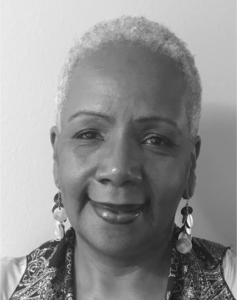 Renell Weathers, Michigan League for Public Policy (MLPP) Community Engagement Consultant. As community engagement consultant, Renell works with organizations throughout the state in connecting the impact of budget and tax policies to their communities. She is motivated by the belief that all children and adults deserve the opportunity to achieve their dreams regardless of race, ethnicity, religion or economic class.
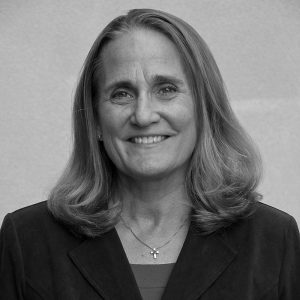


 Emily Jorgensen joined the Michigan League for Public Policy in July 2019. She deeply cares about the well-being of individuals and families and has a great love for Michigan. She is grateful that her position at the League enables her to combine these passions and work to help promote policies that will lead to better opportunities and security for all Michiganders.
 Megan Farnsworth joined the League’s staff in December 2022 as Executive Assistant. Megan is driven by work that is personally fulfilling, and feels honored to help support the work of an organization that pushes for more robust programming and opportunities for the residents of our state. She’s excited and motivated to gain overarching knowledge of the policies and agendas that the League supports.