As Black History Month comes to a close, we asked our staff an important question: How will you continue celebrating Black history in 2020?
Dwayne Barnes, Community Engagement Specialist
Each February we celebrate the contributions of African Americans to our society. Typically, we celebrate the artistic, athletic and cultural contributions but we forget about the economic, political and technological achievements that African Americans have made here in America and through the world.
I would like to honor Fabian Elliott, CEO and co-founder of Black Tech Mecca, a technology think tank in Chicago that provides data, research, and advocacy in the urban tech space. Black Tech Mecca’s mission is to inspire the development of thriving Black Tech Ecosystems to ensure Black people are full participants in the global technology sector.
This young man is making history in the black tech space and deserves some shine during Black History Month.
Amber Bellazaire, Health Policy Analyst
I love to visit museums and watch documentaries, but my favorite way to learn about and celebrate history is to read about it. Black Ink is an incredible book of essays by a range of black American writers, thinkers and poets. The compilation includes essays from Frederick Douglass to Roxane Gay. I enjoyed and would recommend the book because it reveals the diversity of thought within the black community and how profound it is to have such brilliance within a community once forbidden to learn to read.
Brandon Betz, Tax Policy Analyst
Dial into your local Black Lives Matter Chapter. Black history is inseparably connected to grassroots activism. Only a few names have percolated into our historical record; for every Black activist we learn about in our studies, there were thousands who stood up to fight for equity and justice. The work is not over—Black Lives Matter is at the forefront of direct action and organization of people of color throughout the United States. Instead of hiding behind the work that has already been accomplished, we need to fight the current inequities that plague society head-on. Continued direct action, activism, and militancy, I think, is what the Black leaders of the past wanted as their legacy.
Julie Cassidy, Senior Policy Analyst
We can celebrate Black history all year long by being intentional with our charitable giving choices. Black-led organizations like BMe Community, Black Girls Code, GirlTrek, Outdoor Afro and Mothering Justice cultivate today’s history makers through education, health, innovation, leadership and community. Supporting them with your individual donations and philanthropic dollars at any time of the year moves us closer to solutions to society’s most pressing problems.
Karen Holcomb-Merrill, Chief Operations Officer
It’s a shame that Black History Month is the shortest month of the year, even this year, a Leap Year. With all good intentions, I printed off this list of 10 must-read books for Black History Month. What an interesting and varied list of books written by black authors. Needless to say, I didn’t get to all 10 books during this shortest month of the year. But I’m hanging on to the list, with the hopes of extending Black History Month and its celebrations through the rest of the year!
Parker James, Kids Count Policy Analyst
To keep celebrating Black history, we can continue to learn about and uplift Black voices where we live. This month the Kalamazoo Public Library has been featuring African Americans past and present from Kalamazoo and their contributions. I’ve enjoyed reading about librarian Alma Powell, professor Dr. Romeo Phillips and the Motown-famous Velvelettes! The library even has a Velvelettes anthology to borrow, which is a must-listen for any music fan. Thankful for this resource and many others made publicly available through the library to help us learn about and celebrate local Black history all year round.
Emily Jorgensen, Communications Assistant
I’m so grateful to be part of a team that prioritizes the internal and external work that is required to advance racial equity. I’ve already learned so much in my first few months here, so my celebration throughout 2020 will be to continue that work. I’m going to take our 21-Day Challenge again to expand my knowledge and self-reflect, and I’m going to continue listening to the podcasts, watching the videos, and reading the books recommended on our Racial Equity page. There is so much to learn and incorporate into my daily life and into the choices I make, and I will do so with an open heart and desire for true change.
Laura Ross, Communications Director
As someone who once taught history, I’ve seen firsthand the need to promote Black history. The textbooks most schools use always have a section in each chapter labeled something like, “Other groups saw struggles during the Great Depression” or “Other Americans work to support war effort” or “African Americans also contribute to 1920’s art.” From what I’ve seen, Black Americans are still treated in these textbooks as an afterthought—an addendum. This year, I’m going to work on reviewing the texts that are used in the school district where I live, and work on influencing the decisions that are made there. The best way to make sure that happens? Make sure there are Black leaders, teachers—start hiring them, schools—parents and stakeholders at the decision making table.
Alex Rossman, External Affairs Director
As an aspiring writer as a kid, I remember being particularly drawn to Langston Hughes’ poetry. Reading his work in the midst of traditional school learning about Black history, slavery, the Civil War, the civil rights movement and more helped add a layer of emotional connection, context and empathy. Continuing my love of words and desire to better connect with Black culture, and growing up at the same time that hip hop was coming up, I fell in love with that music. The vivid lyricism painted pictures of the Black experience and opened my eyes to issues I might not have otherwise been aware of, and it continues to be one of the best ways for me to connect with Black culture. At every age and stage of my life, hip hop has always made me feel like I am getting a firsthand perspective on the political and racial issues of the times. I encourage everyone to explore the genre, and I’ll also offer a friendly tip that most music streaming services also carry content from authors and spoken word artists, including Langston Hughes.
Peter Ruark, Senior Policy Analyst
One of the best ways I have developed a personal connection over the years with Black history is when I listen to music from the civil rights era and the period of activism that immediately followed. As a White man, music builds a bridge of empathy between myself and the struggles of those with very different lived experiences. Anyone interested can check out my playlist, “Soul Music for Social Change 1963-1974” that captures some of my favorite socially conscious music from that period. https://www.youtube.com/playlist?list=PLoptx_QotyOws9ekvOD8iC8C32dtmee4A
Simon Marshall-Shah, State Policy Fellow
Black History Month is about engaging with and celebrating Black success – in our country’s history, culture and policy. To keep celebrating in 2020, we can continue this work by intentionally selecting some of the authors and creators (and chefs!) of what we consume. For example, if you’re a reader, read books by Black authors and thinkers; if you’re a commuter, listen to podcasts by Black creators; if you’re a foodie, eat at Black-owned restaurants; and if you’re a history buff, visit museums dedicated to Black history and leadership. Plus, this can serve as a way to celebrate and learn while also lending financial support. As with all values, putting our money where our mouth is can speak volumes and contribute to the ethos of Black History Month beyond the month of February.
Kelsey Perdue, Kids Count Project Director
Black history is both past and present. I celebrate this and every month by paying homage to those who came before me, recognize the giants that walk amongst us and serve to benefit those who live after me.
One of my favorite Black leaders is Shirley Chisholm. She was the first Black woman to be elected to the US Congress and later became the first Black candidate to secure a major party’s nomination for president. In announcing her bid, Chisholm said, “I am not the candidate of black America, although I am black and proud. I am not the candidate of the women’s movement of this country, although I am a woman and I am equally proud of that. I am the candidate of the people, and my presence before you now symbolizes a new era in American political history.”
A woman who had “no intention of just sitting quietly and observing”, a photo of her famous 2008 portrait hung in the hallway of a row house I shared in DC during college. Even back then, she inspired our house full of change agents: future lawyers, policy makers, researchers and community leaders.
Black people, women and all of America stand on Chisholm’s shoulders. She was an amazing leader and I encourage anyone who isn’t familiar with her story to look her up! Happy Black History Month!
Jayme Vosovic, Community Engagement Specialist
To keep celebrating Black History Month in 2020, we need to look no further than in our own communities to see the contributions and talent that Black people have and continue to give to us. In West Michigan, while there are many examples of Black excellence, one name I want to lift up is Shannon Cohen, co-founder of Sisters Who Lead. “Sisters Who Lead has been a foremost voice in data collection from women of color to gauge growth, trends, and needs connected to attracting, retaining and promoting women of color in the West Michigan talent pathways.” Ms. Cohen, along with her other co-founder, Patricia Sosa Verduin, and the leadership team, have not only reminded us women of color that we are talented—almost 60% of us have advanced degrees—but that the old mantra of “we can’t find qualified, diverse candidates ready to lead” is garbage.
I encourage all of us and especially those institutional leaders—from CEOs to HR Directors to Managers—to examine the study From Knowing Better to Doing Better: Closing the Opportunity Gap for Women of Color in the Workplace through Transformed Systems Behavior and embrace the recommendations. If we do not seek to close this gap, we are missing out on further economic prosperity for our communities, as “women of color are a force in the U.S. economy…generat(ing) $1 trillion as consumers and $361 billion in revenue as entrepreneurs, launching companies at 4x the rate of all woman-owned businesses.” Thank you Shannon for continuing the work of our ancestors and bringing to light all that women of color have to offer.


 Betsy Zobl-Tar
  Jay Cutler joined the League in March 2026 as the Kids Count Senior Data Analyst, where he collects, analyzes, and prepares data for Kids Count in Michigan.
 Danielle Taylor-Basemore joined the League as the Development Data and Stewardship Coordinator in June 2025. She brings with her five years of nonprofit experience with a special focus on community engagement, data visualization and strategic programming. Prior to joining the League, Danielle served as the Business District, Safety, and Digital Manager at Jefferson East, Inc.
 Scott Preston is a Senior Policy Analyst with the Michigan League for Public Policy, where he leads the organization’s immigration and criminal justice reform portfolios. In the three years prior to joining the League, Scott facilitated the Southeast Michigan Refugee Collaborative and managed a small business economic development program at Global Detroit. His work included launching Michigan’s first Refugee Film Festival and building on a trusted connector model that linked marginalized communities with crucial resources. Scott’s work at the League is informed by his background in journalism and research. He spent four years covering the Syrian refugee crisis in the Middle East for publications such as The Economist, and later worked with unaccompanied refugee minors through Samaritas. Scott holds a master’s degree in international migration and public policy from the London School of Economics and Political Science.
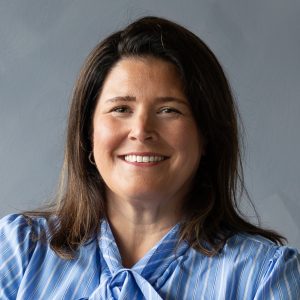 Kate Powers joined the League as the Chief Development Officer in February 2025. Prior to joining the League, Kate held leadership positions at many Michigan nonprofit organizations, most recently serving as the COO and Chief Development Officer of Ele’s Place. Kate has spent the bulk of her career in fundraising, with a short stint in the state Legislature as a legislative aide to members in both chambers. Kate is a graduate of Michigan State University’s James Madison College with a Bachelor of Arts in Social Relations and has a certificate in fundraising management from the Lilly Family School of Philanthropy at Indiana University. Additionally, Kate served on the East Lansing Public Schools Board of Education and is a past President of the Junior League of Lansing. In her free time, she enjoys traveling with her husband and her son and saving outfit of the day and home decor ideas on Pinterest.
  Nicholas Hess joined the League as the Fiscal Policy Analyst in September of 2024. In this role, Nicholas focuses on tax policy, government revenue, and their impact on working families and racial equity, including the effects of the Earned Income Tax Credit (EITC) and Child Tax Credit (CTC). Nicholas values the role that judicious fiscal policy can play in the improvement of people’s lives and the economy, alleviating inequities along the way.
 Audrey Matusz joined the League as the Visual Communications Specialist in September 2024. She supports the team with implementing social media strategies and brainstorming creative ways to talk about public policy. She brings with her nearly a decade of experience in producing digital products for evidence-based social justice initiatives.
  Jacob Kaplan
  Donald Stuckey
  Alexandra Stamm
 Amari Fuller
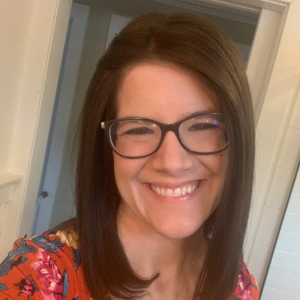 Mikell Frey is a communications professional with a passion for using the art of storytelling to positively impact lives. She strongly believes that positive social change can be inspired by the sharing of data-driven information coupled with the unique perspectives of people from all walks of life across Michigan, especially those who have faced extraordinary barriers.
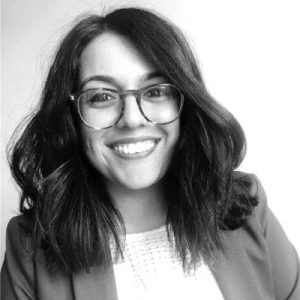


 Yona Isaacs (she/hers) is an Early Childhood Data Analyst for the Kids Count project. After earning her Bachelor of Science in Biopsychology, Cognition, and Neuroscience at the University of Michigan, she began her career as a research coordinator in pediatric psychiatry using data to understand the impacts of brain activity and genetics on children’s behavior and mental health symptoms. This work prompted an interest in exploring social determinants of health and the role of policy in promoting equitable opportunities for all children, families, and communities. She returned to the University of Michigan to complete her Masters in Social Work focused on Social Policy and Evaluation, during which she interned with the ACLU of Michigan’s policy and legislative team and assisted local nonprofit organizations in creating data and evaluation metrics. She currently serves as a coordinator for the Michigan Center for Youth Justice on a project aiming to increase placement options and enhance cultural competency within the juvenile justice system for LGBTQIA+ youth. Yona is eager to put her data skills to work at the League in support of data-driven policies that advocate for equitable access to healthcare, education, economic security, and opportunity for 0-5 year old children. In her free time, she enjoys tackling DIY house projects and trying new outdoor activities with her dog.
 Rachel Richards rejoined the League in December 2020 as the Fiscal Policy Director working on state budget and tax policies. Prior to returning to the League, she served as the Director of Legislative Affairs for the Michigan Department of Treasury, the tax policy analyst and Legislative Director for the Michigan League for Public Policy, and a policy analyst and the Appropriations Coordinator for the Democratic Caucus of the Michigan House of Representatives. She brings with her over a decade of experience in policies focused on economic opportunity, including workforce issues, tax, and state budget.
 Simon Marshall-Shah joined the Michigan League for Public Policy as a State Policy Fellow in August 2019. His work focuses on state policy as it relates to the budget, immigration, health care and other League policy priorities. Before joining the League, he worked in Washington, D.C. at the Association for Community Affiliated Plans (ACAP), providing federal policy and advocacy support to nonprofit, Medicaid health plans (Safety Net Health Plans) related to the ACA Marketplaces as well as Quality & Operations.

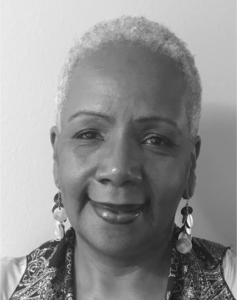 Renell Weathers, Michigan League for Public Policy (MLPP) Community Engagement Consultant. As community engagement consultant, Renell works with organizations throughout the state in connecting the impact of budget and tax policies to their communities. She is motivated by the belief that all children and adults deserve the opportunity to achieve their dreams regardless of race, ethnicity, religion or economic class.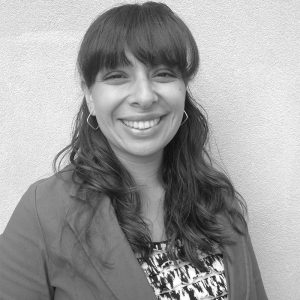
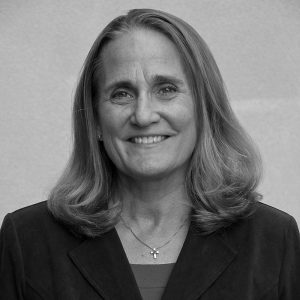


 Emily Jorgensen joined the Michigan League for Public Policy in July 2019. She deeply cares about the well-being of individuals and families and has a great love for Michigan. She is grateful that her position at the League enables her to combine these passions and work to help promote policies that will lead to better opportunities and security for all Michiganders.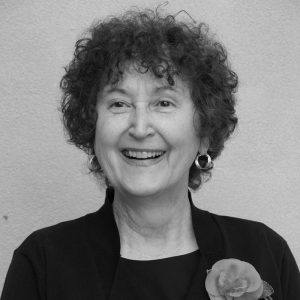
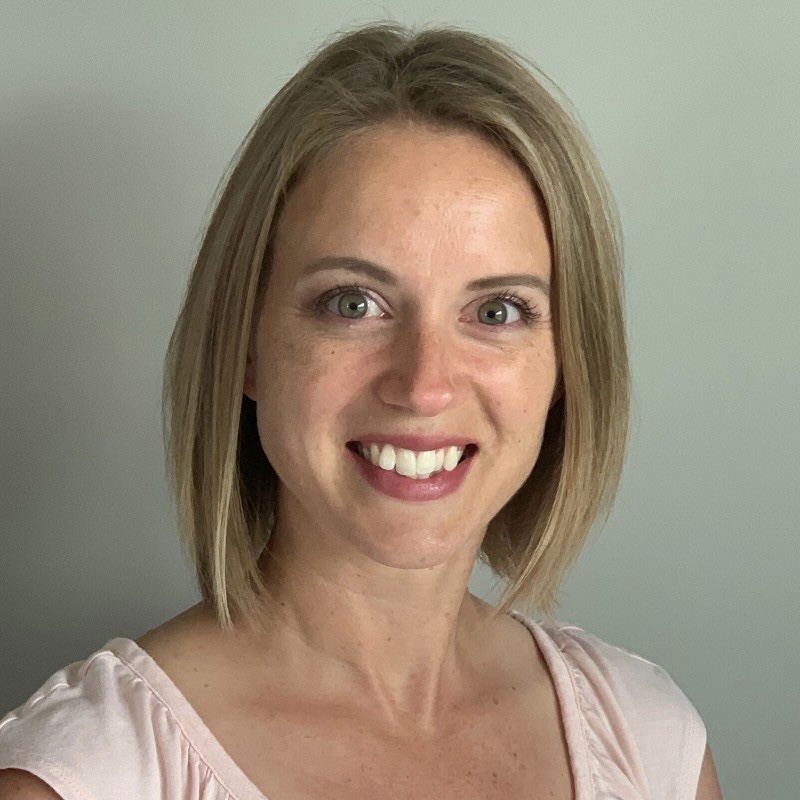 Megan Farnsworth joined the League’s staff in December 2022 as Executive Assistant. Megan is driven by work that is personally fulfilling, and feels honored to help support the work of an organization that pushes for more robust programming and opportunities for the residents of our state. She’s excited and motivated to gain overarching knowledge of the policies and agendas that the League supports.