A version of this column originally appeared in Michigan Advance.
In early 2025, the Trump administration framed mass deportation as a public safety initiative, repeatedly ignoring court orders and broadening authority in ways that erode constitutional limits on executive power. But the operational policies that defined the program created the conditions for foreseeable chaos and violence, resulting in the tragic killings of Alex Pretti and Renée Good in Minneapolis, as well as 32 others in detention centers and around the nation. Americans must now contend with a crisis of accountability that is chipping away at the rule of law and leaving us all with less safety and freedom. A recent package of bills in Michigan seeks to restore the guardrails that prevent civic life from becoming collateral damage.
Public safety is about more than the capabilities of law enforcement; it’s about recognizing public trust as the foundation for effective policing. That trust is quickly fading as the mismatch between the administration’s stated public-safety rationale and the mass deportation program’s real-world actions grows starker. The so-called “Big, Beautiful Bill” passed last year poured unprecedented resources into the U.S. Department of Homeland Security (DHS) to pursue the “worst of the worst.” Yet, 86% of its Michigan detainees have “no threat level” according to U.S. Immigration and Customs Enforcement (ICE) data.
Instead, the tactics of extremist immigration enforcement have collided with fundamental constitutional principles, including aggressive policing of peaceful protest, warrantless stops and home invasion, racial profiling so pervasive that even off-duty Minneapolis police report being accosted, and documented cases of legal status holders detained or deported without due process.
At the same time, accountability mechanisms are failing. One federal judge noted that in January alone, ICE defied more court orders than most federal agencies have in their entire existence. And historically, Customs and Border Protection (CBP) agents have been arrested for misconduct at roughly five times the rate reported across other federal law enforcement agencies. The Government Accountability Office has recommended that DHS, which houses ICE and CBP, needs stronger use-of-force data collection and analysis across its law enforcement components.
Testimony in the Michigan Senate on Nov. 9, 2025, and Jan. 29, 2026 has highlighted the negative impacts that this mass deportation campaign has had on public institutions and programs. This federal program has created a climate of fear, with agents showing up in schools, churches, hospitals and other civic spaces, likely discouraging residents from seeking medical attention or reporting crimes like domestic violence. Detroit council member Gabriela Santiago-Romero said one school in Detroit has seen attendance decline by 50% in the past year.
Along with many other states across the nation, Michigan lawmakers are considering bills that can help restore trust and protect residents through transparency and accountability. The first of these bills, Senate Bill (SB) 508, would effectively reinstitute the DHS “sensitive locations policy,” which limits immigration enforcement in schools, hospitals, and places of worship without a judicial warrant, and protects those spaces from becoming sites of aggressive raids and family separation.
Importantly, the problems associated with today’s immigration enforcement are built on another betrayal of public trust: the seizure of data collected for public services used to target immigrants. Not only does this chill access to services and participation in civic institutions that rely on voluntary compliance, including the tax system, but also government data being repurposed for enforcement is often outdated or error-ridden, which raises the risk of wrongful stops and even the detention of U.S. citizens. Moreover, ICE is hoovering up information to track individuals with viewpoints the administration dislikes. Michigan SB 509 would prohibit government entities from providing an individual’s identifying information for immigration enforcement purposes without a judicial warrant.
Senate Bill 510 would limit masking — a practice that can increase aggressive behavior — and require proper identification during enforcement, which is a standard that nearly all law enforcement abides by. Former acting ICE Director John Sandweg called masked enforcement “incredibly dangerous” because arrestees may resist and bystanders may intervene, mistaking arrests for kidnappings. During a Michigan Senate committee hearing, former Detroit Police Chief Ike McKinnon lamented the practice as problematic, noting that a lack of identification creates the conditions for blue-on-blue use-of-force mistakes.
Like similar campaigns of the past, aggressive enforcement has spilled over into mainstream society. But the scale of constitutional violations and the breakdown of accountability and trust that keeps society functioning is unique. SB 508-510 will put enforcement back within constitutional boundaries by requiring warrants, proper identification, and judicial oversight before state data can be shared.


 Betsy Zobl-Tar
  Jay Cutler joined the League in March 2026 as the Kids Count Senior Data Analyst, where he collects, analyzes, and prepares data for Kids Count in Michigan.
 Danielle Taylor-Basemore joined the League as the Development Data and Stewardship Coordinator in June 2025. She brings with her five years of nonprofit experience with a special focus on community engagement, data visualization and strategic programming. Prior to joining the League, Danielle served as the Business District, Safety, and Digital Manager at Jefferson East, Inc.
 Scott Preston is a Senior Policy Analyst with the Michigan League for Public Policy, where he leads the organization’s immigration and criminal justice reform portfolios. In the three years prior to joining the League, Scott facilitated the Southeast Michigan Refugee Collaborative and managed a small business economic development program at Global Detroit. His work included launching Michigan’s first Refugee Film Festival and building on a trusted connector model that linked marginalized communities with crucial resources. Scott’s work at the League is informed by his background in journalism and research. He spent four years covering the Syrian refugee crisis in the Middle East for publications such as The Economist, and later worked with unaccompanied refugee minors through Samaritas. Scott holds a master’s degree in international migration and public policy from the London School of Economics and Political Science.
 Kate Powers joined the League as the Chief Development Officer in February 2025. Prior to joining the League, Kate held leadership positions at many Michigan nonprofit organizations, most recently serving as the COO and Chief Development Officer of Ele’s Place. Kate has spent the bulk of her career in fundraising, with a short stint in the state Legislature as a legislative aide to members in both chambers. Kate is a graduate of Michigan State University’s James Madison College with a Bachelor of Arts in Social Relations and has a certificate in fundraising management from the Lilly Family School of Philanthropy at Indiana University. Additionally, Kate served on the East Lansing Public Schools Board of Education and is a past President of the Junior League of Lansing. In her free time, she enjoys traveling with her husband and her son and saving outfit of the day and home decor ideas on Pinterest.
  Nicholas Hess joined the League as the Fiscal Policy Analyst in September of 2024. In this role, Nicholas focuses on tax policy, government revenue, and their impact on working families and racial equity, including the effects of the Earned Income Tax Credit (EITC) and Child Tax Credit (CTC). Nicholas values the role that judicious fiscal policy can play in the improvement of people’s lives and the economy, alleviating inequities along the way.
 Audrey Matusz joined the League as the Visual Communications Specialist in September 2024. She supports the team with implementing social media strategies and brainstorming creative ways to talk about public policy. She brings with her nearly a decade of experience in producing digital products for evidence-based social justice initiatives.
  Jacob Kaplan
  Donald Stuckey
  Alexandra Stamm
 Amari Fuller
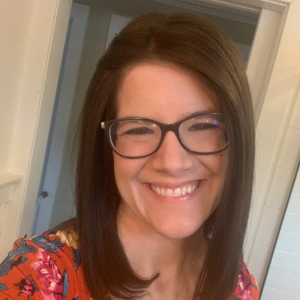 Mikell Frey is a communications professional with a passion for using the art of storytelling to positively impact lives. She strongly believes that positive social change can be inspired by the sharing of data-driven information coupled with the unique perspectives of people from all walks of life across Michigan, especially those who have faced extraordinary barriers.
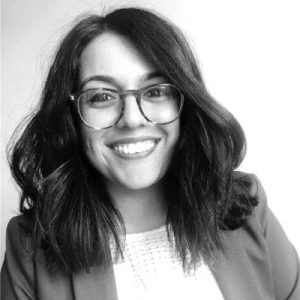


 Yona Isaacs (she/hers) is an Early Childhood Data Analyst for the Kids Count project. After earning her Bachelor of Science in Biopsychology, Cognition, and Neuroscience at the University of Michigan, she began her career as a research coordinator in pediatric psychiatry using data to understand the impacts of brain activity and genetics on children’s behavior and mental health symptoms. This work prompted an interest in exploring social determinants of health and the role of policy in promoting equitable opportunities for all children, families, and communities. She returned to the University of Michigan to complete her Masters in Social Work focused on Social Policy and Evaluation, during which she interned with the ACLU of Michigan’s policy and legislative team and assisted local nonprofit organizations in creating data and evaluation metrics. She currently serves as a coordinator for the Michigan Center for Youth Justice on a project aiming to increase placement options and enhance cultural competency within the juvenile justice system for LGBTQIA+ youth. Yona is eager to put her data skills to work at the League in support of data-driven policies that advocate for equitable access to healthcare, education, economic security, and opportunity for 0-5 year old children. In her free time, she enjoys tackling DIY house projects and trying new outdoor activities with her dog.
 Rachel Richards rejoined the League in December 2020 as the Fiscal Policy Director working on state budget and tax policies. Prior to returning to the League, she served as the Director of Legislative Affairs for the Michigan Department of Treasury, the tax policy analyst and Legislative Director for the Michigan League for Public Policy, and a policy analyst and the Appropriations Coordinator for the Democratic Caucus of the Michigan House of Representatives. She brings with her over a decade of experience in policies focused on economic opportunity, including workforce issues, tax, and state budget.
 Simon Marshall-Shah joined the Michigan League for Public Policy as a State Policy Fellow in August 2019. His work focuses on state policy as it relates to the budget, immigration, health care and other League policy priorities. Before joining the League, he worked in Washington, D.C. at the Association for Community Affiliated Plans (ACAP), providing federal policy and advocacy support to nonprofit, Medicaid health plans (Safety Net Health Plans) related to the ACA Marketplaces as well as Quality & Operations.

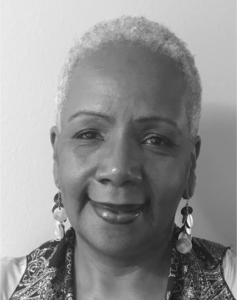 Renell Weathers, Michigan League for Public Policy (MLPP) Community Engagement Consultant. As community engagement consultant, Renell works with organizations throughout the state in connecting the impact of budget and tax policies to their communities. She is motivated by the belief that all children and adults deserve the opportunity to achieve their dreams regardless of race, ethnicity, religion or economic class.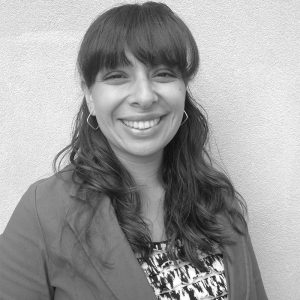
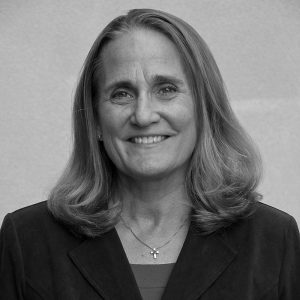


 Emily Jorgensen joined the Michigan League for Public Policy in July 2019. She deeply cares about the well-being of individuals and families and has a great love for Michigan. She is grateful that her position at the League enables her to combine these passions and work to help promote policies that will lead to better opportunities and security for all Michiganders.
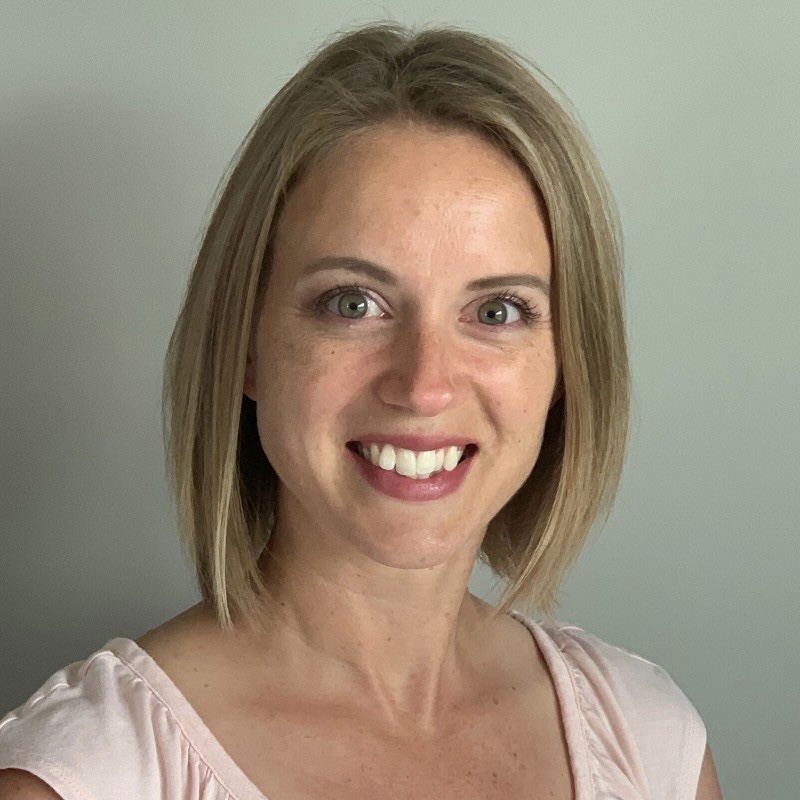 Megan Farnsworth joined the League’s staff in December 2022 as Executive Assistant. Megan is driven by work that is personally fulfilling, and feels honored to help support the work of an organization that pushes for more robust programming and opportunities for the residents of our state. She’s excited and motivated to gain overarching knowledge of the policies and agendas that the League supports.