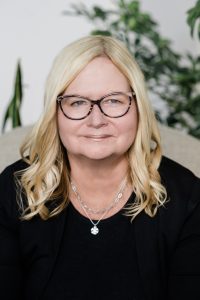
Yesterday, U.S. Senate Republicans announced that they did not have the votes for the Graham-Cassidy healthcare bill and were abandoning this latest effort to repeal the Affordable Care Act (ACA). This now makes the elimination of the ACA highly unlikely and is another win in the ongoing battle to protect healthcare. But that’s just it—it’s an ongoing battle, and while this is a big victory for now, there are surely more attacks to come (which is why we at the League eat “Keep Fighting” bagels).
The Affordable Care Act has become such a political football, but our support of the ACA both as an organization and as individuals lies with this: we believe that healthcare is a right and should be available to all people, regardless of their income, occupation, race and ethnicity, gender, age, pre-existing condition or anything else. We at the League know that we are lucky to have employer-provided health benefits, and that for many of us, having reliable healthcare has changed or even saved our lives. And we know that everyone deserves that same chance.
Here are a just a few staff perspectives on the importance and value of health insurance. Understanding our privilege to have healthcare helps fuel our work to support other people’s struggles to get and keep it through the Affordable Care Act.
Rachel Richards: My Backup Plan
“I always have a backup plan. I know it drives my husband crazy; I can see him roll his eyes every time I plan through a conversation, a vacation and every ‘If, then’ scenario I can think of. Now, I’ve always been a planner, but the backup planner in me really came into existence with the birth of my son. My plan for a calm, medication-free delivery got quickly thrown out the window as I experienced a failed induction and emergency cesarean section. Post-delivery complications led to a five-day hospital stay for me. My son, who was diagnosed with a respiratory infection through a chest X-ray at one day old and GERD through a barium X-ray at four days old, was released a week after his arrival.
“I had not planned for any of this. But thankfully, I already had a backup plan in place: health insurance. When I received my insurance claim in the mail a few weeks later, I was shocked to find out that our entire ordeal, for which I would only pay about $2,500 total, cost about $60,000. Since then, the benefits of healthcare coverage—and the benefits of the Affordable Care Act—haven’t stopped. Basic preventative medicine, like well-child checkups, annual physicals and immunizations, has been completely covered. Having a child—even one without many complications—could have bankrupted us. Instead, thanks to the healthcare coverage that will always back me up, we are able to provide our son with his basic needs, and then some.”
Lorenzo Santavicca: One Less Student Cost
“For me, being a college student and enduring a long-sprint marathon to my degree consists of a heavy load of debt, a full-time job, a part-time internship, class and a floating level of uncertainty. But one area of my life I’m thankful I haven’t had to worry about at this time is my health insurance.
“Thankfully, I am able to claim myself as a dependent on my parents’ health coverage. It has allowed me to go for regularly scheduled appointments, and certainly puts my mind at ease if I were ever to find myself in a dire situation where I would need immediate assistance. Not to mention, allow me to focus my time and financial resources on my educational success. Unfortunately, for some of my peers in college, the same can’t be said about their health coverage. The Affordable Care Act allows young people like me to stay on our parents’ health insurance until age 26 if need be—including 70,000 in Michigan. That is truly a lifesaver for students and young adults as we look for work and prepare for the real world.
“I urge our elected leaders at the national level to take a hard stop at eliminating healthcare for Americans, like my friends, who could not be covered if it weren’t for the health coverage that currently exists and helps them worry about one less need.”
Emily Schwarzkopf: See Appendix
“It was like any typical Sunday in the life of a single 20-something. I binge-watched some Netflix, did a few loads of laundry and had dinner with some friends. Then at around 10 p.m., a sudden sharp pain started in my stomach…and it didn’t go away. I took medicine, hot showers and figured that if I just fell asleep I would feel better by morning. At 4 a.m., realizing that the pain wasn’t getting any better I drove myself to the hospital (trust me when I say, I knew how stupid this was but figured if I got pulled over the cops would just get me to the hospital faster). After a short wait in the waiting room, an IV and a few tests it was confirmed—I had appendicitis. Now, I consider myself a relatively healthy person and would say that under some circumstances, I may have chosen not to have health insurance because honestly I rarely have a need to use it (outside of the preventative services available to me through the Affordable Care Act).
“Appendicitis is not a. something you just ignore or b. choose to have. I spent two nights in the hospital, had surgery, anesthesia and a lot of really good hospital jello. The recovery was relatively quick and the surgery left nothing but three very tiny scars. I awaited the insurance bill and spent a lot of time googling ‘average cost of appendectomy.’ My bill finally arrived. Total cost $21,000—for something I didn’t even want! Luckily, my insurance took care of most of the costs but I still faced a pretty hefty balance.
“Insurance is a lifeline. It is there for the unexpected…in my case, emergency surgery. Without it, I almost assuredly would have faced great financial hardships. As I think about Congress’s continued (and thus far, failed) attempts to repeal and replace the Affordable Care Act, I can’t help but worry about the millions of people that could lose their healthcare, their lifeline and safety net. And that’s why we have to keep fighting.”
Karen Holcomb-Merrill: A Parent’s Job (or Worry) Is Never Done
When your kids are babies and toddlers and elementary school kids you can’t imagine that you could ever worry about them or be more protective than you are at that time. But I’ve got news for you young parents. Your kids grow up and you still worry about them and want to protect them, even into their 20s (and beyond). And healthcare is one of the things you worry about most.
Two of my sons—and let’s be honest, guys aren’t the best about seeing doctors—have asthma. That means lung function tests, regular doctor visits and inhalers (and extra inhalers because, you know, boys). We were very fortunate to have good health insurance to cover all of this. When our middle son got a job after college, it was expensive for him to pay his part of his employer-sponsored health insurance, but because of the Affordable Care Act we were able to keep him on our insurance plan until he was 26. It was much more affordable for us than it would have been for him to have his own plan. And this mom took comfort in knowing that he was covered (and hopefully going to the doctor).
Oh, and about the other son with asthma? He’s in grad school and still on our health insurance. We are grateful that he can safely run when he needs to take a break from his PhD program.
Alex Rossman: Making a Case for Mental Health
“As you may have guessed from my days of raising hell as a kid, I’ve got some issues (cue Kid Cudi). I also use comedy and rap references to cope. But in all seriousness, taking care of your mental health is just as important as taking care of yourself physically. It has an unfortunate stigma, but that stigma is chipped away a little every time someone talks openly about mental health and self-care.
“From my wild childhood on in to my somewhat tamer adulthood, I have relied on counseling and therapy to work through my personal challenges. I have been lucky enough to have employer-provided healthcare my whole adult life, including coverage for mental health services. For a lot of people, myself included, it’s hard enough to get yourself through the door. If you throw a hefty price tag on top of that—and believe me, without insurance, it’s not cheap—most people will not be able to properly take care of themselves.
“One of the many great things about the Affordable Care Act is mental health parity that provides equal healthcare coverage for mental health as physical health. From anxiety and depression to substance use disorders—especially with Michigan’s opioid crisis—people in Michigan and around the country are struggling with mental health issues. Mental health is as essential as any other component of our health, and care should be as essential—and easy to get—as checkups or medical treatment for an illness or injury. People face enough challenges to getting mental health support, and the cost shouldn’t be one of them. The ACA took a big step forward in addressing mental health costs and coverage, and that is yet another reason why it should be protected.”
Conclusion
This is just a handful of stories on what healthcare has meant for us. But it means even more to the millions of people who have spent the last nine months worrying they’re going to lose it. The Affordable Care Act has had a huge and positive impact on our state and our people, and Congress should be working to uphold and improve it, not eliminate it. With yesterday’s news that Graham-Cassidy has failed, more elected officials seem to be understanding that, and we urge you to keep sharing your own stories of what the ACA has meant for you.


 Jay Cutler joined the League in March 2026 as the Kids Count Senior Data Analyst, where he collects, analyzes, and prepares data for Kids Count in Michigan.
 Danielle Taylor-Basemore joined the League as the Development Data and Stewardship Coordinator in June 2025. She brings with her five years of nonprofit experience with a special focus on community engagement, data visualization and strategic programming. Prior to joining the League, Danielle served as the Business District, Safety, and Digital Manager at Jefferson East, Inc.
 Scott Preston is a Senior Policy Analyst with the Michigan League for Public Policy, where he leads the organization’s immigration and criminal justice reform portfolios. In the three years prior to joining the League, Scott facilitated the Southeast Michigan Refugee Collaborative and managed a small business economic development program at Global Detroit. His work included launching Michigan’s first Refugee Film Festival and building on a trusted connector model that linked marginalized communities with crucial resources. Scott’s work at the League is informed by his background in journalism and research. He spent four years covering the Syrian refugee crisis in the Middle East for publications such as The Economist, and later worked with unaccompanied refugee minors through Samaritas. Scott holds a master’s degree in international migration and public policy from the London School of Economics and Political Science.
 Kate Powers joined the League as the Chief Development Officer in February 2025. Prior to joining the League, Kate held leadership positions at many Michigan nonprofit organizations, most recently serving as the COO and Chief Development Officer of Ele’s Place. Kate has spent the bulk of her career in fundraising, with a short stint in the state Legislature as a legislative aide to members in both chambers. Kate is a graduate of Michigan State University’s James Madison College with a Bachelor of Arts in Social Relations and has a certificate in fundraising management from the Lilly Family School of Philanthropy at Indiana University. Additionally, Kate served on the East Lansing Public Schools Board of Education and is a past President of the Junior League of Lansing. In her free time, she enjoys traveling with her husband and her son and saving outfit of the day and home decor ideas on Pinterest.
  Nicholas Hess joined the League as the Fiscal Policy Analyst in September of 2024. In this role, Nicholas focuses on tax policy, government revenue, and their impact on working families and racial equity, including the effects of the Earned Income Tax Credit (EITC) and Child Tax Credit (CTC). Nicholas values the role that judicious fiscal policy can play in the improvement of people’s lives and the economy, alleviating inequities along the way.
 Audrey Matusz joined the League as the Visual Communications Specialist in September 2024. She supports the team with implementing social media strategies and brainstorming creative ways to talk about public policy. She brings with her nearly a decade of experience in producing digital products for evidence-based social justice initiatives.
  Jacob Kaplan
  Donald Stuckey
  Alexandra Stamm
 Amari Fuller
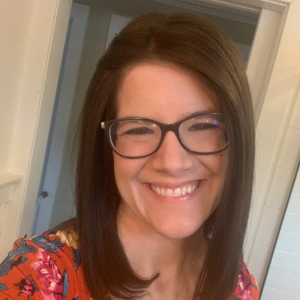 Mikell Frey is a communications professional with a passion for using the art of storytelling to positively impact lives. She strongly believes that positive social change can be inspired by the sharing of data-driven information coupled with the unique perspectives of people from all walks of life across Michigan, especially those who have faced extraordinary barriers.



 Yona Isaacs (she/hers) is an Early Childhood Data Analyst for the Kids Count project. After earning her Bachelor of Science in Biopsychology, Cognition, and Neuroscience at the University of Michigan, she began her career as a research coordinator in pediatric psychiatry using data to understand the impacts of brain activity and genetics on children’s behavior and mental health symptoms. This work prompted an interest in exploring social determinants of health and the role of policy in promoting equitable opportunities for all children, families, and communities. She returned to the University of Michigan to complete her Masters in Social Work focused on Social Policy and Evaluation, during which she interned with the ACLU of Michigan’s policy and legislative team and assisted local nonprofit organizations in creating data and evaluation metrics. She currently serves as a coordinator for the Michigan Center for Youth Justice on a project aiming to increase placement options and enhance cultural competency within the juvenile justice system for LGBTQIA+ youth. Yona is eager to put her data skills to work at the League in support of data-driven policies that advocate for equitable access to healthcare, education, economic security, and opportunity for 0-5 year old children. In her free time, she enjoys tackling DIY house projects and trying new outdoor activities with her dog.
 Rachel Richards rejoined the League in December 2020 as the Fiscal Policy Director working on state budget and tax policies. Prior to returning to the League, she served as the Director of Legislative Affairs for the Michigan Department of Treasury, the tax policy analyst and Legislative Director for the Michigan League for Public Policy, and a policy analyst and the Appropriations Coordinator for the Democratic Caucus of the Michigan House of Representatives. She brings with her over a decade of experience in policies focused on economic opportunity, including workforce issues, tax, and state budget.
 Simon Marshall-Shah joined the Michigan League for Public Policy as a State Policy Fellow in August 2019. His work focuses on state policy as it relates to the budget, immigration, health care and other League policy priorities. Before joining the League, he worked in Washington, D.C. at the Association for Community Affiliated Plans (ACAP), providing federal policy and advocacy support to nonprofit, Medicaid health plans (Safety Net Health Plans) related to the ACA Marketplaces as well as Quality & Operations.


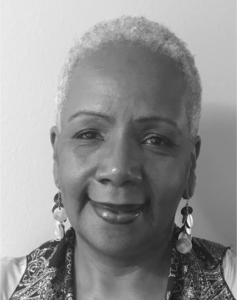 Renell Weathers, Michigan League for Public Policy (MLPP) Community Engagement Consultant. As community engagement consultant, Renell works with organizations throughout the state in connecting the impact of budget and tax policies to their communities. She is motivated by the belief that all children and adults deserve the opportunity to achieve their dreams regardless of race, ethnicity, religion or economic class.
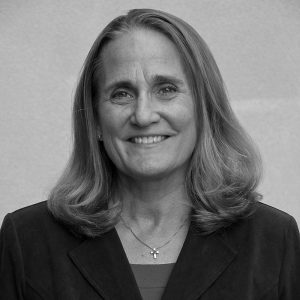


 Emily Jorgensen joined the Michigan League for Public Policy in July 2019. She deeply cares about the well-being of individuals and families and has a great love for Michigan. She is grateful that her position at the League enables her to combine these passions and work to help promote policies that will lead to better opportunities and security for all Michiganders.
 Megan Farnsworth joined the League’s staff in December 2022 as Executive Assistant. Megan is driven by work that is personally fulfilling, and feels honored to help support the work of an organization that pushes for more robust programming and opportunities for the residents of our state. She’s excited and motivated to gain overarching knowledge of the policies and agendas that the League supports.