
Date: September 22, 2026
To: Chair Chang and Members of the Senate Committee on Civil Rights, Judiciary and Public Safety
From: Rachel Richards, Fiscal Policy & Government Relations Director, Michigan League for Public Policy
Subject: Support for SB 1089-1091 — Trial Court Indigency Proceedings
The Michigan League for Public Policy is pleased to support Senate Bills 1089-1091, sponsored by Sens. Chang, Damoose and Cavanagh, which will implement important provisions of the Michigan Judicial Council’s Alternative Funding for Trial Courts Workgroup to help modernize and standardize funding for our trial court system. Importantly, these bills will implement a uniform approach to imposing fees and fines and making indigency determinations, ensuring persons mired in the court system won’t be saddled with court expenses that they’re unable to pay.
The League is a nonpartisan research and advocacy organization that promotes economic opportunity for all and analyzes the impact of public policy and budget decisions on the lives of Michiganders who have been systemically left out of prosperity. The League is also the state’s Kids Count organization, working as a part of a national effort to measure child well-being at the state and local levels and use that information to shape public policies and programs to improve the lives of children and their families.
In 2014, the Michigan Supreme Court ruled in People v. Cunningham that state law did not provide courts with the authority to impose costs upon criminal defendants to fund the day-to-day operation of the courts. While the Legislature passed short-term and temporary laws clarifying the ability of trial courts to levy fees and fines, which have been extended several times, Cunningham was an important decision that identified real and perceived conflicts of interest in our court funding system. Essentially, our system of funding courts through fees and fines creates an obligation to use the courts to generate revenue, rather than incentivizing judges to prioritize accountability, rehabilitation and justice. This system shifts the cost burden onto indigent defendants and people who are disproportionately affected by the criminal justice system and who have the least means to adequate counsel.
In response to Cunningham, in 2017, the Michigan Legislature created the Trial Court Funding Commission to review Michigan’s trial court funding system and make recommendations. The Commission’s report, released in 2019, identified five recommendations to ensure stable funding for trial courts while removing trial court judges from a fundraising role for the operations of the courts. Importantly, one of their recommendations focused on establishing uniform assessments to determine whether a justice-involved individual has the ability to pay the court fees or fines.
Following the release of the report, the Michigan Judicial Council, led by the State Court Administrative Office (SCAO), was tasked with identifying the roadmap to implement the commission’s recommendations. The Alternative Funding for Trial Courts Workgroup was established in 2022 to advance court funding reforms, and the workgroup released its report in November 2025. Senate Bills 1089-1091 implement a small but incredibly important part of the workgroup’s recommendations — to ensure that justice-involved individuals can afford the associated fees and costs while maintaining requirements to pay restitution and fines when appropriate. Crucially, these bills would fill a gap in state law by requiring indigency determinations to be made before fines and fees are levied. This helps to ensure that individuals are held accountable for their actions while not saddling them with unfair court fees that they’re unable to pay.
Senate Bill 1089, sponsored by Sen. Chang, creates the uniform process and standards for assessing and determining a justice-involved individual’s indigency and would prohibit a trial court from imposing costs, fines or assessments on indigent defendants, except in cases of the payment of certain restitutions. The bill’s standards for determining indigency include common-sense definitions, such as enrollment in public assistance, income at or below the United States Department of Housing and Urban Development’s “very low income” level, or demonstrated financial hardship. The bills would also exempt youthful trainees (someone adjudicated under the Holmes Youthful Trainee Act), probationers, and incarcerated persons on work or school release who were already determined to be indigent from having to pay supervision or monitoring fees. Senate Bills 1090, sponsored by Sen. Damoose, and 1091, sponsored by Sen. Cavanagh, update provisions in the Revised Judicature Act and the Michigan Vehicle Code to align with the process and standards included in Senate Bill 1089 as well as prohibit the assessment of various costs or court fines for defendants that have been determined to be indigent.
As a data-backed organization, the definitions of indigency make sense. The definitions include a number of public assistance programs that are federal and state funded and are based on a percentage of the federal poverty guidelines or level (FPL), a standard set by the United States Department of Health and Human Services. These figures are updated annually based on inflation and vary based on the size of a family unit. Additionally, certain state programs have even more restricted or limited eligibility requirements than would have been allowed under federal guidelines. For example, the following table identifies the eligibility limits for a variety of the programs included in the definition of indigency.
| Program | What the Program Provides | Eligibility Limit | Yearly Income | Monthly Income |
| Supplemental Nutrition Assistance Program (SNAP) | Provides individuals with monetary benefits to use at grocery stores, farmers markets and other facilities to purchase food | 200% FPL | Family of 3: $51,640 |
Family of 3: $4,303 |
| Family Independence Program | Provides families with monetary benefits to help support basic needs | Initial Eligibility: 42% FPL |
Family of 3: $11,136 |
Family of 3: $928 |
| Medicaid | Provides basic health insurance to individuals and families with low incomes | Healthy MI: 138% FPL |
Family of 3: $35,632 |
Family of 3: $2,969 |
| Woman, Infant and Children (WIC) Benefits | Provides healthy foods, personalized nutrition education, breastfeeding support and referrals to other services | Generally, receipt of Medicaid, SNAP or FIP or based on gross income | Family of 3: $50,542 |
Family of 3: $4,212 |
Arguments that this will cause a significant reduction in court revenues are unfounded. A study by the Brennan Center assessing court hearings from 2012 to 2018 showed that New Mexico and Texas spent over 41 cents for every dollar collected on associated court and jail costs alone. This represents an extremely inefficient return compared to the third of a penny per dollar the IRS spends on collecting tax revenue. In Michigan, collection of court costs remains low; the report from the Michigan Judicial Council workgroup, on which this legislation is based, found that district court costs collections were 47% between 2022 and 2023 and circuit courts only collected 12% of costs in the same period. In 2023, collection rates fell from 49% in year one to 4% in year three. In addition, year one collections of court costs have fallen over time. Essentially, even existing data show that using court costs as a way to generate revenue is ineffective because it has a poor return on investment.
Relying on fines and fees contributes to a poverty trap that disproportionately impacts the indigent populations with the least ability to incur the costs of funding the basic operations of Michigan’s criminal legal system. The 2024 Urban Institute Well-Being and Basic Needs Survey showed that 1 in 5 working-age adults lived in households that were charged a fine or fee during 2024. More than half of these costs were uncollected and the majority of households struggled to pay for basic necessities like food and housing. These same households face a cascading series of consequences that can prevent them from achieving financial security if they are unable to afford fines and fees, such as arrest and license forfeiture.
Importantly, this will provide some uniformity across all courts. With a patchwork of court systems across the state, currently justice-involved individuals might be treated differently if they are charged and adjudicated in Kalamazoo, Oakland, Clare, or Delta counties. Standardizing indigent determinations can also improve the quality of those assessments, leading to a more fair and effective system. Research by the University of Michigan piloting an online system of determinations found that the standardizing intervention “improves accuracy and therefore the effectiveness of fines as punishments.”
At the same time, the legislation maintains that things like fines and restitution can still be assessed when deemed appropriate. It does not make indigent defendants financially immune from the consequences of an offense. This guarantees that legal defendants are held accountable for their actions. Furthermore, SB 1089-1091 help ensure that all similarly situated individuals are treated equitably regardless of their ZIP codes and take a step toward a more financially efficient and reliable funding system by reducing reliance on fines and fees.
We urge your support for this legislation.


 Maisha Massey is a Detroit native, educator, researcher and advocate committed to creating more equitable experiences for young people and the communities that support them. She currently teaches 11th-grade English Language Arts in Detroit Public Schools Community District and serves as a TeachMichigan Michigan Education Policy Fellow. Maisha holds a master’s degree in Educational Leadership and is currently pursuing her Ed.D. in Educational Leadership and Policy Studies at Wayne State University, where her research centers the experiences of Black girls in schools. Her work is grounded in the belief that meaningful policy should be informed by the voices and lived experiences of the students, educators and communities most impacted by it.
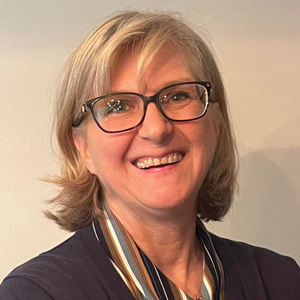 Betsy Zobl-Tar
 Jay Cutler joined the League in March 2026 as the Kids Count Senior Data Analyst, where he collects, analyzes, and prepares data for Kids Count in Michigan.
 Danielle Taylor-Basemore joined the League as the Development Data and Stewardship Coordinator in June 2025. She brings with her five years of nonprofit experience with a special focus on community engagement, data visualization and strategic programming. Prior to joining the League, Danielle served as the Business District, Safety, and Digital Manager at Jefferson East, Inc.
 Scott Preston is a Senior Policy Analyst with the Michigan League for Public Policy, where he leads the organization’s immigration and criminal justice reform portfolios. In the three years prior to joining the League, Scott facilitated the Southeast Michigan Refugee Collaborative and managed a small business economic development program at Global Detroit. His work included launching Michigan’s first Refugee Film Festival and building on a trusted connector model that linked marginalized communities with crucial resources. Scott’s work at the League is informed by his background in journalism and research. He spent four years covering the Syrian refugee crisis in the Middle East for publications such as The Economist, and later worked with unaccompanied refugee minors through Samaritas. Scott holds a master’s degree in international migration and public policy from the London School of Economics and Political Science.
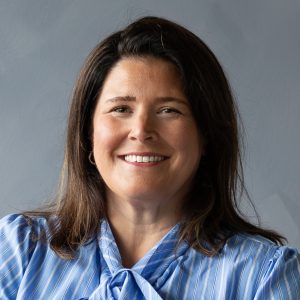 Kate Powers joined the League as the Chief Development Officer in February 2025. Prior to joining the League, Kate held leadership positions at many Michigan nonprofit organizations, most recently serving as the COO and Chief Development Officer of Ele’s Place. Kate has spent the bulk of her career in fundraising, with a short stint in the state Legislature as a legislative aide to members in both chambers. Kate is a graduate of Michigan State University’s James Madison College with a Bachelor of Arts in Social Relations and has a certificate in fundraising management from the Lilly Family School of Philanthropy at Indiana University. Additionally, Kate served on the East Lansing Public Schools Board of Education and is a past President of the Junior League of Lansing. In her free time, she enjoys traveling with her husband and her son and saving outfit of the day and home decor ideas on Pinterest.
 Nicholas Hess joined the League as the Fiscal Policy Analyst in September of 2024. In this role, Nicholas focuses on tax policy, government revenue, and their impact on working families and racial equity, including the effects of the Earned Income Tax Credit (EITC) and Child Tax Credit (CTC). Nicholas values the role that judicious fiscal policy can play in the improvement of people’s lives and the economy, alleviating inequities along the way.
 Audrey Matusz joined the League as the Visual Communications Specialist in September 2024. She supports the team with implementing social media strategies and brainstorming creative ways to talk about public policy. She brings with her nearly a decade of experience in producing digital products for evidence-based social justice initiatives.
 Jacob Kaplan
 Donald Stuckey
 Alexandra Stamm

 Amari Fuller
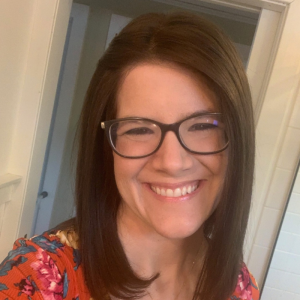 Mikell Frey is a communications professional with a passion for using the art of storytelling to positively impact lives. She strongly believes that positive social change can be inspired by the sharing of data-driven information coupled with the unique perspectives of people from all walks of life across Michigan, especially those who have faced extraordinary barriers.

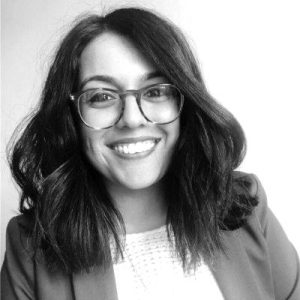


 Yona Isaacs (she/hers) is an Early Childhood Data Analyst for the Kids Count project. After earning her Bachelor of Science in Biopsychology, Cognition, and Neuroscience at the University of Michigan, she began her career as a research coordinator in pediatric psychiatry using data to understand the impacts of brain activity and genetics on children’s behavior and mental health symptoms. This work prompted an interest in exploring social determinants of health and the role of policy in promoting equitable opportunities for all children, families, and communities. She returned to the University of Michigan to complete her Masters in Social Work focused on Social Policy and Evaluation, during which she interned with the ACLU of Michigan’s policy and legislative team and assisted local nonprofit organizations in creating data and evaluation metrics. She currently serves as a coordinator for the Michigan Center for Youth Justice on a project aiming to increase placement options and enhance cultural competency within the juvenile justice system for LGBTQIA+ youth. Yona is eager to put her data skills to work at the League in support of data-driven policies that advocate for equitable access to healthcare, education, economic security, and opportunity for 0-5 year old children. In her free time, she enjoys tackling DIY house projects and trying new outdoor activities with her dog.
 Rachel Richards rejoined the League in December 2020 as the Fiscal Policy Director working on state budget and tax policies. Prior to returning to the League, she served as the Director of Legislative Affairs for the Michigan Department of Treasury, the tax policy analyst and Legislative Director for the Michigan League for Public Policy, and a policy analyst and the Appropriations Coordinator for the Democratic Caucus of the Michigan House of Representatives. She brings with her over a decade of experience in policies focused on economic opportunity, including workforce issues, tax, and state budget.
 Simon Marshall-Shah joined the Michigan League for Public Policy as a State Policy Fellow in August 2019. His work focuses on state policy as it relates to the budget, immigration, health care and other League policy priorities. Before joining the League, he worked in Washington, D.C. at the Association for Community Affiliated Plans (ACAP), providing federal policy and advocacy support to nonprofit, Medicaid health plans (Safety Net Health Plans) related to the ACA Marketplaces as well as Quality & Operations.


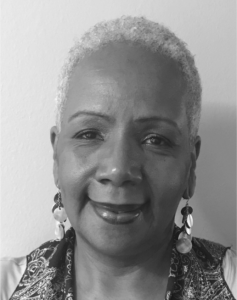 Renell Weathers, Michigan League for Public Policy (MLPP) Community Engagement Consultant. As community engagement consultant, Renell works with organizations throughout the state in connecting the impact of budget and tax policies to their communities. She is motivated by the belief that all children and adults deserve the opportunity to achieve their dreams regardless of race, ethnicity, religion or economic class.
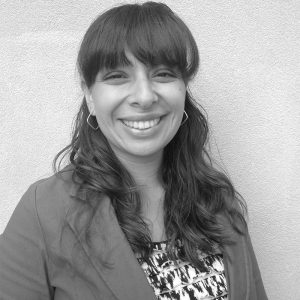
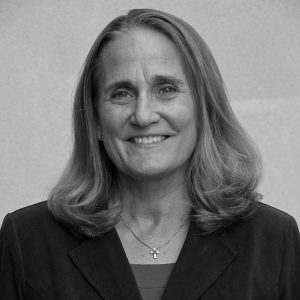

 Emily Jorgensen joined the Michigan League for Public Policy in July 2019. She deeply cares about the well-being of individuals and families and has a great love for Michigan. She is grateful that her position at the League enables her to combine these passions and work to help promote policies that will lead to better opportunities and security for all Michiganders.

 Megan Farnsworth joined the League’s staff in December 2022 as Executive Assistant. Megan is driven by work that is personally fulfilling, and feels honored to help support the work of an organization that pushes for more robust programming and opportunities for the residents of our state. She’s excited and motivated to gain overarching knowledge of the policies and agendas that the League supports.