This article originally appeared in The Alpena News on October 28, 2020
Decades of state revenue sharing cuts have harmed local communities.
All federal and state issues ultimately have a local impact.
But no state policy affects local government policies, services, and spending — and in turn, residents’ daily lives — like local revenue sharing.
Revenue sharing is the portion of state tax revenues distributed to local governments, including counties, cities, villages and townships. There are two types of revenue sharing, known as constitutional revenue sharing and statutory revenue sharing. Constitutional revenue sharing is distributed on a per-capita basis and is fairly steady year after year. Statutory revenue sharing, on the other hand, has not been maintained over time and has declined significantly over the past two decades.
A new report from the Michigan League for Public Policy, “Building Equitable Communities: More Funding Needed for Local Governments,” shows that local revenue sharing payments from the state have declined 35.4% for cities, villages, and townships and 25.4% for counties between 1997 and 2019.
That decline has significantly hurt your county and local government’s ability to fund the things you and your families value: emergency services you depend on in a crisis, the roads you drive on, the parks your kids play in, and more. Revenue sharing also funds the local health departments that are making important decisions right now to help curb the spread of COVID-19.
Unfortunately, local governments have been getting hit on both sides, as far as their budget funding goes. In addition to state revenue sharing declines, property tax collections have also diminished. When adjusted for inflation, property tax collections in 2019 were 8.7% below collections in 2007 and only 11% above the trough in property tax collections brought on by the 2008-09 foreclosure crisis. In 2019, real Michigan property tax collections were on par with collections in 2004.
These revenue declines at both the state and local level have forced local governments to cut their budgets, reduce or eliminate valuable services, and make bad policy decisions. Local units of government are seeking to recoup declining revenues in increasingly inequitable and unpopular ways, including a growing reliance on fine and fee collection to pay for city services. A heavy reliance on fines and fees disproportionately affects people of color, and often pushes residents with lower incomes deeper into poverty.
With more resources from the state in revenue sharing, greater investments can be made in the programs and services that promote racial equity and economic security for all. Increasing local revenues can help all communities and governments achieve the vision of racial equity, economic prosperity, and social justice. And as state lawmakers tackle a variety of criminal justice reforms, including revisiting court fines and fees, they must also acknowledge that revenue sharing declines have pushed local governments to rely more on court fines and fees.
I know firsthand how vital a fair deal from the state is to our local governments, as I served in city and county government for 17 years and in the Michigan Legislature for more than a decade. COVID-19 has amplified the importance of our local governments and their funding needs as county and local officials work to address the public health crisis and protect residents, but equitable revenue sharing should be a part of every single state budget.
The League’s report outlines the following recommendations to address local governments’ funding needs, improving racial equity in the process:
- Significantly increasing statutory revenue sharing to counties and cities, villages and townships to at least match what is called for under the statutory formula from Public Act 532 of 1998;
- Creating new formulas for the distribution of statutory revenue sharing to send more resources to communities with low housing wealth;
- Expanding the Homestead Property Tax Credit; and
- Authorizing more tax options for local units of government, including motor vehicle taxes and registration fees, and alcohol, tobacco and cannabis taxes, and taxes on entertainment and amusement.
In closing, I’d also like to give you, the reader, a few recommendations to help advocate for your communities and their funding needs: Visit mlpp.org to read our report on local revenue sharing. Reach out to your public officials and candidates before and after the election to make sure they know adequate community funding and services are important to you. And, if you haven’t already, vote to make sure you have a say in your government representation at the national, state and local levels.


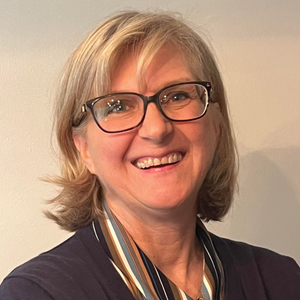 Betsy Zobl-Tar
  Jay Cutler joined the League in March 2026 as the Kids Count Senior Data Analyst, where he collects, analyzes, and prepares data for Kids Count in Michigan.
 Danielle Taylor-Basemore joined the League as the Development Data and Stewardship Coordinator in June 2025. She brings with her five years of nonprofit experience with a special focus on community engagement, data visualization and strategic programming. Prior to joining the League, Danielle served as the Business District, Safety, and Digital Manager at Jefferson East, Inc.
 Scott Preston is a Senior Policy Analyst with the Michigan League for Public Policy, where he leads the organization’s immigration and criminal justice reform portfolios. In the three years prior to joining the League, Scott facilitated the Southeast Michigan Refugee Collaborative and managed a small business economic development program at Global Detroit. His work included launching Michigan’s first Refugee Film Festival and building on a trusted connector model that linked marginalized communities with crucial resources. Scott’s work at the League is informed by his background in journalism and research. He spent four years covering the Syrian refugee crisis in the Middle East for publications such as The Economist, and later worked with unaccompanied refugee minors through Samaritas. Scott holds a master’s degree in international migration and public policy from the London School of Economics and Political Science.
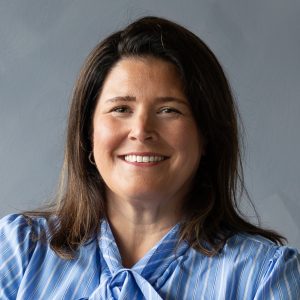 Kate Powers joined the League as the Chief Development Officer in February 2025. Prior to joining the League, Kate held leadership positions at many Michigan nonprofit organizations, most recently serving as the COO and Chief Development Officer of Ele’s Place. Kate has spent the bulk of her career in fundraising, with a short stint in the state Legislature as a legislative aide to members in both chambers. Kate is a graduate of Michigan State University’s James Madison College with a Bachelor of Arts in Social Relations and has a certificate in fundraising management from the Lilly Family School of Philanthropy at Indiana University. Additionally, Kate served on the East Lansing Public Schools Board of Education and is a past President of the Junior League of Lansing. In her free time, she enjoys traveling with her husband and her son and saving outfit of the day and home decor ideas on Pinterest.
  Nicholas Hess joined the League as the Fiscal Policy Analyst in September of 2024. In this role, Nicholas focuses on tax policy, government revenue, and their impact on working families and racial equity, including the effects of the Earned Income Tax Credit (EITC) and Child Tax Credit (CTC). Nicholas values the role that judicious fiscal policy can play in the improvement of people’s lives and the economy, alleviating inequities along the way.
 Audrey Matusz joined the League as the Visual Communications Specialist in September 2024. She supports the team with implementing social media strategies and brainstorming creative ways to talk about public policy. She brings with her nearly a decade of experience in producing digital products for evidence-based social justice initiatives.
  Jacob Kaplan
  Donald Stuckey
  Alexandra Stamm
 Amari Fuller
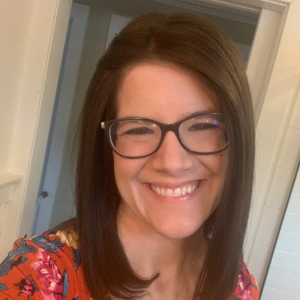 Mikell Frey is a communications professional with a passion for using the art of storytelling to positively impact lives. She strongly believes that positive social change can be inspired by the sharing of data-driven information coupled with the unique perspectives of people from all walks of life across Michigan, especially those who have faced extraordinary barriers.
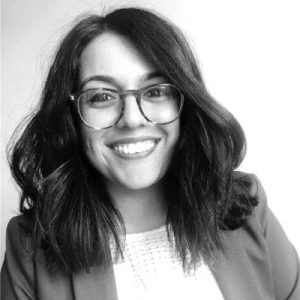


 Yona Isaacs (she/hers) is an Early Childhood Data Analyst for the Kids Count project. After earning her Bachelor of Science in Biopsychology, Cognition, and Neuroscience at the University of Michigan, she began her career as a research coordinator in pediatric psychiatry using data to understand the impacts of brain activity and genetics on children’s behavior and mental health symptoms. This work prompted an interest in exploring social determinants of health and the role of policy in promoting equitable opportunities for all children, families, and communities. She returned to the University of Michigan to complete her Masters in Social Work focused on Social Policy and Evaluation, during which she interned with the ACLU of Michigan’s policy and legislative team and assisted local nonprofit organizations in creating data and evaluation metrics. She currently serves as a coordinator for the Michigan Center for Youth Justice on a project aiming to increase placement options and enhance cultural competency within the juvenile justice system for LGBTQIA+ youth. Yona is eager to put her data skills to work at the League in support of data-driven policies that advocate for equitable access to healthcare, education, economic security, and opportunity for 0-5 year old children. In her free time, she enjoys tackling DIY house projects and trying new outdoor activities with her dog.
 Rachel Richards rejoined the League in December 2020 as the Fiscal Policy Director working on state budget and tax policies. Prior to returning to the League, she served as the Director of Legislative Affairs for the Michigan Department of Treasury, the tax policy analyst and Legislative Director for the Michigan League for Public Policy, and a policy analyst and the Appropriations Coordinator for the Democratic Caucus of the Michigan House of Representatives. She brings with her over a decade of experience in policies focused on economic opportunity, including workforce issues, tax, and state budget.
 Simon Marshall-Shah joined the Michigan League for Public Policy as a State Policy Fellow in August 2019. His work focuses on state policy as it relates to the budget, immigration, health care and other League policy priorities. Before joining the League, he worked in Washington, D.C. at the Association for Community Affiliated Plans (ACAP), providing federal policy and advocacy support to nonprofit, Medicaid health plans (Safety Net Health Plans) related to the ACA Marketplaces as well as Quality & Operations.

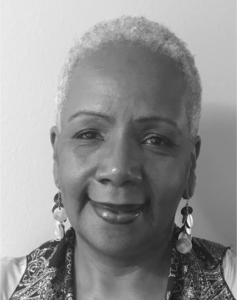 Renell Weathers, Michigan League for Public Policy (MLPP) Community Engagement Consultant. As community engagement consultant, Renell works with organizations throughout the state in connecting the impact of budget and tax policies to their communities. She is motivated by the belief that all children and adults deserve the opportunity to achieve their dreams regardless of race, ethnicity, religion or economic class.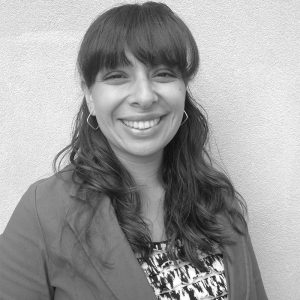
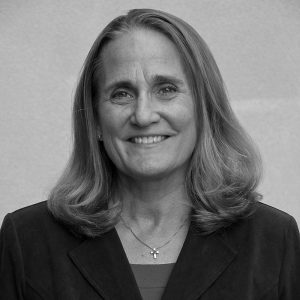
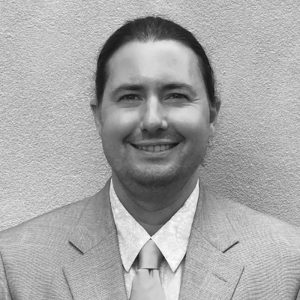

 Emily Jorgensen joined the Michigan League for Public Policy in July 2019. She deeply cares about the well-being of individuals and families and has a great love for Michigan. She is grateful that her position at the League enables her to combine these passions and work to help promote policies that will lead to better opportunities and security for all Michiganders.
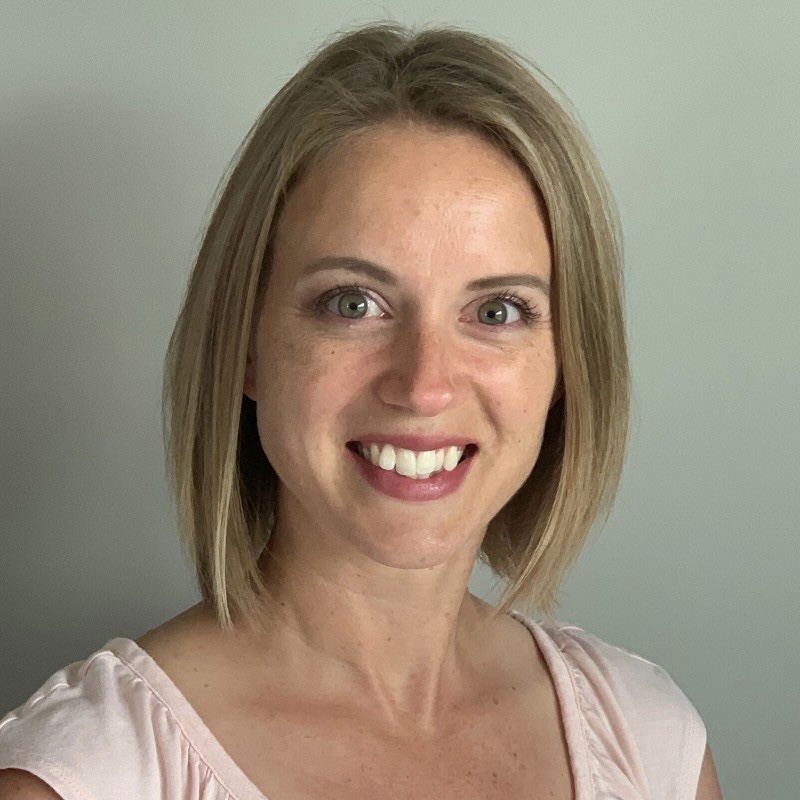 Megan Farnsworth joined the League’s staff in December 2022 as Executive Assistant. Megan is driven by work that is personally fulfilling, and feels honored to help support the work of an organization that pushes for more robust programming and opportunities for the residents of our state. She’s excited and motivated to gain overarching knowledge of the policies and agendas that the League supports.