 Michigan families are experiencing a crisis-level shortage of affordable housing, a symptom of the income inequality that has been growing in the state for decades. Since the 1980s, incomes have declined for 99% of the state’s households1 and African-American and Latinx households have lost 75% and 50% of their wealth, respectively.2 Despite Michigan’s recovery from the Great Recession, many families still must make difficult choices between shelter and other basics, leading to poor health, critical life disruptions that limit achievement in school and at work, and significant losses to the economy.
This opening installment of the Home, Health, Hope series provides an overview of Michigan’s affordable housing crisis. Future installments will examine the situations in Detroit and Grand Rapids, as well as the underlying factors that make it hard to secure healthy housing at a manageable cost, including discrimination, unaffordable utility bills and barriers confronting people with disabilities and other health conditions.
To ensure adequate homes for all Michiganders, government must reverse its decades-old strategy of underinvestment in housing, address discriminatory policy designed to create inequitable housing access, and support measures that promote economic opportunity for families with low incomes.

BREAKING THE BUDGET
Housing (including utilities) is considered “affordable” when it costs no more than 30% of household income. Many families, however, are housing cost-burdened, meaning they spend even more than that. More than 1.5 million Michigan households don’t earn enough to meet their basic needs,3 and in Detroit and Grand Rapids, housing costs put an even greater strain on family budgets. The average household wage necessary to afford a modest two-bedroom rental unit in Michigan is $16.85 per hour—almost twice the state minimum wage ($9.25 per hour at the time of this calculation).4

 Throughout the state, the demand for affordable housing exceeds the supply, especially among renters and the most economically disadvantaged households.
Unlike a number of other means-tested services, federal housing programs receive a finite amount of funding every year.
THE CYCLE OF POOR HEALTH, LOST OPPORTUNITY & POVERTY
High housing costs drive the cycle of generational poverty by threatening health, creating toxic stress and limiting academic achievement, work productivity and earning potential.

Policy designed to promote racial segregation has led to the concentration of poverty and low-quality housing stock in certain neighborhoods, as well as disinvestment in these areas by both government and the private sector. The result is a lack of amenities that promote health, education and employment. Revitalization efforts are often focused on attracting wealthier people to the area, displacing current residents and potentially leaving them with no place to go.
POLICY RECOMMENDATIONS
Federal housing services have been underfunded for decades and the 2017 tax overhaul’s impact on the Low-Income Housing Tax Credit—historically, the primary incentive for private-sector development of affordable housing—could discourage the production of more than 3,600 affordable units in Michigan over the next 10 years.5 To ensure quality homes for all Michiganders so they can stay healthy, be productive students and workers and keep the state competitive in the global economy, it’s critical that state policy creates a friendly environment for local housing efforts and empowers families facing housing challenges.
Promote inclusionary zoning (IZ): Local IZ ordinances call for a number of units in new housing developments to be priced affordably for people of modest means. Such ordinances can easily be tailored to address conditions in a particular community and can be either mandatory, applicable to all development projects meeting the criteria set by the local unit, or voluntary, meaning developers can agree to provide an affordable set-aside in exchange for certain benefits from the municipality, such as a tax break, flexibility regarding certain land use regulations or a discount on the purchase of public land.
Michigan law prohibits local units of government from adopting rent control policies, including mandatory IZ, and does not make it clear that communities may offer incentives to encourage the development of affordable housing. A handful of Michigan communities have adopted voluntary IZ (also known as incentive zoning). At a minimum, the state should clarify that voluntary IZ does not violate the rent control ban. Ideally, Michigan should give local units the option to adopt mandatory IZ, which overall has been shown to produce more affordable units than incentive zoning.6
Fund Michigan’s housing trust fund (HTF): State HTFs can supplement federal housing programs, fund projects and services precluded by federal program rules, and support nonprofit organizations in implementing affordable solutions for a market that’s often under-served by for-profit developers.7 On average, every dollar a state HTF invests in the creation, rehabilitation and preservation of affordable housing generates $7 in further public and private investment.8 Since its creation, the Michigan Housing and Community Development Fund (MHCDF) has received only two rounds of one-time, limited funding—in 2008 and 2012. Funded projects attracted as much as $11 in new investment for every $1 of MHCDF money and created thousands of jobs.9 Michigan should examine HTF funding methods used in other states and identify a robust, sustainable revenue stream for the MHCDF.
Prohibit source-of-income (SOI) discrimination: The federal Housing Choice Voucher (HCV) program is designed to diffuse concentrated poverty and desegregate neighborhoods by giving families with low incomes the option to move to neighborhoods with better opportunities for health, education and employment. Some landlords, however, are unwilling to rent to HCV holders. In some cases, SOI discrimination may provide cover for landlords to violate fair housing laws. Local anti-SOI discrimination ordinances (which already exist in several Michigan communities) are linked to an increase in the HCV use rate and neighborhood racial integration.10 A state-level ban should be enacted to protect all Michigan families using HCVs no matter where they live and reduce the long waiting lists for vouchers that exist in many communities.
Promote economic opportunity for struggling families: The state should raise the minimum wage and invest more in measures that promote health, improve outcomes for children and boost adult earning capacity, such as quality child care, the Healthy Michigan program and the earned income tax credit. In particular, the state should invest more in adult education, career and technical education and job training to ensure that Michigan’s workforce can meet the high demand for skilled labor. This would prepare individuals for family-supporting jobs and alleviate the shortage of construction and other trade workers that is contributing to housing scarcity and further driving up home prices.
ENDNOTES
- Richards, R. Michigan League for Public Policy. (2016, July). Time to end income inequality: Michigan’s top 1% makes 22 times more than rest of workers. Retrieved from https://mlpp.org/time-to-end-income-inequality.
- Asante-Muhammad, D., Collins, C., Hoxie, J., & Nieves, E. Prosperity Now & Institute for Policy Studies. (2017, September). The road to zero wealth: How the racial wealth divide is hollowing out America’s middle class. Retrieved from https://prosperitynow.org/files/PDFs/road_to_zero_wealth.pdf.
- United Ways of Michigan. (2017). ALICE Study of Financial Hardship: 2017 Update. Retrieved from https://www.uwmich.org/alice/.
- National Low Income Housing Coalition. (2018). Out of Reach 2018. Retrieved from http://nlihc.org/oor.
- Novogradoc, M. Novogradoc & Company, LLP. (2017, December 17). See how many jobs, affordable rental homes each state would lose under the final tax reform bill. Retrieved from https://www.novoco.com/notes-from-novogradac/see-how-many-jobs-affordable-rental-homes-each-state-would-lose-under-final-tax-reform-bill
- Brunick, N.J. (2004, September). The inclusionary housing debate: The effectiveness of mandatory programs over voluntary programs. Zoning Practice, (9)1, 1-7. Retrieved from http://www.china-up.com:8080/international/case/case/1342.pdf.
- Larsen, L. (2004, June). State housing trust funds in the U.S.: A comparative study, presented at the International Housing Research Conference, Toronto, Canada. Retrieved from http://www.urbancenter.utoronto.ca/pdfs/housingconference/Larsen_State_Housing_Trust_.pdf
- Center for Community Change, Housing Trust Fund Project. (2018). State housing trust funds. Retrieved from https://housingtrustfundproject.org/housing-trust-funds/state-housing-trust-funds/.
- AcMoody, J. Community Economic Development Association of Michigan. (2018, July 13). Fund the Fund: Why Michigan’s Housing and Community Development Fund needs support. Retrieved from http://cedamichigan.org/2018/06/michigans-community-development-fund/.
- Freeman, L. U.S. Department of Housing and Urban Development, Office of Policy Development and Research. (2011). The impact of source of income laws on voucher utilization and locational outcomes. Retrieved from https://www.huduser.gov/publications/pdf/freeman_impactlaws_assistedhousingrcr06.pdf.


 Betsy Zobl-Tar
  Jay Cutler joined the League in March 2026 as the Kids Count Senior Data Analyst, where he collects, analyzes, and prepares data for Kids Count in Michigan.
 Danielle Taylor-Basemore joined the League as the Development Data and Stewardship Coordinator in June 2025. She brings with her five years of nonprofit experience with a special focus on community engagement, data visualization and strategic programming. Prior to joining the League, Danielle served as the Business District, Safety, and Digital Manager at Jefferson East, Inc.
 Scott Preston is a Senior Policy Analyst with the Michigan League for Public Policy, where he leads the organization’s immigration and criminal justice reform portfolios. In the three years prior to joining the League, Scott facilitated the Southeast Michigan Refugee Collaborative and managed a small business economic development program at Global Detroit. His work included launching Michigan’s first Refugee Film Festival and building on a trusted connector model that linked marginalized communities with crucial resources. Scott’s work at the League is informed by his background in journalism and research. He spent four years covering the Syrian refugee crisis in the Middle East for publications such as The Economist, and later worked with unaccompanied refugee minors through Samaritas. Scott holds a master’s degree in international migration and public policy from the London School of Economics and Political Science.
 Kate Powers joined the League as the Chief Development Officer in February 2025. Prior to joining the League, Kate held leadership positions at many Michigan nonprofit organizations, most recently serving as the COO and Chief Development Officer of Ele’s Place. Kate has spent the bulk of her career in fundraising, with a short stint in the state Legislature as a legislative aide to members in both chambers. Kate is a graduate of Michigan State University’s James Madison College with a Bachelor of Arts in Social Relations and has a certificate in fundraising management from the Lilly Family School of Philanthropy at Indiana University. Additionally, Kate served on the East Lansing Public Schools Board of Education and is a past President of the Junior League of Lansing. In her free time, she enjoys traveling with her husband and her son and saving outfit of the day and home decor ideas on Pinterest.
  Nicholas Hess joined the League as the Fiscal Policy Analyst in September of 2024. In this role, Nicholas focuses on tax policy, government revenue, and their impact on working families and racial equity, including the effects of the Earned Income Tax Credit (EITC) and Child Tax Credit (CTC). Nicholas values the role that judicious fiscal policy can play in the improvement of people’s lives and the economy, alleviating inequities along the way.
 Audrey Matusz joined the League as the Visual Communications Specialist in September 2024. She supports the team with implementing social media strategies and brainstorming creative ways to talk about public policy. She brings with her nearly a decade of experience in producing digital products for evidence-based social justice initiatives.
  Jacob Kaplan
  Donald Stuckey
  Alexandra Stamm
 Amari Fuller
 Mikell Frey is a communications professional with a passion for using the art of storytelling to positively impact lives. She strongly believes that positive social change can be inspired by the sharing of data-driven information coupled with the unique perspectives of people from all walks of life across Michigan, especially those who have faced extraordinary barriers.



 Yona Isaacs (she/hers) is an Early Childhood Data Analyst for the Kids Count project. After earning her Bachelor of Science in Biopsychology, Cognition, and Neuroscience at the University of Michigan, she began her career as a research coordinator in pediatric psychiatry using data to understand the impacts of brain activity and genetics on children’s behavior and mental health symptoms. This work prompted an interest in exploring social determinants of health and the role of policy in promoting equitable opportunities for all children, families, and communities. She returned to the University of Michigan to complete her Masters in Social Work focused on Social Policy and Evaluation, during which she interned with the ACLU of Michigan’s policy and legislative team and assisted local nonprofit organizations in creating data and evaluation metrics. She currently serves as a coordinator for the Michigan Center for Youth Justice on a project aiming to increase placement options and enhance cultural competency within the juvenile justice system for LGBTQIA+ youth. Yona is eager to put her data skills to work at the League in support of data-driven policies that advocate for equitable access to healthcare, education, economic security, and opportunity for 0-5 year old children. In her free time, she enjoys tackling DIY house projects and trying new outdoor activities with her dog.
 Rachel Richards rejoined the League in December 2020 as the Fiscal Policy Director working on state budget and tax policies. Prior to returning to the League, she served as the Director of Legislative Affairs for the Michigan Department of Treasury, the tax policy analyst and Legislative Director for the Michigan League for Public Policy, and a policy analyst and the Appropriations Coordinator for the Democratic Caucus of the Michigan House of Representatives. She brings with her over a decade of experience in policies focused on economic opportunity, including workforce issues, tax, and state budget.
 Simon Marshall-Shah joined the Michigan League for Public Policy as a State Policy Fellow in August 2019. His work focuses on state policy as it relates to the budget, immigration, health care and other League policy priorities. Before joining the League, he worked in Washington, D.C. at the Association for Community Affiliated Plans (ACAP), providing federal policy and advocacy support to nonprofit, Medicaid health plans (Safety Net Health Plans) related to the ACA Marketplaces as well as Quality & Operations.

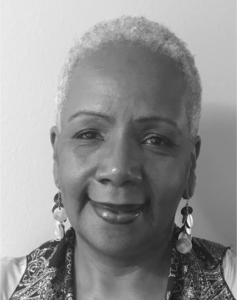 Renell Weathers, Michigan League for Public Policy (MLPP) Community Engagement Consultant. As community engagement consultant, Renell works with organizations throughout the state in connecting the impact of budget and tax policies to their communities. She is motivated by the belief that all children and adults deserve the opportunity to achieve their dreams regardless of race, ethnicity, religion or economic class.
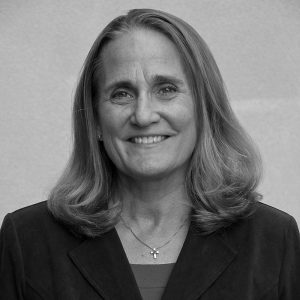


 Emily Jorgensen joined the Michigan League for Public Policy in July 2019. She deeply cares about the well-being of individuals and families and has a great love for Michigan. She is grateful that her position at the League enables her to combine these passions and work to help promote policies that will lead to better opportunities and security for all Michiganders.
 Megan Farnsworth joined the League’s staff in December 2022 as Executive Assistant. Megan is driven by work that is personally fulfilling, and feels honored to help support the work of an organization that pushes for more robust programming and opportunities for the residents of our state. She’s excited and motivated to gain overarching knowledge of the policies and agendas that the League supports.