Few laws, if any, have been the object of more misinformation, disinformation and alternative facts than the Affordable Care Act of 2010 (ACA, also known as Obamacare). Now that Congress is considering plans to dismantle the ACA, it’s more important than ever for Americans to have access to thoughtful analysis, which is what I hope to provide here.
Why Health Insurance Is a Good Thing
The first thing to say is something that may sound obvious, but which has nevertheless often been lost in the noise: Health insurance saves lives. Across the country, thousands of people are alive today who would be dead without the insurance coverage that they have received through the ACA. That’s worth saying again—thousands of Americans would be dead without the ACA.
If the ACA is rolled back, it is estimated that nearly 24 million Americans will lose their health insurance. This includes millions of people in Michigan. If that happens, every year more and more will die needlessly.
Why the United States is the Only Affluent Country without Universal Health Insurance
The second thing to say is another thing that may seem obvious, but is worth saying because the “debate” over the ACA has obscured so much: The USA is the only affluent country in which a “debate” like this is taking place. Every other affluent country in the world (including Canada, the United Kingdom, Australia, Germany, Japan and many others) has achieved a moral consensus that all residents should have full access to the healthcare system. In these countries, the moral judgment is that it is simply wrong for a society to provide full access to healthcare for some residents, but not for others. In other words, in these other countries, access to healthcare is viewed as something that should be distributed very equally.
In the United States, the lack of such a consensus indicates that many are comfortable with a very unequal distribution of access to healthcare. With that very unequal distribution, those who are rich enough or lucky enough to have good health insurance have access to the best doctors and hospitals in the world. Those who aren’t so lucky are left to pray that they don’t get sick. If they get very sick, they are sometimes lucky enough to get a hospital to provide them with uncompensated care. And sometimes not.
It’s worth noting that access to healthcare is only one of several areas in which the moral consensus in the USA is different from the moral consensus in the rest of the world. For example, in the USA, household income is distributed much more unequally than in other affluent countries. For the USA to have a distribution of income as equal as that of the countries of western Europe, it would be necessary to redistribute a few trillion dollars from the top one percent to the bottom 99 percent, every year.
These differences between the USA and the other affluent countries did not arise by accident. They are the deliberate result of policies. The other countries also have more generous provisions for parental leave and child care, much lower rates of incarceration, and the list goes on and on. In one policy area after another, the political systems of the other affluent countries reflect a moral consensus to limit inequality, while the American political system reflects a moral consensus (or lack thereof) that allows a much greater degree of inequality.
The Economics of Health Insurance Markets
Although morals and ethics are central to understanding why we in America allow so many needless deaths as a result of lack of health insurance, a full assessment of the issue also requires some knowledge of the economics of health insurance. If private health insurance markets were able to provide universal coverage at a cost that everyone could afford, the problem would easily be solved.
However, private insurance markets suffer from fundamental flaws. (This is not a diatribe against private markets. Private markets do an amazing job of providing all sorts of goods and services, with only a very modest amount of government regulation and oversight. But the peculiar characteristics of insurance markets are such that they don’t work nearly as well as most other markets.)
A private health insurance company makes a profit by collecting more in premiums than it pays out in claims. Thus the best of all possible worlds for a private health insurance company is to collect premiums from very healthy customers who have few illnesses, and thus generate few claims. That’s why, before the ACA, the standard business model for private health insurance companies was to deny coverage to people with pre-existing medical conditions.
If a private health insurance company were to offer coverage at rates based on community averages, and if it could not keep out the sickest people, what would happen? The sickest people would sign up, but the healthiest would not. That would leave the company with a sicker-than-average pool of customers. This is called “adverse selection,” and it’s a formula for insurance companies to go out of business.
Denial of coverage to people with pre-existing medical conditions is extremely unpopular with the public, but it is the only way for an otherwise unregulated private health insurance market to avoid collapsing from adverse selection.
Public Policies for Overcoming the Flaws of Private Health Insurance Markets: The Simple and the Complicated
If we want people with pre-existing conditions to have health insurance, two public policy approaches are available. The simple method is to have a “single-payer” system in which everyone is covered. This simple method is used in Medicare, which pays for health insurance for all elderly Americans. Medicare is not perfect, but it does effectively solve the problem of adverse selection for elderly Americans—the elderly are covered automatically.
If we were to extend Medicare to the non-elderly population, a system of “Medicare for All” would achieve universal health insurance coverage, and would thus overcome the problem of adverse selection. Everyone would be covered.
An added advantage of Medicare for All is that it would lead to a dramatic reduction in administrative costs. The healthcare “system” in the United States is a crazy-quilt hodge-podge of Medicare, Medicaid, various types of private insurance, and a separate system for veterans, each with its own rules and forms. As a result, the United States spends far more on administration than any other country. If we had a single, unified system, we would save hundreds of billions of dollars per year by reducing the cost of administering the system.
The complicated way to expand health insurance coverage is to continue to rely on private insurance companies, but to add some major tweaks to the system. The first tweak would be to prohibit the insurance companies from denying coverage to those with pre-existing conditions. But that, by itself, would push the system into a death spiral of adverse selection. The sickest would sign up; the healthiest would not; the companies would go out of business.
Thus if we desire to move toward universal coverage, while still working within the framework of a private market for health insurance, it isn’t enough to prohibit companies from denying coverage. It’s also urgently necessary to get more healthy people into the risk pool. The way to get more healthy people to sign up for coverage is to offer a set of subsidies for acquiring insurance, and/or penalties for not doing so.
Enter President Barack Obama. When he took office in 2009, along with Democratic majorities in both Houses of Congress, the levers of power in Washington were in the hands of people who were committed to pushing toward more equal access to healthcare. They faced a choice between the simple method (Medicare for All) and the complicated method (prohibition of denial of coverage, combined with taxes and subsidies).
They chose the complicated method: The Affordable Care Act prohibits insurance companies from denying coverage to those with pre-existing conditions, which is extremely popular. And then, in an effort to avoid an adverse-selection spiral, the ACA also has a complicated system of taxes and subsidies, which are unpopular.
Why did President Obama and the congressional Democrats choose the complicated method? The answer has nothing to do with the economic advantages and disadvantages of the simple method and the complicated method. It has everything to do with the political fact that health insurance companies have tremendous power. The simple approach of Medicare for All would cut out the insurance companies. President Obama and the Congressional Democrats reached the conclusion that insurance companies had enough power to block the simple method, which left the complicated method as the only option for increasing access to healthcare.
Evaluation of the Affordable Care Act
What can we say about how well the ACA has performed? In my view, the ACA is a significant improvement on what we had before. Its biggest achievement, of course, is that the number of Americans with health insurance has increased by about 20 million, including about 1 million in Michigan; as mentioned above, some of these people are alive today because of the ACA.
Unfortunately, the ACA has not done as much as it might have done. One problem is that the decision to take part in the Medicaid expansion, which is an important part of the ACA, was left up to the states. Many states decided not to participate, even though the federal government would have covered a large portion of the costs. Millions of Americans thus had to continue without health insurance, and some of them died needlessly. Fortunately, Michigan’s Governor Rick Snyder is one of the few Republican governors who had the courage to put the health of residents ahead of partisan politics.
The taxes and subsidies that are designed to shore up the private health insurance market have only been modestly successful. Some insurance companies have stopped providing coverage. This is a testament to the extraordinary stubbornness of the adverse-selection problem. Even with a very elaborate system of incentives, the ACA still has not been able to get as many healthy people into the system as it should.
Efforts to Roll Back the ACA
If the 2016 elections had been won by people who place a high priority on equal access to healthcare, the ACA probably would have been tweaked in an effort to put a further dent in the problem of adverse selection.
But power in Washington now rests in the hands of those for whom equal access to healthcare appears to be a low priority. And yet the Congressional leadership also appears to understand that it would be politically unpopular to return to a system in which insurance companies can deny coverage to those with pre-existing conditions. Thus the American Healthcare Act maintains the ACA’s prohibition on denial of coverage, but would charge more in a person has a significant lapse in coverage while weakening the parts of the ACA that were designed to prevent an adverse-selection spiral. This raises the real possibility that the problem of adverse selection could worsen.
The rollback of the ACA also includes repeal of some of the taxes that were enacted to pay for the expansions of health insurance. The most important thing to know about the taxes slated for repeal is that they are paid almost exclusively by people with very high incomes. Thus again we see the linkage between moral attitudes toward different issues. The Congressional leadership seeks to scale back the ACA (thus leading to less equal access to healthcare), at the same time that it seeks to reduce taxes on the most affluent (thus increasing income inequality generally).
I trust it is clear that I am in favor of expanded health insurance. In fact, I would be happy if every American had health insurance, even though that would probably require increased taxes, some of which I would probably have to pay. It’s also true that I have been fortunate to work for the last 34 years for an employer that provides very good health insurance. Thus you might ask, why do I care whether anyone else gets insurance? If I have mine, why shouldn’t I just be happy about that (and if others don’t have health insurance, that’s just their tough luck)? The reason is that I am a member of a community. I am not an island unto myself; I am a citizen of the State of Michigan and the United States of America. I believe in the Biblical admonitions to feed the hungry, clothe the naked, welcome the stranger, and care for the sick. I believe that if you have done it unto one of the least of my brethren, you have done it unto me.
— Charles L. Ballard, Ph.D., League Board Chair

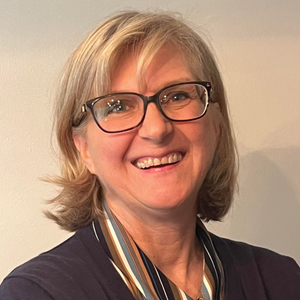 Betsy Zobl-Tar
 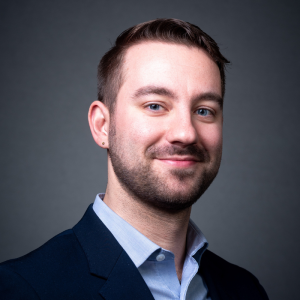 Jay Cutler joined the League in March 2026 as the Kids Count Senior Data Analyst, where he collects, analyzes, and prepares data for Kids Count in Michigan.
 Danielle Taylor-Basemore joined the League as the Development Data and Stewardship Coordinator in June 2025. She brings with her five years of nonprofit experience with a special focus on community engagement, data visualization and strategic programming. Prior to joining the League, Danielle served as the Business District, Safety, and Digital Manager at Jefferson East, Inc.
 Scott Preston is a Senior Policy Analyst with the Michigan League for Public Policy, where he leads the organization’s immigration and criminal justice reform portfolios. In the three years prior to joining the League, Scott facilitated the Southeast Michigan Refugee Collaborative and managed a small business economic development program at Global Detroit. His work included launching Michigan’s first Refugee Film Festival and building on a trusted connector model that linked marginalized communities with crucial resources. Scott’s work at the League is informed by his background in journalism and research. He spent four years covering the Syrian refugee crisis in the Middle East for publications such as The Economist, and later worked with unaccompanied refugee minors through Samaritas. Scott holds a master’s degree in international migration and public policy from the London School of Economics and Political Science.
 Kate Powers joined the League as the Chief Development Officer in February 2025. Prior to joining the League, Kate held leadership positions at many Michigan nonprofit organizations, most recently serving as the COO and Chief Development Officer of Ele’s Place. Kate has spent the bulk of her career in fundraising, with a short stint in the state Legislature as a legislative aide to members in both chambers. Kate is a graduate of Michigan State University’s James Madison College with a Bachelor of Arts in Social Relations and has a certificate in fundraising management from the Lilly Family School of Philanthropy at Indiana University. Additionally, Kate served on the East Lansing Public Schools Board of Education and is a past President of the Junior League of Lansing. In her free time, she enjoys traveling with her husband and her son and saving outfit of the day and home decor ideas on Pinterest.
  Nicholas Hess joined the League as the Fiscal Policy Analyst in September of 2024. In this role, Nicholas focuses on tax policy, government revenue, and their impact on working families and racial equity, including the effects of the Earned Income Tax Credit (EITC) and Child Tax Credit (CTC). Nicholas values the role that judicious fiscal policy can play in the improvement of people’s lives and the economy, alleviating inequities along the way.
 Audrey Matusz joined the League as the Visual Communications Specialist in September 2024. She supports the team with implementing social media strategies and brainstorming creative ways to talk about public policy. She brings with her nearly a decade of experience in producing digital products for evidence-based social justice initiatives.
  Jacob Kaplan
  Donald Stuckey
  Alexandra Stamm
 Amari Fuller
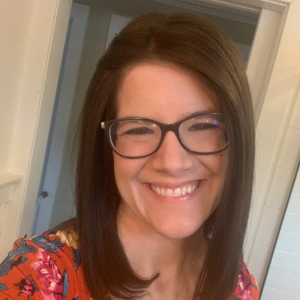 Mikell Frey is a communications professional with a passion for using the art of storytelling to positively impact lives. She strongly believes that positive social change can be inspired by the sharing of data-driven information coupled with the unique perspectives of people from all walks of life across Michigan, especially those who have faced extraordinary barriers.
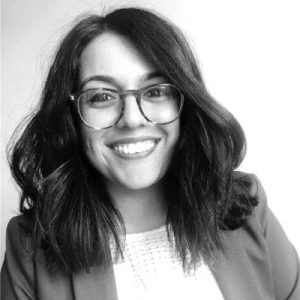


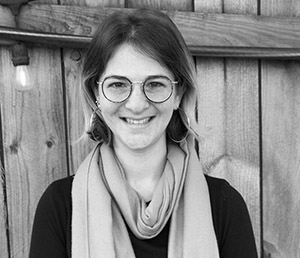 Yona Isaacs (she/hers) is an Early Childhood Data Analyst for the Kids Count project. After earning her Bachelor of Science in Biopsychology, Cognition, and Neuroscience at the University of Michigan, she began her career as a research coordinator in pediatric psychiatry using data to understand the impacts of brain activity and genetics on children’s behavior and mental health symptoms. This work prompted an interest in exploring social determinants of health and the role of policy in promoting equitable opportunities for all children, families, and communities. She returned to the University of Michigan to complete her Masters in Social Work focused on Social Policy and Evaluation, during which she interned with the ACLU of Michigan’s policy and legislative team and assisted local nonprofit organizations in creating data and evaluation metrics. She currently serves as a coordinator for the Michigan Center for Youth Justice on a project aiming to increase placement options and enhance cultural competency within the juvenile justice system for LGBTQIA+ youth. Yona is eager to put her data skills to work at the League in support of data-driven policies that advocate for equitable access to healthcare, education, economic security, and opportunity for 0-5 year old children. In her free time, she enjoys tackling DIY house projects and trying new outdoor activities with her dog.
 Rachel Richards rejoined the League in December 2020 as the Fiscal Policy Director working on state budget and tax policies. Prior to returning to the League, she served as the Director of Legislative Affairs for the Michigan Department of Treasury, the tax policy analyst and Legislative Director for the Michigan League for Public Policy, and a policy analyst and the Appropriations Coordinator for the Democratic Caucus of the Michigan House of Representatives. She brings with her over a decade of experience in policies focused on economic opportunity, including workforce issues, tax, and state budget.
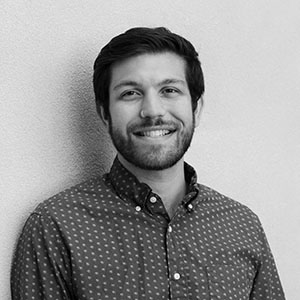 Simon Marshall-Shah joined the Michigan League for Public Policy as a State Policy Fellow in August 2019. His work focuses on state policy as it relates to the budget, immigration, health care and other League policy priorities. Before joining the League, he worked in Washington, D.C. at the Association for Community Affiliated Plans (ACAP), providing federal policy and advocacy support to nonprofit, Medicaid health plans (Safety Net Health Plans) related to the ACA Marketplaces as well as Quality & Operations.

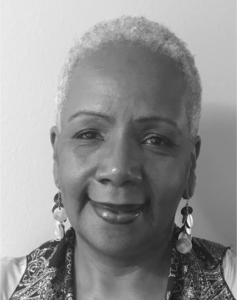 Renell Weathers, Michigan League for Public Policy (MLPP) Community Engagement Consultant. As community engagement consultant, Renell works with organizations throughout the state in connecting the impact of budget and tax policies to their communities. She is motivated by the belief that all children and adults deserve the opportunity to achieve their dreams regardless of race, ethnicity, religion or economic class.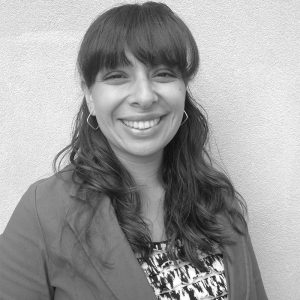
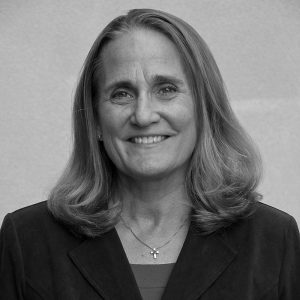
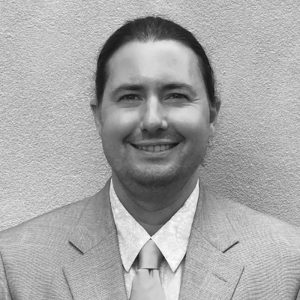

 Emily Jorgensen joined the Michigan League for Public Policy in July 2019. She deeply cares about the well-being of individuals and families and has a great love for Michigan. She is grateful that her position at the League enables her to combine these passions and work to help promote policies that will lead to better opportunities and security for all Michiganders.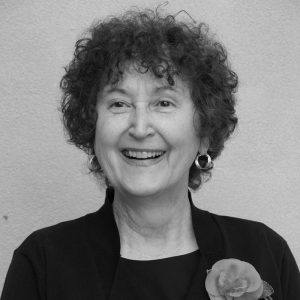
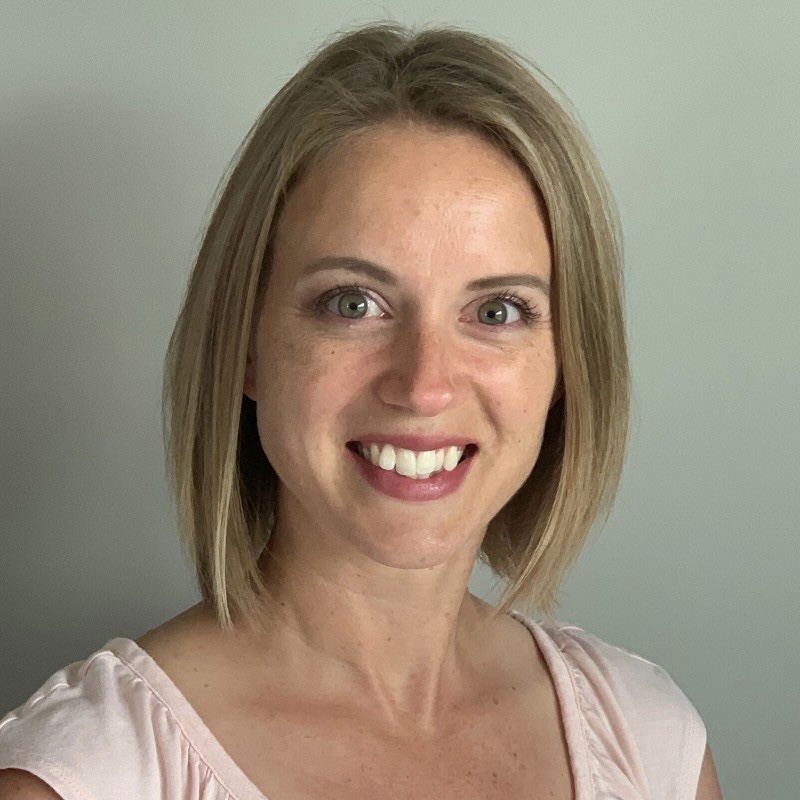 Megan Farnsworth joined the League’s staff in December 2022 as Executive Assistant. Megan is driven by work that is personally fulfilling, and feels honored to help support the work of an organization that pushes for more robust programming and opportunities for the residents of our state. She’s excited and motivated to gain overarching knowledge of the policies and agendas that the League supports.