
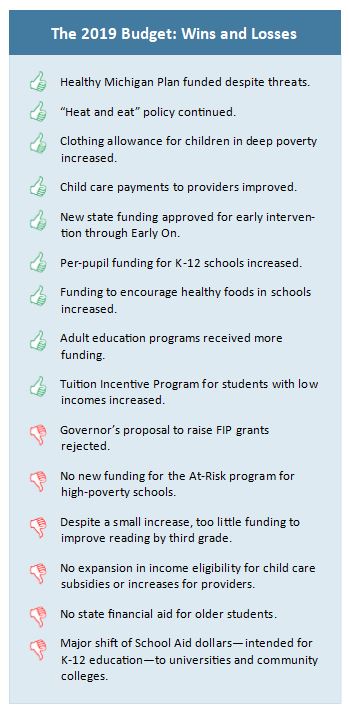
 The 2019 state budget bills have been approved by the Michigan Legislature and Governor Rick Snyder. Below are some of the major highlights of the 2019 budget, along with some of the issues not yet addressed. For more on the state budget and the League’s priorities, go to www.mlpp.org.
HUMAN SERVICES
Access to Healthy Food
- “Heat and eat” policy continued. The “heat and eat” policy increases food assistance benefits for thousands of Michigan residents with low incomes. In April of 2018, nearly 1.3 million Michigan residents received food assistance, including over half a million children. African American and Latinx families are more likely to face food shortages, as well as live in high-poverty neighborhoods with few sources of healthy food.
- The asset test currently in place for food assistance was retained. The League has supported the removal of the current asset test because it can discourage families with low incomes from saving enough to weather a temporary crisis. Since 2002, approximately 35 states have eliminated their asset tests.
- Override of waivers exempting food assistance recipients from work was included. The governor’s recommendation did not include language about waivers from work requirements for persons receiving food assistance through the Supplemental Nutrition Assistance Program (SNAP). The Legislature added language to override any federal waiver requested by the department that would allow able-bodied adults without dependents to receive SNAP benefits for more than three months out of a three-year period if they are not meeting the 20-hour-per-week work requirements for those months during times of high unemployment.
Income and Family Support
- The governor’s proposal to increase income assistance grants slightly was rejected. The Legislature rejected the governor’s recommendation to increase Family Independence Program (FIP) grants by approximately $2 per person per month at a cost of $1 million. Since 1996, there have been only a few very small increases in FIP grants, and their purchasing power has fallen from 42% of poverty to only 29%.
- The FIP school clothing allowance was increased. The Legislature approved $960,000 for an increase in the FIP school clothing allowance. Based on the current year budget, families receiving public assistance were eligible for $156 per child for clothes at the beginning of the school year. The governor provided no new funding for the school clothing allowance in his 2019 budget, but in prior budget years had recommended that the school clothing allowance be raised to $200 per child.
Child and Adult Safety
- Overall funding for foster care and other child welfare programs continues to grow. In recent years, funding for foster care and other out-of-home placements for children has grown, in part because of litigation against the state for its failure to find safe and secure permanent homes for children in a timely manner. For 2019, the Legislature approved an increase of $19.5 million ($16.5 million state General Fund dollars) to cover expected caseloads for foster care, adoption subsidies, the Child Care Fund, guardianship assistance and the Family Support Subsidy. In addition, the Legislature included $16 million in state funding to comply with a court decision requiring the state to pay the foster care maintenance rate to unlicensed relative foster care providers.
- Funding for child abuse and neglect prevention programs increased slightly. The Legislature approved a total increase of $1 million for child abuse and neglect prevention programs funded by the Children’s Trust Fund (CTF). Of that total, $800,000 was authorized for the CTF to spend current cash reserves for grants over the next three years. The additional $200,000 in state General Fund dollars approved by the Legislature is accompanied by budget language that at least half of the $1 million expansion in services is to be used for programs that address substance use disorders.
- Funding for runaway and homeless youth services expanded. The Legislature approved $500,000 to expand funding for services and housing for runaway and homeless youth.
HEALTH
Healthy Michigan
- Healthy Michigan funded despite threats. With the likely signing of legislation requiring work requirements and other proposed changes, the Healthy Michigan program faces a number of threats, but in the meantime the Legislature and governor have continued to fund the state’s share of the program. The budget, however, does discontinue $50 gift cards intended to incentivize those with income below 100% of the federal poverty level to complete a health risk assessment.
Public Health
- Flint investment continues. As Flint continues to deal with the ongoing water crisis and its aftermath, state support for the city remains critical. Through the final 2019 budget, the governor and Legislature have reduced funding to the city by $16.9 million in ongoing funding, but have allocated one-time funding for food and nutrition services, health services at adolescent centers and schools, and lead poisoning prevention and related services.
- Funding approved to address PFAS concerns. The budget provides funding to address the environmental contamination of perfluoroalkyl and polyfluoroalkyl substances (PFAS) in state water sources. Funding is to be used for laboratory capacity and services, environmental health toxicology and response, and local health department response grants.
- Lead Poisoning Prevention Board continues work. The board created in 2016 has recommended over 80 actions the state can take to prevent lead poisoning. In order to continue implementation of the recommendations the board received $1.25 million.
Support for Michigan Seniors
- Senior community service programs increased. $2.5 million was approved in order to provide community service programs for seniors, including in-home services.
- Long-term insurance options to be studied. The League has been active in advocating for HB 4674, which would assess the current landscape of long-term care, including costs, and would explore potential policy and budget solutions. The Legislature will match private funds of up to $100,000 to begin to address these issues.
- PACE sees boost in funding. Over $41 million is allocated to expand the state’s Program of All-Inclusive Care for the Elderly (PACE) program to approximately 950 Michigan seniors. PACE programs provide all medically necessary care and services to often medically frail seniors—encouraging them to stay in their homes, which is both more comfortable and cost-effective.
Behavioral Health
- Pay increased for state psychiatrists. In order to bring wages more in line with other states, the governor proposed and the Legislature approved $1.4 million to increase pay for psychiatrists at state hospitals. This increase is expected to help attract and retain staff, which will ultimately lessen wait times at these facilities.
- Non-Medicaid mental health services become whole. $5.5 million is provided to community mental health service programs to ensure that the revised funding formula does not result in a reduction of funding for non-Medicaid mental health services.
- Specialty programs receive funding. The budget included funding for an autism navigator, opioid outreach coordination and an autism train-the-trainer program. The Legislature eliminated funding for university autism programs, along with one-time funding for the Special Olympics.
K-12 AND EARLY EDUCATION
Per-Pupil Spending
- Per-pupil spending is increased. The Legislature increased the per-pupil payment to schools by between $120 and $240, with the largest increases for districts currently receiving the lowest payments. This is the increase recommended by the governor for 2019 and brings the minimum School Aid payment to $7,871 per student and the maximum to $8,409, at a total cost of $312 million.
- Increased payments for high school students are continued. In recognition of the higher cost of instruction for high school students, the Legislature provided $11 million this year for a new bonus payment of $25 per pupil in grades nine through 12. That payment is continued in the 2019 budget.
- Funding for cyber schools and shared-time nonpublic/homeschooled students continued. For a second year, the Legislature rejected the governor’s proposed cuts in funding for cyber schools, as well as shared-time programs for nonpublic and homeschooled students. The governor had proposed a reduction of 25% in funding to cyber-schools to reflect lower facility and transportation costs, and a cap on shared-time payments.
Partnership Districts
- Funding for partnership districts increased slightly. The Legislature approved a $1 million increase in funding for partnership districts that are working to improve student achievement, bringing total funding to $7 million. The governor had requested an increase of $2 million.
- New accountability measures adopted for partnership districts. The final budget established new accountability measures for low-performing partnership districts, including: 1) partnership agreements with the state must include measurable academic outcomes to be achieved within 18 and 36 months; 2) accountability measures must be outlined and may include either school closure or reconstitution, with reconstitution defined as significant changes to instruction and other school programs, the replacement of at least 25% of faculty and staff, and the hiring of new principals.
Programs for Students Academically At-Risk
- No new funding was approved for the At-Risk School Aid program. The Legislature adopted the governor’s recommendation for level funding for the At-Risk School Aid program ($499 million). Despite increases in the last two budget years, funding for services for students who are academically at-risk remains below what would be required to meet the statutory formula, leaving many schools in high-poverty communities struggling to reduce educational inequities.
- Some of the intended uses of At-Risk funding are changed. Currently, At-Risk funding is to be used to ensure that third grade students are reading proficiently, and high school graduates are career and college ready. The Legislature broadened the goals of the program to include literacy and math in grades K-12; added additional accountability metrics, including proficiency in math by the end of eighth grade; and included a new focus on academic growth along with proficiency (effective in 2020).
Early Intervention
- New state funding for Early On. The Legislature approved $5 million in state funding for Michigan’s early intervention program—the first state funding provided for the program. Early On identifies and serves infants and toddlers with developmental delays, but the lack of state funding has resulted in an inability to provide comprehensive services to all children who are identified as needing intervention. The governor recommended $5 million for competitive grants, but the Legislature opted to distribute the funds through the same formula used for federal Early On dollars.
Early Literacy
- Total funding for early literacy was increased slightly. The Legislature added $500,000 for a summer reading pilot program and maintained $2.5 million for the Michigan Education Corps—bringing total early literacy funding to $29.9 million. In the final budget, $19.9 million is available for additional instructional time for students needing support, and $7 million for teacher coaches. The governor recommended $6 million for teacher coaches and $20.0 million for extra instructional time for students needing support, but eliminated $2.5 million for the Michigan Education Corps.
School Nutrition
- Increased funding to encourage healthy foods in schools. The governor removed funding ($375,000) for the 10 Cents a Meal program that provides up to 20 cents for every meal served in schools that includes locally-grown fruits and vegetables. Priority for funding is given to school districts with high percentages of students eligible for free lunches, and is currently available in three of the state’s Prosperity Regions (Northwest Michigan, West Michigan and Southeast Michigan). The Legislature increased funding for the program by $200,000 to a total of $575,000, allocating $125,000 each to the Northwest, West, East and Southeast Prosperity Regions, and $75,000 to the Southwest region.
Early Childhood Education and Care
- Level funding was provided for the Great Start Readiness preschool program (GSRP). While the Legislature agreed with the governor to continue the GSRP at current funding levels ($243.9 million), it shifted $1 million of funding that is currently allocated for direct preschool services to professional development for early childhood educators in programs implementing new curricula in the 2020 budget year. The Legislature also added budget language requiring the Department of Education to evaluate and approve GSRP curricula that are in compliance with the early childhood standards of quality for prekindergarten adopted by the State Board of Education.
- A new payment system for child care subsidies was adopted. The final budget spends part of the approximately $65 million annually of new federal Child Care Development Block Grant (CCDBG) funds coming into Michigan. In recognition of the fact that few child care providers bill families by the hour, the budget adds $15 million to establish biweekly payments to child care providers with the following schedule: 1) providers caring for children up to 30 hours every two weeks will continue to be paid hourly for their services; 2) those between 31 and 60 hours are paid at 60 hours; 3) between 61 and 80 hours receive payments for 80 hours; and 4) for 81 to 90 hours, payments are for 90 hours of care. The new payment schedule takes effect in December of 2018. Child care providers, many of whom operate small businesses at the margin, have struggled to provide care to children receiving state subsidies because of the administrative time required to track hours of care, as well as the inability to accurately project their business income.
- No increase in income eligibility levels for child care subsidies or payments to providers. The final budget did not include a Senate proposal to increase the state’s income eligibility level for child care from 130% of poverty to 150%. Also rejected was a Senate increase of $10.7 million to raise payments to providers.
Adult Education
- Statewide adult education programs received a small funding increase. The Legislature increased adult education programs by $1 million. The governor had not provided additional funding for adult education programs, despite the reality that state support has dropped from $80 million in 2001 to only $25 million this year and still falls short of the need.
- Additional funding was provided for adult education and career/technical education (CTE) collaborations. The Legislature increased funding for adult education/CTE collaborations by $2 million to a total of $4 million, with funding used to transform current pilot projects into ongoing grants to Intermediate School Districts. In addition to the program funding, $500,000 will be available for related administrative costs.
Flint Water Crisis
- School Aid funding for Flint was reduced. The Legislature agreed with the governor and reduced School Aid funding for Flint by $5.5 million, from $8.7 million this year to $3.2 million in 2019. Also approved was $15 million in contingency fund authorization—funds that are not available to spend unless transferred by the Legislature at a later time. A total of $2.6 million of the total $3.2 million appropriation is to be used by the Flint School District for school nurses and social workers, as well as a newly allowable use of the funding—hiring additional classroom aides. Removed from the budget are $2.5 million for early childhood and nutrition services, as well as $3 million for universal preschool for Flint children regardless of income.
School Safety
- New School Mental Health and Support Services Fund created. The Legislature created a new fund of $30 million for school mental health and support services. The fund is created in the current year budget, with legislative approval required before any funds can be spent. Funds not spent are allowed to be carried over into subsequent budget years.
POSTSECONDARY EDUCATION
Financial Aid
- No state financial aid for older students. Neither the governor nor the Legislature included funding for the Part?Time Independent Student Grant, which helps students who have been out of high school more than 10 years.
- Tuition Incentive Program serving Medicaid-eligible students gets a larger than expected increase. Although the House and Senate both approved the governor’s $1.5 million (2.6%) increase in funding for the Tuition Incentive Program, the conference committee increased funding by $6 million (10.3%), for a total of $64.3 million. This grant is funded 100% with TANF dollars.
- Tuition Grant serving students at private, not-for-profit colleges stays flat. Although the governor’s budget had cut funding for this grant by $6 million, the Legislature retained the current funding level of $38 million, of which all except $6.4 million is paid with TANF funds.
- Michigan Competitive Scholarship gets an increase: The Legislature increased funding for this scholarship at the $6 million recommended by the governor, for a total of $32.4 million. All except $8 million is funded with TANF dollars.
School Aid Fund Dollars Diverted to Postsecondary Education
 Postsecondary education gets more than $900 million intended for K-12 public schools. The Legislature more than doubled the amount of School Aid Fund dollars going to universities from $238 million to $500 million, far more than the level recommended by the governor. The Legislature followed the governor’s recommendation to pull $408.2 million from the School Aid Fund and put it into community colleges, comprising 100% of state financial support for community colleges. This adds up to a total of $908.3 million for Budget Year 2019 that the Legislature pulled from the School Aid Fund intended for K-12 schools and students, the largest amount ever diverted and a 43% increase over the current year. The money is used for college and university operations, shoring up the employee retirement program, and reimbursing community colleges for the loss of revenue resulting from Renaissance Zone tax breaks.
Tuition Restraint
- Tuition restraint gets small adjustment. Currently, a university may not raise its resident undergraduate tuition and fees by more than 3.8% or $475, whichever is greater. The governor updated the tuition restraint cap to 3.8% or $490, whichever is greater, and the Legislature adopted this change.
CORRECTIONS
Prison Operations
- Cut to prison operations to reflect future prison closure. The governor funded prison operations at a total of approximately $1.08 billion spread across the state’s 28 prison facilities, including regional support systems for those facilities. He did not recommend another prison closure for the 2019 budget. The Legislature, however, cut funding for prison operations by $19.2 million to reflect the future closure of another, undetermined prison in the 2019 budget year. The Legislature will fund prison operations at a total of approximately $1.06 billion.
- Additional funding to move prison food services in-house. The governor retained current-year funding for prison food services, and recommended an additional $13.7 million General Fund dollars, as well as the authorization of 352 state employee positions, to terminate the current contract for food service operations and return to the delivery of services by state employees. The Legislature reduced the 2019 appropriation for the transition to $13.2 million. Additionally, the Legislature will fund annual prison kitchen inspections at $50,000.
Residential Alternative to Prison Program
- Residential Alternative to Prison program is maintained. The governor maintained $1.5 million for the Residential Alternative to Prison program, which expanded to counties in West Michigan last year. The program provides vocational, educational and cognitive programming for probation violators who might otherwise be sentenced to prison. The Legislature supported the governor’s proposal.
Education and Job Training for Prisoners
- Funding for Vocational Village maintained. The governor maintained $3.3 million in funding for the Vocational Village program in Jackson and Ionia. The program trains prisoners in the skilled trades. A third Vocational Village program set to open in Huron Valley is still in the planning and development stages. The Legislature did not make a specific recommendation for the program, but funding for Vocational Village and other education and career readiness programs is not reduced, so it is assumed that program funding will not change from the current year.
- Online High School Equivalency Pilot Program funding reduced. The governor proposed eliminating the program, which offers career-based online high school diplomas. The funding was first included in the 2018 budget with the intention of serving up to 400 inmates. The Legislature reduced funding for 2019 from $1 million to $500,000.
- Goodwill Flip the Script funding maintained. The governor eliminated funding for the Flip the Script program ($1.5 million) operated by Goodwill Industries in Wayne County. The program has been funded since the 2015 budget year and provides education, job training and mentoring to 16- to 39-year-olds who have entered the criminal justice system, with the goal of keeping them out of the prison system. The Legislature disagreed with the governor and retained current year funding for the program.
- Education Programs for Higher Security Prisoners funding maintained. The governor recommended $4 million ($2.4 million one-time and $1.6 million ongoing) to expand education programs to higher-security level prisoners with the intention of ensuring that more inmates are able to gain job readiness skills and prepare for reentry into communities. The Legislature included only $2.4 million in one-time spending for education programs for higher security prisoners.
- Enhanced Food Technology Program funded. The Legislature included $2 million for a new enhanced food technology program that would enable program participants to complete on-the-job training hours through work in the prison kitchens.
Health-Related Services
- Funding for hepatitis C treatment maintained. The governor maintained $6.7 million in funding for drug treatment of prisoners with hepatitis C. The Legislature approved the governor’s funding.
- Funding increase for Federally Qualified Health Center Pilot Program. The governor eliminated the pilot program that helps ensure that behavioral and physical health needs of parolees and probationers are met. The Legislature disagreed and included an additional $175,000 in funding for a total appropriation of $250,000 for the program.
- Substance Abuse Parole Certain Sanction Program funding maintained. The governor eliminated the program ($1.4 million in funding) for accredited rehabilitation organizations offering services to parole violators with a history of heroin and methamphetamine abuse. The Legislature retained current year funding of $1.4 million.
- Funding increase for Medication-Assisted Treatment Reentry Pilot Program. The governor did not fund an expansion for the pilot program which provides pre-release treatment and post-release referral for opioid- and alcohol-addicted offenders. The Legislature included an additional $500,000 to expand the program, bringing total funding to $1 million.

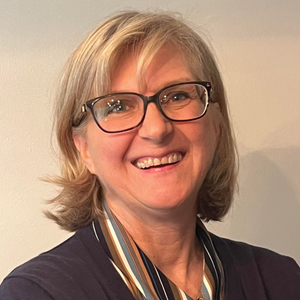 Betsy Zobl-Tar
  Jay Cutler joined the League in March 2026 as the Kids Count Senior Data Analyst, where he collects, analyzes, and prepares data for Kids Count in Michigan.
 Danielle Taylor-Basemore joined the League as the Development Data and Stewardship Coordinator in June 2025. She brings with her five years of nonprofit experience with a special focus on community engagement, data visualization and strategic programming. Prior to joining the League, Danielle served as the Business District, Safety, and Digital Manager at Jefferson East, Inc.
 Scott Preston is a Senior Policy Analyst with the Michigan League for Public Policy, where he leads the organization’s immigration and criminal justice reform portfolios. In the three years prior to joining the League, Scott facilitated the Southeast Michigan Refugee Collaborative and managed a small business economic development program at Global Detroit. His work included launching Michigan’s first Refugee Film Festival and building on a trusted connector model that linked marginalized communities with crucial resources. Scott’s work at the League is informed by his background in journalism and research. He spent four years covering the Syrian refugee crisis in the Middle East for publications such as The Economist, and later worked with unaccompanied refugee minors through Samaritas. Scott holds a master’s degree in international migration and public policy from the London School of Economics and Political Science.
 Kate Powers joined the League as the Chief Development Officer in February 2025. Prior to joining the League, Kate held leadership positions at many Michigan nonprofit organizations, most recently serving as the COO and Chief Development Officer of Ele’s Place. Kate has spent the bulk of her career in fundraising, with a short stint in the state Legislature as a legislative aide to members in both chambers. Kate is a graduate of Michigan State University’s James Madison College with a Bachelor of Arts in Social Relations and has a certificate in fundraising management from the Lilly Family School of Philanthropy at Indiana University. Additionally, Kate served on the East Lansing Public Schools Board of Education and is a past President of the Junior League of Lansing. In her free time, she enjoys traveling with her husband and her son and saving outfit of the day and home decor ideas on Pinterest.
  Nicholas Hess joined the League as the Fiscal Policy Analyst in September of 2024. In this role, Nicholas focuses on tax policy, government revenue, and their impact on working families and racial equity, including the effects of the Earned Income Tax Credit (EITC) and Child Tax Credit (CTC). Nicholas values the role that judicious fiscal policy can play in the improvement of people’s lives and the economy, alleviating inequities along the way.
 Audrey Matusz joined the League as the Visual Communications Specialist in September 2024. She supports the team with implementing social media strategies and brainstorming creative ways to talk about public policy. She brings with her nearly a decade of experience in producing digital products for evidence-based social justice initiatives.
  Jacob Kaplan
  Donald Stuckey
  Alexandra Stamm
 Amari Fuller
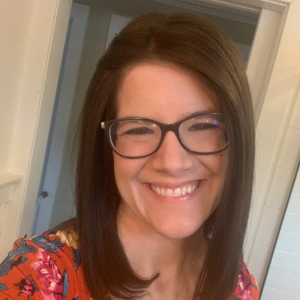 Mikell Frey is a communications professional with a passion for using the art of storytelling to positively impact lives. She strongly believes that positive social change can be inspired by the sharing of data-driven information coupled with the unique perspectives of people from all walks of life across Michigan, especially those who have faced extraordinary barriers.



 Yona Isaacs (she/hers) is an Early Childhood Data Analyst for the Kids Count project. After earning her Bachelor of Science in Biopsychology, Cognition, and Neuroscience at the University of Michigan, she began her career as a research coordinator in pediatric psychiatry using data to understand the impacts of brain activity and genetics on children’s behavior and mental health symptoms. This work prompted an interest in exploring social determinants of health and the role of policy in promoting equitable opportunities for all children, families, and communities. She returned to the University of Michigan to complete her Masters in Social Work focused on Social Policy and Evaluation, during which she interned with the ACLU of Michigan’s policy and legislative team and assisted local nonprofit organizations in creating data and evaluation metrics. She currently serves as a coordinator for the Michigan Center for Youth Justice on a project aiming to increase placement options and enhance cultural competency within the juvenile justice system for LGBTQIA+ youth. Yona is eager to put her data skills to work at the League in support of data-driven policies that advocate for equitable access to healthcare, education, economic security, and opportunity for 0-5 year old children. In her free time, she enjoys tackling DIY house projects and trying new outdoor activities with her dog.
 Rachel Richards rejoined the League in December 2020 as the Fiscal Policy Director working on state budget and tax policies. Prior to returning to the League, she served as the Director of Legislative Affairs for the Michigan Department of Treasury, the tax policy analyst and Legislative Director for the Michigan League for Public Policy, and a policy analyst and the Appropriations Coordinator for the Democratic Caucus of the Michigan House of Representatives. She brings with her over a decade of experience in policies focused on economic opportunity, including workforce issues, tax, and state budget.
 Simon Marshall-Shah joined the Michigan League for Public Policy as a State Policy Fellow in August 2019. His work focuses on state policy as it relates to the budget, immigration, health care and other League policy priorities. Before joining the League, he worked in Washington, D.C. at the Association for Community Affiliated Plans (ACAP), providing federal policy and advocacy support to nonprofit, Medicaid health plans (Safety Net Health Plans) related to the ACA Marketplaces as well as Quality & Operations.

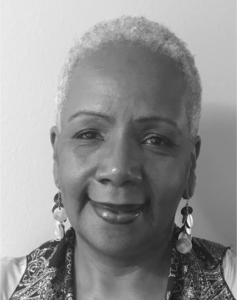 Renell Weathers, Michigan League for Public Policy (MLPP) Community Engagement Consultant. As community engagement consultant, Renell works with organizations throughout the state in connecting the impact of budget and tax policies to their communities. She is motivated by the belief that all children and adults deserve the opportunity to achieve their dreams regardless of race, ethnicity, religion or economic class.


 Emily Jorgensen joined the Michigan League for Public Policy in July 2019. She deeply cares about the well-being of individuals and families and has a great love for Michigan. She is grateful that her position at the League enables her to combine these passions and work to help promote policies that will lead to better opportunities and security for all Michiganders.
 Megan Farnsworth joined the League’s staff in December 2022 as Executive Assistant. Megan is driven by work that is personally fulfilling, and feels honored to help support the work of an organization that pushes for more robust programming and opportunities for the residents of our state. She’s excited and motivated to gain overarching knowledge of the policies and agendas that the League supports.