Recent changes at the federal level now allow states to request waivers to enforce work requirements on Medicaid recipients. Some policymakers in Michigan have suggested that Michigan should adopt such a policy. However, work requirements for Medicaid are a bad idea for a number of reasons.
On Jan. 11, 2018, the federal Department of Health and Human Services (HHS) and the Centers on Medicare and Medicaid Services (CMS) provided guidance indicating the administration’s decision to allow work requirements in Medicaid. CMS Administrator Seema Verma has historically cited her  concerns about able-bodied individuals being enrolled in Medicaid; the population of “able-bodied” individuals is typically able to access Medicaid through expansion programs, for example, the Healthy Michigan Plan. However, a majority of the states that have requested work requirement waivers from CMS have been states that have not yet expanded Medicaid. This raises concerns about the implications of work requirements on the elderly, disabled and other traditional Medicaid populations as many of these states’ work requirements would apply to these so-called traditional Medicaid populations. The decision to approve waiver requests relating to work requirements reverses years of both Republican and Democratic administrations’ beliefs that the requirements do not promote the program’s ultimate purpose of providing health insurance.
Despite HHS and CMS’s claims, data and history show us that work requirements don’t improve health outcomes or employment outcomes for those who qualify for Medicaid. Implementation of work requirements will ultimately result in lost coverage for individuals unable to complete cumbersome paperwork, properly qualify for an exemption, or overcome daily barriers to being able to get to work.
AGAINST MEDICAID OBJECTIVES
Section 1115 waivers, which would allow for states to request the use of work requirements for qualification of Medicaid, were created by Congress and were intended to be broad, but within the confines of the law. Specifically, that a Medicaid waiver must be an “experimental, pilot or demonstration project” that, in the judgment of the HHS secretary, is “likely to assist in promoting the objectives of” the Medicaid program. If we look very plainly at the intent of the Medicaid program, the program was designed to give people with low incomes health insurance and improve their health. Nowhere in the Medicaid statute does it say that work could and can be used as a determination of eligibility. From that view, Medicaid is a health insurance program, not a jobs program—a basis supported by every previous administration.
When President Lyndon B. Johnson signed Medicaid into law in 1965, he stated:
“Millions of our citizens do not now have a full measure of opportunity to achieve and to enjoy good health, millions do not have protection or security against the economic effects of sickness.
And the time has now arrived for action to help them attain that opportunity and to help them get that protection.”
In this speech he also talked about lifting people out of poverty, helping the sick and developing compassion in our country. He spoke of “attaining opportunity” to receive healthcare—not to receive healthcare only if you are working.
In her speech to state Medicaid directors, CMS Administrator Verma stated that “if we are going to live up to the promise of Medicaid, we need to do more than simply pay for healthcare services, it’s why we believe community engagement requirements are actually in the spirt of Johnson’s idea.”
It is clear that much of the debate over Medicaid work requirements will be about whether or not they support the objectives of the program, which is expected to be one of the legal challenges states may use to block work requirements.
WAIVER LEGALITY
While CMS/HHS have provided guidance that they will accept waivers allowing for work requirements, there are some questions on whether or not they are legal. Under the Social Welfare Act, the act that created the Medicaid program, the secretary of HHS can waive certain parts of the Medicaid Act but cannot impose new eligibility criteria—in this case, the criteria of work in order to qualify for Medicaid. This is also expected to be the basis of legal challenges to work requirements.
Legal challenges will focus on individual states’ proposals and why CMS approved a specific waiver allowing for work requirements. It is important to note that blocking work requirements in one state through litigation does not mean that work requirements proposed in other states will be blocked by the courts.
CMS Administrator Verma has already defended the assumptions that legal challenges to work requirements will be forthcoming once waiver requests start being approved. She believes there is a link between having a job and positive health outcomes and has referenced numerous studies that show that. While this research does exist, there is some disagreement that this could be a “chicken before the egg” situation. Are people able to get a job because they are healthy or are they healthy because they have a job?
It is expected that this research will be used to defend HHS’s decisions to approve work requirements in states. It is also possible that legal challenges could be made on the basis of administrative procedure and whether the proper state and federal rulemaking process is followed before waivers are approved.
A lawsuit has already been filed in response to the recent approval of the Kentucky Medicaid waiver (Stewart v. Azar). The lawsuit identifies 15 plaintiffs ranging from retired workers, students, housekeepers, and car repairers, ranging in age from 20-62, all of whom rely on the healthcare provided by Medicaid. The plaintiffs are asking the court to declare the work requirements and the waiver in its entirety illegal on the basis of two different issues. The first declaring that HHS has “bypass[ed] the legislative process and act[ed] unilaterally to ‘comprehensively transform’ Medicaid” using “a narrow statutory waiver authority” that has “effectively rewritten the statute.” More plainly, the requirements risk the loss of Medicaid by creating new eligibility requirements that may be beyond HHS’s authority. The plaintiffs also raised the concern that the process violated the Administrative Procedures Act stating that the proper notice and public comment period was not met.
It is also possible for the court to consider if the waiver qualifies as “experimental,” if authority was exceeded when HHS determined that these policies further the objectives of the program, if policies are supported by evidence in the administrative policy, and if the work requirements were issued without formal notice and comment rule-making.
MEDICAID ENROLLEES ARE ALREADY WORKING
Right here in Michigan we have data showing that Medicaid enrollees are working and that their ability to have health insurance improves their work outcomes. A study by the University of Michigan shows that of those enrolled in Michigan’s Medicaid expansion program, Healthy Michigan, 69% did better at work once they were covered, and that those who were out of work said that coverage made it easier for them to seek out a job. What is also notable is that those surveyed who were not working stated numerous justifiable reasons including poor health, chronic conditions, age or other limitations.
In another study of Healthy Michigan recipients done by the University of Michigan, 48.8% of respondents said they were employed. It is an important reminder that although they are employed and qualify for Medicaid, they make no more than about $15,800 for an individual or $32,300 for a family of four. Additionally, 27.6% of enrollees were out of work, with many stating poor health status, chronic illness or mental illness as their reason for not having work. The rest of those surveyed who were not working stated they were unable to work due to fair or poor health (11.3%), or because they were retired (2.5%), students (5.2%) or homemakers (4.5%).
Other studies related to Medicaid employment nationwide show that 6 out of 10 nonelderly Medicaid enrollees are working and 8 out of 10 Medicaid enrollees live in a household where someone is working. Similar to the study done in Michigan, those who are not working state that disability, caregiving responsibilities or going to school are the reasons they are not.
The evidence is clear that Medicaid enrollees are working, and those who are not face legitimate health issues or other barriers associated with their age or position in life. On the face, it is possible that those who have asserted why they do not or cannot work could be viewed as “exempt” from work requirements, but obtaining that exemption can often be difficult and could result in losing health coverage or never being able to obtain it. States’ decisions to propose work requirements are a solution in search of a problem, as it is evident that people on Medicaid are working—often more than one job—to help support their families.
EXEMPTIONS WILL BE HARD TO GET
The ability to be granted a so-called exemption from work requirements may be difficult for some people to get. While it is likely that states will propose exemptions for the people who are “medically frail,” the narrow language of this definition could result in individuals losing their coverage. Typically, people who receive Supplemental Security Income (SSI) would qualify for exemption through the “medically frail” distinction, but it is not clear at this time how non-SSI adult Medicaid enrollees who may also suffer from a disability or chronic health condition and are not able to work will obtain an exemption. Right here in Michigan, we can look at the 27.6% of Healthy Michigan recipients surveyed that reported serious chronic conditions as a reason for not working.
The process of obtaining medical records, physician statements or other documents to prove exemption can be a difficult task, made more difficult for individuals not currently enrolled in a health insurance program. States are required to comply with the Americans with Disabilities Act and other laws that protect people with disabilities—CMS has provided little insight into how they are to prove their exemption.
BUREAUCRACY AND LOST COVERAGE
The long history of difficult enrollment practices in programs such as the Children’s Health Insurance Program (CHIP) and Medicaid foreshadow further concerns about imposing work requirements. The inability for individuals to manage complex paperwork and government bureaucracy could result in individuals losing coverage. One cause of major concern could be those who may be seeking an exemption from work requirements but may have difficulties completing the appropriate paperwork due to a chronic disease or disability and therefore would have to comply with the requirements. Depending on how the waiver was written, noncompliance with the work requirement could result in additional negative actions; for example, Kentucky’s waiver includes a six-month lockout from coverage for not complying with the work requirements.
In another layer of bureaucracy, paperwork that will be needed to prove meeting work requirements does not only need to be completed by the individual required to meet them. Employers will also need to fill out paperwork proving that an individual is in fact working, and doctors will have to sign-off should a person not be able to work. People will fall through the cracks, sometimes by no fault of their own, due to burdensome paperwork.
There is also concern regarding the impact implementing a work requirement would have on employees in state government. Tracking individuals who must meet work requirements will mean additional training and paperwork for state employees. The process of enrolling in and renewing Medicaid is already difficult and additional requirements are sure to put a strain on state agencies and employees. Michigan doesn’t need more red tape and it would be irresponsible to think that adding work requirements will do anything except cost the state significant amounts of money and add more paperwork for everyone.
STATE BUDGET IMPACTS
The guidance that has come from CMS requires states to identify how they will assist enrollees in attaining, seeking and maintaining work. However, it does not allow the use of federal Medicaid funds to provide this assistance. Given the current status of Michigan’s budget, lower projected revenues and changes in the tax code, it is hard to identify where the state would be able to come up with funding to support these types of programs. There are multiple barriers that may interfere with an individual’s ability to comply with work requirements including job training, transportation and child care that the state would have to address. In order to comply with guidance from CMS, the state—should it decide to impose work requirements—would potentially need to pull from other state services in order to provide the required support for enrollees. This could result in cuts to education, infrastructure or other vital social service programs that Michigan lawmakers and residents tend to prioritize.
A recent report out of Kentucky shows that the estimated cost of simply setting up the infrastructure to track work requirements will cost nearly $187 million just in the first six months, of which $167 million is expected to come from the federal government. In Tennessee, the estimated work requirements would cost the state $18.7 million a year with the federal government kicking in an additional $15 million. Similar studies in states such as Virginia also show the need for significant financial investment to set up electronic systems, hire additional staff and track individuals, including providing individuals the needed resources to find work. To date, CMS has not commented on the increased federal spending on administration. States would need to invest significant funding to provide individuals the needed support to access jobs, including job training and professional development opportunities.
Kentucky officials have said that they expect the implementation of work requirements and other reforms will save the state over $2 billion dollars. This savings is likely to come as a result of people losing their coverage by not being able to meet these harsh requirements or not even being able to attain coverage due to reforms.
STATUS OF REQUESTS IN OTHER STATES
Numerous states have submitted requests to HHS and CMS to allow work requirements for Medicaid enrollees. Almost immediately following the announcement that waiver requests for work requirements would be accepted, a request submitted by Kentucky was approved. The Kentucky waiver includes a number of problematic reforms including lockouts, ending retroactive coverage and imposing premiums in addition to work requirements.
The work requirement accepted in Kentucky requires that enrollees who are not primary caretakers, pregnant or full-time students must work, volunteer, be searching for a job or seeking job training for at least 80 hours a month, unless they are already working 30 hours a week. Documentation is required monthly and if the requirement is not maintained, enrollees’ Medicaid will be suspended unless other arrangements are made, including making up hours or enrolling in health or financial literacy classes. These so-called reforms are expected to significantly reduce the number of individuals who are able to attain and maintain Medicaid coverage. Kentucky expects that as a result of the harsh reforms allowed in their waiver request, Medicaid enrollment will drop by 3% in the first year, ultimately growing to 15% in the fifth year. This means 20,000 enrollees with low incomes will lose this valuable health coverage in the first year and grow to over 100,000 by the fifth year—this includes those enrolled in the state’s Medicaid expansion program.
Like in Michigan, many of those enrolled in Medicaid in Kentucky are working or find that maintaining Medicaid coverage improves their ability to seek and maintain work. The harsh requirements of reporting will result in individuals losing access to coverage, including for chronic conditions or substance use disorders, and additional barriers to keeping and maintaining employment.
IS MICHIGAN NEXT?
Legislation has been introduced in the Michigan House of Representatives to impose work requirements on the Healthy Michigan population, with additional rumors swirling about other attempts to implement work requirements. As lawsuits move forward in Kentucky, it is imperative that Michigan look at the human and financial costs of attempting to implement work requirements, especially with the growing data and information that shows they are likely to cause more harm than good.
Instead of burdening individuals with harsh and confusing work requirements, it would be more productive for Michigan lawmakers to invest in job training and continued support for the Medicaid program, without which many Michiganders would lose access to valuable health coverage that allows them to work and provide for their families.


 Betsy Zobl-Tar
  Jay Cutler joined the League in March 2026 as the Kids Count Senior Data Analyst, where he collects, analyzes, and prepares data for Kids Count in Michigan.
 Danielle Taylor-Basemore joined the League as the Development Data and Stewardship Coordinator in June 2025. She brings with her five years of nonprofit experience with a special focus on community engagement, data visualization and strategic programming. Prior to joining the League, Danielle served as the Business District, Safety, and Digital Manager at Jefferson East, Inc.
 Scott Preston is a Senior Policy Analyst with the Michigan League for Public Policy, where he leads the organization’s immigration and criminal justice reform portfolios. In the three years prior to joining the League, Scott facilitated the Southeast Michigan Refugee Collaborative and managed a small business economic development program at Global Detroit. His work included launching Michigan’s first Refugee Film Festival and building on a trusted connector model that linked marginalized communities with crucial resources. Scott’s work at the League is informed by his background in journalism and research. He spent four years covering the Syrian refugee crisis in the Middle East for publications such as The Economist, and later worked with unaccompanied refugee minors through Samaritas. Scott holds a master’s degree in international migration and public policy from the London School of Economics and Political Science.
 Kate Powers joined the League as the Chief Development Officer in February 2025. Prior to joining the League, Kate held leadership positions at many Michigan nonprofit organizations, most recently serving as the COO and Chief Development Officer of Ele’s Place. Kate has spent the bulk of her career in fundraising, with a short stint in the state Legislature as a legislative aide to members in both chambers. Kate is a graduate of Michigan State University’s James Madison College with a Bachelor of Arts in Social Relations and has a certificate in fundraising management from the Lilly Family School of Philanthropy at Indiana University. Additionally, Kate served on the East Lansing Public Schools Board of Education and is a past President of the Junior League of Lansing. In her free time, she enjoys traveling with her husband and her son and saving outfit of the day and home decor ideas on Pinterest.
  Nicholas Hess joined the League as the Fiscal Policy Analyst in September of 2024. In this role, Nicholas focuses on tax policy, government revenue, and their impact on working families and racial equity, including the effects of the Earned Income Tax Credit (EITC) and Child Tax Credit (CTC). Nicholas values the role that judicious fiscal policy can play in the improvement of people’s lives and the economy, alleviating inequities along the way.
 Audrey Matusz joined the League as the Visual Communications Specialist in September 2024. She supports the team with implementing social media strategies and brainstorming creative ways to talk about public policy. She brings with her nearly a decade of experience in producing digital products for evidence-based social justice initiatives.
  Jacob Kaplan
  Donald Stuckey
  Alexandra Stamm
 Amari Fuller
 Mikell Frey is a communications professional with a passion for using the art of storytelling to positively impact lives. She strongly believes that positive social change can be inspired by the sharing of data-driven information coupled with the unique perspectives of people from all walks of life across Michigan, especially those who have faced extraordinary barriers.



 Yona Isaacs (she/hers) is an Early Childhood Data Analyst for the Kids Count project. After earning her Bachelor of Science in Biopsychology, Cognition, and Neuroscience at the University of Michigan, she began her career as a research coordinator in pediatric psychiatry using data to understand the impacts of brain activity and genetics on children’s behavior and mental health symptoms. This work prompted an interest in exploring social determinants of health and the role of policy in promoting equitable opportunities for all children, families, and communities. She returned to the University of Michigan to complete her Masters in Social Work focused on Social Policy and Evaluation, during which she interned with the ACLU of Michigan’s policy and legislative team and assisted local nonprofit organizations in creating data and evaluation metrics. She currently serves as a coordinator for the Michigan Center for Youth Justice on a project aiming to increase placement options and enhance cultural competency within the juvenile justice system for LGBTQIA+ youth. Yona is eager to put her data skills to work at the League in support of data-driven policies that advocate for equitable access to healthcare, education, economic security, and opportunity for 0-5 year old children. In her free time, she enjoys tackling DIY house projects and trying new outdoor activities with her dog.
 Rachel Richards rejoined the League in December 2020 as the Fiscal Policy Director working on state budget and tax policies. Prior to returning to the League, she served as the Director of Legislative Affairs for the Michigan Department of Treasury, the tax policy analyst and Legislative Director for the Michigan League for Public Policy, and a policy analyst and the Appropriations Coordinator for the Democratic Caucus of the Michigan House of Representatives. She brings with her over a decade of experience in policies focused on economic opportunity, including workforce issues, tax, and state budget.
 Simon Marshall-Shah joined the Michigan League for Public Policy as a State Policy Fellow in August 2019. His work focuses on state policy as it relates to the budget, immigration, health care and other League policy priorities. Before joining the League, he worked in Washington, D.C. at the Association for Community Affiliated Plans (ACAP), providing federal policy and advocacy support to nonprofit, Medicaid health plans (Safety Net Health Plans) related to the ACA Marketplaces as well as Quality & Operations.


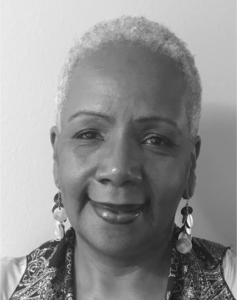 Renell Weathers, Michigan League for Public Policy (MLPP) Community Engagement Consultant. As community engagement consultant, Renell works with organizations throughout the state in connecting the impact of budget and tax policies to their communities. She is motivated by the belief that all children and adults deserve the opportunity to achieve their dreams regardless of race, ethnicity, religion or economic class.
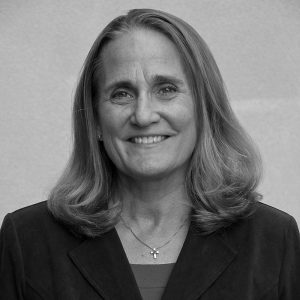


 Emily Jorgensen joined the Michigan League for Public Policy in July 2019. She deeply cares about the well-being of individuals and families and has a great love for Michigan. She is grateful that her position at the League enables her to combine these passions and work to help promote policies that will lead to better opportunities and security for all Michiganders.
 Megan Farnsworth joined the League’s staff in December 2022 as Executive Assistant. Megan is driven by work that is personally fulfilling, and feels honored to help support the work of an organization that pushes for more robust programming and opportunities for the residents of our state. She’s excited and motivated to gain overarching knowledge of the policies and agendas that the League supports.