- FIRST LOOK: THE GOVERNOR’S 2025 STATE BUDGET PROPOSAL
Gov. Gretchen Whitmer’s fiscal year 2025 budget proposal comes on the heels of a historic, transformational budget that focused on kitchen table issues, helped families’ wallets stretch a little farther and provided Michigan children with better access to opportunity. However, with Michigan’s poverty rate still the 13th highest in the nation and rising in over half of Michigan counties, bold action continues to be necessary to support children, families and workers in our state. Building on the successes of the current year budget and continuing to invest in people-centered, values-driven priorities, the governor’s budget focuses on balancing Michigan’s budget and cutting red tape; lowering costs for Michiganders; safe communities and keeping Michigan healthy; a better, more affordable education; growing Michigan’s economy and protecting its environment; and building a fairer and more equitable state.
The governor’s budget proposal, which was presented to the Legislature on Feb. 7, 2024, contains the details of her plan to allocate the state’s resources for the 2025 budget year, which begins on Oct. 1, 2024, and ends on Sept. 30, 2025. For 2025, the governor recommends $80.7 billion in total spending from state and federal sources. About $18.9 billion of our School Aid Fund (SAF) dollars are spent across pre-K-12 schools, community colleges, and colleges and universities. Spending from the state’s General Fund—the portion of the budget over which lawmakers have the most control—is expected to be $14.3 billion. Federal funds continue to make up the largest portion of the state budget, at nearly $33.9 billion or 42% of the state budget.
Somewhat surprisingly, the governor’s budget is a slight increase over the current year’s budget, which benefited from a significant one-time surplus. In fact, at the January Consensus Revenue Estimating Conference, the post-COVID economy was deemed to be strong and stable and revenues were estimated to be coming in slightly ahead of what we projected last year. This provided budget crafters with some additional cushion in both one-time and ongoing funds. The governor’s budget recommendation includes about $1.85 billion total ($769.3 million General Fund) in one-time allocations, including the deposit into the Budget Stabilization Fund (often called the Rainy Day Fund); this represents only about 2.3% of total appropriations, or about 5.3% of the General Fund.
As has been the case in past budgets, the vast majority (80.8%) of the overall state budget supports health and human services, education—including child care, preK, K-12 and postsecondary education—and public safety. The same is true for the state’s General Fund budget, with 81.3% of the budget allocated to these three core categories. Overall, health and human services, which provides funding for Michiganders’ basic needs like healthcare, basic cash assistance, food assistance, child welfare, and behavioral health supports, remains the largest department in both overall funds and General Fund appropriations.
The governor’s budget allocates nearly all of available one-time and ongoing funds in her recommendation. Based on the governor’s recommendation, our state General Fund would end the 2025 budget year with only $7 million on the balance sheet, and our state School Aid Fund would end the year with only $12.2 million on the balance sheet. These figures do create some hesitancy as it provides little opportunity to make investments beyond where the governor recommended without reducing or eliminating other proposed investments, and a mild economic downturn, small tax reduction or any other change affecting revenues could easily result in a midyear deficit or shortfall. The budget also relies on some potentially uncertain policy changes and fund shifts that could affect the ability to make some of the governor’s major investments. Additionally, Michigan’s personal income tax law still contains a rate reduction trigger that could significantly reduce revenues in future years, making it difficult to maintain some of these vital investments. In fact, Michigan triggered a rate reduction to 4.05% in 2023, however the rate reverted to 4.25% this year, an impact of the law that is still being litigated.
As Michiganders, we all deserve strong schools, attainable housing, safe drinking water, affordable healthcare, and economic security. The state budget provides an opportunity to improve access to the services that Michigan people—kids, workers, and families—need and rely on, and the League will continue to work toward a People’s Budget that works for all Michiganders.
- FIRST LOOK: THE GOVERNOR’S 2025 STATE BUDGET PROPOSAL
Michiganders succeed when they are given the resources that allow them to go to school, work and participate in their community. Children have a difficult time learning if they are hungry or if they worry about whether their family can afford their next meal. Stable, safe, affordable housing is necessary to find and retain a job. Being able to access their basic needs helps Michiganders achieve better educational outcomes, live healthier lives and access economic prosperity.
For too long, our budget has disinvested in key areas that can have these lifelong beneficial impacts on the lives of our most important commodity—our people. The COVID-19 pandemic and our resulting recovery has shown policymakers the importance of investing in these social determinants of health and direct drivers of economic prosperity. When we prioritize state investments that help Michiganders afford their basic needs, put food on their tables and access safe housing, it has long-lasting impacts on the lives of Michigan’s families and children. The governor’s budget builds on current-year commitments to food access and safe, affordable housing, and makes key investments in programs to support direct cash payments, which would be the first significant investment since the program’s inception.
Please note, investments covering the basic needs of Michiganders cross many different areas of the state budget. If a department is not listed within the investment line, the program and funding falls within the budget for the Department of Health and Human Services (MDHHS).
Michigan’s Family Independence Program provides basic cash assistance to Michiganders with no to very low incomes. After years of neglect of eligibility criteria and harmful policies enacted by the Legislature, the number of families served by the program dropped from nearly 80,000 per month in 2011 to about 12,300 per month—including about 23,100 children—in 2023.
-
-
-
-
- Expanding the Young Child Supplement. $10 million will go toward increasing the small child monthly supplemental payment from $50 per child under the age of 6 to $150 per child.
-
-
-
-
-
-
-
- Reallocating existing funds to target poverty. These changes represent a shift in allocation of federal TANF dollars from administrative functions and other public programs to targeted investments to support families living in poverty rather than new general fund spending.
-
-
-
-
-
-
-
- Significant improvements to Michigan’s cash assistance program (Family Independence Program, or FIP). For the first time since the program’s inception in the early 90’s the governor has proposed significant investments into the Family Independence Program. This includes $34.8 million to increase the base monthly payment to families receiving cash assistance. On top of this, an additional $1.2 million will be reallocated to the program to extend the lifetime limit from 48 months to 60 months, which would also require a statutory change in addition to the budget allocation.FIPs’ standard of payment has not had a meaningful increase since the program’s creation. This means benefits have eroded and have not kept up with the cost of living. This is especially striking when comparing the erosion of the standard of payment to the rising cost of housing. The governor’s proposed increase to the payment standard would be a step forward toward reversing this trend.
-
-
-
THE GOVERNOR’S RECOMMENDATION ALSO INCLUDES THE FOLLOWING TO HELP FAMILIES AFFORD BASIC COSTS OF LIVING
-
-
-
-
- Maintained support for the Diaper Assistance Program. The diaper assistance program funds entities that distribute diapers free of charge to qualifying families with children under 3 years of age. The governor’s budget recommendation maintains funding at $4.4 million.
-
-
-
-
-
-
-
- Grants for prenatal and infant support programs. The current year budget included funding for the RxKids program, a public-private partnership in Flint, MI to provide cash payments to pregnant people and monthly payments for infants through 12 months. Recognizing that reducing the toxic stress of poverty on families has long-term beneficial impacts on kids, the governor’s budget proposes $24 million to provide grants to programs that assist families with young children alleviate symptoms of poverty.
-
-
-
-
-
-
-
- $3 million (General Fund) for promotion of and education about the Michigan Achieving a Better Life Experience (MiABLE) program. The program allows people who become disabled before age 26 to save money for disability-related expenses without affecting their eligibility for other public benefits programs (which typically limit disabled people to a mere $2,000 in assets). Only 1% of the roughly 500,000 eligible Michiganders are enrolled currently, and in 2026, a federal law change will expand eligibility to all people disabled before age 46. (Treasury)
-
-
-
-
-
-
-
- Creation of a state income tax credit for caretakers. The governor recommended providing certain caretakers with an income tax credit of up to $5,000 to cover costs associated with caring for an aging parent or other family member with long-term health needs, such as transportation, counseling and nursing or respite services. (Treasury/Tax Policy Change)
-
-
-
-
-
- A Paid Family and Medical Leave Program. During the governor’s August 2023 special address, she announced support for a state-level paid family and medical leave program that would allow all workers to access paid leave during illness, following the birth of a child, while caring for a family member, or for other purposes. Typically paid for by payroll taxes that are shared between the employer and the employee, state-administered paid leave programs provide at least partial replacement of wages that are lost due to family or medical leave needs. Legislation to implement such a policy has stalled in the legislature.
-
The ability to access and pay for healthy food is essential to a person’s health and ability to learn and go to work. The federally funded Supplemental Nutrition Assistance Program (SNAP) remains the state’s main way to help families afford groceries, and earlier this year, the state removed barriers to access SNAP by eliminating the asset test that was used to determine eligibility. Building on this success, Michigan’s budget recognizes that Michiganders of all ages and stages in life could use extra support in ensuring healthy meals make it to their dinner tables.
-
-
- Continued funding of $12.5 million for procurement and distribution through the Michigan Agricultural Surplus System, which distributes surplus produce to people with low incomes.
-
-
-
- Maintaining funding for the Double Up Food Bucks (DUFB) program at $2 million for the 2025 and 2026 budget years. Through DUFB, SNAP participants can double up to $20 in food assistance per day by purchasing Michigan-grown produce at participating grocery stores and farmers markets. This amount will enable Michigan to maximize federal matching dollars but is less than the estimated $5 million necessary to expand the program to all grocers and farmers markets currently on the waiting list. (Dept. of Agriculture and Rural Development)
-
-
-
- $108.5 million ($108 million federal, $500,000 state General Fund) for a summer food assistance program for children. Beginning in 2011, Michigan has participated in a federal pilot program to provide food assistance via electronic benefit transfer (EBT) during the summer, when children lose access to school meals and child hunger spikes. Recent federal legislation makes the program permanent and opens it to all states beginning in the summer of 2024. The governor’s budget dedicates $108 million in federal funds to MDHHS for summer food assistance benefits of $120 per eligible child, and $500,000 in state funds to the Michigan Department of Education to administer the program and meet Michigan’s federal match requirement.
-
-
-
- A total of $200 million to continue offering public schools the option to provide free breakfast and lunch to all students. For the current school year, the legislature allocated $100 million ongoing from the School Aid Fund (SAF) and $60 million in a one-time School Meals Reserve Fund to cover all school meal costs that are not reimbursed by the federal government. The governor proposes to increase the SAF appropriation by $70 million and add $30 million to the Reserve Fund for the 2024-25 school year. (School Aid/K-12 Budget)
-
-
-
- Reduced funding for the Ten Cents a Meal program, a competitive grant program that provides incentives for school districts and child care centers to purchase Michigan-grown produce. Ideally, funding would remain at the current level of $9.3 million, but for 2025, the governor recommends $4.5 million ($500,000 General Fund, $4 million School Aid Fund). The governor does also recommend several changes to make the program more effective: increasing the share retained by project partners for data collection, outreach and training from 1 percent to 2 percent; and allowing grantees to use up to 25% of their awards for program-related labor and food transportation costs. (School Aid/K-12 Budget)
-
Access to safe, affordable housing is a crucial factor in an individual’s health status, academic success and economic stability. Unfortunately, high housing costs and the lack of available, affordable housing has resulted in many Michiganders having to make tough decisions between housing, healthcare access, food access and other basic needs. While unaffordable housing costs disproportionately affect renters and households in urban communities, it is neither a new issue nor one that only affects certain demographic or geographic populations.
-
-
- In a current year supplemental, $1 million (General Fund) to augment the Housing Readiness Incentive Grant Program, which supports local governments with costs to change land use and zoning policies, update master plans, and otherwise encourage housing supply and affordability. (Labor and Economic Opportunity)
-
-
-
- $50 million (restricted funds) for the Housing and Community Development Program, which promotes rehabilitation and new housing development and revitalization of downtown areas. The Program is supported by a trust fund that, until recently, received extremely sporadic and limited funding. Public Act 4 of 2023 created a permanent dedicated funding stream by requiring $50 million in corporate income tax revenue to be deposited into the fund annually. (Labor and Economic Opportunity)
-
-
-
- Also in a current year supplemental, $20 million ($10 million federal ARPA, $10 million state General Fund) for home- and community-based supportive housing services. Supportive housing, which combines affordable housing with other services for people facing the most complex housing challenges, are critical to homelessness prevention. Current funding sources, however, are enough to meet only ⅓ of Michigan’s supportive housing needs. The proposed investment would help fill the gap while the state works to leverage more Medicaid funding for these essential services.
-
One of the reasons housing is unaffordable to so many Michiganders is the cost of utilities. Generally, housing–including utilities–is considered affordable when it costs no more than 30 percent of household income. Many families with the lowest incomes, however, must spend more than that on energy bills alone.
TO ENSURE THAT MORE FAMILIES WITH LOW INCOMES HAVE UTILITY SERVICE THAT IS ESSENTIAL TO HEALTH AND SAFETY, THE GOVERNOR’S BUDGET RECOMMENDS:
-
-
- A 30-percent increase for the Michigan Energy Assistance Program (MEAP), bringing total funding to $15 million (General Fund). This would be the first increase since 2012. A monthly surcharge on customer utility bills is MEAP’s primary revenue source; it generates enough to assist only a small fraction of families struggling to pay their energy bills.
- $5 million (General Fund) to draw down $41.8 million in matching IIJA funds over five years for weatherization assistance, which provides energy efficiency improvements that permanently lower utility bills for struggling families. This investment will also help the state address housing quality and energy needs that cannot be met with less flexible federal dollars.
-
THE GOVERNOR’S BUDGET ALSO INCLUDES SEVERAL LONG-OVERDUE INVESTMENTS IN MICHIGAN’S HOMELESSNESS PREVENTION AND RESPONSE EFFORTS
-
-
- A total of $7.3 million (one-time General Fund) for families experiencing or at risk of homelessness, including:
- $2 million to expand family shelters, which currently don’t have the capacity to serve all families in need.
- $750,000 to cover short-term hotel stays so communities can begin to address the backlog while they build up permanent shelter capacity.
- $4.5 million to support families involved in the child welfare system, including eviction diversion, first month’s rent and deposit, and utility arrears.
- A total of $7.3 million (one-time General Fund) for families experiencing or at risk of homelessness, including:
-
-
-
- An additional $3.5 million (TANF) for case management services to assist housing-insecure families involved in the child welfare system.
-
-
-
- A $30-million (TANF) increase for the State Emergency Relief (SER) program, which provides one-time emergency assistance for relocation, homeownership, utilities, deposits and home repairs. Despite inflation and rising property taxes, assistance with property tax arrearages through SER is capped at $2,000 per household. Also, families are not eligible until the second year of tax delinquency. The governor proposes increasing the limit to $5,000 and allowing assistance earlier in the process to help families avoid tax foreclosure and potential homelessness.
-
-
-
- Revival of the Emergency Rental Assistance (ERA) program that was in place during the pandemic. Federal emergency rental assistance helped pay rent and utility bills for nearly 263,000 Michiganders who experienced hardship resulting from the COVID-19 pandemic. But those funds have dried up and evictions and homelessness are on the rise again. Michigan rents are increasing at the third-fastest rate in the nation. Continued state investment in this effective program would keep struggling families safe, support landlords when their tenants’ ability to pay rent is uncertain, and ensure stability of the rental market.
-
- FIRST LOOK: THE GOVERNOR’S 2025 STATE BUDGET PROPOSAL
Michigan’s earliest learners deserve the opportunity to set their educational journey on the best path. At the same time, parents rely on our early childhood education systems, including child care and pre-K programs, to ensure their children are kept safe and are well taken care of while they work or go to school. Michigan’s state budget helps families with low and moderate incomes afford child care and preschool programs as well as funds other early childhood programs, and the governor is pushing forward with her goal toward providing universal access to state-funded preschool programs, regardless of income. However, there is a concern that this will destabilize our early childhood system, especially our child care providers, potentially increasing costs on our families with the youngest children and making access for families with low incomes more difficult. While the governor’s 2024-25 budget recommends expanding eligibility for state-funded preschool and improving access to child care assistance, more work needs to be done to fully address the cost of caring for and educating our youngest learners.
Please note, most of the programs below are administered by the Michigan Department of Lifelong Education, Advancement and Potential (MILEAP) but may also receive funding through the School Aid budget (K-12). Where there are differences, the department or budget is included within the proposed investment.
Michigan’s child care subsidy program provides support to help families with low to moderate incomes cover part of their child care costs. Families are initially eligible for the subsidy if they make under 200% of the federal poverty level (about $62,400 for a family of four) and need child care because they work or go to school. The state then reimburses providers, with rates determined by the child age, the facility (center, group home or family home) and the provider’s quality.
-
-
- Help ensure child care facilities are safe for the children they serve. Families need the assurance that the child care facility they choose is providing quality and safe care for their children. The governor’s MILEAP budget includes the following investments:
- $4.8 million to increase the number of staff who inspect child care facilities
- $500,000 to provide technical assistance and supplies to ensure safe drinking water
- $4 million to support Family Child Care Networks, which provide support to home-based providers
- Help ensure child care facilities are safe for the children they serve. Families need the assurance that the child care facility they choose is providing quality and safe care for their children. The governor’s MILEAP budget includes the following investments:
-
-
-
- Increase reimbursements for providers by 10%. During the COVID-19 pandemic, increased federal aid allowed the state to temporarily boost reimbursement rates paid to providers caring for kids with subsidies. This funding ran out in October 2023. While rates to providers are still higher than pre-pandemic levels, the removal of the temporary funding resulted in 20-25% cuts in rates, resulting in budget instability and potential wage cuts and private pay rate increases. The governor’s budget recommendation includes $37.9 million to increase child care provider reimbursement rates by 10% over current year levels. (MILEAP)
-
-
-
- Provide automatic eligibility for child care workers. At less than $13 an hour, child care workers are among the lowest-paid workforce—and the lowest-paid child educators—in the state. Low wages are one of the biggest barriers to attracting and retaining child care workers, and the cost of child care often keeps many qualified caretakers out of the workforce, with the average cost of infant care at a center ($12,238) eating up over 45% of the median annual wage of a child care worker. The executive budget recommendation includes $60 million in one-time funds to establish a three-year pilot program to provide employees working in licensed child care programs child care benefits. (MILEAP)
-
-
-
- Includes a pilot program to match state employee dependent care flexible spending account contributions. Flexible spending accounts (FSAs), which are widely offered by both private and public employers, allow employees to set aside pre-tax dollars to pay for out-of-pocket expenses. A dependent care FSA allows the employee to save for costs associated with care for a child or for elder care expenses. Over 1,200 state employees currently enroll in the state’s dependent care FSA. To encourage use and to help these contributions to go further, the governor’s budget includes $31.5 million in one-time funds to match state employee contributions dollar-for-dollar, up to $2,500 per family. (Dept. of Tech., Mgmt and Budget: Civil Service Commission)
-
-
-
- Reimbursement rates for providers still will be below pandemic-era levels. The 10% increase in reimbursement rates will go a long way toward helping improve access, affordability and quality, but rates remain below pandemic-era levels. The state is currently working on updating its market rate study, and this information will be helpful in determining whether we are meeting reimbursement rate goals and standards. However, Michigan should truly base reimbursement rates on the true cost of care, to allow child care workers to receive a living wage and other employment benefits.
-
-
-
- A comprehensive strategy to support the entire early childhood education system as we expand state-funded Pre-K. Speeding up access to universal, state-funded Pre-K through our Great Start Readiness Program (GSRP) without adequately strengthening our child care system may destabilize care for our infants and toddlers.
-
-
-
- A comprehensive strategy to address the early childhood workforce shortage. Michigan’s child care industry—overwhelmingly women and often women of color—is one of the most undervalued sectors of the workforce, and Michigan is facing a crisis-level workforce shortage. Wages are one of the main reasons contributing to the shortage; a caretaker working full time (2,080 hours) a year at the median hourly wage of just under $13 makes only $26,960 a year, far less than their early childhood education peers. Additionally, many do not qualify for other workforce benefits, such as retirement or healthcare.
-
During Gov. Gretchen Whitmer’s 2023 State of the State address, she proposed moving the state toward universal state-funded preschool programs for all Michigan 4-year-olds by the end of her second term (by the 2026-27 budget). However, this must be done in a strategic way to not exacerbate the early childhood workforce crisis and to not destabilize our early childhood education and care system for families. The current budget took the initial step by expanding our Great Start Readiness Program (GSRP), which provides state-funded pre-K programs at no cost for some Michigan families. At her 2024 State of the State, the governor called to move up the deadline to make free, state-funded preschool available for all Michigan families two years early. The governor’s budget includes a $159.5 million increase to GSRP, and anticipates the program will be able to serve an additional 6,800 children.
-
-
- Eliminate income eligibility for GSRP. Currently, families with children under 300% of the federal poverty level (or $93,600 for a family of four) are eligible for GSRP. The governor’s budget removes the income eligibility requirement and allows all 4-year-olds to qualify for GSRP; however, programs must prioritize enrollment of families with low incomes.
-
-
-
- Increase the per-child allocation. The governor’s budget proposes to increase the per-child allocation from $9,608 to $10,342 for a full-day program (from $4,804 to $5,171 for a part-day program). This represents an approximately 7.5% increase over the current budget, and 5% more than the increase provided to K-12 per-student foundation allowance amounts. The governor’s budget also recommends increasing the per-child allocation for the extended day program by 5%, from $11,530 to $12,107.
-
-
-
- Create new classrooms and expand providers. The executive budget recommendation includes another year of $35 million in one-time funds to open new classrooms in underserved areas. The funding would be used to provide grants of up to $25,000 for each new or expanded GSRP classroom for costs associated with attracting, recruiting, retaining, and licensing required staff; supporting facility improvements or purchasing necessary facility space; outreach material for public awareness; and improving a provider’s rating.
-
A child’s educational journey begins before they set foot in a classroom, and children of all ages need support in order to start them off on the right path. The governor’s school aid budget includes these items to support interventions for Michigan’s earliest learners.
-
-
- Increased funding for Early On. Early On helps identify and provide interventions for infants and toddlers, birth to age 3, who have developmental delays or disabilities. The governor’s budget recommends increasing funding by $1 million, from $22.3 million to $23.3 million. While this is an increased investment, it still continues to fall short of programmatic needs.
-
-
-
- Increased funding for home visiting programs. The executive budget recommendation includes a $1 million increase—from $3.5 million to $4.5 million total—for evidence-based home visiting programs that encourage strong family relationships and provide support to those with young children
-
-
-
- Maintained funding for Great Start Collaboratives (GSCs). Great Start Collaboratives bring together parents, caregivers, and community leaders and organizations to help strengthen the early childhood system and expand efforts to enroll families in early childhood education. The GSCs receive funding to provide this support through the Early Childhood Block Grants. The governor’s budget proposes flat funding, at $15.9 million.
-
- FIRST LOOK: THE GOVERNOR’S 2025 STATE BUDGET PROPOSAL
Providing a high-quality education to all students gives our children the best chance for success in life beyond school. However, decades of disinvestment has resulted in Michigan falling from a top-ranked state for educational outcomes to one of the lowest in the nation. The most recent national KIDS COUNT Data Book ranked Michigan 42nd in education, the state’s lowest indicator ranking. In the 2023 school year, 35% of third-graders tested “not proficient” in reading, a key indicator of future academic success. The governor’s budget maintains the historic momentum gained in the previous year by focusing funding to equitable weights to ensure that resources can reach students and teachers who need it most.
The governor’s proposed K-12 budget totals $20.6 billion, a 4% decrease from the current year budget, which benefited from higher than expected state revenue.
The governor’s Fiscal Year 2025 budget continues to invest in important programs for students and teachers. Although state revenue has not substantially increased, the governor’s budget is able to maintain investments in these programs by reducing the state’s contribution to a portion of the Michigan Public School Employees’ Retirement System (MPSERS) by about $670 million. This is possible because this portion of MPSERS will be fully funded, but reinvesting these dollars requires a statutory change.
The majority of funding for school districts comes from the foundation allowance, which provides a per-pupil payment to all districts. However, we know that equal funding for all districts leads to inequities. Therefore, the state has been moving towards a weighted funding system that provides an additional percentage of the per-pupil dollar amount for students who require more services to adequately educate.
-
-
- A 2.5% foundation allowance increase of $241 per pupil. This sets the foundation at $9,849 per pupil. The foundation allowance for cyber schools is set at 20% of the base foundation at $7,879.
-
-
-
- A 2.5% increase ($23.8 million) for “at risk” funding. The Fiscal Year 2024 budget made history as Michigan became one of the first 10 states to enact an Opportunity Index. The goal of the Opportunity Index is to provide every school district a payment equal to 35-47% of the foundation allowance depending on the concentration of poverty within the district, with higher concentrations receiving more funding, for every student eligible for “at risk” funding. However, because appropriations are insufficient to meet the goal, payments are prorated to 32.7% of the intended amount. Schools will receive between 11.5-15.3% of the foundation allowance per eligible pupil based on this prorated amount.
- The budget also includes a new $90 million competitive grant program for students experiencing high poverty. These funds can be used for academic, social-emotional and physical needs.
- A 2.5% increase ($23.8 million) for “at risk” funding. The Fiscal Year 2024 budget made history as Michigan became one of the first 10 states to enact an Opportunity Index. The goal of the Opportunity Index is to provide every school district a payment equal to 35-47% of the foundation allowance depending on the concentration of poverty within the district, with higher concentrations receiving more funding, for every student eligible for “at risk” funding. However, because appropriations are insufficient to meet the goal, payments are prorated to 32.7% of the intended amount. Schools will receive between 11.5-15.3% of the foundation allowance per eligible pupil based on this prorated amount.
-
-
-
- A 12% increase in special education funding to continue providing districts with the full foundation allowance and required cost reimbursement payments.
- Importantly, the budget also includes a new formula to fix the inequities in special education funding between intermediate school districts (ISDs). Currently, ISDs are able to generate additional revenue through special education millages. Because of large differences in millage rates and tax bases, this additional revenue for special education services can vary greatly from one ISD to the next. The new formula will provide $124.2 million to reduce the gap between available funding and required costs for special education services.
- A 12% increase in special education funding to continue providing districts with the full foundation allowance and required cost reimbursement payments.
-
-
-
- $42.8 million (a 7.4% increase) in funding for services for students learning English through the following tiered formula: $1,589 for students with the lowest English language proficiency scores (below 2.0); $1,097 for students with moderate English proficiency (between 2.0 and 2.9); and $180 for students with the greatest English language proficiency scores (3.0-3.9). The budget also includes legislative intent to increase these amounts until they reach 75%, 50% and 35% of the foundation allowance amount.
-
-
-
- Reading at grade level by the time students exit third grade is a key indicator for future success both during and after K-12 schooling. During the pandemic disruptions, Michigan students’ reading scores fell from being just above the national average to the 45th percentile, and they have not since recovered. Students who are economically disadvantaged are performing about 20 percentile points below students who are not economically disadvantaged, furthering the need for academic support for these students.
-
-
-
- $155 million to improve literacy outcomes by creating a committee of literacy achievement and implementing improved instructional practices.
-
-
-
- $45.3 million for hiring literacy coaches at ISDs to assist teachers and students in reaching grade-level reading by the end of third grade.
-
-
-
- Renewed funding of $150 million for the MI Kids Back on Track program to provide support, including tutors, for students in need of learning recovery.
-
Schools are not only tasked with educating our children, but they also often provide important physical and mental health support and services.
When students feel safe and connected to their schools, they are more likely to experience positive outcomes including:
-
-
-
- Fewer sexual partners and STD diagnoses
- Reduced emotional distress and suicidal ideation
- Lower likelihood of being a victim of or committing violence
- Less prescription drug use
- Higher likelihood of attending and graduating from college
-
-
The governor’s budget recognizes that kids cannot learn if they are sick, hungry, or feel anxious or unsafe, and therefore recommends a number of positive investments.
-
-
- Maintaining funds of $107.8 million to hire mental health professionals and provide school-based mental health services. However, the one-time funding in the current year budget for grants for school-based health center facility infrastructure improvements was not continued.
-
-
-
- Including $300 million for per-pupil payments to schools to support student mental health and school safety, $28 million less than the current year. While the funding was included as one-time in the current year budget, the Governor recommends moving half of this funding to ongoing funds, which helps districts hire and retain mental health professionals and invest in long-lasting systems of support. However, the governor recommends removing the requirement that half of the funds be used on student mental health services.
-
-
-
- $108.5 million ($108 million federal, $500,000 state General Fund) for a summer food assistance program for children. Beginning in 2011, Michigan has participated in a federal pilot program to provide food assistance via electronic benefit transfer (EBT) during the summer, when children lose access to school meals and child hunger spikes. Recent federal legislation makes the program permanent and opens it to all states beginning in the summer of 2024. The governor’s budget dedicates $108 million in federal funds to the Michigan Department of Health and Human Services for summer food assistance benefits of $120 per eligible child, and $500,000 in state funds to the Michigan Department of Education to administer the program and meet Michigan’s federal match requirement.
-
-
-
- A total of $200 million to continue offering public schools the option to provide free breakfast and lunch to all students. For the current school year, the Legislature allocated $100 million ongoing from the School Aid Fund (SAF) and $60 million in a one-time School Meals Reserve Fund to cover all school meal costs that are not reimbursed by the federal government. The governor proposes to increase the SAF appropriation by $70 million and add $30 million to the Reserve Fund for the 2024-25 school year.
-
-
-
- Reduced funding for the Ten Cents a Meal program, a competitive grant program that provides incentives for school districts and child care centers to purchase Michigan-grown produce. Ideally, funding would remain at the current level of $9.3 million, but for 2025, the governor recommends $4.5 million ($500,000 General Fund, $4 million School Aid Fund). The governor also recommends several changes to make the program more effective including: increasing the share retained by project partners for data collection, outreach, and training from 1% to 2%; and allowing grantees to use up to 25% of their awards for program-related labor and food transportation costs.
-
Many schools continue to deal with crisis-level teacher shortages, and some schools have had to fill open positions with long-term substitutes or increase class sizes simply to ensure all kids have access to an education.
-
-
- Maintaining $25 million for the MI Future Educator Fellowship program and $50 million for student teacher stipends. These programs help Michigan college students pursue teaching degrees by offsetting tuition costs and allowing colleges and universities to pay students during their student teaching.
-
-
-
- Maintaining $50 million for mentoring programs to help new educators find the support they need to be successful.
-
-
-
- Maintaining $40.5 million in funds to support adult education programs.
-
-
-
- $40 million over four years to continue programs to encourage high school students to file their Free Application for Federal Student Aid (FAFSA).
-
ADDITIONAL K-12 FUNDING FOR FLINT DECLARATION OF EMERGENCY
The governor’s budget recommends the following for the Flint water declaration of emergency:
-
-
- Flat funding of $8.1 million for the Flint water emergency; and
- Removal of $1.0 million of one-time funding for the Flint Early Childhood Collaboration.
-
- FIRST LOOK: THE GOVERNOR’S 2025 STATE BUDGET PROPOSAL
Earning a postsecondary credential, whether a college degree, an occupational license, or a skills certificate, is beneficial for obtaining employment and earning a liveable wage. A report from the Lumina Foundation highlights additional health and social benefits linked to degree attainment. As Michigan continues to work towards a Sixty by 30 goal of having 60% of working-aged adults with a postsecondary credential or degree by 2030, degree attainment has risen to 51.1% (as of 2022), but it still lags behind the national average of 54.3%.
And even within this progress, disparities exist due to systemic barriers to accessing postsecondary education, tuition or other financial aid, and other wraparound supports necessary to succeed in college. In Michigan, only about 52.8% of 2022 high school graduates had enrolled in postsecondary education within six months of graduation, but rates were lower for Hispanic or Latino graduates (41.5%) and Black or African American graduates (37.2%). And rates are declining across almost all races and ethnicities.
Michigan’s 15 public universities and 28 community colleges, its numerous private not-for-profit colleges and universities, and its many occupational skills training programs provide a means for the state’s residents to achieve academic and vocational skills and credentials. It’s an investment in Michigan’s future to provide strong state support for these institutions and programs, for financial aid to make them affordable, and for support services to help ensure student success. Across several departments in the 2024-25 budget, the governor recommends steps to help improve access to a postsecondary education and provide support to colleges and students to help improve enrollment and retention of students; however, problems remain in how we fund our postsecondary educational programs and how much more we need to invest in our young adults to help them achieve success.
OPERATIONS
To help support basic operations of Michigan’s community colleges and universities, the governor proposes a 2.5% ongoing increase for community college and university operations. Increases in operations funding for public colleges and universities would range from a low of 1.9% to a high of 2.7%. Increases in operations funding for community colleges would range from a low of 2% to a high of 3.8%.
TUITION RESTRAINT
Tuition restraint, first enacted in the public universities budget in the 2013-14 budget and in the current year budget for community colleges, is a tool with which the governor and Legislature incentivize limiting tuition increases from year to year. It makes each university’s operations funding increases contingent on keeping tuition increases within a specific percentage or monetary amount, whichever is greater.
For the 2024-25 year, the governor recommends the tuition restraint level for both community colleges and universities be equal to the greater of 5% or a specific amount, $241 for community college tuition or $781 for tuition at colleges and universities.
Michigan’s various financial aid programs help reduce costs for Michigan college students. This can be done through typical financial aid programs that provide direct grants to students or through wraparound supports that help students to remain in college.
-
-
- Increasing investment in the Michigan Achievement Scholarship including the Community College Guarantee. $330 million ($30 million increase) for the Michigan Achievement Scholarship with a Community College Guarantee. The scholarship provides students up to $5,500 a year to cover college costs at a Michigan college or university. The governor’s recommendation would also provide the Community College Guarantee, expanding last-dollar aid and a $1,000 needs-based stipend for community college students.
-
-
-
- Maintaining funding for Michigan Reconnect for adults 25 or older. Michigan Reconnect provides last-dollar scholarships to help adult learners (25 and older) re-engage with higher education to earn a Pell-eligible associate degree or skills-based certificate. The governor’s budget recommends $62 million for Michigan Reconnect.
-
-
-
- Increasing the Tuition Incentive Program. The Tuition Incentive Program (TIP) pays students’ tuition costs in their entirety for associate degree coursework, and up to $2,000 for bachelor’s degree coursework. TIP is the only Michigan needs-based grant in which eligibility is based on household income (using Medicaid eligibility as a proxy, it covers students from families whose household income is below 130% of the federal poverty guideline) rather than on estimated family contribution. The governor recommends $93.8 million, an increase of $20 million, for the Tuition Incentive Program to provide tuition support to students with lower incomes.
-
-
-
- Streamlining college scholarships. Michigan currently has several different financial aid programs. The current year budget initiated a phase-out of the Michigan Competitive Scholarship (MCS) as student awards increase under the Michigan Achievement Scholarship, and the governor’s budget recommends a $6.9 million decrease for MCS. The governor’s budget similarly recommends phasing out the Tuition Grant Program, which provides tuition assistance to students at Michigan’s independent (i.e. private, non-profit) colleges and universities, and proposes a $7.1 million decrease.
-
-
-
- Shifting funding streams for college scholarships. Until recently, college scholarships, many of which go to students from middle-income and affluent households, were largely paid for with federal Temporary Assistance for Needy Families (TANF) dollars, despite only partially serving the TANF population. Proposed changes in federal rules are expected to prohibit the use of TANF for these purposes. The governor’s budget replaces $127.8 million of federal TANF funds with state General Fund dollars.
-
Both the community colleges and the public universities budgets continue the problematic practice, begun in budget year 2010, of using a significant amount of School Aid Fund (SAF) dollars to supplant General Fund dollars. Although constitutionally allowed, this is money that has historically been meant to support K-12 public education; when Michigan residents voted by ballot to raise their taxes in 1994 to strengthen the SAF, they did so with the understanding that the money would go to support the public K-12 school system, not universities and community colleges.
Taken together, the governor’s recommendation for the two postsecondary education budgets for 2024-25 use a total of more than $1 billion to support the operations of postsecondary institutions—the second-highest diversion of SAF dollars since the practice began. With the governor’s proposal, a total of more than $9.5 billion will have been diverted out of K-12 education this way during the past 15 years.
- FIRST LOOK: THE GOVERNOR’S 2025 STATE BUDGET PROPOSAL
Michigan lags the nation as well as most of our midwest states in health outcomes, including life expectancy and reported poor physical and mental health. Additionally, for far too long, things like a person’s race or ethnicity, zip code and immigration status have been predictive of worse health outcomes that have resulted in deep, long-lasting disparities in health. Barriers such as a lack of access to services due to distance from a healthcare provider, eligibility exclusions due to policy or social determinants of health—like living in a community with aging infrastructure causing lead-poisoned water or groundwater contamination by PFAS–prevent healthy outcomes. Poor health contributes to worsening educational and economic opportunity outcomes for the individual who is ill specifically as well as for the family or community that bears the time and financial cost of acting as the caregiver.
The governor’s Fiscal Year 2024-25 budget continues to recommend a number of tools and policies to improve health outcomes for all Michiganders by increasing access to healthcare, supporting Michigan’s healthcare workforce and addressing the social determinants of health.
Please note, most of the investments below fall in the budget for the Department of Health and Human Services (MDHHS); any differences to this are noted within the investment line.
Access to safe, affordable and convenient healthcare is necessary to improve health outcomes for all Michiganders. Traditional Medicaid programs and the Healthy Michigan Plan—Michigan’s version of Medicaid expansion—are some of the state’s main ways to help Michiganders with low incomes all over the state to afford basic health services. However, numerous programs within the state budget provide tools to improve access and reduce existing health disparities.
-
-
- Restructuring of Medicaid. As the state is currently engaging in renegotiating contracts with health plans that deliver Medicaid services, the state budget also includes investments that intend to remove barriers and improve Michiganders’ and families’ access to quality healthcare, including:
-
-
- $30.5 million to provide limited Medicaid coverage to incarcerated individuals 90 days prior to release by seeking a federal Section 1115 waiver to partially waive the “inmate exclusion.” Michigan would join a number of states seeking similar waivers to help reduce reliance on emergency medical services and support the transition of care for formerly incarcerated individuals;
- $1.8 million to eliminate the $10 per month MIChild (Children’s Health Insurance Program, or CHIP) premium for all families with children enrolled in the program. During the Fiscal Year 2022-23 budget cycle, MIChild regularly provided low-cost, high-quality healthcare for nearly 50,000 children on average per month;
- $7 million to increase provider participation in the Vaccines for Children program, which provides vaccines at no cost to children who might not otherwise be vaccinated because of inability to pay. In 2023, only 69.8% of toddlers, ages 19-35 months, had been fully vaccinated, far under the 80-90% goal for herd immunity.
- $10 million for an “in-lieu-of-services” incentive pool for Medicaid health plans that improve food security for their enrollees with specific dietary needs.
-
-
-
-
- Investments to help strengthen connections between fathers and their newborn children. The governor recommends adding $13.7 million to end birth cost recovery, the practice of the state collecting money from unmarried fathers to pay for a portion of Medicaid-paid birth expenses. Michigan is one of three states still operating a birth cost recovery program.
-
-
-
- Support to increase behavioral health capacity. Despite improving, Michigan still has too few behavioral health providers, with 316 Michiganders for every mental health provider in the state. However, disparities exist across the state, and many of our rural and Upper Peninsula counties have ratios that are significantly higher than the state average, including six counties that have over 2,000 residents for every mental health provider. To help improve capacity and access for behavioral health support, the governor recommends:
- $193.3 million to expand Michigan’s Certified Community Behavioral Health Clinics (CCBHC). Funding will support new CCBHC sites, establish improved oversight and provide technical assistance;
- $36.1 million to increase rates for behavioral health services provided through Medicaid. This is intended to bring parity in reimbursement rates for behavioral health services paid through Medicaid;
- $7.3 million for the Michigan Crisis and Access Line (MiCAL) which allows individuals experiencing behavioral health crises to contact Michigan-based providers through text and chat, 24 hours a day, seven days a week.
- Support to increase behavioral health capacity. Despite improving, Michigan still has too few behavioral health providers, with 316 Michiganders for every mental health provider in the state. However, disparities exist across the state, and many of our rural and Upper Peninsula counties have ratios that are significantly higher than the state average, including six counties that have over 2,000 residents for every mental health provider. To help improve capacity and access for behavioral health support, the governor recommends:
-
-
-
- Improved support for non-clinical nursing home staff and maintained wages for direct care workers. Over the last couple of budget cycles, the budget has included extra funding for wage increases, totaling $3.20/hr in Fiscal Year 2023-24 (or an $0.85/hour increase over Fiscal Year 2022-23) for direct care workers. The current budget provided the first ever $0.85/hour wage increase for non-clinical nursing home staff, such as staff that provide laundry, housekeeping, maintenance or dining services. The governor’s budget includes funding to maintain the wages provided for direct care workers and includes $14 million to provide an additional $0.85/hour wage increase, totaling $1.70, for non-clinical staff.
-
-
-
- Additional support for Michigan’s healthcare workforce. A recent report highlighted Michigan’s challenges in attracting and retaining healthcare professionals and anticipated a staff shortage in nearly every healthcare field in the next decade. To support attracting and retaining healthcare workers, the governor’s budget proposes:
- $3 million in one-time funds to be used by Michigan’s public universities for scholarships and internship programs for behavioral health providers;
- $10 million in one-time funds to launch a new nurse incentive program (loan repayment plan), including $5 million to support nurses working at state operated facilities and $5 million to support those working at non-state operated facilities; and
- $1 million in one-time funds to establish a Home Health Care Public Authority to facilitate orientation and training for home care workers and connecting them with clients.
- Additional support for Michigan’s healthcare workforce. A recent report highlighted Michigan’s challenges in attracting and retaining healthcare professionals and anticipated a staff shortage in nearly every healthcare field in the next decade. To support attracting and retaining healthcare workers, the governor’s budget proposes:
-
-
-
- Significant investments in maternal and child health. Ensuring a strong start for a child often begins well before the child is born. To support in programs that allow families to decide if and when to have a child and that support them throughout pregnancy, the governor’s budget recommendation provides a total investment of $26.6 million, with $15.7 million going through the Healthy Moms, Healthy Babies Initiative, including:
- $14.2 million in one-time funds for family planning services. These would be allocated to local health departments and agencies to help people in planning and spacing birth, preventing unintended pregnancies and seeking preventative health screenings;
- $5 million in one-time funds for the Michigan Perinatal Quality Collaborative for regional strategies to improve maternal and infant health outcomes;
- $2.5 million in one-time funds to expand CenteringPregnancy sites. CenteringPregnancy sites are group-based prenatal care locations where pregnant people can engage in dialogue with peers and healthcare providers; and
- $4.9 million ($1.4 million in one-time funding) to increase Medicaid reimbursement for doula care and for training and continuing education support for doulas.
- $3.3 million to increase reimbursement rates for Maternal Infant Health Program services providers. The Maternal Infant Health Program is an evidence-based home visiting program for pregnant and postpartum people, infants and caregivers. It currently serves more than 15,000 Medicaid-eligible pregnant people and 20,000 infants annually.
- Significant investments in maternal and child health. Ensuring a strong start for a child often begins well before the child is born. To support in programs that allow families to decide if and when to have a child and that support them throughout pregnancy, the governor’s budget recommendation provides a total investment of $26.6 million, with $15.7 million going through the Healthy Moms, Healthy Babies Initiative, including:
-
-
-
- Continuous healthcare coverage through Medicaid for children and adults. Providing multi year continuous coverage for children under 6 and 12 months continuous coverage for adults can reduce churn—or the process of gaining and losing coverage—which often results in higher healthcare costs, disruption to care and worse health outcomes.
-
-
-
- Funding to help improve maternal and child health outcomes for immigrants in Michigan. Michigan recently extended Medicaid postpartum healthcare coverage from 60 days to 12 months and included some lawfully residing immigrants in the five-year waiting period; however, not everyone who gives birth while enrolled in Medicaid will benefit from Michigan’s extension of postpartum coverage—specifically, those who are still ineligible because of their immigration status. Michigan should use CHIP Health Services Initiative (HSI) funding to extend postpartum Medicaid coverage for undocumented women from 60 days to 12 full months.
-
-
-
- Public health is constantly working—often behind the scenes—to protect us and our families. Public and environmental health services and programming prevent disease from occurring in the first place or provide resources to prevent its spread; promote physical, social and environmental health; and protect entire communities, along with our homes, from toxins. State-level investment that reaches the local level, along with innovative policies and programs, is key to strengthening Michigan’s capacity to respond to community-specific public health needs.
-
-
-
- Implementation of the Racial Disparities Task Force’s recommendations. The COVID-19 pandemic highlighted the racial disparities in health outcomes for communities of color. To study the causes of racial disparities and recommend actions to address the historical and systemic inequities, Gov. Gretchen Whitmer created the Racial Disparities Task Force. Building on the investments included in the current year budget, the executive budget recommendation provides $35 million ($25 million one-time state fiscal relief funds) to implement Task Force recommendations including:
- $13.5 million ($8.5 million one-time) for local healthy community zones to expand comprehensive long-term strategies to address access to healthy foods, affordable housing and safety networks;
- $12 million ($9.5 million one-time) for a neighborhood health grant program. This will provide grants to support the operations of community-based health and mobile clinics located in areas with disparities in health access and outcomes; and
- $6.5 million ($4 million one-time) to continue supporting the operation of mobile health clinics in communities with poor health access.
- Implementation of the Racial Disparities Task Force’s recommendations. The COVID-19 pandemic highlighted the racial disparities in health outcomes for communities of color. To study the causes of racial disparities and recommend actions to address the historical and systemic inequities, Gov. Gretchen Whitmer created the Racial Disparities Task Force. Building on the investments included in the current year budget, the executive budget recommendation provides $35 million ($25 million one-time state fiscal relief funds) to implement Task Force recommendations including:
-
-
-
- Increased funding for smoking cessation and tobacco prevention programs. Michigan has higher rates of e-cigarette use in high school students (14%) and adults who smoke (15.2%) than the national average (10% and 11.5%, respectively). At the same time, we rank below most other states in terms of our smoking cessation and prevention programs and below recommendations set by the CDC for program funding. The governor’s budget proposes a $5 million increase for smoking cessation and tobacco prevention programs to maintain and expand current efforts to reduce tobacco use among Michigan’s adult and youth population.
-
-
-
- One-time investments for firearm injury and prevention programs. The governor’s budget proposes $4.3 million total in grants for the University of Michigan to do the following:
- $2.6 million for technical training, assistance and program evaluation to implement statutory changes to extreme risk protection orders;
- $1 million for training, technical assistance and program evaluation of strategies to reduce school violence and firearm injuries; and
- $750,000 to support data collection about fatal and non-fatal firearm injuries in the state.
- One-time investments for firearm injury and prevention programs. The governor’s budget proposes $4.3 million total in grants for the University of Michigan to do the following:
-
-
-
- Continued Support for Community Violence Intervention (CVI) services. CVI programs are data-driven programs that build trust in the community and help reduce the risk of gun violence. The governor’s budget recommends $5.5 million total ($5 million one-time federal state fiscal relief funds) to provide ongoing operations support in the department and one-time grants to local CVI providers; however long-term ongoing funding is necessary to maintain stability. (Dept. of Health and Human Services)
-
-
-
- Maintained funding for community public health, including essential local public health services provided by local health departments. The governor’s recommendation provides $471.8 million for community public health, which includes local health programs and administrative services in addition to a variety of services such as epidemiology, emergency preparedness, laboratory services and PFAS (Per- and Polyfluoroalkyl Substances) and environmental contamination response.
- This total includes an $8.8 million increase spread across a range of public health and administrative services such as chronic disease control, laboratory services, newborn screening follow-up and treatment, and violence prevention.
- Maintained funding for community public health, including essential local public health services provided by local health departments. The governor’s recommendation provides $471.8 million for community public health, which includes local health programs and administrative services in addition to a variety of services such as epidemiology, emergency preparedness, laboratory services and PFAS (Per- and Polyfluoroalkyl Substances) and environmental contamination response.
-
-
-
-
- In addition, $76.4 million would continue to go to Essential Local Public Health Services, per the 50-50 state/local cost-sharing requirement related to mandated services.
-
-
-
-
- Continued investment in infrastructure to improve drinking water safety and address climate change, including:
- $40 million ($35 million one-time, $5 million ongoing; General Fund) to draw down federal Infrastructure Investment and Jobs Act (IIJA) funds and provide grants to local communities for lead service line replacement projects. (Environment, Great Lakes & Energy)
- $15.3 million (General Fund; $5.3 million ongoing, $10 million one-time) for grants to municipalities for projects that mitigate and adapt to climate change through stormwater diversion infrastructure. (Environment, Great Lakes & Energy)
- $25 million ($3.5 million General Fund, $22 million IIJA) for local water infrastructure projects. (Environment, Great Lakes & Energy)
- Continued investment in infrastructure to improve drinking water safety and address climate change, including:
-
-
-
- Adequate funding for lead poisoning investigations and response. Although the Flint water crisis has sparked crucial investment in water infrastructure upgrades to remove lead in recent years, children still face threats from the primary source of lead exposure: deteriorating paint in older homes. When a child has been poisoned by lead, an elevated blood lead investigation is crucial to identifying the source and preventing future poisonings in the same home. Lead exposure response varies across the state based on the resources individual local health departments can cobble together. A state-level revenue stream, estimated at $86 million to $100 million annually, for local investigations and other critical response activity would ensure that all affected children receive the attention they deserve.
-
-
-
- Funding for full implementation of the “Filter First” legislation enacted to ensure safe drinking water in schools and child care centers. In 2022, the Legislature appropriated $50 million for installation of touchless hydration stations and faucet filters in schools and child care centers. This is a cost-effective way to protect children from exposure to lead and other contaminants. Another $50 million will be needed as more institutions throughout the state move to adopt these measures. The Filter First approach will better assure parents that their children are safe, help mitigate the broader social and economic impacts of water contamination, and ensure equitable opportunity for all kids.
-
- FIRST LOOK: THE GOVERNOR’S 2025 STATE BUDGET PROPOSAL
Michigan succeeds when all of its residents have access to what they need to thrive—high-quality education, healthcare, support for their basic needs and opportunities to engage in the economy. This also needs to extend to our justice-involved youth and adults. While policymakers have enacted a number of criminal legal system reforms over the past five years—including raising the age for who is considered an adult under our legal system and allowing for expungement of certain prior convictions—the state budget provides an opportunity to provide direct support to those currently involved in the justice system. The governor’s budget includes a number of investments to support this population.
Responsible for the operation and maintenance of the state’s 26 correctional facilities, the Michigan Department of Corrections (MDOC) supervises a total of 88,078 people as of February 2024 (a net increase of 17.8% since last year), mostly driven by an increase in the number of people on probation but with increases across the board: 32,871 people who are incarcerated, 44,973 people on probation and 10,234 people on parole. The governor’s budget includes investments in healthcare delivery and pre-release services—such as in-reach and peer-led reentry services—as well as a new Education Center to provide more academic, college, or career readiness programming.
-
-
- Support for operations of and frontline workers at state correctional facilities: The governor’s recommendation includes $1.1 billion in funding for the state’s 26 correctional facilities, a 3% increase from recent years.
-
-
-
- Expanded educational and vocational training in prison with a new Education Center. The governor’s recommendation includes $3.4 million in restricted, one-time funding, along with just under $500,000 of reinvested General Fund (from “Offender Success” Services), to retrofit a building at the Thumb Correctional Facility to create one that provides more educational and vocational training. This location will provide academic, career and technical education, employment readiness or college programming. The $3.4 million would be one-time funding allocated from the remaining unspent balance of the Program and Special Equipment Fund.
-
-
-
- Increased funding for peer service providers to support peer-led reentry. With a $1.5 million reinvestment (from “Offender Success” Services), the governor’s budget includes a boost for peer-led reentry services, which is programming that centers on formerly incarcerated individuals working with those who are eligible for parole. These supports include peer mentoring and coaching focused on both navigating various resources upon reentry as well as recovery from mental illness and/or addiction.
-
-
-
- Expanded capacity to provide services that address social determinants of health earlier. The period just prior to an individual’s release from prison is critical, particularly when it comes to addressing needs around housing, healthcare, transportation, community supports and other social determinants of health. The executive recommendation reinvests $900,000 (from “Offender Success” Services) and authorizes six additional full-time equivalent (FTE) positions to support the department’s adoption of an In-Reach model that places staff at every facility. This more regional approach would result in In-Reach parole planning services being brought directly to more people who are incarcerated in Michigan.
-
-
-
- Providing Medicaid coverage prior to release to support reentry and improve health outcomes. The governor’s recommendation contains $30.5 million ($5.6 million General Fund) to provide limited Medicaid coverage to incarcerated individuals 90 days prior to release, by seeking a federal Section 1115 waiver to partially waive the “inmate exclusion.” Michigan would join a number of states seeking similar waivers to help reduce reliance on emergency medical services and support the transition of care for formerly incarcerated individuals.
-
-
-
- Increased funding toward healthcare services, driven largely by population increase. Contracted healthcare services for incarcerated Michiganders cover medical and behavioral healthcare, speciality care, and pharmaceutical services that occur onsite. The governor’s recommendation includes a $16.2 million increase overall to cover the rising costs of the contracted services; $12 million of this total would go toward paying for healthcare services themselves, an increase that is the result of new utilization because the population of those under MDOC supervision has recently grown.
-
-
-
- Funding to pay for contracted nurses. The executive recommendation contains $10.4 million to go toward the increased costs of contract nursing staff. Contracting with nurses (RNs, LPNs) is more expensive than hiring civil service nurses, but there have been staffing difficulties for civil service nursing positions, forcing MDOC to contract out nursing positions.
-
Over the past several years, Michigan has enacted a number of policies to help reform our juvenile justice system, including raising the age of automatic adult adjudication and improving county services for justice-involved youth. However, Michigan still detains youth at one of the highest rates in the nation, especially for non-criminal behavior, and because of systemic barriers and racial bias, youth of color are disproportionately impacted by juvenile justice policies. A bipartisan Task Force on Juvenile Justice Reform was created in June of 2021, relied on data- and research-backed analysis, and presented a number of reforms that can help both deter delinquency and improve rehabilitation of justice-involved youth. A key recommendation from the Task Force will help incent the use of community-based organizations rather than state-run or privately-owned residential placements, keeping justice-involved youth in their communities where they can receive the support they need. The governor’s 2024-25 budget recommendation grows on the current budget that included a number of the recommendations presented by the Task Force to improve community safety, reduce disparities and improve youth outcomes.

- Implementation of the Task Force on Juvenile Justice Reform recommendations. The governor recommends $11.9 million ($5 million one-time) to fund new tools to improve pre-service screening, diversion services, and case reviews to reduce lengths of stay as well as new programs at state-operated juvenile justice facilities. (Dept. of Health and Human Services)
-
-
- Funding to support implementation of youth defense. One of the recommendations of the Task Force on Juvenile Justice Reform was to help provide effective public defense of justice-involved youth. The Michigan Indigent Defense Commission needs $1.3 million to support staff necessary to conduct the research, data analysis, and compliance framework to develop youth defense standards, which will help implement HB 4630, pending on the Senate floor. (Licensing and Regulatory Affairs)
-
-
-
- Increasing staff at the State Appellate Defender Office. The State Appellate Defender Office (SADO) provides state-funded public defenders to represent individuals with pending appeals and ensure effective counsel for indigent people appealing criminal convictions; they handle about 30% of these individuals. The governor’s budget includes an additional $3.3 million to support attorneys and support staff at SADO for a three-year, phased implementation of workload standards. (Judiciary)
-
-
-
- Increasing support for public defenders of indigent individuals at initial trials. The Michigan Indigent Defense Commission works to develop and implement minimum standards and provide grants to local trial courts to ensure Michigan’s public defense system is fair, cost-effective and constitutional. The budget recommends a $37.4 million increase for the grants to the 120 local trial courts to help them meet existing and new minimum standards. (Licensing and Regulatory Affairs)
-
-
-
- Support for Conviction Integrity Units. Since 2018, Michigan has exonerated 71 people falsely imprisoned for crimes they did not commit, which reflect the hard work of innocence clinics, attorneys, and state and local Conviction Integrity Units (CIUs). Conviction Integrity Units provide checks and balances in our criminal legal system by helping investigate innocence claims. Establishing or expanding county-level CIUs improve public safety and restore freedom and justice to Michiganders who have done nothing wrong.
-
-
-
- Implementing an Expungement Lookup Portal. In April 2023, Michigan’s automatic expungement law went into effect, and over 4.5 million convictions have been automatically sealed. However, there is no easily accessible, centralized resource where people can check their records and confirm they have been properly sealed. As a result, people may not be accessing jobs and housing for which they are eligible now that they no longer need to check the felony conviction box.
-
- A note on data
Finding and analyzing data on justice-involved Michiganders has been challenging for a number of reasons: it’s not available or if it is available, it’s incomplete or it cannot be compared across communities because there’s no standardization. Unfortunately, this means we rely on incomplete data or data from other states to form policy recommendations. To truly create improved outcomes for Michiganders across the state, we need adequate, comparable and available data. This is especially important to determine whether the changes will equitably impact disproportionately affected individuals and communities.

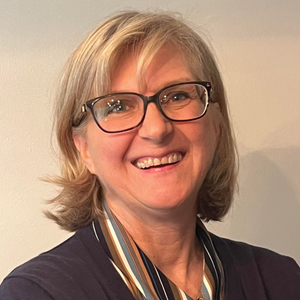 Betsy Zobl-Tar
  Jay Cutler joined the League in March 2026 as the Kids Count Senior Data Analyst, where he collects, analyzes, and prepares data for Kids Count in Michigan.
 Danielle Taylor-Basemore joined the League as the Development Data and Stewardship Coordinator in June 2025. She brings with her five years of nonprofit experience with a special focus on community engagement, data visualization and strategic programming. Prior to joining the League, Danielle served as the Business District, Safety, and Digital Manager at Jefferson East, Inc.
 Scott Preston is a Senior Policy Analyst with the Michigan League for Public Policy, where he leads the organization’s immigration and criminal justice reform portfolios. In the three years prior to joining the League, Scott facilitated the Southeast Michigan Refugee Collaborative and managed a small business economic development program at Global Detroit. His work included launching Michigan’s first Refugee Film Festival and building on a trusted connector model that linked marginalized communities with crucial resources. Scott’s work at the League is informed by his background in journalism and research. He spent four years covering the Syrian refugee crisis in the Middle East for publications such as The Economist, and later worked with unaccompanied refugee minors through Samaritas. Scott holds a master’s degree in international migration and public policy from the London School of Economics and Political Science.
 Kate Powers joined the League as the Chief Development Officer in February 2025. Prior to joining the League, Kate held leadership positions at many Michigan nonprofit organizations, most recently serving as the COO and Chief Development Officer of Ele’s Place. Kate has spent the bulk of her career in fundraising, with a short stint in the state Legislature as a legislative aide to members in both chambers. Kate is a graduate of Michigan State University’s James Madison College with a Bachelor of Arts in Social Relations and has a certificate in fundraising management from the Lilly Family School of Philanthropy at Indiana University. Additionally, Kate served on the East Lansing Public Schools Board of Education and is a past President of the Junior League of Lansing. In her free time, she enjoys traveling with her husband and her son and saving outfit of the day and home decor ideas on Pinterest.
  Nicholas Hess joined the League as the Fiscal Policy Analyst in September of 2024. In this role, Nicholas focuses on tax policy, government revenue, and their impact on working families and racial equity, including the effects of the Earned Income Tax Credit (EITC) and Child Tax Credit (CTC). Nicholas values the role that judicious fiscal policy can play in the improvement of people’s lives and the economy, alleviating inequities along the way.
 Audrey Matusz joined the League as the Visual Communications Specialist in September 2024. She supports the team with implementing social media strategies and brainstorming creative ways to talk about public policy. She brings with her nearly a decade of experience in producing digital products for evidence-based social justice initiatives.
  Jacob Kaplan
  Donald Stuckey
  Alexandra Stamm
 Amari Fuller
 Mikell Frey is a communications professional with a passion for using the art of storytelling to positively impact lives. She strongly believes that positive social change can be inspired by the sharing of data-driven information coupled with the unique perspectives of people from all walks of life across Michigan, especially those who have faced extraordinary barriers.


 Yona Isaacs (she/hers) is an Early Childhood Data Analyst for the Kids Count project. After earning her Bachelor of Science in Biopsychology, Cognition, and Neuroscience at the University of Michigan, she began her career as a research coordinator in pediatric psychiatry using data to understand the impacts of brain activity and genetics on children’s behavior and mental health symptoms. This work prompted an interest in exploring social determinants of health and the role of policy in promoting equitable opportunities for all children, families, and communities. She returned to the University of Michigan to complete her Masters in Social Work focused on Social Policy and Evaluation, during which she interned with the ACLU of Michigan’s policy and legislative team and assisted local nonprofit organizations in creating data and evaluation metrics. She currently serves as a coordinator for the Michigan Center for Youth Justice on a project aiming to increase placement options and enhance cultural competency within the juvenile justice system for LGBTQIA+ youth. Yona is eager to put her data skills to work at the League in support of data-driven policies that advocate for equitable access to healthcare, education, economic security, and opportunity for 0-5 year old children. In her free time, she enjoys tackling DIY house projects and trying new outdoor activities with her dog.
 Rachel Richards rejoined the League in December 2020 as the Fiscal Policy Director working on state budget and tax policies. Prior to returning to the League, she served as the Director of Legislative Affairs for the Michigan Department of Treasury, the tax policy analyst and Legislative Director for the Michigan League for Public Policy, and a policy analyst and the Appropriations Coordinator for the Democratic Caucus of the Michigan House of Representatives. She brings with her over a decade of experience in policies focused on economic opportunity, including workforce issues, tax, and state budget.
 Simon Marshall-Shah joined the Michigan League for Public Policy as a State Policy Fellow in August 2019. His work focuses on state policy as it relates to the budget, immigration, health care and other League policy priorities. Before joining the League, he worked in Washington, D.C. at the Association for Community Affiliated Plans (ACAP), providing federal policy and advocacy support to nonprofit, Medicaid health plans (Safety Net Health Plans) related to the ACA Marketplaces as well as Quality & Operations.

 Renell Weathers, Michigan League for Public Policy (MLPP) Community Engagement Consultant. As community engagement consultant, Renell works with organizations throughout the state in connecting the impact of budget and tax policies to their communities. She is motivated by the belief that all children and adults deserve the opportunity to achieve their dreams regardless of race, ethnicity, religion or economic class.


 Emily Jorgensen joined the Michigan League for Public Policy in July 2019. She deeply cares about the well-being of individuals and families and has a great love for Michigan. She is grateful that her position at the League enables her to combine these passions and work to help promote policies that will lead to better opportunities and security for all Michiganders.
 Megan Farnsworth joined the League’s staff in December 2022 as Executive Assistant. Megan is driven by work that is personally fulfilling, and feels honored to help support the work of an organization that pushes for more robust programming and opportunities for the residents of our state. She’s excited and motivated to gain overarching knowledge of the policies and agendas that the League supports.