A version of this post originally appeared in The Alpena News.
A woman sits in her rocking chair, holding a piece of white cotton fabric. She turns it over, running her fingers along the edges, looking over her handiwork. It had been a simple tea towel when she started, but her hands had transformed it, creating an intricate crocheted pattern. Satisfied, she crossed the room and hung it in a prominent spot in the parlor. Her guests would appreciate it, she knew.
Especially if they looked closely.
She began work on it sometime between 1904 and 1918, though exactly when, I can’t say. You see, the woman was my great-grandmother. The history of the tea towel was never written down, but we can figure out the time frame based on that intricate pattern, because closer examination reveals a hidden message in the lacy edging: VOTES FOR WOMEN.
Family lore says that Great-Grandma Blanche and her suffragist friends hung these towels in their homes to communicate that it was safe to talk about their movement.
Safe to talk about voting.

The tea towel’s “Votes for Women” message is barely discernible unless laid flat on a dark surface.
They lived in a world where such conversations were dangerous. It was less than a century ago that women gained the right to vote, and for decades before that—and after that, really—journalists, religious leaders and politicians used incendiary language to fight against suffrage. And closer to home, in even more chilling conditions, husbands, fathers, brothers and even mothers and sisters used harsh tactics to shield their families from the “dangers” of women gaining the vote.
But in my great-grandparents’ home, it seems, people were on the right side of the issue. Given what I know about my family, I assume they took a quiet approach to political activism. Today, Great-Grandma Blanche’s tea towel is one of my most prized possessions. And when I feel defeated by the state of our world, I try to remember the state of her world: War, disease, laws that were inherently anti-woman, rivers that ran thick with toxins, factories where children worked barefoot.
What if she hadn’t, even in her own subtle way, fought for progress? There is so much progress still to be made—so much more we can do for women, for kids, for our planet, for each other.
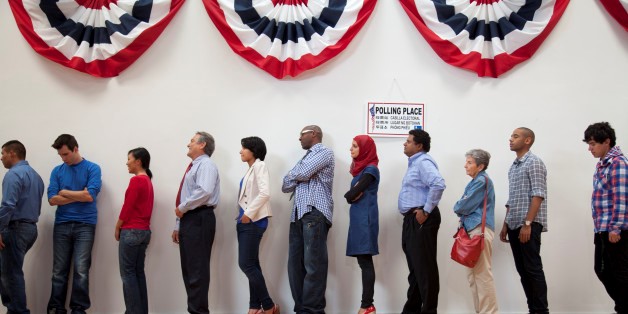
I don’t know where Blanche stood on all the issues; she died decades before I was born. But I know she stood. And that’s why I’ll stand on Tuesday. I know where my polling place is, I’ve looked at my sample ballot and I have a plan to vote.
Many of the most pressing political issues of her time have since passed on, but others, like voter access and racial and gender equity, are just as burning today. Let’s remember that the suffrage movement was by no means inclusive of all women. Great-Grandma Blanche was white and a member of the middle class; she fought to win the right to vote for women, but we know that voter suppression for men and women of color continued throughout the 20th century and continues today.
But know this: people would not try to prevent women or people of color from voting if their votes “did not matter.” The staunch opposition to and ongoing suppression of their right to vote belies the exact opposite.
That’s why it’s vital to support Proposals 2 and 3 on Nov. 6, which the Michigan League for Public Policy has proudly endorsed. For too long gerrymandering and voter restrictions have kept Americans from being represented at the polls. A great state begins with fair elections, and these two proposals go a long way in making sure our voting system is stronger.
Voting matters. Representation matters, too. And exercising one rectifies the other.
Great-Grandma Blanche knew the power and importance of voting and she pushed for it in her own way. Though we never met, I think I inherited this same reverence for voting and a desire to make it better for everyone. Working at the League, I know that nearly every policy improvement our state needs is at the discretion of elected officials. And every elected official is at the discretion of your vote. You have more power than you may realize. It’s imperative that you use it.


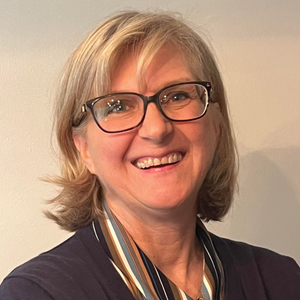 Betsy Zobl-Tar
  Jay Cutler joined the League in March 2026 as the Kids Count Senior Data Analyst, where he collects, analyzes, and prepares data for Kids Count in Michigan.
 Danielle Taylor-Basemore joined the League as the Development Data and Stewardship Coordinator in June 2025. She brings with her five years of nonprofit experience with a special focus on community engagement, data visualization and strategic programming. Prior to joining the League, Danielle served as the Business District, Safety, and Digital Manager at Jefferson East, Inc.
 Scott Preston is a Senior Policy Analyst with the Michigan League for Public Policy, where he leads the organization’s immigration and criminal justice reform portfolios. In the three years prior to joining the League, Scott facilitated the Southeast Michigan Refugee Collaborative and managed a small business economic development program at Global Detroit. His work included launching Michigan’s first Refugee Film Festival and building on a trusted connector model that linked marginalized communities with crucial resources. Scott’s work at the League is informed by his background in journalism and research. He spent four years covering the Syrian refugee crisis in the Middle East for publications such as The Economist, and later worked with unaccompanied refugee minors through Samaritas. Scott holds a master’s degree in international migration and public policy from the London School of Economics and Political Science.
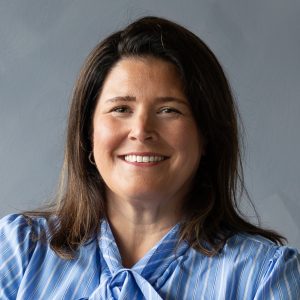 Kate Powers joined the League as the Chief Development Officer in February 2025. Prior to joining the League, Kate held leadership positions at many Michigan nonprofit organizations, most recently serving as the COO and Chief Development Officer of Ele’s Place. Kate has spent the bulk of her career in fundraising, with a short stint in the state Legislature as a legislative aide to members in both chambers. Kate is a graduate of Michigan State University’s James Madison College with a Bachelor of Arts in Social Relations and has a certificate in fundraising management from the Lilly Family School of Philanthropy at Indiana University. Additionally, Kate served on the East Lansing Public Schools Board of Education and is a past President of the Junior League of Lansing. In her free time, she enjoys traveling with her husband and her son and saving outfit of the day and home decor ideas on Pinterest.
  Nicholas Hess joined the League as the Fiscal Policy Analyst in September of 2024. In this role, Nicholas focuses on tax policy, government revenue, and their impact on working families and racial equity, including the effects of the Earned Income Tax Credit (EITC) and Child Tax Credit (CTC). Nicholas values the role that judicious fiscal policy can play in the improvement of people’s lives and the economy, alleviating inequities along the way.
 Audrey Matusz joined the League as the Visual Communications Specialist in September 2024. She supports the team with implementing social media strategies and brainstorming creative ways to talk about public policy. She brings with her nearly a decade of experience in producing digital products for evidence-based social justice initiatives.
  Jacob Kaplan
  Donald Stuckey
  Alexandra Stamm
 Amari Fuller
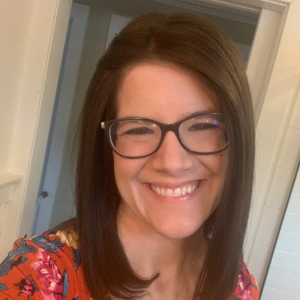 Mikell Frey is a communications professional with a passion for using the art of storytelling to positively impact lives. She strongly believes that positive social change can be inspired by the sharing of data-driven information coupled with the unique perspectives of people from all walks of life across Michigan, especially those who have faced extraordinary barriers.
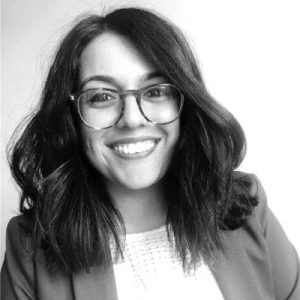


 Yona Isaacs (she/hers) is an Early Childhood Data Analyst for the Kids Count project. After earning her Bachelor of Science in Biopsychology, Cognition, and Neuroscience at the University of Michigan, she began her career as a research coordinator in pediatric psychiatry using data to understand the impacts of brain activity and genetics on children’s behavior and mental health symptoms. This work prompted an interest in exploring social determinants of health and the role of policy in promoting equitable opportunities for all children, families, and communities. She returned to the University of Michigan to complete her Masters in Social Work focused on Social Policy and Evaluation, during which she interned with the ACLU of Michigan’s policy and legislative team and assisted local nonprofit organizations in creating data and evaluation metrics. She currently serves as a coordinator for the Michigan Center for Youth Justice on a project aiming to increase placement options and enhance cultural competency within the juvenile justice system for LGBTQIA+ youth. Yona is eager to put her data skills to work at the League in support of data-driven policies that advocate for equitable access to healthcare, education, economic security, and opportunity for 0-5 year old children. In her free time, she enjoys tackling DIY house projects and trying new outdoor activities with her dog.
 Rachel Richards rejoined the League in December 2020 as the Fiscal Policy Director working on state budget and tax policies. Prior to returning to the League, she served as the Director of Legislative Affairs for the Michigan Department of Treasury, the tax policy analyst and Legislative Director for the Michigan League for Public Policy, and a policy analyst and the Appropriations Coordinator for the Democratic Caucus of the Michigan House of Representatives. She brings with her over a decade of experience in policies focused on economic opportunity, including workforce issues, tax, and state budget.
 Simon Marshall-Shah joined the Michigan League for Public Policy as a State Policy Fellow in August 2019. His work focuses on state policy as it relates to the budget, immigration, health care and other League policy priorities. Before joining the League, he worked in Washington, D.C. at the Association for Community Affiliated Plans (ACAP), providing federal policy and advocacy support to nonprofit, Medicaid health plans (Safety Net Health Plans) related to the ACA Marketplaces as well as Quality & Operations.

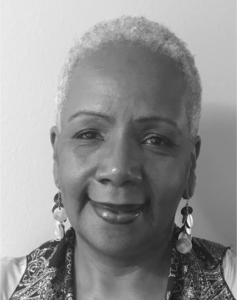 Renell Weathers, Michigan League for Public Policy (MLPP) Community Engagement Consultant. As community engagement consultant, Renell works with organizations throughout the state in connecting the impact of budget and tax policies to their communities. She is motivated by the belief that all children and adults deserve the opportunity to achieve their dreams regardless of race, ethnicity, religion or economic class.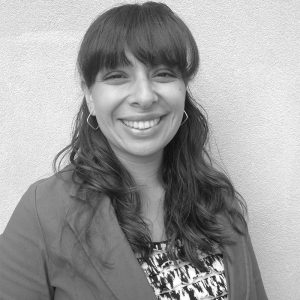
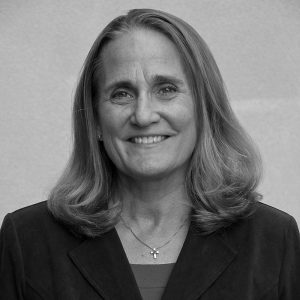


 Emily Jorgensen joined the Michigan League for Public Policy in July 2019. She deeply cares about the well-being of individuals and families and has a great love for Michigan. She is grateful that her position at the League enables her to combine these passions and work to help promote policies that will lead to better opportunities and security for all Michiganders.
 Megan Farnsworth joined the League’s staff in December 2022 as Executive Assistant. Megan is driven by work that is personally fulfilling, and feels honored to help support the work of an organization that pushes for more robust programming and opportunities for the residents of our state. She’s excited and motivated to gain overarching knowledge of the policies and agendas that the League supports.