As Michigan college students start school, they face increasingly high tuition and an unprecedented level of student loan debt that stands to linger their whole lives. At the same time, Michigan’s state-funded financial aid hasn’t kept up with tuition costs and older students cannot get any state financial aid at all. While Michigan’s economy and job market continue to demand well-educated workers, too many students are unable to afford a college degree altogether and many more are incurring a mountain of debt to pursue one. Current state policies are hurting college access and affordability and the state’s workforce and job market. Michigan policymakers should make changes so that postsecondary education is more affordable.
Public University Tuition in Michigan is Rising Far Faster than Inflation and Pell Grants
Between 2003 and 2015, tuition more than doubled at almost every Michigan university and increased by more than 150% at several schools. This increase far surpassed the rate of inflation; if each university had only raised its costs to students to keep up with inflation, tuition in 2015 would have been only 20.4% higher than in 2003.
 University tuition is also rising faster than the national Pell Grant, a subsidy the U.S. federal government provides for students with financial need to pay for college, which as a result covers a far lower percentage of the university tuition “sticker price.” In 2003, the average Pell Grant covered from 40% (University of Michigan-Ann Arbor) to 66% (Saginaw Valley State University) of tuition, but by 2015, it covered less than 40% of tuition at nearly all Michigan universities and less than 30% at three (Fig. 1).
While college costs are rising across the nation, it is particularly bad in Michigan. Michigan universities have raised tuition so much that the state’s average tuition cost was the sixth highest in the nation and second highest in the Midwest during the 2015-16 school year. Michigan’s community colleges, on the other hand, have the lowest tuition in the Midwest and the 16th lowest in the nation (Fig. 2).


 There is a direct correlation, in Michigan and around the country, between state support for public universities and tuition costs. Between 2003 and 2017, Michigan cut university funding by more than $262 million, a 30% decrease in public support after adjusting for inflation (Fig. 3). The cuts have resulted in students and their families being charged higher tuition to make up for universities’ lost state revenue. As shown in Fig. 4, from 1990 to 2002, the share of public college operating costs borne by students (before application of financial aid and scholarships and not counting endowments or donations) ranged from 39% to 44% each year. In 2004, the student’s share of expenses began to exceed the amount the state paid per student, and in the past several years it has remained at or around 70%. One might call this decrease in state funding a “slow privatization” of Michigan’s public university system.

 This is a larger problem in Michigan than in the other Midwest states. Michigan students pay a higher share of universities’ college expenses than in any other Midwest state and pay the sixth-highest share in the nation. Michigan universities also rank third in the nation for the amount of tuition money per full-time equivalent (FTE) student that goes toward operating expenses (Fig. 5)
Rising Tuition Means Debt
Of Michigan college students who graduated in 2014, 62% graduated with debt. Student debt averaged $29,450, the ninth highest average debt level in the nation and more than $10,000 higher than students in Utah and New Mexico.1 While there is not racial data on student debt at the state level, national studies have shown great racial disparity regarding the amount of debt owed by students of color. The Urban Institute has found that African-American students and their families owe significantly more in student debt ($43,725) than individuals of other races, and that Latino parents and grandparents incur the most student debt on behalf of their children (Fig. 6).2
As might be expected due to the relatively low tuition, community college students nationwide are far more likely than students at other types of institutions to be able to finish and graduate from college without taking out student loans (61%). This is a real contrast to graduates of for-profit colleges, where only 12-14% graduate without borrowing money for tuition.3
 On the other hand, 88% of graduates of for-profit four-year colleges have taken out student loans, and 62% have student debt of at least $24,300 (Fig. 7).4 These loans often come with exorbitant interest rates, further complicating students’ ability to pay them off. Loan defaults by students at these schools (whether they have graduated or not) are also far higher (22%) than at public (9%) or not-for-profit (8%) four-year colleges.5 While students at private, for-profit colleges (both two- and four-year) make up about 13% of the nation’s college enrollment, they account for nearly half of all student loan defaults.6 In addition to the larger debt burden students at for-profit schools carry, factors in the high default rate might also be the higher likelihood of such students to experience substantial unemployment since leaving school, and the lower earnings they have six years after starting college than their counterparts at public and nonprofit institutions.7
State Financial Aid Falls Far Short of Need
As data shows, tuition is rising very rapidly, Pell Grants do not cover a large enough portion of costs by themselves to keep college affordable for low-income students, and student loans with high interest rates are resulting in unprecedented levels of student debt. These factors make it imperative that Michigan maintain a robust need-based financial aid system, yet policymakers have been doing the opposite. The state invests far less in need-based grants proportional to its student population than most other states and has completely eliminated state financial aid for students over age 30 attending a public community college or university.
 One indicator of whether a state is spending enough on financial aid is the number of dollars spent on such grants per FTE student. The national average of state spending on need-based grants is $533 per FTE undergraduate student, yet Michigan spends only 42% of that amount ($223) and only one-quarter of the $870 that Indiana spends (Fig. 8).
This has not always been the case. In the early 1990s, Michigan was among the top ten states in need-based financial aid spending. Since then, however, the state’s investment has fallen by more than half when adjusted for inflation and Michigan is now in the bottom half of states for need-based grant spending per FTE undergraduate student (Fig. 9).

In addition, while Michigan’s three need-based higher education grant programs are available to “traditional” college students who begin attending immediately or soon after high school graduation and are not raising families, there are no state financial aid programs to help students attend public community colleges or universities if they have been out of high school for more than 10 years. Two of the three existing grant programs explicitly exclude such individuals from eligibility, and the third is available only to those attending a private, not-for-profit institution:
- Tuition Incentive Program: Eligibility rules require applicants to apply prior to high school or GED completion and before their 20th birthday, and the award must be used within 10 years of high school or GED completion—effectively preventing anyone older than age 28-30 from using the award.
- Michigan Competitive Scholarship: Workers are ineligible if they are out of high school for more than 10 years, preventing students who graduated “on time” at age 18 from using the award once they pass age 28.
- Michigan Tuition Grant: Workers and parents of any age are eligible, but their postsecondary education must be at a private not-for-profit institution. It is not available for use at community colleges, which offer programs specifically designed for students who are working or raising families.
Another aspect of Michigan’s three grant programs is detrimental to the growing number of students who are working parents even if they are otherwise eligible: none of the three current grant programs are available to students enrolled less than half time or who are in short-term occupational programs. Students who are juggling employment, family and school must often go less than half time or enroll in a short-term program due to having to work and care for family members. While low-income adult students are likely to need employment to support their families and finance their education, working more than a few hours at a job can often result in lower grades and even dropping out. But not having financial aid may discourage adult learners from going to school less than half time. For many workers, this pits work and school against each other, with both often suffering.
In 2010, the Michigan Legislature eliminated a number of grant programs that were available to adult learners: the Part-Time Independent Student Grant, the Michigan Educational Opportunity Grant, the Michigan Nursing Scholarship and the state Work-Study program. In 2015, the Michigan Senate included $6 million in state budget funding for the Part-Time Independent Student Grant for the 2015-16 school year, but this was removed from the final appropriations bill.
For more on Michigan’s need-based financial aid funding and awards, please see the appendices.
Policy Recommendations to Reduce College Costs and Student Debt
Michigan legislators should make the following policy changes to make postsecondary education more afford-able for its residents, both traditional college students age 18-24 and the growing number of nontraditional students who often have full-time jobs and families to support.
1. Restore the state funding that has been cut from public universities and community colleges over the past several years, coupling significantly increased budget funding for higher education institutions with stronger tuition restraint or tuition reduction requirements on the schools.
2. Enact legislation to require clear and accurate information in the recruitment materials of for-profit colleges (including online colleges without a physical location in Michigan) regarding student loans, educational quality, job placement and expected earnings. Ensure that the Michigan Attorney General has enforcement powers in this area and that students have the right to seek redress for noncompliance or law violations.
3. Make need-based financial aid grants available to older workers by:
a. Reauthorizing funding for the Part-Time Independent Student Grant and/or the Educational Opportunity Grant, both of which were specifically designed to serve adult learners in a wide variety of circumstances.
b. Modifying the eligibility rules of the Michigan Competitive Scholarship and/or the Tuition Incentive Program to allow older workers to qualify and to allow the money to be used for less than half-time enrollment or for short-term occupational programs.
4. Ensure that there is financial aid help for students going to college less than half time or who are in short-term programs.
5. Implement a state Work-Study program that subsidizes academically relevant work for low-income adult students while paying a livable wage. Studies have shown that working students are less likely to drop out or suffer academic setbacks if their work is related to their courses of study. Although the traditional Work-Study program was ended in 2010, Michigan could replace it with a carefully targeted program that connects employment with academics.8
6. Support policies that can help alleviate hardship for low-income students, including policies that permit low-income students to receive public assistance such as cash assistance, food assistance or subsidized child care.
Endnotes:
- The Institute for College Access & Success, Student Debt and the Class of 2014, October 2015.
- Braga, Breno, Racial and Ethnic Differences in Family Student Loan Debt, Urban Institute, July 2016.
- Smith, Peter & Leslie Parrish, Do Students of Color Profit from For-Profit College? Poor Outcomes and High Debt Hamper Attendees’ Futures, The Center for Responsible Lending, October 2014.
- Ibid.
- Ibid.
- Ibid.
- Deming, David J., Claudia Goldin, and Lawrence F. Katz, The For-Profit Postsecondary School Sector: Nimble Critters or Agile Predators?, Journal of Economic Perspectives—Volume 26, Winter 2012.
- For more information, see Alstadt, D., Earn to Learn: How States Can Reimagine and Reinvest in Work-Study to Help Low-Income Adults Pay for College, Enhance Their Academic Studies, and Prepare for Post-College Careers, The Working Poor Families Project, Spring 2014.


 Jay Cutler joined the League in March 2026 as the Kids Count Senior Data Analyst, where he collects, analyzes, and prepares data for Kids Count in Michigan.
 Danielle Taylor-Basemore joined the League as the Development Data and Stewardship Coordinator in June 2025. She brings with her five years of nonprofit experience with a special focus on community engagement, data visualization and strategic programming. Prior to joining the League, Danielle served as the Business District, Safety, and Digital Manager at Jefferson East, Inc.
 Scott Preston is a Senior Policy Analyst with the Michigan League for Public Policy, where he leads the organization’s immigration and criminal justice reform portfolios. In the three years prior to joining the League, Scott facilitated the Southeast Michigan Refugee Collaborative and managed a small business economic development program at Global Detroit. His work included launching Michigan’s first Refugee Film Festival and building on a trusted connector model that linked marginalized communities with crucial resources. Scott’s work at the League is informed by his background in journalism and research. He spent four years covering the Syrian refugee crisis in the Middle East for publications such as The Economist, and later worked with unaccompanied refugee minors through Samaritas. Scott holds a master’s degree in international migration and public policy from the London School of Economics and Political Science.
 Kate Powers joined the League as the Chief Development Officer in February 2025. Prior to joining the League, Kate held leadership positions at many Michigan nonprofit organizations, most recently serving as the COO and Chief Development Officer of Ele’s Place. Kate has spent the bulk of her career in fundraising, with a short stint in the state Legislature as a legislative aide to members in both chambers. Kate is a graduate of Michigan State University’s James Madison College with a Bachelor of Arts in Social Relations and has a certificate in fundraising management from the Lilly Family School of Philanthropy at Indiana University. Additionally, Kate served on the East Lansing Public Schools Board of Education and is a past President of the Junior League of Lansing. In her free time, she enjoys traveling with her husband and her son and saving outfit of the day and home decor ideas on Pinterest.
  Nicholas Hess joined the League as the Fiscal Policy Analyst in September of 2024. In this role, Nicholas focuses on tax policy, government revenue, and their impact on working families and racial equity, including the effects of the Earned Income Tax Credit (EITC) and Child Tax Credit (CTC). Nicholas values the role that judicious fiscal policy can play in the improvement of people’s lives and the economy, alleviating inequities along the way.
 Audrey Matusz joined the League as the Visual Communications Specialist in September 2024. She supports the team with implementing social media strategies and brainstorming creative ways to talk about public policy. She brings with her nearly a decade of experience in producing digital products for evidence-based social justice initiatives.
  Jacob Kaplan
  Donald Stuckey
  Alexandra Stamm
 Amari Fuller
 Mikell Frey is a communications professional with a passion for using the art of storytelling to positively impact lives. She strongly believes that positive social change can be inspired by the sharing of data-driven information coupled with the unique perspectives of people from all walks of life across Michigan, especially those who have faced extraordinary barriers.


 Yona Isaacs (she/hers) is an Early Childhood Data Analyst for the Kids Count project. After earning her Bachelor of Science in Biopsychology, Cognition, and Neuroscience at the University of Michigan, she began her career as a research coordinator in pediatric psychiatry using data to understand the impacts of brain activity and genetics on children’s behavior and mental health symptoms. This work prompted an interest in exploring social determinants of health and the role of policy in promoting equitable opportunities for all children, families, and communities. She returned to the University of Michigan to complete her Masters in Social Work focused on Social Policy and Evaluation, during which she interned with the ACLU of Michigan’s policy and legislative team and assisted local nonprofit organizations in creating data and evaluation metrics. She currently serves as a coordinator for the Michigan Center for Youth Justice on a project aiming to increase placement options and enhance cultural competency within the juvenile justice system for LGBTQIA+ youth. Yona is eager to put her data skills to work at the League in support of data-driven policies that advocate for equitable access to healthcare, education, economic security, and opportunity for 0-5 year old children. In her free time, she enjoys tackling DIY house projects and trying new outdoor activities with her dog.
 Rachel Richards rejoined the League in December 2020 as the Fiscal Policy Director working on state budget and tax policies. Prior to returning to the League, she served as the Director of Legislative Affairs for the Michigan Department of Treasury, the tax policy analyst and Legislative Director for the Michigan League for Public Policy, and a policy analyst and the Appropriations Coordinator for the Democratic Caucus of the Michigan House of Representatives. She brings with her over a decade of experience in policies focused on economic opportunity, including workforce issues, tax, and state budget.
 Simon Marshall-Shah joined the Michigan League for Public Policy as a State Policy Fellow in August 2019. His work focuses on state policy as it relates to the budget, immigration, health care and other League policy priorities. Before joining the League, he worked in Washington, D.C. at the Association for Community Affiliated Plans (ACAP), providing federal policy and advocacy support to nonprofit, Medicaid health plans (Safety Net Health Plans) related to the ACA Marketplaces as well as Quality & Operations.

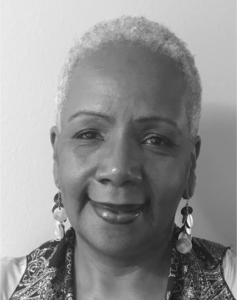 Renell Weathers, Michigan League for Public Policy (MLPP) Community Engagement Consultant. As community engagement consultant, Renell works with organizations throughout the state in connecting the impact of budget and tax policies to their communities. She is motivated by the belief that all children and adults deserve the opportunity to achieve their dreams regardless of race, ethnicity, religion or economic class.
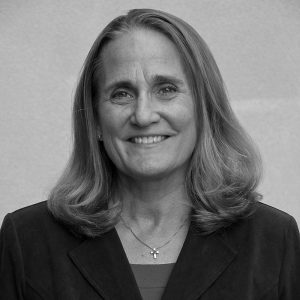


 Emily Jorgensen joined the Michigan League for Public Policy in July 2019. She deeply cares about the well-being of individuals and families and has a great love for Michigan. She is grateful that her position at the League enables her to combine these passions and work to help promote policies that will lead to better opportunities and security for all Michiganders.
 Megan Farnsworth joined the League’s staff in December 2022 as Executive Assistant. Megan is driven by work that is personally fulfilling, and feels honored to help support the work of an organization that pushes for more robust programming and opportunities for the residents of our state. She’s excited and motivated to gain overarching knowledge of the policies and agendas that the League supports.