The League in the ‘Roaring ’20s’
During the ‘Roaring ’20s,’ the Michigan League for Human Services was known as the Michigan Conference of Social Work, a name adopted in 1918 from the original Michigan Conference of Charities and Corrections.
The 1920s was a decade of growing economic problems in which both public and private agencies had to respond to increasing needs for social services and financial assistance. And the cultural momentum of the Progressive era was gone. Some evidence suggests that the Conference may have been forced to spend much of its energy during that decade into maintaining basic operations. It would be another 10 years before a full-time executive would be hired.
 Entry into World War I brought economic expansion to the U.S., but that came to an end in the 1920s. Michigan began to suffer hard times long before the crash of 1929. Employment and production fell across the Michigan economy. The value of Michigan’s agricultural products peaked in 1920, and the number of farms declinedduring the 1920s. Iron ore production also peaked in 1920 and then fell to a quarter its volume the next year. Employment in copper mining fell from over 12,000 in 1919 to less than 8,000 in 1929. The lumber industry was hit hard. For the auto industry, the 1920s was a period of turbulence, with frequent production slow downs and recurring worker layoffs.
Here’s a description of the 1920s from the League’s 50th anniversary project in 1962:
 “The Great War was followed by disillusionment, the breakdown of social and moral values, and the accumulation of the quick buck. These were the days of Prohibition and the Jazz Age. People enjoyed living, and they thought they had no serious problems.
The Michigan Conference of Social Work Executive Committee and conference participants were not to be misled. From experience, they spoke of the need for revision of the township and county relief system, a statewide probation service, protection for the unemployed and ‘justice for the poor.’’’
 The Conference had a paid secretary, Grace Cone, and continued its annual meetings in cities across the state: Lansing, Ann Arbor, Saginaw, Kalamazoo, Detroit, Grand Rapids, Battle Creek, Flint and St. Joseph. It’s clear from the extensive agendas for the annual conferences that the role of the conferences was to make connections among organizations and with state and national officials and social work and public health experts.
Much of the policy work at the Conference involved vulnerable children and families. The first legislative committee formed in 1922 to address illegitimacy, unemployment relief and insurance, and “outdoor relief” (public assistance provided to people in their own homes, known as “welfare” today).
 A 1921 letter to Gov. Alexander Groesbeck urged a cottage style plan rather than a “congregate institution” for juveniles at the State Industrial School for juveniles, and a 1924 urgent telegram was sent to the same governor urging that the next Superintendent of the State Public School, a Coldwater institution for orphans and neglected children, have a background in social work.
The Conference supported a bill in 1922 providing a delay between the issuance of a marriage license and the ceremony. In 1923 the Conference urged support for laws to allow illegitimate children to inherit equally as other children from a father’s estate and to take the father’s name. A 1924 report urged the study of play in counseling children.
In 1926, the Conference passed a resolution assuring incoming Gov. Fred Green of its willingness to work to with the administration to find better delivery of public welfare.
The Conference meetings were not all work and no play. Minutes from 1921 commented that “exceptional entertainment was enjoyed in Ann Arbor” at an Ann Arbor conference where attendees were offered seats at a football game between the University of Michigan and Michigan Agricultural College (now Michigan State University). A 1923 Kalamazoo conference included trips to local churches, the Michigan State Hospital and entertainment provided by what’s now Western Michigan University — the Western State Normal School Glee Club.
Organizational problems for the Conference were evident by the early 1920s. In a 1922 article in the Journal of Social Forces, Grace Cone, the group’s secretary, reported that recommendations to create a statewide structure adopted by the Conference in 1919 had still not been acted upon.
In the social welfare field in Michigan, the 1920s saw efforts to professionalize social services continued, along with efforts to integrate the many local welfare services across Michigan into a single state level department.
By the 1920s case work had become the professional social work standard in the U.S. and in Michigan. Legislation in 1921 created the State Welfare Department, but it did not integrate services in the way the proponents of a state welfare system wanted. Localism and the associated pattern of varied access to services and assistance prevailed.
In the 1920s hardships increased the demands on local welfare programs and private charities, particularly because workers in urban factories, of which many were immigrants, usually did not have land as a fall back for living self-sufficiently when unemployed. Apparently, as the need for assistance grew in the 1920s, the inability of private organizations to meet those needs led to an increase in public efforts.
By 1928 public funding for relief aid was greater than private funding in Michigan and public agencies served far more people than private organizations. As part of the response to harder times centralized fundraising was developed in some larger Michigan cities in the form of community chests and welfare leagues.
“The ideal of the ‘20s – poverty’s possible elimination – toppled in the face of the stock market crash. Business and industry were paralyzed…trade came to a near-halt…agriculture stagnated…and the number of unemployed soon ran into the thousands,” according to the League’s 1962 history project.
While still an organization centered around an annual meeting, the groundwork laid in the first 20 years of the Conference’s existence would soon be called into action as the Great Depression took its toll on families across the state and the conference worked toward a stronger system of public relief.
— Jim Lunday and Judy Putnam


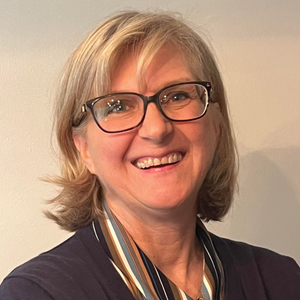 Betsy Zobl-Tar
  Jay Cutler joined the League in March 2026 as the Kids Count Senior Data Analyst, where he collects, analyzes, and prepares data for Kids Count in Michigan.
 Danielle Taylor-Basemore joined the League as the Development Data and Stewardship Coordinator in June 2025. She brings with her five years of nonprofit experience with a special focus on community engagement, data visualization and strategic programming. Prior to joining the League, Danielle served as the Business District, Safety, and Digital Manager at Jefferson East, Inc.
 Scott Preston is a Senior Policy Analyst with the Michigan League for Public Policy, where he leads the organization’s immigration and criminal justice reform portfolios. In the three years prior to joining the League, Scott facilitated the Southeast Michigan Refugee Collaborative and managed a small business economic development program at Global Detroit. His work included launching Michigan’s first Refugee Film Festival and building on a trusted connector model that linked marginalized communities with crucial resources. Scott’s work at the League is informed by his background in journalism and research. He spent four years covering the Syrian refugee crisis in the Middle East for publications such as The Economist, and later worked with unaccompanied refugee minors through Samaritas. Scott holds a master’s degree in international migration and public policy from the London School of Economics and Political Science.
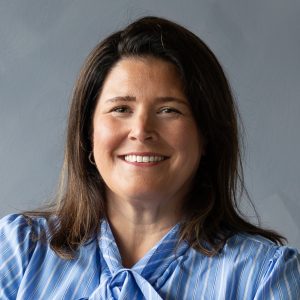 Kate Powers joined the League as the Chief Development Officer in February 2025. Prior to joining the League, Kate held leadership positions at many Michigan nonprofit organizations, most recently serving as the COO and Chief Development Officer of Ele’s Place. Kate has spent the bulk of her career in fundraising, with a short stint in the state Legislature as a legislative aide to members in both chambers. Kate is a graduate of Michigan State University’s James Madison College with a Bachelor of Arts in Social Relations and has a certificate in fundraising management from the Lilly Family School of Philanthropy at Indiana University. Additionally, Kate served on the East Lansing Public Schools Board of Education and is a past President of the Junior League of Lansing. In her free time, she enjoys traveling with her husband and her son and saving outfit of the day and home decor ideas on Pinterest.
  Nicholas Hess joined the League as the Fiscal Policy Analyst in September of 2024. In this role, Nicholas focuses on tax policy, government revenue, and their impact on working families and racial equity, including the effects of the Earned Income Tax Credit (EITC) and Child Tax Credit (CTC). Nicholas values the role that judicious fiscal policy can play in the improvement of people’s lives and the economy, alleviating inequities along the way.
 Audrey Matusz joined the League as the Visual Communications Specialist in September 2024. She supports the team with implementing social media strategies and brainstorming creative ways to talk about public policy. She brings with her nearly a decade of experience in producing digital products for evidence-based social justice initiatives.
  Jacob Kaplan
  Donald Stuckey
  Alexandra Stamm
 Amari Fuller
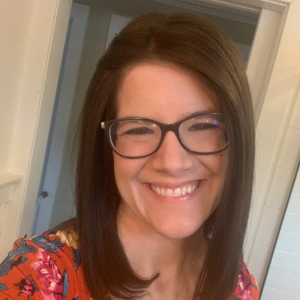 Mikell Frey is a communications professional with a passion for using the art of storytelling to positively impact lives. She strongly believes that positive social change can be inspired by the sharing of data-driven information coupled with the unique perspectives of people from all walks of life across Michigan, especially those who have faced extraordinary barriers.
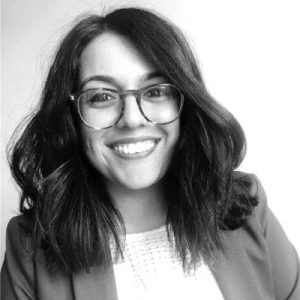


 Yona Isaacs (she/hers) is an Early Childhood Data Analyst for the Kids Count project. After earning her Bachelor of Science in Biopsychology, Cognition, and Neuroscience at the University of Michigan, she began her career as a research coordinator in pediatric psychiatry using data to understand the impacts of brain activity and genetics on children’s behavior and mental health symptoms. This work prompted an interest in exploring social determinants of health and the role of policy in promoting equitable opportunities for all children, families, and communities. She returned to the University of Michigan to complete her Masters in Social Work focused on Social Policy and Evaluation, during which she interned with the ACLU of Michigan’s policy and legislative team and assisted local nonprofit organizations in creating data and evaluation metrics. She currently serves as a coordinator for the Michigan Center for Youth Justice on a project aiming to increase placement options and enhance cultural competency within the juvenile justice system for LGBTQIA+ youth. Yona is eager to put her data skills to work at the League in support of data-driven policies that advocate for equitable access to healthcare, education, economic security, and opportunity for 0-5 year old children. In her free time, she enjoys tackling DIY house projects and trying new outdoor activities with her dog.
 Rachel Richards rejoined the League in December 2020 as the Fiscal Policy Director working on state budget and tax policies. Prior to returning to the League, she served as the Director of Legislative Affairs for the Michigan Department of Treasury, the tax policy analyst and Legislative Director for the Michigan League for Public Policy, and a policy analyst and the Appropriations Coordinator for the Democratic Caucus of the Michigan House of Representatives. She brings with her over a decade of experience in policies focused on economic opportunity, including workforce issues, tax, and state budget.
 Simon Marshall-Shah joined the Michigan League for Public Policy as a State Policy Fellow in August 2019. His work focuses on state policy as it relates to the budget, immigration, health care and other League policy priorities. Before joining the League, he worked in Washington, D.C. at the Association for Community Affiliated Plans (ACAP), providing federal policy and advocacy support to nonprofit, Medicaid health plans (Safety Net Health Plans) related to the ACA Marketplaces as well as Quality & Operations.

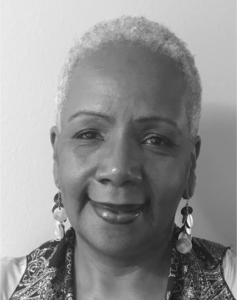 Renell Weathers, Michigan League for Public Policy (MLPP) Community Engagement Consultant. As community engagement consultant, Renell works with organizations throughout the state in connecting the impact of budget and tax policies to their communities. She is motivated by the belief that all children and adults deserve the opportunity to achieve their dreams regardless of race, ethnicity, religion or economic class.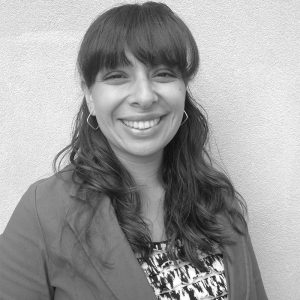
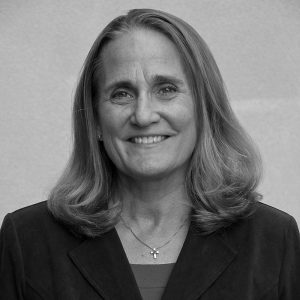


 Emily Jorgensen joined the Michigan League for Public Policy in July 2019. She deeply cares about the well-being of individuals and families and has a great love for Michigan. She is grateful that her position at the League enables her to combine these passions and work to help promote policies that will lead to better opportunities and security for all Michiganders.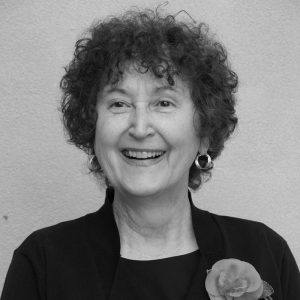
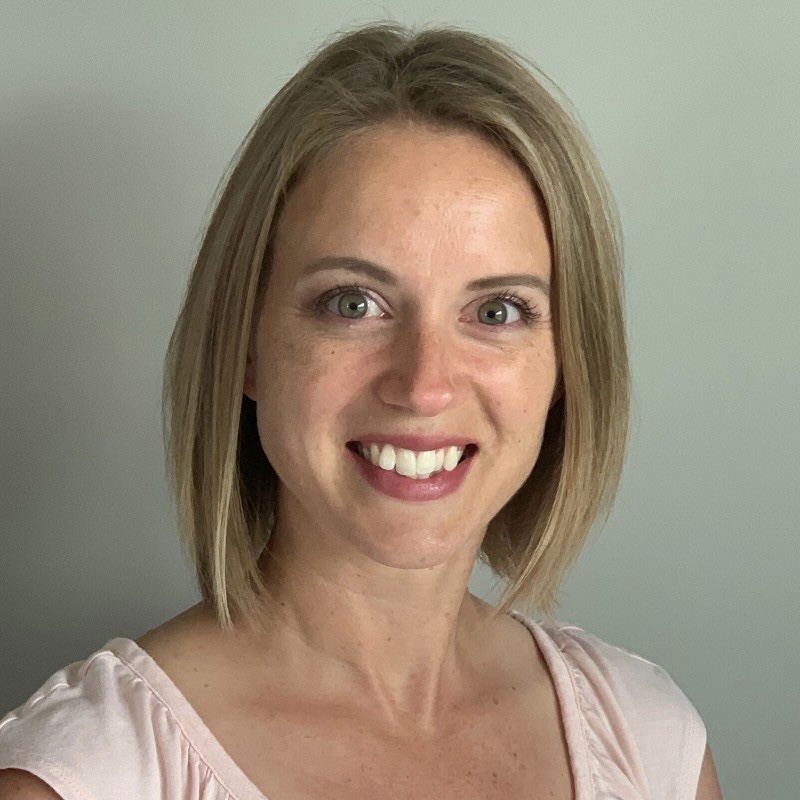 Megan Farnsworth joined the League’s staff in December 2022 as Executive Assistant. Megan is driven by work that is personally fulfilling, and feels honored to help support the work of an organization that pushes for more robust programming and opportunities for the residents of our state. She’s excited and motivated to gain overarching knowledge of the policies and agendas that the League supports.