Start of the 21st century marred by terrorism, Great Recession
The first decade of the 21st century was marred by the realization that Americans were not safe from terrorist attacks, as the 9/11 tragedy altered our lives in many ways. The terrorist attacks, two foreign wars and a national financial crisis marked much of the decade. The Great Recession meant economic uncertainty for many Americans, and with that, a growing lack of trust in government to make their lives better.
Michigan began the decade with outgoing Gov. John Engler issuing his first budget cutting Executive Order since taking office in 1991. A decade of mounting deficits was to follow, as Gov. Jennifer Granholm, in 1993, took the reins of a state struggling to rebound from another brief recession and facing a mounting structural deficit.
The economic tsunami that swept Michigan took a heavy toll. By the end of the decade, Michigan had lost over 440,000 jobs, housing values plummeted and foreclosures mounted, and earnings declined by over twice the national average. From April 2006 through April 2010—49 consecutive months – Michigan led the nation with the highest unemployment rate.
Throughout the decade the League’s work focused intensely on the economic dislocation faced by households across Michigan, and the enormous fiscal constraints faced by the state as needs continued to mount and the state’s infrastructure crumbled.
As tens of thousands of Michigan residents experienced unemployment, others became trapped in low-wage employment, earning wages that, on average, did not lift a family of four out of poverty. The League provided leadership in articulating the income that is actually needed to meet a family’s basic needs on an ongoing basis. The League’s highly successful publication, Economic Self-Sufficiency in Michigan: A Benchmark for Family Well-Being, served as a successful tool for discussing the importance of providing income supplements and work supports to families with low wages.
The League also drew attention to needed changes in the state’s unemployment insurance system. Partnering with the National Employment Law Project in 2002, the League produced Out of Date and Out of Reach: Michigan’s Unemployment System Needs Repair, which outlined to need to increase unemployment benefits and extend eligibility to low-wage and part-time workers. The League continued to advocate for improvements in the UI system and for extensions in federal UI benefits, as long-term unemployment became the norm.
Over the course of the decade the League advanced policy options through publication of Working Hard But Still Poor: An Agenda for Meeting the Needs of Michigan’s Low-Income Working Families (2004), a series of annual Labor Day reports, the quarterly Economic Security Bulletin and leadership on two federally mandated bodies, the workforce investment board (Council for Labor and Economic Growth) and the Medical Care Advisory Council, which advises the state’s Medicaid director.
The League also joined two additional national networks, the Annie E. Casey’s Workforce Measures Project (the League was one of five states selected) and the Working Poor Families Project funded by several national foundations, including the Annie E. Casey, Joyce and Ford foundations. These initiatives, and funding from the Joyce Foundation, enabled the League to delve more deeply into the need for education and training programs, particularly those that address the needs of workers with low educational and skill levels.
The state’s poor fiscal health cast a dark cloud over the entire decade, with each budget year beginning with a projected large deficit. In 2001 the League sounded an alarm as phased-in tax cuts enacted in 1999 threatened revenues needed for state services. The struggle to maintain a revenue base that was adequate, stable and fair continued throughout the ’00s as the League’s analyses informed the debate about a proposal to constitutionally limit state spending (StopOverspending—much like Colorado’s TABOR amendment) and a proposal to replace most of Michigan’s taxes with a flat consumption tax—the Fair Tax proposal). Numerous analyses, public policy forums, coalition leadership and annual publication of Tax Dollars at Work: Public Spending for Selected Health and Social Programs in Michigan were critical to abroad public education effort throughout the decade.
As the Great Recession consumed the nation and ravaged Michigan, the American Recovery and Reinvestment Act of 2009 offered a glimmer of hope for Michigan. Federal funds through the Act rescued the automobile industry, which was on the verge of collapse and key to the future of Michigan and the Midwest. It also funneled funds to Michigan for an array of programs that created new jobs and enabled thousands of workers to remain employed, rather than losing their jobs to budget cuts. Just after the Act took effect, the League sponsored a public policy forum that featured the director of Michigan’s Economic Recovery Office; forum attendees received up-to-date information about the distribution and use of funds in Michigan. The League also produced analyses of the impact of the Act in Michigan.
Despite the adverse environment throughout the decade, the League achieved several long-sought policy goals: extension of food stamp eligibility to single adults; an increase in the state’s minimum wage—the first in eight years; and enactment of a state Earned Income Tax Credit—passed in 2006 and effective in tax year 2008.
Organizationally, the League was fortunate to have the continued support of the foundation community and local United Ways, despite declines in assets and giving during the economic decline. The League undertook a comprehensive strategic planning process in 2002 that guided its work throughout the decade and, in 2007 with the retirement of Ann Marston, long-time staffer Sharon Parks assumed leadership of the organization, retiring in 2010. Gilda Z. Jacobs took over as president and CEO in 2011.
 At the close of the decade, as stagnant state funding and retrenchment in public services eroded the social safety net, significant challenges loomed for Michigan residents still struggling to make ends meet, and for new Michigan policymakers charged with improving the state’s economy and the circumstances of its residents.
A century after it began, the League continues to pull citizens and groups together to address major public welfare issues of the day. In 2011, it helped launch the Michigan Consumers for Healthcare, a consumer advocacy organization helping to implement the Affordable Care Act, and the Prosperity Coalition, a Kellogg-funded initiative to bring new voices to the table around the topic of vulnerable children and their families and racial equity.
— Sharon Parks


 Jay Cutler joined the League in March 2026 as the Kids Count Senior Data Analyst, where he collects, analyzes, and prepares data for Kids Count in Michigan.
 Danielle Taylor-Basemore joined the League as the Development Data and Stewardship Coordinator in June 2025. She brings with her five years of nonprofit experience with a special focus on community engagement, data visualization and strategic programming. Prior to joining the League, Danielle served as the Business District, Safety, and Digital Manager at Jefferson East, Inc.
 Scott Preston is a Senior Policy Analyst with the Michigan League for Public Policy, where he leads the organization’s immigration and criminal justice reform portfolios. In the three years prior to joining the League, Scott facilitated the Southeast Michigan Refugee Collaborative and managed a small business economic development program at Global Detroit. His work included launching Michigan’s first Refugee Film Festival and building on a trusted connector model that linked marginalized communities with crucial resources. Scott’s work at the League is informed by his background in journalism and research. He spent four years covering the Syrian refugee crisis in the Middle East for publications such as The Economist, and later worked with unaccompanied refugee minors through Samaritas. Scott holds a master’s degree in international migration and public policy from the London School of Economics and Political Science.
 Kate Powers joined the League as the Chief Development Officer in February 2025. Prior to joining the League, Kate held leadership positions at many Michigan nonprofit organizations, most recently serving as the COO and Chief Development Officer of Ele’s Place. Kate has spent the bulk of her career in fundraising, with a short stint in the state Legislature as a legislative aide to members in both chambers. Kate is a graduate of Michigan State University’s James Madison College with a Bachelor of Arts in Social Relations and has a certificate in fundraising management from the Lilly Family School of Philanthropy at Indiana University. Additionally, Kate served on the East Lansing Public Schools Board of Education and is a past President of the Junior League of Lansing. In her free time, she enjoys traveling with her husband and her son and saving outfit of the day and home decor ideas on Pinterest.
  Nicholas Hess joined the League as the Fiscal Policy Analyst in September of 2024. In this role, Nicholas focuses on tax policy, government revenue, and their impact on working families and racial equity, including the effects of the Earned Income Tax Credit (EITC) and Child Tax Credit (CTC). Nicholas values the role that judicious fiscal policy can play in the improvement of people’s lives and the economy, alleviating inequities along the way.
 Audrey Matusz joined the League as the Visual Communications Specialist in September 2024. She supports the team with implementing social media strategies and brainstorming creative ways to talk about public policy. She brings with her nearly a decade of experience in producing digital products for evidence-based social justice initiatives.
  Jacob Kaplan
  Donald Stuckey
  Alexandra Stamm
 Amari Fuller
 Mikell Frey is a communications professional with a passion for using the art of storytelling to positively impact lives. She strongly believes that positive social change can be inspired by the sharing of data-driven information coupled with the unique perspectives of people from all walks of life across Michigan, especially those who have faced extraordinary barriers.



 Yona Isaacs (she/hers) is an Early Childhood Data Analyst for the Kids Count project. After earning her Bachelor of Science in Biopsychology, Cognition, and Neuroscience at the University of Michigan, she began her career as a research coordinator in pediatric psychiatry using data to understand the impacts of brain activity and genetics on children’s behavior and mental health symptoms. This work prompted an interest in exploring social determinants of health and the role of policy in promoting equitable opportunities for all children, families, and communities. She returned to the University of Michigan to complete her Masters in Social Work focused on Social Policy and Evaluation, during which she interned with the ACLU of Michigan’s policy and legislative team and assisted local nonprofit organizations in creating data and evaluation metrics. She currently serves as a coordinator for the Michigan Center for Youth Justice on a project aiming to increase placement options and enhance cultural competency within the juvenile justice system for LGBTQIA+ youth. Yona is eager to put her data skills to work at the League in support of data-driven policies that advocate for equitable access to healthcare, education, economic security, and opportunity for 0-5 year old children. In her free time, she enjoys tackling DIY house projects and trying new outdoor activities with her dog.
 Rachel Richards rejoined the League in December 2020 as the Fiscal Policy Director working on state budget and tax policies. Prior to returning to the League, she served as the Director of Legislative Affairs for the Michigan Department of Treasury, the tax policy analyst and Legislative Director for the Michigan League for Public Policy, and a policy analyst and the Appropriations Coordinator for the Democratic Caucus of the Michigan House of Representatives. She brings with her over a decade of experience in policies focused on economic opportunity, including workforce issues, tax, and state budget.
 Simon Marshall-Shah joined the Michigan League for Public Policy as a State Policy Fellow in August 2019. His work focuses on state policy as it relates to the budget, immigration, health care and other League policy priorities. Before joining the League, he worked in Washington, D.C. at the Association for Community Affiliated Plans (ACAP), providing federal policy and advocacy support to nonprofit, Medicaid health plans (Safety Net Health Plans) related to the ACA Marketplaces as well as Quality & Operations.

 Renell Weathers, Michigan League for Public Policy (MLPP) Community Engagement Consultant. As community engagement consultant, Renell works with organizations throughout the state in connecting the impact of budget and tax policies to their communities. She is motivated by the belief that all children and adults deserve the opportunity to achieve their dreams regardless of race, ethnicity, religion or economic class.
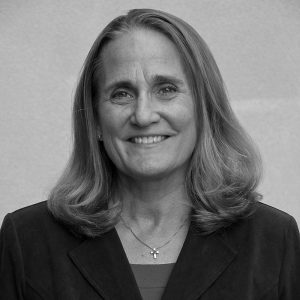


 Emily Jorgensen joined the Michigan League for Public Policy in July 2019. She deeply cares about the well-being of individuals and families and has a great love for Michigan. She is grateful that her position at the League enables her to combine these passions and work to help promote policies that will lead to better opportunities and security for all Michiganders.
 Megan Farnsworth joined the League’s staff in December 2022 as Executive Assistant. Megan is driven by work that is personally fulfilling, and feels honored to help support the work of an organization that pushes for more robust programming and opportunities for the residents of our state. She’s excited and motivated to gain overarching knowledge of the policies and agendas that the League supports.