By Anne Kuhnen, Kids Count Policy Director
Michigan League for Public Policy, November 2026
This is the text-only version of this fact sheet. Download the designed PDF version of Punished for Progress (PDF).
What is a benefit cliff?
A benefit cliff exists when a public assistance program has a hard income cut-off preventing economic mobility for working families. Most benefit cliffs exist for programs that provide in-kind benefits, such as food, healthcare and childcare, although there are exceptions. Some policymakers and researchers worry the threat or fear of hitting a benefit cliff undermines efforts to grow the workforce and encourage economic self-sufficiency.
There is not one single cliff. Where the cliff occurs depends on the family size, income and program. For the programs below, if a family’s earnings exceed the income eligibility level by just one dollar, they will lose access to the program.
Public assistance programs with dropoffs
Michigan Women, Infants and Children (WIC)
Where’s the cliff? $4,212 per month for a family of three.
Michiganders who are pregnant, postpartum or breastfeeding as well as those in households with children under 5 can qualify for WIC if their household income does not exceed 185% of the federal poverty level. Benefit levels cover specific food packages based on the beneficiary’s age and medical status.
Child Development and Care (CDC)
Where’s the cliff? $6,964 per month for a family of three.
Families meeting work requirements and earning up to 200% of the federal poverty level at initial application are eligible for a childcare scholarship through Michigan’s CDC. A family remains eligible, with a family contribution of up to $186 per pay period, as long as they remain below 80% of the state median income.
Healthy Kids and MIChild
Where’s the cliff? $4,940 per month for a family of three.
Children in a household below 160% of the federal poverty level are eligible for Michigan’s Healthy Kids program. MIChild has a slightly higher income limit, 217% of the federal poverty level, ensuring children continue to have low-cost health coverage even if their families earn too much to qualify for traditional Medicaid.
Family Independence Program (FIP)
Where’s the cliff? $1,365 per month for a family of three.
FIP, Michigan’s primary cash assistance program funded through Temporary Assistance for Needy Families (TANF), phases out as a family earns a higher income. However, the recent addition of the young child supplement and the annual clothing allowance introduced a cliff effect, as families either receive the full young child supplement or none at all.
Tax credit with a dropoff
Michigan Home Heating Credit
Where’s the cliff? $29,330 annually for a family of three.
Michigan’s Home Heating Credit allows households with incomes below 110% of the federal poverty level to receive a credit to help cover winter heating bills on their annual income tax return.
Good policy design can avoid a benefit cliff
The most effective policy design to avoid a benefit cliff is with a structured phase-out. A phase-out ensures families see only small benefit reductions as their earnings rise, whether through increased pay or increased work hours. If a benefit cliff cannot be avoided, transitional assistance programs, like Our Chance TN, may help bridge the gap.
Programs with off-ramps, not cliffs
In the PDF, each program below is illustrated with a line chart. As income rises along the horizontal axis, the benefit or credit amount declines gradually on a downward slope rather than dropping straight to zero.
Supplemental Nutrition Assistance Program (SNAP)
SNAP’s broad-based categorical eligibility (BBCE) policy, which Michigan and 45 other states have adopted, eliminates the benefit cliff by phasing down assistance gradually. In fiscal year 2023, approximately 245,000 Michiganders received SNAP benefits thanks to the adoption of BBCE.
The off-ramp: For each additional dollar earned, a working parent will see their SNAP benefit shrink by 30 cents.
Earned Income Tax Credit (EITC)
The federal EITC has both a phase-in and phase-out, with maximum credits ranging from $664 for workers with no children to $8,231 for workers with three or more children.
Michigan also has a state EITC, which aligns with federal eligibility rules and provides an additional 30% to families on top of their federal credit.
The off-ramp: For each additional dollar earned, a working parent will see their EITC shrink by 21 cents.
Child Tax Credit (CTC)
Families must earn at least $2,500 and can claim a partially refundable CTC of up to $2,200 per child under age 17.
The credit begins to phase out when a family reaches an income of $200,000 for single parents ($400,000 for married couples).
The off-ramp: For each additional dollar earned, a working parent will see their CTC shrink by 5 cents.
Michigan League for Public Policy
101 S. Washington Sq., Suite 820, Lansing, MI 48933
Email: info@mlpp.org
Website: www.mlpp.org


 Maisha Massey is a Detroit native, educator, researcher and advocate committed to creating more equitable experiences for young people and the communities that support them. She currently teaches 11th-grade English Language Arts in Detroit Public Schools Community District and serves as a TeachMichigan Michigan Education Policy Fellow. Maisha holds a master’s degree in Educational Leadership and is currently pursuing her Ed.D. in Educational Leadership and Policy Studies at Wayne State University, where her research centers the experiences of Black girls in schools. Her work is grounded in the belief that meaningful policy should be informed by the voices and lived experiences of the students, educators and communities most impacted by it.
 Betsy Zobl-Tar
 Jay Cutler joined the League in March 2026 as the Kids Count Senior Data Analyst, where he collects, analyzes, and prepares data for Kids Count in Michigan.
 Danielle Taylor-Basemore joined the League as the Development Data and Stewardship Coordinator in June 2025. She brings with her five years of nonprofit experience with a special focus on community engagement, data visualization and strategic programming. Prior to joining the League, Danielle served as the Business District, Safety, and Digital Manager at Jefferson East, Inc.
 Scott Preston is a Senior Policy Analyst with the Michigan League for Public Policy, where he leads the organization’s immigration and criminal justice reform portfolios. In the three years prior to joining the League, Scott facilitated the Southeast Michigan Refugee Collaborative and managed a small business economic development program at Global Detroit. His work included launching Michigan’s first Refugee Film Festival and building on a trusted connector model that linked marginalized communities with crucial resources. Scott’s work at the League is informed by his background in journalism and research. He spent four years covering the Syrian refugee crisis in the Middle East for publications such as The Economist, and later worked with unaccompanied refugee minors through Samaritas. Scott holds a master’s degree in international migration and public policy from the London School of Economics and Political Science.
 Kate Powers joined the League as the Chief Development Officer in February 2025. Prior to joining the League, Kate held leadership positions at many Michigan nonprofit organizations, most recently serving as the COO and Chief Development Officer of Ele’s Place. Kate has spent the bulk of her career in fundraising, with a short stint in the state Legislature as a legislative aide to members in both chambers. Kate is a graduate of Michigan State University’s James Madison College with a Bachelor of Arts in Social Relations and has a certificate in fundraising management from the Lilly Family School of Philanthropy at Indiana University. Additionally, Kate served on the East Lansing Public Schools Board of Education and is a past President of the Junior League of Lansing. In her free time, she enjoys traveling with her husband and her son and saving outfit of the day and home decor ideas on Pinterest.
 Nicholas Hess joined the League as the Fiscal Policy Analyst in September of 2024. In this role, Nicholas focuses on tax policy, government revenue, and their impact on working families and racial equity, including the effects of the Earned Income Tax Credit (EITC) and Child Tax Credit (CTC). Nicholas values the role that judicious fiscal policy can play in the improvement of people’s lives and the economy, alleviating inequities along the way.
 Audrey Matusz joined the League as the Visual Communications Specialist in September 2024. She supports the team with implementing social media strategies and brainstorming creative ways to talk about public policy. She brings with her nearly a decade of experience in producing digital products for evidence-based social justice initiatives.
 Jacob Kaplan
 Donald Stuckey
 Alexandra Stamm

 Amari Fuller
 Mikell Frey is a communications professional with a passion for using the art of storytelling to positively impact lives. She strongly believes that positive social change can be inspired by the sharing of data-driven information coupled with the unique perspectives of people from all walks of life across Michigan, especially those who have faced extraordinary barriers.




 Yona Isaacs (she/hers) is an Early Childhood Data Analyst for the Kids Count project. After earning her Bachelor of Science in Biopsychology, Cognition, and Neuroscience at the University of Michigan, she began her career as a research coordinator in pediatric psychiatry using data to understand the impacts of brain activity and genetics on children’s behavior and mental health symptoms. This work prompted an interest in exploring social determinants of health and the role of policy in promoting equitable opportunities for all children, families, and communities. She returned to the University of Michigan to complete her Masters in Social Work focused on Social Policy and Evaluation, during which she interned with the ACLU of Michigan’s policy and legislative team and assisted local nonprofit organizations in creating data and evaluation metrics. She currently serves as a coordinator for the Michigan Center for Youth Justice on a project aiming to increase placement options and enhance cultural competency within the juvenile justice system for LGBTQIA+ youth. Yona is eager to put her data skills to work at the League in support of data-driven policies that advocate for equitable access to healthcare, education, economic security, and opportunity for 0-5 year old children. In her free time, she enjoys tackling DIY house projects and trying new outdoor activities with her dog.
 Rachel Richards rejoined the League in December 2020 as the Fiscal Policy Director working on state budget and tax policies. Prior to returning to the League, she served as the Director of Legislative Affairs for the Michigan Department of Treasury, the tax policy analyst and Legislative Director for the Michigan League for Public Policy, and a policy analyst and the Appropriations Coordinator for the Democratic Caucus of the Michigan House of Representatives. She brings with her over a decade of experience in policies focused on economic opportunity, including workforce issues, tax, and state budget.
 Simon Marshall-Shah joined the Michigan League for Public Policy as a State Policy Fellow in August 2019. His work focuses on state policy as it relates to the budget, immigration, health care and other League policy priorities. Before joining the League, he worked in Washington, D.C. at the Association for Community Affiliated Plans (ACAP), providing federal policy and advocacy support to nonprofit, Medicaid health plans (Safety Net Health Plans) related to the ACA Marketplaces as well as Quality & Operations.


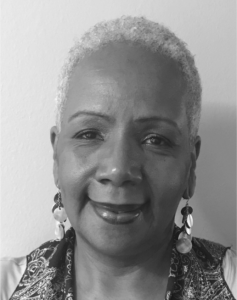 Renell Weathers, Michigan League for Public Policy (MLPP) Community Engagement Consultant. As community engagement consultant, Renell works with organizations throughout the state in connecting the impact of budget and tax policies to their communities. She is motivated by the belief that all children and adults deserve the opportunity to achieve their dreams regardless of race, ethnicity, religion or economic class.

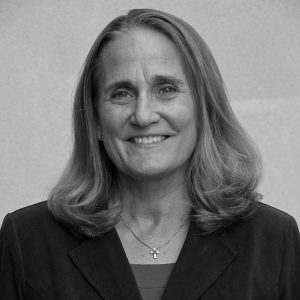


 Emily Jorgensen joined the Michigan League for Public Policy in July 2019. She deeply cares about the well-being of individuals and families and has a great love for Michigan. She is grateful that her position at the League enables her to combine these passions and work to help promote policies that will lead to better opportunities and security for all Michiganders.

 Megan Farnsworth joined the League’s staff in December 2022 as Executive Assistant. Megan is driven by work that is personally fulfilling, and feels honored to help support the work of an organization that pushes for more robust programming and opportunities for the residents of our state. She’s excited and motivated to gain overarching knowledge of the policies and agendas that the League supports.