
FOR IMMEDIATE RELEASE
September 7, 2026
Contact:
Laura Millard Ross
lauramr@mlpp.org
517-281-1084
New ‘Labor Day’ Report reveals Michigan has one of the highest unemployment rates in the nation, hourly wage gaps are widening
Snapshot examines current trends, challenges and data-driven opportunities for strengthening Michigan’s workforce amid rising costs
Lansing — The Michigan League for Public Policy has released a new snapshot of Michigan’s workforce to coincide with the Labor Day holiday.
The 2026 Labor Day Snapshot examines current trends, challenges and data-driven opportunities to strengthen Michigan’s workforce. Right now, rising costs are straining families and the state’s economy is still adjusting to a shrinking manufacturing sector. At the same time, more workers are being pushed into part-time jobs, hourly wage gaps are widening and fewer Michiganders than ever are part of organized labor.
“Boosting Michigan’s struggling labor economy can be done if we use the right policy solutions, like removing barriers to employment, funding programs that help families and promoting collective bargaining and rights for workers,” said Michigan League for Public Policy Acting President and CEO Karen Holcomb-Merrill. “Michigan workers are the backbone of our state’s economy, and with the right policies in place we can strengthen their financial security and build a stronger, more prosperous Michigan for everyone.”
In June of this year, Michigan had the 8th-highest unemployment rate in the country. Whilemthe current unemployment rate of 5% has not changed much over the past year, it’s worth noting that Michigan has a higher unemployment rate than the national average, which is 4.2%.
Additionally, Michigan’s unemployment insurance exhaustion rate was 30% in June 2026, meaning nearly 1 in 3 job seekers are running out of benefits before finding a job, though this rate is starting to trend downward. And the most recent data shows there are 1.2 job seekers per job opening in Michigan, indicating there are simply not enough jobs for everyone.
It’s also important to note that exorbitant childcare costs play a big role in workforce participation, with many parents and guardians choosing to leave jobs in the face of full-time center-based infant care costs averaging $14,064 per year in Michigan in 2025.
In terms of pay, the inflation-adjusted Michigan median wage has steadily been on the rise over the past year. The inflation-adjusted median wage in 2025 was $23.69, up from $23.61 the previous year. Earnings are starting to outpace inflation; however, 26.3% of Michiganders are employed, while still being asset-limited and income-constrained (ALICE). Another 13.4% of Michiganders fall below the federal poverty threshold. This means 40% of Michiganders are still struggling to earn enough to afford basic necessities.
And hourly wages are not increasing for everyone. The median hourly wage of Black Michiganders fell by 43 cents over the past year when factoring in inflation, worsening a widening gap between Black and white hourly wages in the state, with the median white worker now taking home 23.4% more than the median Black worker. Female workers in Michigan also saw a dip in median wages of 16 cents, now earning 20.3% less per hour than the median male worker across the state. This data shows that Black workers and female workers, especially Black women who are disproportionately working tipped and other low-paying jobs, are being left behind as the affordability crisis continues to take its toll on hard-working people across the state and country. Basic necessities such as groceries, utilities and housing are more expensive than ever, and wages are not keeping up. Meanwhile, the top 1% of earners in Michigan take home 21.3 times more than the bottom 99%.
Michigan’s labor challenges have been further compounded by a longstanding decline in labor union participation, with just 14.2% of Michigan workers currently represented by a union.
Moving forward, the League recommends the elimination of preemption, the protection of worker organizing rights, making Michigan’s minimum wage a living wage ($13.73 an hour is not enough and neither is $15 an hour), eliminating the unfair and harmful tipped wage, and enacting a salary history ban so that wage discrimination that began early in a worker’s career is not perpetuated. Increasing scholarship reimbursement for childcare facilities in order to make childcare more affordable and to increase wages for childcare workers is also critically important. Other barriers to employment can also be removed by investing in public transit, thoroughly funding schools, and reducing costs for post-secondary education and training so that Michiganders are prepared for future employment.
###
The Michigan League for Public Policy, www.mlpp.org, is a nonprofit policy institute focused on opportunity for all. Its mission is to advance economic security, racial equity, health and well-being for all people in Michigan through policy change. It is the only state-level organization that addresses poverty in a comprehensive way.


 Maisha Massey is a Detroit native, educator, researcher and advocate committed to creating more equitable experiences for young people and the communities that support them. She currently teaches 11th-grade English Language Arts in Detroit Public Schools Community District and serves as a TeachMichigan Michigan Education Policy Fellow. Maisha holds a master’s degree in Educational Leadership and is currently pursuing her Ed.D. in Educational Leadership and Policy Studies at Wayne State University, where her research centers the experiences of Black girls in schools. Her work is grounded in the belief that meaningful policy should be informed by the voices and lived experiences of the students, educators and communities most impacted by it.
 Betsy Zobl-Tar
 Jay Cutler joined the League in March 2026 as the Kids Count Senior Data Analyst, where he collects, analyzes, and prepares data for Kids Count in Michigan.
 Danielle Taylor-Basemore joined the League as the Development Data and Stewardship Coordinator in June 2025. She brings with her five years of nonprofit experience with a special focus on community engagement, data visualization and strategic programming. Prior to joining the League, Danielle served as the Business District, Safety, and Digital Manager at Jefferson East, Inc.
 Scott Preston is a Senior Policy Analyst with the Michigan League for Public Policy, where he leads the organization’s immigration and criminal justice reform portfolios. In the three years prior to joining the League, Scott facilitated the Southeast Michigan Refugee Collaborative and managed a small business economic development program at Global Detroit. His work included launching Michigan’s first Refugee Film Festival and building on a trusted connector model that linked marginalized communities with crucial resources. Scott’s work at the League is informed by his background in journalism and research. He spent four years covering the Syrian refugee crisis in the Middle East for publications such as The Economist, and later worked with unaccompanied refugee minors through Samaritas. Scott holds a master’s degree in international migration and public policy from the London School of Economics and Political Science.
 Kate Powers joined the League as the Chief Development Officer in February 2025. Prior to joining the League, Kate held leadership positions at many Michigan nonprofit organizations, most recently serving as the COO and Chief Development Officer of Ele’s Place. Kate has spent the bulk of her career in fundraising, with a short stint in the state Legislature as a legislative aide to members in both chambers. Kate is a graduate of Michigan State University’s James Madison College with a Bachelor of Arts in Social Relations and has a certificate in fundraising management from the Lilly Family School of Philanthropy at Indiana University. Additionally, Kate served on the East Lansing Public Schools Board of Education and is a past President of the Junior League of Lansing. In her free time, she enjoys traveling with her husband and her son and saving outfit of the day and home decor ideas on Pinterest.
 Nicholas Hess joined the League as the Fiscal Policy Analyst in September of 2024. In this role, Nicholas focuses on tax policy, government revenue, and their impact on working families and racial equity, including the effects of the Earned Income Tax Credit (EITC) and Child Tax Credit (CTC). Nicholas values the role that judicious fiscal policy can play in the improvement of people’s lives and the economy, alleviating inequities along the way.
 Audrey Matusz joined the League as the Visual Communications Specialist in September 2024. She supports the team with implementing social media strategies and brainstorming creative ways to talk about public policy. She brings with her nearly a decade of experience in producing digital products for evidence-based social justice initiatives.
 Jacob Kaplan
 Donald Stuckey
 Alexandra Stamm

 Amari Fuller
 Mikell Frey is a communications professional with a passion for using the art of storytelling to positively impact lives. She strongly believes that positive social change can be inspired by the sharing of data-driven information coupled with the unique perspectives of people from all walks of life across Michigan, especially those who have faced extraordinary barriers.




 Yona Isaacs (she/hers) is an Early Childhood Data Analyst for the Kids Count project. After earning her Bachelor of Science in Biopsychology, Cognition, and Neuroscience at the University of Michigan, she began her career as a research coordinator in pediatric psychiatry using data to understand the impacts of brain activity and genetics on children’s behavior and mental health symptoms. This work prompted an interest in exploring social determinants of health and the role of policy in promoting equitable opportunities for all children, families, and communities. She returned to the University of Michigan to complete her Masters in Social Work focused on Social Policy and Evaluation, during which she interned with the ACLU of Michigan’s policy and legislative team and assisted local nonprofit organizations in creating data and evaluation metrics. She currently serves as a coordinator for the Michigan Center for Youth Justice on a project aiming to increase placement options and enhance cultural competency within the juvenile justice system for LGBTQIA+ youth. Yona is eager to put her data skills to work at the League in support of data-driven policies that advocate for equitable access to healthcare, education, economic security, and opportunity for 0-5 year old children. In her free time, she enjoys tackling DIY house projects and trying new outdoor activities with her dog.
 Rachel Richards rejoined the League in December 2020 as the Fiscal Policy Director working on state budget and tax policies. Prior to returning to the League, she served as the Director of Legislative Affairs for the Michigan Department of Treasury, the tax policy analyst and Legislative Director for the Michigan League for Public Policy, and a policy analyst and the Appropriations Coordinator for the Democratic Caucus of the Michigan House of Representatives. She brings with her over a decade of experience in policies focused on economic opportunity, including workforce issues, tax, and state budget.
 Simon Marshall-Shah joined the Michigan League for Public Policy as a State Policy Fellow in August 2019. His work focuses on state policy as it relates to the budget, immigration, health care and other League policy priorities. Before joining the League, he worked in Washington, D.C. at the Association for Community Affiliated Plans (ACAP), providing federal policy and advocacy support to nonprofit, Medicaid health plans (Safety Net Health Plans) related to the ACA Marketplaces as well as Quality & Operations.


 Renell Weathers, Michigan League for Public Policy (MLPP) Community Engagement Consultant. As community engagement consultant, Renell works with organizations throughout the state in connecting the impact of budget and tax policies to their communities. She is motivated by the belief that all children and adults deserve the opportunity to achieve their dreams regardless of race, ethnicity, religion or economic class.

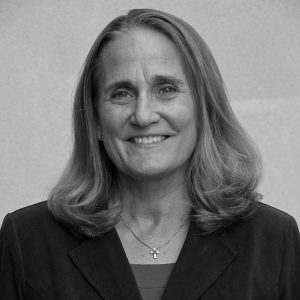


 Emily Jorgensen joined the Michigan League for Public Policy in July 2019. She deeply cares about the well-being of individuals and families and has a great love for Michigan. She is grateful that her position at the League enables her to combine these passions and work to help promote policies that will lead to better opportunities and security for all Michiganders.

 Megan Farnsworth joined the League’s staff in December 2022 as Executive Assistant. Megan is driven by work that is personally fulfilling, and feels honored to help support the work of an organization that pushes for more robust programming and opportunities for the residents of our state. She’s excited and motivated to gain overarching knowledge of the policies and agendas that the League supports.