Simon Marshall-Shah | Policy Analyst | November 2021

For over a decade, Michigan has had the ability to be more inclusive and enroll thousands more of the state’s children in Medicaid and the Children’s Health Insurance Program (CHIP) but has not yet opted to do so. Specifically, these children are “lawfully residing,” or lawfully present immigrants who meet Medicaid or CHIP state residency and income requirements, yet have lived in the United States for fewer than five years. Federal law requires lawfully residing immigrants to live in the country for five years before they can enroll in some public programs. The 2009 Children’s Health Insurance Program Reauthorization Act (CHIPRA), however, gave states the  Immigrant Children’s Health Improvement Act (ICHIA) option to waive the five-year waiting period for Medicaid and CHIP for lawfully residing children (up to 21 years old) and/or pregnant people.1
If Michigan were to take up the ICHIA option for children, the state would be able to enroll thousands of eligible lawfully residing children in these healthcare programs and receive substantial federal matching funds to do so. This administrative policy change would expand access to comprehensive healthcare coverage for Michigan’s immigrant children—particularly Hispanic or Latinx children. By taking up the ICHIA option for pregnant people, Michigan could secure future coverage gains for those enrolled in the state’s Maternity Outpatient Medical Services (MOMS) program, which currently provides prenatal care and up to 60 days of postpartum care to Medicaid-eligible pregnant people, regardless of immigration status.
Given MOMS’ reach and funding structure, this report focuses primarily on using the ICHIA option to extend Medicaid and CHIP to immigrant children sooner, and the impact this policy change would have. Michigan should make use of all its available policy options—particularly those that include built-in federal funding—as we strive to attain healthcare coverage for all kids and achieve healthier outcomes in our state.

There are two main categories of foreign-born, lawfully present people in the United States: immigrants, who are admitted into the country for permanent residence and nonimmigrants, who are admitted into the country temporarily for study or work, for example.2 (Refugees and asylees, once admitted, may apply to adjust their status to become permanent residents.) The sweeping 1996 welfare reform law, or the Personal Responsibility and Work Opportunity Reconciliation Act (PRWORA), placed many federal restrictions on immigrants’ access to public benefits.3 The law divided lawfully present immigrants into two narrower groups: “qualified” and “non-qualified,” where the former comprises the group of noncitizens who are potentially eligible for public benefits.4 PRWORA imposes further restrictions, including a five-year waiting period (or “bar”) for Medicaid and CHIP, which prevent certain qualified immigrants who entered the United States on or after August 22, 1996 from enrolling in full-scope Medicaid until they have lived in the country for five years.5 In contrast to full-scope coverage, “emergency Medicaid” (also known in Michigan as Emergency Services Only coverage) will cover only emergency care and services, and it is available to anyone who is eligible for Medicaid—save for their immigration status—without a five-year wait.6
The federal five-year waiting period includes most lawfully residing children and pregnant people who are otherwise eligible for Medicaid or CHIP based on income but not immigration status. Prior to 1996, there were generally few differences between most lawful permanent residents (LPRs, or “green card” holders), other noncitizens and United States citizens in regards to eligibility for major public programs.7 Despite some changes in law over subsequent decades, PRWORA intricately linked federal immigration policy and public benefits and legitimized immigrant exclusion in policies to come, which has impacted the accessibility and reach of such programs for millions of immigrant families from 1996 to today.8
There are, however, groups of qualified immigrants who are exempt from the federal five-year waiting period, such as refugees and asylees, those serving in the Armed Forces and certain survivors of severe forms of trafficking.9 Therefore, those who are subject to the five-year waiting period include: LPRs who arrived on or after August 22, 1996; individuals paroled into the U.S. for a period of at least one year; and certain survivors of battery or extreme cruelty and their family members.10 When states take up the ICHIA option, they allow Medicaid- and CHIP-eligible children and pregnant people who are lawfully present (including LPRs and others) and have lived in the country for less than five years to become eligible for Medicaid and CHIP without a five-year wait. Furthermore, these states are able to draw down federal matching dollars to cover a large portion of the cost of extending coverage to these additional residents.

From the state policy perspective, making use of the ICHIA option to expand healthcare coverage among immigrant children and pregnant people would  align Michigan law with that of most states. In fact, Michigan is one of only 16 states that still does not allow eligible lawfully residing children to obtain Medicaid and CHIP coverage without a five-year wait (and it is one of 26 states that does not allow pregnant people to do so).11 In the Great Lakes region, six out of eight states have made use of the ICHIA option for children, except for Michigan and Indiana, where thousands of lawfully residing immigrant children continue to be excluded from health programs, despite otherwise being eligible for Medicaid or CHIP.12 Most of Michigan’s peers, not only among Great Lakes states but also across the country, have agreed that taking up the ICHIA option is an important opportunity to move closer to covering all children.


The ICHIA option would extend health insurance coverage to 3,000 to 4,000 children. Through the ICHIA option included in CHIPRA, lawfully residing children (up to 21 years old) and pregnant people in Michigan could be eligible for Medicaid or CHIP coverage without a five-year wait. Newly eligible groups would include children or pregnant people who are lawfully present (including LPRs, nonimmigrants and those with Temporary Protected Status, for example) and currently meet Medicaid or CHIP income requirements. Based on these criteria, approximately 3,000 to 4,000 Michigan children would become eligible for healthcare coverage through Medicaid and CHIP via the ICHIA option.13,14 Some of these children may be enrolled in other coverage, such as Marketplace coverage through the Affordable Care Act (ACA), since lawfully present immigrants are eligible for such coverage and associated subsidies.15 Yet, Medicaid and CHIP offer comprehensive coverage with lower premiums and controlled out-of-pocket spending, which would make coverage more affordable for these children’s families.16 Furthermore, immigrant Michiganders are twice as likely to be uninsured than residents who are U.S.-born, with over two-thirds of immigrants who are uninsured being noncitizens.17 The ICHIA option’s targeted scope would result in a small increase in the number of children who are insured, but it would also reduce the uninsured rate among noncitizen residents specifically. This policy change would bring Michigan closer to covering all children—and providing affordable, quality care to thousands more children in our state—while aligning our state law with that of most other states.
The ICHIA option could cement access to future coverage gains for pregnant immigrants in Michigan. Michigan currently provides prenatal care and up to 60 days of postpartum care to Medicaid-eligible pregnant people, regardless of immigration status, through its Maternity Outpatient Medical Services (MOMS) program. In 2016, more than 5,000 pregnant people in Michigan received coverage through this option via MOMS.18 This state-funded program leverages CHIP’s “unborn child option,” which allows states to provide coverage to the fetus and effectively cover pregnant parents-to-be who would otherwise be ineligible for full-scope Medicaid coverage due to immigration status. (In addition, Emergency Services Only Medicaid covers labor and delivery services for those enrolled in MOMS.) Although the state already receives federal matching dollars to cover pregnant immigrants, expanding Medicaid and CHIP eligibility criteria to include pregnant immigrants via the ICHIA option could cover new parents directly and secure access to future coverage gains. For example, future extensions to postpartum coverage for people enrolled in Medicaid (from 60 days to a full year, for example) through administrative policy changes would benefit these pregnant people themselves (as opposed to their unborn children), for whom such coverage extension may not otherwise be guaranteed under current policy.19 Therefore, the ICHIA option can be an immigrant-inclusive opportunity to build on the MOMS program and proactively ensure future coverage gains for pregnant immigrants in our state.
The ICHIA option would extend coverage to more Hispanic or Latinx children, who are more likely to be uninsured in Michigan. Children in immigrant families who are themselves foreign-born parent come from all over the world. Per American Community Survey (ACS) data, in Michigan, the majority were born in Asia or Latin America (50% and 26%, respectively), with others born in Europe (14%), Africa (7%) and Northern America and Oceania (3%).20 Of course, this regional data encompasses immigrants of varying races and ethnicities who were born in these areas of the world (e.g., not all European immigrants are White). There is broad diversity within these groups, and in addition to questions about country of origin, the ACS asks about race and ethnicity as two separate questions. There are specific data concerns and collection challenges regarding the ACS’ separation of race and ethnic identity, such as with the definition of “Hispanic/Latino,” which can lead to under-sampling and other inaccuracies.21 Noting these considerations, children in Michigan’s immigrant families are most likely to be Asian or Hispanic or Latinx, or have parents who identify as such.
 A history of racial and economic geographic segregation, in addition to institutional racism in areas like housing and employment, continue to impact families of color in Michigan—particularly Black or African American, Hispanic or Latinx, and Indigenous or American Indian families—by limiting both the access to, and equitable distribution of, resources like healthcare, healthy food, education and employment. In addition to institutional barriers, for some immigrant parents, challenges around language access and barriers to licensing or jobs in one’s field of expertise may also contribute to difficulty accessing higher-paying jobs. These barriers contribute to Black or African American children, Hispanic or Latinx children, and children of two or more races in Michigan being more likely to live in families that are considered poor or low income (with incomes less than 200% of the federal poverty threshold). These data also show that on the whole, Asian and Pacific Islanders are less likely to live in families that are considered poor or low-income, but it is also true that among the diverse Asian and Pacific Islander population there are wide variations in income by country of origin, which are not distinguishable here.22
Compared with other racial and ethnic groups, Hispanic or Latinx children in Michigan are less likely to have health insurance, with 7% being uninsured. Notably, this rate is double that of all other racial and ethnic groups and has increased over the last few years. If the state were to take up the ICHIA option, it would impact uninsured children who are immigrants and also live in families that are considered poor or low income. In Michigan, coverage via the ICHIA option would extend to Hispanic or Latinx children in particular because they represent a large share of those who are themselves foreign-born or are a part of immigrant families, are more likely to be income-eligible for Medicaid and CHIP and are more likely to be uninsured than children in other racial groups today.

The ICHIA option would contribute to a climate of inclusion and could promote re-enrollment after the “public charge”-induced chilling effect. The rate of Michigan children without health insurance increased for two groups from 2017 to 2019: Hispanic or Latinx children (4% to 7%) and children of two or more races (2% to 3%).23 National context provides insight into these increases. For example, massive cuts to navigator funding (over 80% in two years by 2018) meant that programs that support consumers’ enrollment in ACA 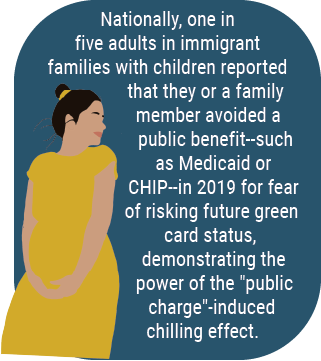 Marketplace plans, often by providing objective information and help with eligibility, were forced to limit their activity.24 Explicitly anti-immigration policies such as a 2019 presidential proclamation requiring proof of health insurance (or means to obtain it quickly) to lawfully immigrate to the country also limited immigration options for many lower-income people, contributed to a narrative about immigrants burdening the healthcare system and created a climate of fear about enrollment, which deterred families from enrolling in robust coverage.25 Finally, changes that the Trump administration made to longstanding “public charge” rules that made it harder for noncitizens to obtain future permanent residency (such as a “green card”) if they used public benefits, including Medicaid. Although in Michigan nearly nine in 10 children in immigrant families are citizens,26 28% of all children in immigrant families live in “mixed immigration status” households, where at least one parent is a noncitizen.27 Messaging and misinformation about the new public charge rule led many families with eligible children (citizen children, e.g.) to disenroll because of fears and confusion about the impact on parents who might be hoping to adjust their immigration status in the future.28 In fact, survey data found that nationally, one in five adults in immigrant families with children reported that they or a family member avoided a public benefit in 2019 for fear of risking future green card status. For those with lower incomes, this number increases to close to one-third of respondents (31.5%).29
As noted earlier, over a quarter of Michigan children in immigrant families are themselves from Latin America or have parents from this region, and Hispanic or Latinx children in the state are disproportionately more likely to be eligible for public programs based on income. Concerns about changes to the public charge rule likely help explain the increase in the uninsured rate for Hispanic or Latinx children, with fears about the rule and its impact resulting in a “chilling effect” on enrollment in public programs of all types, including Medicaid and CHIP, due to eligible families disenrolling their children from such programs.
In March 2021, the Biden administration formally rescinded the Trump-era public charge rule after the Department of Justice stopped defending the rule through legal avenues. With the rule now rescinded, there should be a push in our state to re-enroll eligible children, particularly Hispanic or Latinx children, as Michigan continues to climb toward covering all kids. The ICHIA option is an existing tool the state can use to reach this goal and will create a more welcoming Michigan by enacting explicitly immigrant-inclusive policy that affirms coverage options for immigrants. These actions could combat a climate of fear and instead send a powerful message to parents and families that public programs like Medicaid and CHIP are available to a broader group of eligible immigrant residents and their children; that families should not be deterred from enrolling in public programs; and that Michigan is using all of its available options to provide comprehensive coverage to immigrant families, which for the last decade has included the opportunity of expansion via the ICHIA option.

Healthcare coverage through Medicaid and CHIP can lead to consistent care for children and support financial stability for families. These programs help children and families meet myriad health needs: those who enroll in Medicaid or CHIP in Michigan receive a comprehensive package of healthcare benefits including vision, dental and mental health services.30 The cost of care is also affordable, as enrolling in CHIP through MIChild in Michigan costs $10 per family (including all children in the family) and CHIP programs must limit out-of-pocket spending (including premiums) to 5% of family income.31
For families enrolled in these programs, low premiums and controlled out-of-pocket spending can provide financial security against unexpected medical bills. In fact, research has shown that expanded Medicaid coverage is associated with improved housing stability and fewer evictions, since medical debt or other urgent health needs can compete with families’ other financial obligations, like housing costs.32 In addition, research on the impact of Medicaid and CHIP coverage for children demonstrates better access to primary and preventive care and fewer unmet health needs when compared with uninsured children.33 A study examining the impact of extending Medicaid and CHIP coverage to lawfully residing children showed that states that had made such a policy change as of 2011 saw a nearly 14% decrease in the probability of immigrant children experiencing any unmet need, while also improving access to consistent preventive care.34

There are clear health benefits to extending affordable coverage to more children. Plus, if Michigan were to expand coverage through the ICHIA option for children and pregnant people, the cost to the state would be limited. Medicaid postpartum coverage extensions for pregnant immigrants, for example, would be matched at the Medicaid Federal Medical Assistance Percentage (FMAP) rate. For newly enrolled immigrant children, Michigan would receive matching payments at the Enhanced FMAP rate for CHIP (80.18% for Michigan), meaning the state would be responsible for less than one-fifth of the total cost per child during their first five years in the country.35 Currently, over 1 million children (up to 21 years old) are enrolled in Medicaid programs in Michigan.36 The increase in eligible children due to expansion via the ICHIA option would be less than one-half of a percent of total enrolled children, and the state would take on a fraction of the cost of coverage.
It is time that Michigan made use of this long-standing policy option as we continue to make progress toward covering all children who call the Great Lakes State home, which includes immigrant children. In addition, by making use of the ICHIA option for pregnant people,  Michigan could secure future coverage gains, beyond the current scope of the MOMS program, via Medicaid postpartum coverage extensions. Taking up the ICHIA option for immigrant children, in particular, will align Michigan law with that of much of the region and a majority of states across the country. Expanded eligibility for Medicaid and CHIP via the ICHIA option will provide access to comprehensive and affordable healthcare, especially to Hispanic and Latinx children. Although the number of children who will gain access to coverage is relatively small, the ICHIA option will have an impact on a group that is disproportionately more likely to be uninsured and will have a significant impact on the lives of lower-income immigrant children and their families by providing access to healthcare much sooner than is currently allowed by law. Given the rate of Hispanic and Latinx children who are uninsured in Michigan—likely exacerbated by fear surrounding the public charge rule changes and the resultant “chilling effect” on Medicaid and CHIP—the ICHIA option is one policy solution that will demonstrate a commitment to immigrant-inclusive policy and can help shrink this statistic. Plus, expanded eligibility comes with a lower price tag thanks to federal matching dollars to support care for this population, making the ICHIA option well worth the investment in creating a healthier future for more of Michigan’s children.


1 Centers for Medicare and Medicaid Services. “Dear State Health Official Re: Medicaid and CHIP Coverage of ‘Lawfully Residing’ Children and Pregnant Women (SHO #10-006, CHIPRA #17).” July 1, 2010. Retrieved from https://www.medicaid.gov/federal-policy-guidance/downloads/SHO10006.pdf. Specifically, the ICHIA option may be applied to children up to age 19 for CHIP or up to age 21 for Medicaid.
2 Kandel, William A. “Primer on U.S. Immigration Policy.” Congressional Research Service. July 1, 2021. Retrieved from https://sgp.fas.org/crs/homesec/R45020.pdf.
3 Siskin, Alison. “Noncitizen Eligibility for Federal Public Assistance: Policy Overview.” Congressional Research Service. December 12, 2016. Retrieved from https://fas.org/sgp/crs/misc/RL33809.pdf.
4 8 U.S.C. §§ 1641(b), (c). The following definition of a “qualified” immigrant is provided in Grusin, Sarah and Catherine McKee. “Medicaid Coverage for Immigrants: Eligibility and Verification.” National Health Law Program. April 21, 2021. Retrieved from https://healthlaw.org/resource/medicaid-coverage-for-immigrants/.
Currently, “qualified” immigrants include an individual who: is a legal permanent resident (LPR, also known as a green card holder); is granted asylum; is admitted to the U.S. as a refugee; is paroled into the U.S. for a period of at least one year; has been granted withholding of deportation; has been granted conditional entry; is a Cuban or Haitian entrant; is lawfully residing in the United States in accordance with a Compact of Free Association (individuals from the Republic of the Marshall Islands, the Federated States of Micronesia, and the Republic of Palau); or was born in Canada and is at least 50 percent American Indian, or is a member of a tribe recognized by the federal government. The statute also treats as qualified immigrants certain: (1) survivors of battery or extreme cruelty, as well as some of their family members; and (2) victims of severe forms of trafficking, as well as some of their family members.
5 Ibid. § 1613.
6 Ibid. §§ 1611(b)(1)(A).
7 Siskin, Alison, ibid.
8 Minoff, Elisa et al. “The Lasting Legacy of Exclusion: How the Law that Brought Us Temporary Assistance for Needy Families Excluded Immigrant Families & Institutionalized Racism in Our Social Support System.” Center for the Study of Social Policy and Georgetown Center on Poverty and Inequality Economic Security & Opportunity Initiative. August 2021. Retrieved from https://cssp.org/resource/the-lasting-legacy-of-exclusion/.
9 8 U.S.C. §§ 1613(b), (d)(1). The following explanation of groups exempt from the five-year waiting period is provided in Grusin, Sarah and Catherine McKee, ibid.
Currently, the five-year waiting period does not apply to an individual who: is granted asylum; is admitted to the U.S. as a refugee; has been granted withholding of deportation; is a Cuban or Haitian entrant; Is admitted to the U.S. as an Amerasian immigrant; is lawfully residing in any state and is: (1) an honorably discharged veteran; (2) on active duty in the armed forces; or (3) the spouse (including a surviving spouse who has not remarried) or unmarried dependent child of an honorably discharged veteran or individual on active duty; is lawfully residing in the United States in accordance with a Compact of Free Association; was born in Canada and is at least 50 percent American Indian, or is a member of a tribe recognized by the federal government; is granted Iraqi or Afghan special immigrant status; or is a child receiving foster care or adoption assistance under Title IV-E of the Social Security Act. In addition to the groups noted above, certain survivors of severe forms of trafficking and their family members are exempt from the five-year bar.
10 Grusin, Sarah and Catherine McKee, ibid.
11 Kaiser Family Foundation. “State Health Facts: Medicaid/CHIP Coverage of Lawfully-Residing Immigrant Children and Pregnant Women.” January 1, 2021. Retrieved from https://www.kff.org/health-reform/state-indicator/medicaid-chip-coverage-of-lawfully-residing-immigrant-children-and-pregnant-women/.
12 The eight Great Lakes states include Illinois, Indiana, Michigan, Minnesota, New York, Ohio, Pennsylvania and Wisconsin.
13 Capps, Randy and Julia Gelatt. “Barriers to COVID-19 Testing and Treatment: Immigrants without Health Insurance Coverage in the United States.” Migration Policy Institute. 2020. Retrieved from https://www.migrationpolicy.org/research/covid-19-testing-treatment-immigrants-health-insurance. The authors estimate there are fewer than a combined 3,000 LPR and nonimmigrant children in Michigan (0-18 years old) who are currently uninsured.
14 Michigan Department of Attorney General. “AG Nessel Joins Coalition in Supreme Court Briefing Supporting the Rights of Temporary Protected Status Holders.” News release, March 5, 2021. Retrieved from https://www.michigan.gov/ag/0,4534,7-359–553698–,00.html. There are more than 1,500 Temporary Protected Status holders in Michigan, some of whom are children that would be impacted by the ICHIA option.
15 Healthcare.gov. “Coverage for lawfully present immigrants.” Accessed September 2021. Retrieved from https://www.healthcare.gov/immigrants/lawfully-present-immigrants/.
16 Michigan Department of Health and Human Services. “Health Care Programs Eligibility.” Accessed August 2021. Retrieved from https://www.michigan.gov/mdhhs/0,5885,7-339-71547_4860-35199–,00.html.
17 Marshall-Shah, Simon. “Immigrants in Michigan: A Snapshot of Immigrants in Michigan.” Michigan League for Public Policy. April 2021. Retrieved from https://mlpp.org/wp-content/uploads/2020/01/immigration-in-michigan-2021.pdf.
18 Medicaid and CHIP Payment and Access Commission. “Fact Sheet: State Children’s Health Insurance Program (CHIP), Table 5: Unborn Children and Pregnant Women Enrollment in CHIP by State, FY 2016.” February 2018. Retrieved from https://www.macpac.gov/wp-content/uploads/2018/02/State-Children%E2%80%99s-Health-Insurance-Program-CHIP.pdf19.
19 The American Rescue Plan Act of 2021 gives states the option to extend postpartum Medicaid coverage from 60 days following pregnancy to a full year by filing a State Plan Amendment (SPA) to their Medicaid program. More information on the postpartum coverage extension option is available from Ranji, Usha et al. “Postpartum Coverage Extension in the American Rescue Plan Act of 2021.” Kaiser Family Foundation. March 18, 2021. Retrieved from https://www.kff.org/policy-watch/postpartum-coverage-extension-in-the-american-rescue-plan-act-of-2021/.
20 The Annie E. Casey Foundation. “Children in immigrant families by parent’s region of origin in Michigan.” KIDS COUNT Data Center. 2019 American Community Survey estimates through the U.S. Census Bureau. Accessed August 2021.
21 Whitener, Kelly and Alexandra Corcoran. “Getting Back on Track: A Detailed Look at Health Coverage Trends for Latino Children, Appendix A: How the Census Bureau Collects Questions about Race and Ethnicity on the American Community Survey and Compiles Hispanic/Latino Data.” Georgetown University Center for Children and Families. June 2021. Retrieved from https://ccf.georgetown.edu/wp-content/uploads/2021/06/Health-Coverage-Trends-for-Latino-Children-FINAL-1.pdf.
22 Budiman, Abby and Neil G. Ruiz. “Key facts about Asian Americans, a diverse and growing population.” Pew Research Center. April 29, 2021. Retrieved from https://www.pewresearch.org/fact-tank/2021/04/29/key-facts-about-asian-americans/.
23 The Annie E. Casey Foundation. “Children without health insurance by race and ethnicity in Michigan.” KIDS COUNT Data Center. 2019 American Community Survey estimates through the U.S. Census Bureau. Accessed August 2021. American Indian children also experienced an increase of 3% to 12% from 2017 to 2018; estimates are suppressed in 2019.
24 Center on Budget and Policy Priorities. “Sabotage Watch: Tracking Efforts to Undermine the ACA.” Accessed September 2021. Last updated February 2, 2021. Retrieved from https://www.cbpp.org/sabotage-watch-tracking-efforts-to-undermine-the-aca.
25 Ibid.
26 The Annie E. Casey Foundation. “Children in immigrant families who are U.S. citizens in Michigan.” KIDS COUNT Data Center. 2019 American Community Survey estimates through the U.S. Census Bureau. Accessed August 2021.
27 Ibid., “Children in immigrant families in which resident parents are not U.S. citizens in Michigan.” Accessed August 2021.
28 Whitener, Kelly and Alexandra Corcoran, ibid.
29 Haley, Jennifer M. et al. “One in Five Adults in Immigrant Families with Children Reported Chilling Effects on Public Benefit Receipt in 2019.” The Urban Institute. June 18, 2020. Retrieved from https://www.urban.org/research/publication/one-five-adults-immigrant-families-children-reported-chilling-effects-public-benefit-receipt-2019.
30 Michigan Department of Health and Human Services. “Health Care Programs Eligibility.” Accessed August 2021. Retrieved from https://www.michigan.gov/mdhhs/0,5885,7-339-71547_4860-35199–,00.html.
31 Paradise, Julia. “The Impact of the Children’s Health Insurance Program (CHIP): What Does the Research Tell Us?” Kaiser Family Foundation. July 17, 2014. Retrieved from https://www.kff.org/report-section/the-impact-of-the-childrens-health-insurance-program-chip-issue-brief/.
32 Allen, Heidi L. et al. “Can Medicaid Expansion Prevent Housing Evictions?” Health Affairs 38, no. 9 (2019): 1451–1457. Retrieved from https://doi.org/10.1377/hlthaff.2018.05071.
33 Paradise, Julia, ibid.
34 Saloner, Brendan et al. “Coverage For Low-Income Immigrant Children Increased 24.5 Percent In States That Expanded CHIPRA Eligibility.” Health Affairs 33, no. 5 (2014): 832–839. Retrieved from https://doi.org/10.1377/hlthaff.2013.1363.
35 Kaiser Family Foundation. “Enhanced Federal Medical Assistance Percentage (FMAP) for CHIP.” FY 2022. Retrieved from https://www.kff.org/other/state-indicator/enhanced-federal-matching-rate-chip/.
36 Michigan Department of Health and Human Services. “Green Book Report of Key Program Statistics, Table 70: Distribution of Children By Age: Medicaid.” June 2021. Accessed August 2021. Retrieved from https://www.michigan.gov/documents/mdhhs/2021_06_GreenBook_730774_7.pdf.


 Jay Cutler joined the League in March 2026 as the Kids Count Senior Data Analyst, where he collects, analyzes, and prepares data for Kids Count in Michigan.
 Danielle Taylor-Basemore joined the League as the Development Data and Stewardship Coordinator in June 2025. She brings with her five years of nonprofit experience with a special focus on community engagement, data visualization and strategic programming. Prior to joining the League, Danielle served as the Business District, Safety, and Digital Manager at Jefferson East, Inc.
 Scott Preston is a Senior Policy Analyst with the Michigan League for Public Policy, where he leads the organization’s immigration and criminal justice reform portfolios. In the three years prior to joining the League, Scott facilitated the Southeast Michigan Refugee Collaborative and managed a small business economic development program at Global Detroit. His work included launching Michigan’s first Refugee Film Festival and building on a trusted connector model that linked marginalized communities with crucial resources. Scott’s work at the League is informed by his background in journalism and research. He spent four years covering the Syrian refugee crisis in the Middle East for publications such as The Economist, and later worked with unaccompanied refugee minors through Samaritas. Scott holds a master’s degree in international migration and public policy from the London School of Economics and Political Science.
 Kate Powers joined the League as the Chief Development Officer in February 2025. Prior to joining the League, Kate held leadership positions at many Michigan nonprofit organizations, most recently serving as the COO and Chief Development Officer of Ele’s Place. Kate has spent the bulk of her career in fundraising, with a short stint in the state Legislature as a legislative aide to members in both chambers. Kate is a graduate of Michigan State University’s James Madison College with a Bachelor of Arts in Social Relations and has a certificate in fundraising management from the Lilly Family School of Philanthropy at Indiana University. Additionally, Kate served on the East Lansing Public Schools Board of Education and is a past President of the Junior League of Lansing. In her free time, she enjoys traveling with her husband and her son and saving outfit of the day and home decor ideas on Pinterest.
  Nicholas Hess joined the League as the Fiscal Policy Analyst in September of 2024. In this role, Nicholas focuses on tax policy, government revenue, and their impact on working families and racial equity, including the effects of the Earned Income Tax Credit (EITC) and Child Tax Credit (CTC). Nicholas values the role that judicious fiscal policy can play in the improvement of people’s lives and the economy, alleviating inequities along the way.
 Audrey Matusz joined the League as the Visual Communications Specialist in September 2024. She supports the team with implementing social media strategies and brainstorming creative ways to talk about public policy. She brings with her nearly a decade of experience in producing digital products for evidence-based social justice initiatives.
  Jacob Kaplan
  Donald Stuckey
  Alexandra Stamm
 Amari Fuller
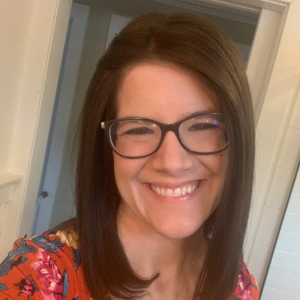 Mikell Frey is a communications professional with a passion for using the art of storytelling to positively impact lives. She strongly believes that positive social change can be inspired by the sharing of data-driven information coupled with the unique perspectives of people from all walks of life across Michigan, especially those who have faced extraordinary barriers.
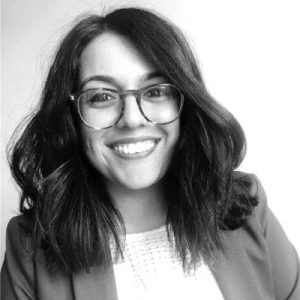


 Yona Isaacs (she/hers) is an Early Childhood Data Analyst for the Kids Count project. After earning her Bachelor of Science in Biopsychology, Cognition, and Neuroscience at the University of Michigan, she began her career as a research coordinator in pediatric psychiatry using data to understand the impacts of brain activity and genetics on children’s behavior and mental health symptoms. This work prompted an interest in exploring social determinants of health and the role of policy in promoting equitable opportunities for all children, families, and communities. She returned to the University of Michigan to complete her Masters in Social Work focused on Social Policy and Evaluation, during which she interned with the ACLU of Michigan’s policy and legislative team and assisted local nonprofit organizations in creating data and evaluation metrics. She currently serves as a coordinator for the Michigan Center for Youth Justice on a project aiming to increase placement options and enhance cultural competency within the juvenile justice system for LGBTQIA+ youth. Yona is eager to put her data skills to work at the League in support of data-driven policies that advocate for equitable access to healthcare, education, economic security, and opportunity for 0-5 year old children. In her free time, she enjoys tackling DIY house projects and trying new outdoor activities with her dog.
 Rachel Richards rejoined the League in December 2020 as the Fiscal Policy Director working on state budget and tax policies. Prior to returning to the League, she served as the Director of Legislative Affairs for the Michigan Department of Treasury, the tax policy analyst and Legislative Director for the Michigan League for Public Policy, and a policy analyst and the Appropriations Coordinator for the Democratic Caucus of the Michigan House of Representatives. She brings with her over a decade of experience in policies focused on economic opportunity, including workforce issues, tax, and state budget.
 Simon Marshall-Shah joined the Michigan League for Public Policy as a State Policy Fellow in August 2019. His work focuses on state policy as it relates to the budget, immigration, health care and other League policy priorities. Before joining the League, he worked in Washington, D.C. at the Association for Community Affiliated Plans (ACAP), providing federal policy and advocacy support to nonprofit, Medicaid health plans (Safety Net Health Plans) related to the ACA Marketplaces as well as Quality & Operations.

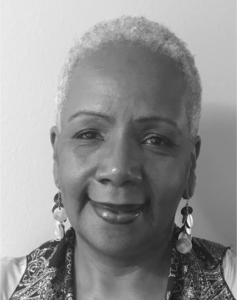 Renell Weathers, Michigan League for Public Policy (MLPP) Community Engagement Consultant. As community engagement consultant, Renell works with organizations throughout the state in connecting the impact of budget and tax policies to their communities. She is motivated by the belief that all children and adults deserve the opportunity to achieve their dreams regardless of race, ethnicity, religion or economic class.
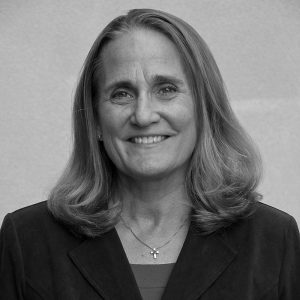


 Emily Jorgensen joined the Michigan League for Public Policy in July 2019. She deeply cares about the well-being of individuals and families and has a great love for Michigan. She is grateful that her position at the League enables her to combine these passions and work to help promote policies that will lead to better opportunities and security for all Michiganders.
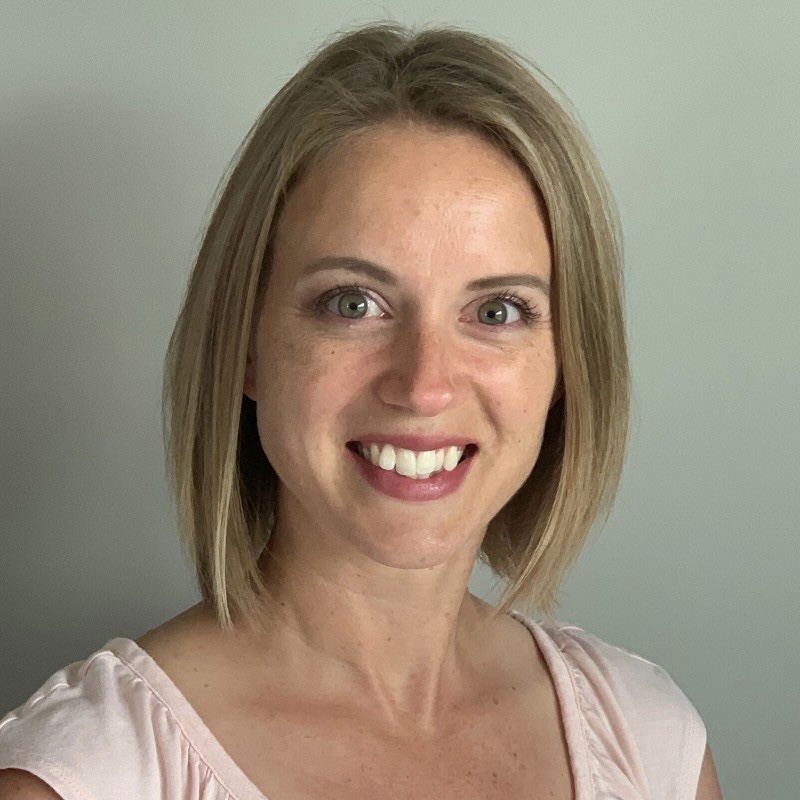 Megan Farnsworth joined the League’s staff in December 2022 as Executive Assistant. Megan is driven by work that is personally fulfilling, and feels honored to help support the work of an organization that pushes for more robust programming and opportunities for the residents of our state. She’s excited and motivated to gain overarching knowledge of the policies and agendas that the League supports.