For many families with low incomes, housing comes with high energy bills. An affordable rent or mortgage payment often means living in a home with outdated heating and cooling systems, sparse insulation, leaky windows or other structural issues that lead to energy waste. High energy bills can push housing costs into the unaffordable realm and diminish health. As the COVID-19 crisis continues to stress families’ health and finances, strengthening household energy security is more important than ever to ensure safe housing for all Michiganders and promote thriving communities.

Housing, including utilities, is generally considered affordable when it costs no more than 30% of household income. Michigan families living below 50% of the federal poverty level (FPL), however, spend more than that on energy bills alone.1 Difficulty paying for energy needs isn’t limited to the families with the very lowest incomes.
Before COVID-19 emerged, help with utility bills was consistently one of the most common reasons people contacted Michigan 2-1-1,2 a free service that connects state residents to local resources for a variety of basic needs. Even though energy providers suspended disconnections to vulnerable customers for the first few months of the pandemic and have worked to connect them to assistance and affordable payment plans, Michigan 2-1-1 received more than 55,600 calls from people seeking help with electric bill payment from March 5, 2020, to May 1, 2021.3
Federal and state programs fund: a credit to offset winter heating bills, emergency relief for households facing an arrearage or imminent utility shutoff, assistance with budgeting, and weatherization services to improve energy efficiency. These vital supports, however, are chronically underfunded: the federal Low Income Home Energy Assistance Program, for example, reaches fewer than 1 in 6 Michigan households who meet the income eligibility requirements.4

Utility shutoff is the main reason for rental property condemnations in Michigan,5 meaning tenants who can’t pay their energy bills often face eviction—a frequent precursor to homelessness. Utility disconnection and eviction can both trigger the loss of some types of rental assistance, including Housing Choice Vouchers. To avoid literal homelessness, families that can’t afford their energy bills may have to move into overcrowded homes or couch surf, which are both conducive to the spread of contagious illnesses and create other school- and work-related challenges.

Home energy burden (the share of income spent on energy bills) varies by housing ownership status, race and ethnicity. These disparities are due in large part to historical and ongoing systemic factors that disproportionately leave families with low incomes and people of color with fewer housing options that are both high-quality and affordable.
Energy bills for renters living in multifamily apartment buildings are an average of 20% higher per square foot than for owners living in single-family homes.6 This can contribute to a higher overall housing cost burden for renters, placing them at higher risk for eviction and frequent moves that can interfere with school and work.
At the same time, renters have lower access to energy efficiency measures that could reduce their utility bills, improve their health and stabilize their housing situations. Landlords may not want to take on the cost of efficiency improvements if energy bills are in tenants’ names. Furthermore, in multifamily buildings, all living units, common areas and building-wide systems must be addressed in order for individual families to see a meaningful benefit.
In the past, racially restrictive covenants, discriminatory zoning ordinances and redlining in the real estate and banking industries and federal homeownership programs forced families of color into low-quality rental housing in neighborhoods of concentrated poverty. This prevented these families from building wealth and passing it on, preserving housing and economic inequity long after the removal of explicit racism from our laws. This discrimination continues in the more contemporary forms of subprime lending, predatory land contracts and dubious tax foreclosures that extract wealth from families of color and deny them the homeownership opportunities available to White families.
We can see evidence of this today in the fact that, while White households consume more energy overall, African American and Latinx families live in less-efficient homes and consume more energy per square foot.7 The continuing combination of lower incomes and lower-quality housing requires households of color to spend a larger share of their income on energy bills than White households do.8
Broader economic forces can prevent utility customers with low incomes from taking advantage of even the simplest measures to reduce their home energy use and lower their bills. For example, energy-efficient light bulbs are more widely available and less expensive at big box stores, which are typically located in more affluent areas. Residents of high-poverty neighborhoods must rely on smaller retailers like corner stores and pharmacies, which cannot offer the wide variety and low prices of large retailers.9
Due to these same economic forces, Michiganders of color are more likely to live in high-poverty neighborhoods with low access to energy-efficient products like light bulbs—another factor contributing to their higher energy burden.


In addition to exorbitant energy bills, poor housing quality contributes to some common health problems that have a significant impact on education, employment and well-being for people of all ages. For example, 40% of asthma episodes are brought on by a trigger in the home10 and asthma is the No. 1 chronic health reason that children miss school. As another potentially disabling or fatal respiratory disease, COVID-19 has highlighted the crucial need for measures to improve household safety, reduce energy waste and ensure affordability of utility service.
Asthma rates are highest in Michigan families with incomes below $25,000,11 who are also more likely to live in substandard housing and face a higher energy burden. Asthma prevalence, hospitalization and mortality rates in the state also vary by race and ethnicity: Black, American Indian and multiracial people have the highest asthma rates among adults, and Black people are more than five times as likely to be hospitalized for asthma and nearly four times more likely to die from asthma as their White counterparts.12 Michigan children of color, particularly Black and Hispanic children, are more likely than White children to experience asthma-related emergency department visits.13 In addition to the direct health impact of removing asthma triggers, improved housing conditions would reduce these children’s family energy burden, freeing up money in the budget for asthma medication, healthy food and other basics kids need for academic success.

(Note: As this brief examines energy security as part of our housing justice series, we have focused largely on household-level policy recommendations. Broader policy questions remain regarding the larger system of energy generation, service delivery and the regulatory process; these questions are outside the scope of this brief but will be addressed in the future.)
Michigan must have effective stopgap measures in place to protect families in crisis from losing essential heat and electric service—especially during a disaster like the COVID-19 pandemic—as well as long-term solutions that reduce their energy burden and promote economic and health justice. To that end, the League recommends that Michigan do the following:
Expand utility shutoff protections to households with young children. Because older adults may be especially vulnerable to the health impacts of inadequate home heating, state law and Michigan Public Service Commission rules prohibit energy providers from shutting off service due to nonpayment during the heating season for customers age 65 or older. The health risks of a shutoff, however, can be just as serious for young children. Massachusetts has adopted utility shutoff protections for families with infants under age 1 and households in which both older adults and minor children reside;14 Michigan should consider expanding its protections similarly.
Increase funding for home repairs that promote health and safety. Poor housing conditions can negate the positive impact of energy efficiency measures or prevent their installation altogether. For example, sealing an improperly ventilated home to prevent heat loss also can trap air pollutants and mold-causing moisture inside. Many Michigan homes need major roof repairs or replacement; however, because the cost usually eclipses the potential for timely energy savings, underfunded weatherization programs cannot use their scarce resources in this way. In communities with the oldest housing stock, health and safety issues consistently force weatherization contractors to defer most of the families referred to them for services. The state should explore avenues for funding this essential weatherization precursor work for families with low incomes, especially those who rent. Possibilities include:
- Supporting health and safety pilots involving utility providers, weatherization contractors, housing providers, and landlords.
- Prioritizing home repairs in Michigan’s use of its Community Development Block Grant.
- Establishing a dedicated revenue stream for Michigan’s housing trust fund and earmarking a portion of the money for home repairs that aren’t covered by existing programs.
Establish a pilot program to study the impact of energy efficiency improvements on housing stability, health outcomes and healthcare costs for Medicaid enrollees. Currently, Michigan is conducting a Medicaid pilot to help measure the impact of housing vouchers on health and healthcare spending for people who have experienced chronic homelessness. The state should consider a similar study related to energy efficiency and health impacts among families with low incomes. Such a pilot could demonstrate that increased state investment in energy efficiency is worthwhile via savings in the Medicaid program and help lay the groundwork for future incorporation of non-energy benefits, such as health and environmental impacts, in the state’s process for regulating utilities and setting energy rates.
Promote income-based utility bills for households with low incomes. Some jurisdictions have adopted percentage-of-income payment plans (PIPPs) for utility customers who struggle to make ends meet. Under such a plan, the customer’s portion of the monthly bill is set at a fixed percentage of their income and assistance program funds cover the rest. With each on-time payment, the customer’s arrearage is reduced and eventually eliminated. This helps families stay current on their bills, increases certainty in the energy provider’s revenue stream, and reduces the provider’s expenses related to collections and bad debt. Michigan utilities already offer affordable payment plans based on this model to customers who fall behind on their bills, but this option should be more widely available to families with low incomes before they accumulate debt. Several utilities in Michigan are preparing to launch PIPP pilot programs; the state and applicable local governments should provide financial and technical support for these programs so that eventually all struggling families can experience greater energy security and housing stability.

1 Fisher Sheehan & Colton, Home Energy Affordability Gap 2020, http://www.homeenergyaffordabilitygap.com/03a_affordabilityData.html. Accessed May 12, 2021.
2 2-1-1 Counts, Michigan, http://mi211.211counts.org/. Accessed February 18, 2020.
3 Michigan 2-1-1. COVID Dashboard. https://app.powerbi.com/view?r=eyJrIjoiMTljNjZhYjktMjY1MS00MmU3LTg5NWYtZWQ1NGI4NjRiNTUxIiwidCI6IjdkZWFlMDVkLTQ1NGYtNGM0MC05ZDE2LTlhZTI3MzY1YTQ4NiIsImMiOjN9. Accessed September 1, 2020.
4 Fisher Sheehan & Colton, Home Energy Affordability Gap 2020, http://www.homeenergyaffordabilitygap.com/03a_affordabilityData.html. Accessed May 12, 2021.
5 Rental Property Owners Association. (2016, June 9). Condemnation policies. Retrieved from https://rpoaonline.org/condemnation-policies/.
6 Midwest Energy Efficiency Alliance. (2018). Multifamily energy efficiency fact sheet. Retrieved from http://www.mwalliance.org/sites/default/files/meea-research/multifamily_fact_sheet_5_8_18_final_pdf.pdf.
7 Reams, T.G. (2016). Targeting energy justice: Exploring spatial, racial/ethnic and socioeconomic disparities in urban residential heating energy efficiency. Energy Policy, 97, 549-558. Retrieved from https://justurbanenergy.files.wordpress.com/2018/03/reames-2016-targeting-energy-justice.pdf.
8 Drehobl, A. and Ross, L. American Council for an Energy-Efficient Economy. (April 2016). Lifting the high energy burden in America’s largest cities: How energy efficiency can improve low-income and underserved communities. Retrieved from https://assets.ctfassets.net/ntcn17ss1ow9/1UEmqh5l59cFaHMqVwHqMy/e81368fa10d39bbb4b114262aaee5be2/Lifting_the_High_Energy_Burden_0.pdf.
9 Reames, T.G., Reiner, M.A., and Stacey, M.B. (2018). An incandescent truth: Disparities in energy-efficient lighting availability and prices in an urban U.S. county. Applied Energy, 218, 95-103. Retrieved from https://justurbanenergy.files.wordpress.com/2018/03/reames-reiner-stacey-2018-an-incandescent-truth-w-supp.pdf.
10 Lee, C. Green & Healthy Homes Initiative. (October 4, 2018). Multiple Impacts of Healthy & Efficient Housing [PowerPoint slides].
11 Michigan Department of Health and Human Services. (February 2020). Asthma by race and ethnicity. Retrieved from https://www.michigan.gov/documents/mdhhs/Asthma_in_Michigan_by_Race_and_Ethnicity_600961_7.pdf.
12 Ibid.
13 Ibid.
14 Commonwealth of Massachusetts. (2021). When am I protected from having my utilities shut off? Retrieved from https://www.mass.gov/service-details/when-am-i-protected-from-having-my-utilities-shut-off.

 Jay Cutler joined the League in March 2026 as the Kids Count Senior Data Analyst, where he collects, analyzes, and prepares data for Kids Count in Michigan.
 Danielle Taylor-Basemore joined the League as the Development Data and Stewardship Coordinator in June 2025. She brings with her five years of nonprofit experience with a special focus on community engagement, data visualization and strategic programming. Prior to joining the League, Danielle served as the Business District, Safety, and Digital Manager at Jefferson East, Inc.
 Scott Preston is a Senior Policy Analyst with the Michigan League for Public Policy, where he leads the organization’s immigration and criminal justice reform portfolios. In the three years prior to joining the League, Scott facilitated the Southeast Michigan Refugee Collaborative and managed a small business economic development program at Global Detroit. His work included launching Michigan’s first Refugee Film Festival and building on a trusted connector model that linked marginalized communities with crucial resources. Scott’s work at the League is informed by his background in journalism and research. He spent four years covering the Syrian refugee crisis in the Middle East for publications such as The Economist, and later worked with unaccompanied refugee minors through Samaritas. Scott holds a master’s degree in international migration and public policy from the London School of Economics and Political Science.
 Kate Powers joined the League as the Chief Development Officer in February 2025. Prior to joining the League, Kate held leadership positions at many Michigan nonprofit organizations, most recently serving as the COO and Chief Development Officer of Ele’s Place. Kate has spent the bulk of her career in fundraising, with a short stint in the state Legislature as a legislative aide to members in both chambers. Kate is a graduate of Michigan State University’s James Madison College with a Bachelor of Arts in Social Relations and has a certificate in fundraising management from the Lilly Family School of Philanthropy at Indiana University. Additionally, Kate served on the East Lansing Public Schools Board of Education and is a past President of the Junior League of Lansing. In her free time, she enjoys traveling with her husband and her son and saving outfit of the day and home decor ideas on Pinterest.
  Nicholas Hess joined the League as the Fiscal Policy Analyst in September of 2024. In this role, Nicholas focuses on tax policy, government revenue, and their impact on working families and racial equity, including the effects of the Earned Income Tax Credit (EITC) and Child Tax Credit (CTC). Nicholas values the role that judicious fiscal policy can play in the improvement of people’s lives and the economy, alleviating inequities along the way.
 Audrey Matusz joined the League as the Visual Communications Specialist in September 2024. She supports the team with implementing social media strategies and brainstorming creative ways to talk about public policy. She brings with her nearly a decade of experience in producing digital products for evidence-based social justice initiatives.
  Jacob Kaplan
  Donald Stuckey
  Alexandra Stamm
 Amari Fuller
 Mikell Frey is a communications professional with a passion for using the art of storytelling to positively impact lives. She strongly believes that positive social change can be inspired by the sharing of data-driven information coupled with the unique perspectives of people from all walks of life across Michigan, especially those who have faced extraordinary barriers.



 Yona Isaacs (she/hers) is an Early Childhood Data Analyst for the Kids Count project. After earning her Bachelor of Science in Biopsychology, Cognition, and Neuroscience at the University of Michigan, she began her career as a research coordinator in pediatric psychiatry using data to understand the impacts of brain activity and genetics on children’s behavior and mental health symptoms. This work prompted an interest in exploring social determinants of health and the role of policy in promoting equitable opportunities for all children, families, and communities. She returned to the University of Michigan to complete her Masters in Social Work focused on Social Policy and Evaluation, during which she interned with the ACLU of Michigan’s policy and legislative team and assisted local nonprofit organizations in creating data and evaluation metrics. She currently serves as a coordinator for the Michigan Center for Youth Justice on a project aiming to increase placement options and enhance cultural competency within the juvenile justice system for LGBTQIA+ youth. Yona is eager to put her data skills to work at the League in support of data-driven policies that advocate for equitable access to healthcare, education, economic security, and opportunity for 0-5 year old children. In her free time, she enjoys tackling DIY house projects and trying new outdoor activities with her dog.
 Rachel Richards rejoined the League in December 2020 as the Fiscal Policy Director working on state budget and tax policies. Prior to returning to the League, she served as the Director of Legislative Affairs for the Michigan Department of Treasury, the tax policy analyst and Legislative Director for the Michigan League for Public Policy, and a policy analyst and the Appropriations Coordinator for the Democratic Caucus of the Michigan House of Representatives. She brings with her over a decade of experience in policies focused on economic opportunity, including workforce issues, tax, and state budget.
 Simon Marshall-Shah joined the Michigan League for Public Policy as a State Policy Fellow in August 2019. His work focuses on state policy as it relates to the budget, immigration, health care and other League policy priorities. Before joining the League, he worked in Washington, D.C. at the Association for Community Affiliated Plans (ACAP), providing federal policy and advocacy support to nonprofit, Medicaid health plans (Safety Net Health Plans) related to the ACA Marketplaces as well as Quality & Operations.

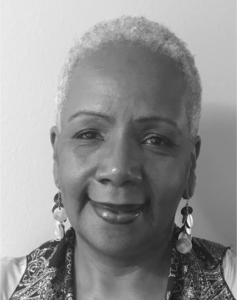 Renell Weathers, Michigan League for Public Policy (MLPP) Community Engagement Consultant. As community engagement consultant, Renell works with organizations throughout the state in connecting the impact of budget and tax policies to their communities. She is motivated by the belief that all children and adults deserve the opportunity to achieve their dreams regardless of race, ethnicity, religion or economic class.
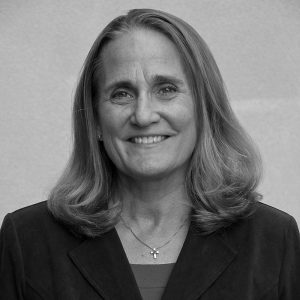


 Emily Jorgensen joined the Michigan League for Public Policy in July 2019. She deeply cares about the well-being of individuals and families and has a great love for Michigan. She is grateful that her position at the League enables her to combine these passions and work to help promote policies that will lead to better opportunities and security for all Michiganders.
 Megan Farnsworth joined the League’s staff in December 2022 as Executive Assistant. Megan is driven by work that is personally fulfilling, and feels honored to help support the work of an organization that pushes for more robust programming and opportunities for the residents of our state. She’s excited and motivated to gain overarching knowledge of the policies and agendas that the League supports.