
The COVID-19 Pandemic Creates Hardship for College Students
Fact Sheet | Policy Recommendations
The COVID-19 pandemic took much of the nation by surprise, and in Michigan, the response escalated from one to ten very quickly. The first two cases were confirmed in Michigan on March 10, and within two weeks Gov. Gretchen Whitmer issued executive orders banning large gatherings and closing public buildings, including universities and community colleges. For the past five months, the quarantining, shutdowns and uncertainty have created challenges for college students and will continue to do so. It is likely that students from households with low incomes and students of color in particular are experiencing hardship. Challenges to students include:
- With in-person classes being cancelled and going online, students depend on having a computer in their home with reliable internet connection, something they may not all have.
- Many students’ jobs have been temporarily halted, and not all are eligible for public assistance such as Unemployment Insurance (UI), Supplemental Nutrition Assistance Program (SNAP), or federal emergency pandemic aid to help pay the bills in the absence of a paycheck.
 Those who are eligible for public assistance programs must navigate the application process for these programs with which they have little or no experience, and present required documentation without which they likely will not be approved to receive assistance.
- Because many or most child care facilities have temporarily shut down, many students with families must care for their children themselves while completing their online coursework.
- Students who could not return home, either because they lived far away or overseas or because they did not have a home or safe space to return to, found themselves with housing challenges.
- Students whose academic programs require an internship may be unable to fulfill the requirements of that internship online, which may complicate receiving a credential or fulfilling prerequisites for upper-level classes.
- Uncertainty about the future makes it difficult for students to do academic, financial or career planning.
The Federal CARES Act Provides Help for Many Students, but Not All
 The Coronavirus Aid, Relief, and Economic Security (CARES) Act was passed by Congress with overwhelming, bipartisan support and signed into law on March 27. It contained a number of provisions to help relieve some of the hardships for college students, including:
- Appropriating a $14.25 billion Higher Education Emergency Relief Fund (HEERF), with allocations going directly to postsecondary institutions through a formula based largely (75%) on the enrollment of Pell Grant recipients at each institution. Approximately half of each institution’s amount is to be used for providing direct emergency aid grants to students for food, housing, course materials, technology, healthcare and child care. Michigan public universities received $86.4 million to use for the grants, and Michigan community colleges received $42.6 million.1 (See the appendix for the HEERF allocations to specific Michigan universities and community colleges.)
- Excluding Pell Grants awarded from counting towards annual or cumulative limits if a recipient is unable to complete the term due to a qualifying emergency.
- Providing relief for student borrowers by, among other things, suspending required payments on federal Direct Loans through September 2020 and suspending interest on the payments, as well as suspending wage and tax refund garnishment during that period for borrowers in default.2 (Nationally, Black graduates, upon earning their bachelor’s degree, owe on average $23,400 while their White peers owe $16,000.3 Also, 81% of Black recent graduates have taken out student loans compared to 63% of White recent graduates.4)
Colleges and universities have broad latitude to determine which students receive an emergency aid grant and the amount of the grant. The U.S. Department of Education has issued clear directives that colleges and universities cannot use the grant money to reimburse themselves for tuition or room and board refunds to students, supplying computers to students, or paying students for on-campus jobs they had been employed in prior to the closing of the school, nor can an institution use the grant money to pay outstanding or overdue student bills. These restrictions ensure that the grant dollars are given directly to students and not used to fill college or university budget holes resulting from the pandemic or other reasons.5
Unfortunately, the CARES Act emergency aid grants leave out many students who need the help, due to an April 21 departmental rule issued by the U.S. Department of Education to exclude students who are not Title IV eligible (meaning not eligible for federal student financial aid).6 Ineligible students include Deferred Action for Childhood Arrivals (DACA) students, international students, some students with drug convictions, students in loan default, students who did not register with the selective service, and perhaps others. Although the department later clarified that the exclusion will not be enforced, having the exclusion in the rule still encourages colleges to turn down students in these categories that apply for emergency aid grants.7,8
 DACA students, also called DREAMers (after the DREAM Act that has been introduced several times in Congress), are students who were brought by their parents to the United States without documentation and who have some protections from deportation. Michigan postsecondary institutions, as well as policymakers, need to be aware of the needs of DACA students and other students who are ineligible for the grants. Due to their parents’ immigration status and limited economic mobility, most DACA students likely do not have the same family supports that other students have, nor the access to public programs and benefits that most Americans take for granted, and are therefore especially vulnerable to economic harm created by the pandemic and the quarantine. Colleges and universities—and Michigan’s Legislature—should seek ways to do outreach to and assist these students.
The Need Among College Students During the Pandemic is Real
The Hope Center conducts a survey on student needs each year, called the #RealCollege survey. Shortly after the beginning of the pandemic, a special survey was created to gauge not only student needs during the pandemic, but also student awareness of and access to public assistance that may be available to them. This special survey questioned 38,602 students in 15 universities (including Eastern Michigan University, which has a large number of students from families with low incomes and also the highest percentage of Black students, at 30%) and 39 community colleges (including Grand Rapids Community College) in 26 states.9,10
The survey asked students questions about basic needs insecurity (related to food and housing) as well as academic challenges arising from the pandemic (such as access to technology and the need to care for children). The survey also asked about knowledge, access and application for three public assistance programs: UI, SNAP (formerly known as Food Stamps), and the emergency aid grants provided by colleges through funding from the CARES Act.11
The survey found that 44% of community college students and 38% of students at four-year universities experienced some level of food insecurity. Somewhat alarmingly, the survey also found that 15% of four-year students and 11% of two-year students were experiencing homelessness during the pandemic. Roughly half of the respondents reported experiencing at least a moderate level of anxiety.12
The findings reveal acute racial disparities in both basic needs insecurity and academic challenges. Nearly three out of every four Black students experienced some kind of basic needs insecurity during April and May, compared to just over half of White students, with the starkest difference being the experience of food insecurity (58% compared to 35%). Black students were considerably more likely to report housing insecurity as well. Black students were also less likely to own a functional laptop or have sufficient internet access, and more likely to need to care for family members while in school, while White students were more likely to report not having time for school or being unable to concentrate.13

Student Basic Needs Hardship Existed Even Before the Pandemic, and Will Exist Afterward
While it is tempting to assume that the campus and job closures resulting from COVID-19 are at the root of basic needs hardship, recent #RealCollege surveys show that campus food and housing insecurity have existed for a long time and the pandemic has only made them more pronounced and acute. The Hope Center’s five-year assessment of student basic needs insecurity surveys taken from 2015 to 2019 showed that 42-56% of two-year college students experienced food insecurity and 46-60% experienced housing insecurity. Students at four-year colleges experienced this to a somewhat lesser degree but still significantly, at more than 30% in each of those two basic needs categories in 2017 and 2019 and more than 40% in each in 2018.14
Any policy to address student basic needs insecurity, therefore, must be long-term, and must not assume that student need will diminish significantly after campuses open and social distancing and mask wearing are no longer required. The recommendations that follow are intended to address both the immediate concerns during the coronavirus stay-home orders and longer-term student needs.
RECOMMENDATIONS
What Michigan’s Policymakers Can Do
1. Support Hunger-Free Campus legislation, wherein the Legislature appropriates funding to college campuses that submit plans to address hunger among their students. California passed such legislation in 2017 and appropriated $7.5 million for this purpose, and New Jersey and Minnesota followed suit in 2019, appropriating $1 million and $77,000 respectively.
In Minnesota, to receive a Hunger-Free Campus designation with funding, a campus must:
- Have a food pantry, partnership with a food bank, or some type of food distribution system on campus available to students;
- Have a designated staff person on campus to educate students on SNAP and other public services aimed to reduce food insecurity;
- Provide emergency funds to assist students who may be experiencing basic needs insecurity;
- Have a task force dedicated to addressing food insecurity concerns; and
- Host or participate in at least one hunger awareness event each year.15
In California, each participating campus that receives Hunger-Free Campus Act funding must do three things:
- Establish a “Swipe Out Hunger” program in which students can donate unneeded meal points to a fund to help food-insecure students access meals at dining halls;
- Establish an on-campus food pantry or a partnership with a food bank to provide regular on-campus food distribution; and
- Designate a paid staff person who works to ensure that students have access to information about applying for SNAP.16
In New Jersey, to be designated as a Hunger-Free Campus, a college or university must do the following:
- Establish a hunger task force that meets a minimum of three times per academic year to set at least two goals with action plans;
- Designate a staff member responsible for assisting students with SNAP enrollment;
- Provide options for students to utilize SNAP benefits at campus stores;
- Participate in an awareness day campaign activity and plan a campus awareness event
- Provide at least one food pantry on campus or enable students to receive food through a separate, stigma-free arrangement;
- Develop a “Swipe Out Hunger” student meal credit sharing program, or designate a certain amount of funds for free meal vouchers; and
- Annually conduct a student survey on hunger.17
These state initiatives were enacted before the COVID-19 pandemic, but with social distancing requirements and other precautions, practices such as establishing campus food pantries can be done during the quarantine stay-home orders. Likewise, campus staff designated to help students navigate public assistance applications ought to be accessible by phone while the campus is closed.
2. Encourage or incentivize universities and community colleges to accept EBT Bridge Cards at qualifying retailers on campus and provide ATMs that enable Bridge Card withdrawals. This will help not only students who receive public assistance while going to school, but will also help lower-paid employees working at or near the institution to access or make purchases with their benefits.
3. Appropriate state funds to provide emergency pandemic grants to DACA students. DACA students and others are excluded from the federal funding made available in the CARES Act, yet likely face more or different challenges than most students during the pandemic.
What Michigan’s Department of Health and Human Services Can Do
4. Create a food assistance manual for college students experiencing need. California’s Department of Social Services created the CalFresh Student Eligibility Handbook in February 2020, before the pandemic hit the United States, in order “to provide County Welfare Departments and education stakeholders with consolidated policy guidance related to CalFresh student eligibility.” The 30-page document provides definitions of qualifying students, eligibility guidelines and, for childless students, descriptions of work programs that help the recipient meet work requirements.18 Michigan’s Department of Health and Human Services could create a similar manual to increase outreach to eligible college students and to help ensure that policies are being followed uniformly regarding SNAP food assistance for students.
What Michigan’s Colleges and Universities Can Do
5. Designate a staff member to assist students with applying for SNAP or other forms of public assistance. This is part of Hunger-Free Campus funding legislation in two states, but until such legislation is enacted in Michigan, universities can still provide this service. During times when social distancing is required, such services should be accessible by phone or an online video appointment.
6. Create a student basic needs website listing available supports. The Hope Center recommends that college student needs websites include:
- How to access SNAP, the Earned Income Tax Credit, and affordable health care;
- How to reduce the cost of utilities;
- How to secure emergency aid;
- Where to find free food, including any meal swipe programs; and
- Who to call if more comprehensive support is needed.19
Appendix
Endnotes


 Betsy Zobl-Tar
  Jay Cutler joined the League in March 2026 as the Kids Count Senior Data Analyst, where he collects, analyzes, and prepares data for Kids Count in Michigan.
 Danielle Taylor-Basemore joined the League as the Development Data and Stewardship Coordinator in June 2025. She brings with her five years of nonprofit experience with a special focus on community engagement, data visualization and strategic programming. Prior to joining the League, Danielle served as the Business District, Safety, and Digital Manager at Jefferson East, Inc.
 Scott Preston is a Senior Policy Analyst with the Michigan League for Public Policy, where he leads the organization’s immigration and criminal justice reform portfolios. In the three years prior to joining the League, Scott facilitated the Southeast Michigan Refugee Collaborative and managed a small business economic development program at Global Detroit. His work included launching Michigan’s first Refugee Film Festival and building on a trusted connector model that linked marginalized communities with crucial resources. Scott’s work at the League is informed by his background in journalism and research. He spent four years covering the Syrian refugee crisis in the Middle East for publications such as The Economist, and later worked with unaccompanied refugee minors through Samaritas. Scott holds a master’s degree in international migration and public policy from the London School of Economics and Political Science.
 Kate Powers joined the League as the Chief Development Officer in February 2025. Prior to joining the League, Kate held leadership positions at many Michigan nonprofit organizations, most recently serving as the COO and Chief Development Officer of Ele’s Place. Kate has spent the bulk of her career in fundraising, with a short stint in the state Legislature as a legislative aide to members in both chambers. Kate is a graduate of Michigan State University’s James Madison College with a Bachelor of Arts in Social Relations and has a certificate in fundraising management from the Lilly Family School of Philanthropy at Indiana University. Additionally, Kate served on the East Lansing Public Schools Board of Education and is a past President of the Junior League of Lansing. In her free time, she enjoys traveling with her husband and her son and saving outfit of the day and home decor ideas on Pinterest.
  Nicholas Hess joined the League as the Fiscal Policy Analyst in September of 2024. In this role, Nicholas focuses on tax policy, government revenue, and their impact on working families and racial equity, including the effects of the Earned Income Tax Credit (EITC) and Child Tax Credit (CTC). Nicholas values the role that judicious fiscal policy can play in the improvement of people’s lives and the economy, alleviating inequities along the way.
 Audrey Matusz joined the League as the Visual Communications Specialist in September 2024. She supports the team with implementing social media strategies and brainstorming creative ways to talk about public policy. She brings with her nearly a decade of experience in producing digital products for evidence-based social justice initiatives.
  Jacob Kaplan
  Donald Stuckey
  Alexandra Stamm
 Amari Fuller
 Mikell Frey is a communications professional with a passion for using the art of storytelling to positively impact lives. She strongly believes that positive social change can be inspired by the sharing of data-driven information coupled with the unique perspectives of people from all walks of life across Michigan, especially those who have faced extraordinary barriers.



 Yona Isaacs (she/hers) is an Early Childhood Data Analyst for the Kids Count project. After earning her Bachelor of Science in Biopsychology, Cognition, and Neuroscience at the University of Michigan, she began her career as a research coordinator in pediatric psychiatry using data to understand the impacts of brain activity and genetics on children’s behavior and mental health symptoms. This work prompted an interest in exploring social determinants of health and the role of policy in promoting equitable opportunities for all children, families, and communities. She returned to the University of Michigan to complete her Masters in Social Work focused on Social Policy and Evaluation, during which she interned with the ACLU of Michigan’s policy and legislative team and assisted local nonprofit organizations in creating data and evaluation metrics. She currently serves as a coordinator for the Michigan Center for Youth Justice on a project aiming to increase placement options and enhance cultural competency within the juvenile justice system for LGBTQIA+ youth. Yona is eager to put her data skills to work at the League in support of data-driven policies that advocate for equitable access to healthcare, education, economic security, and opportunity for 0-5 year old children. In her free time, she enjoys tackling DIY house projects and trying new outdoor activities with her dog.
 Rachel Richards rejoined the League in December 2020 as the Fiscal Policy Director working on state budget and tax policies. Prior to returning to the League, she served as the Director of Legislative Affairs for the Michigan Department of Treasury, the tax policy analyst and Legislative Director for the Michigan League for Public Policy, and a policy analyst and the Appropriations Coordinator for the Democratic Caucus of the Michigan House of Representatives. She brings with her over a decade of experience in policies focused on economic opportunity, including workforce issues, tax, and state budget.
 Simon Marshall-Shah joined the Michigan League for Public Policy as a State Policy Fellow in August 2019. His work focuses on state policy as it relates to the budget, immigration, health care and other League policy priorities. Before joining the League, he worked in Washington, D.C. at the Association for Community Affiliated Plans (ACAP), providing federal policy and advocacy support to nonprofit, Medicaid health plans (Safety Net Health Plans) related to the ACA Marketplaces as well as Quality & Operations.

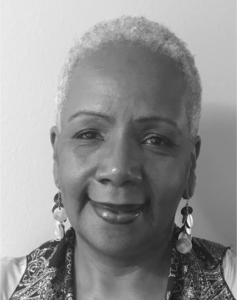 Renell Weathers, Michigan League for Public Policy (MLPP) Community Engagement Consultant. As community engagement consultant, Renell works with organizations throughout the state in connecting the impact of budget and tax policies to their communities. She is motivated by the belief that all children and adults deserve the opportunity to achieve their dreams regardless of race, ethnicity, religion or economic class.



 Emily Jorgensen joined the Michigan League for Public Policy in July 2019. She deeply cares about the well-being of individuals and families and has a great love for Michigan. She is grateful that her position at the League enables her to combine these passions and work to help promote policies that will lead to better opportunities and security for all Michiganders.
 Megan Farnsworth joined the League’s staff in December 2022 as Executive Assistant. Megan is driven by work that is personally fulfilling, and feels honored to help support the work of an organization that pushes for more robust programming and opportunities for the residents of our state. She’s excited and motivated to gain overarching knowledge of the policies and agendas that the League supports.