
Michigan is Facing Unprecedented Public Health and Budget Crises
The rapid expansion of COVID-19 across the country and world changed our lives in many ways, including the need to protect ourselves, our loved ones and our communities by staying home. As Michigan’s governor responded to protect the state’s residents, businesses were closed, jobs were lost, and students left their classrooms behind. The foundations of the state’s economy were shaken as they haven’t been in decades.
The fallout from COVID-19 placed an intense and much-needed spotlight on policies and budgets that have harmed Black and brown people and communities in Michigan and across the country. Michigan was one of the first states to report COVID-19 data by race and ethnicity, showing that while African Americans make up 14% of the state’s population, more than 40% of Michigan residents who died as a result of COVID-19 were Black.
The reasons for these inequities are many, including persistent and deep employment discrimination, fewer opportunities to work from home or take advantage of other workplace protections, lack of access to healthcare and transportation, and the lack of appropriate housing to shelter at home. All of these factors have a long-standing backstory in policies, practices and budgets with racist intention or impact—mostly designed without any leadership or input from the people and communities most affected.
The public health crisis isn’t over, but the state’s bold moves to flatten the curve of COVID-19 have had an unavoidable impact on the state’s revenues and budget. In May, state economists predicted a budget deficit of $3.2 billion in the current budget year (2020), and an additional $3 billion in 2021. Because Michigan is required to balance its budget, any shortfall this year has to be resolved before the end of September—just a couple months from now.
The unprecedented drop in state revenues has come with a sharp increase in the need for public services, and related costs. Hospitals struggled to care for the sick, and skyrocketing unemployment increased the need for food, water, shelter, medical care and safe transportation. As Michigan moves to reopen businesses, schools and other aspects of community life, the costs will be higher including higher healthcare costs; the need to purchase adequate protective and cleaning materials; the costs to businesses, restaurants, schools and colleges of maintaining safe social distancing; and the price tag associated with providing distance learning.
The bottom line is that Michigan residents are suffering, and this public health crisis has become a very personal crisis for the many who are ill, have lost a loved one, can’t access needed medical care, are unemployed or can’t find the child care they need to work—with the greatest impact on communities of color. Any attempt to address Michigan’s budget deficit without accounting for current inequities based on race, place and income will only widen disparities and ultimately impede Michigan’s economic recovery.
What Options Does the State Have to Balance its Budget?
Given the short timeframe, the options for the governor and lawmakers to bridge the budget gap for 2020 were fairly limited, and included:
- Rainy Day Fund: Michigan’s budget stabilization fund or rainy day fund currently holds $1.2 billion. Based on triggers in statute, $287 million was automatically available, but a larger withdrawal required a supermajority legislative vote. Rainy day fund withdrawals are one-time money, but can provide a much-needed boost to state revenues.
- Federal Funds: Michigan and states around the country have needed federal relief to battle COVID-19 and its costs to the healthcare system, businesses, workers and families. There have been several rounds of federal assistance, most of which was targeted to very specific health and other costs related to COVID-19. The Coronavirus Aid, Relief and Economic Security (CARES) Act (stage 3 of stimulus relief) is the main funding for the state budget, but federal guidance has made it difficult for states to use those funds to fill holes in state and local budgets, and CARES dollars must be expended before the end of December—even though unemployment is expected to remain high at least until 2022, and Michigan is facing deficits for several years.
- Budget Cuts: Michigan’s budget is already very lean, and deep cuts would have made it nearly impossible to open schools and keep Michigan’s economy working. Michigan has two major state funds, both of which rely heavily on revenues from the state personal income and sales taxes, which were hard hit by the COVID-19 shutdowns. Nearly 80% of the $10.4 billion General Fund budget is used to fund health and human services, public safety, and higher/K-12 education. In the 2019 budget year, the state’s General Fund was estimated to be nearly 30% below 2000 levels when adjusted for inflation, while the School Aid Fund was 2.2% below 2000 levels.1
- Tax Reform: While tax reform was not a practical solution for increasing revenues during the few months left in Michigan to balance the 2020 budget, it is a viable and needed long-term fix. Michigan revenues have eroded over time in the face of increased costs through inflation, and the state’s tax system cannot generate the revenues needed for the COVID-19 crisis, or adequately produce the resources needed to rebuild the state’s economy, fund vital services and infrastructure, and prepare for future downturns.
What Have Lawmakers and the Governor Done so Far to Address the Deficits?
To bridge the budget gap, Michigan lawmakers and the governor agreed at the end of June to a plan for balancing the 2020 budget that included:
- $490 million in savings from state hiring freezes, layoffs and other savings in state government.
- $475 million in state savings from public safety costs that are now eligible for federal relief.
- $256 million in School Aid Fund reductions to schools, with a total of $512 million in federal relief to fill some of the funding gaps, as well as $53 million for hazard pay for Michigan teachers.
- A $200 million reduction in School Aid Fund dollars for colleges and universities, offset with federal funds.
- A $97 million reduction in state funds for local governments, offset by $150 million in federal funds, as well as $300 million already approved for public health and safety costs and first responder hazard pay (P.A. 123 of 2020).
The 2020 budget agreement allocates approximately $3.1 billion in federal CARES dollars, including funding from SB 690 (P.A. 123 of 2020), a bill signed by the governor on June 22 to address COVID-19 needs. Highlights of the approved spending include:
- Funding to sustain child care businesses and provide rate relief to parents ($125 million) with up to a 30% reimbursement to providers who reduce rates for parents during June, July and August. Payments are available to providers who received assistance under the governor’s Child Care Relief Fund initiative, which is providing up to $130 million in grants to child care providers to help stabilize their programs and reopen.
- School district COVID relief ($18 million) for summer and other recovery programs, benchmark assessments and health/safety expenses.
- Water utility assistance ($25 million) to reimburse utilities for forgiveness for arrearages, along with a 25% discount on total water bills for families eligible for food assistance through the end of December.
- Rental assistance ($60 million) with $4 million for legal services, $4 million to help community action agencies provide case management, and $2 million for state administration and promotion of the assistance. The remainder of the funds are to help pay for rent arrearages and rent subsidies.
- Funds to expand staff needed to process unemployment insurance requests ($20.1 million), with the goal of getting assistance to those who need it as quickly as possible.
- Funding for distance learning in schools ($25 million), for the purpose of helping districts purchase equipment and improve connectivity.
- Grants to local governments ($200 million) and first responder hazard pay ($100 million). Local grants of federal relief funding were provided to reimburse counties, cities, villages and townships for eligible public safety and health payroll costs under CARES. The funds are only available to local governments that did not receive direct CARES grants. Funds for hazard pay are available for law enforcement, firefighters, EMTs, paramedics, 9-1-1 providers, local corrections officers, airport safety and ambulance operations.
- Small business restart grants ($115 million), including $100 million for small businesses with 50 or fewer employees, and $15 million for agriculture processing/farming safety.
What’s Next?
Michigan is still facing a large deficit for the 2021 budget year, and more flexible federal relief is critical. As part of last year’s budget agreement, which continued until nearly the end of the state’s budget year in the fall, a new target of July was set for final 2021 state budget deliberations. Facing the COVID-19 crisis and the need to balance the current state budget (2020), the Legislature and governor agreed to extend that timeline, and it is anticipated that much of the action on the 2021 budget will continue into September of this year. The League has developed a series of recommendations related to the programs and policies needed to weather the COVID-19 crisis and that can inform the 2021 budget.
To be clear, the state’s ability to balance the 2021 budget will hinge on the willingness of Congress to provide additional and flexible relief to the state. Michigan and other states need federal relief that is tied to economic conditions, not the calendar, and allows states to use the funds to cover revenue losses created by COVID-related shutdowns. The League is advocating for additional federal assistance through the HEROES Act that was passed by the U.S. House of Representatives in May.
Michigan needs tax reform: For 2021 and beyond, Michigan lawmakers have another option, one that the League believes is long overdue—reform of Michigan’s tax system to ensure that there are adequate state funds to weather downturns and sufficient revenues to craft state policies and programs in ways that eliminate inequities based on race and ethnicity, provide for the basic needs of families and children, and create economic opportunities for all Michiganders. The League has developed a set of recommendations for improving Michigan’s tax system to make it more fair and progressive.
Addressing racial and ethnic inequities: State and community leaders must work together to change the state policies and spending priorities that helped to create the deep inequities that have harmed Black and brown Michiganders before and during the COVID-19 crisis. In April, the governor issued an Executive Order establishing the Michigan Coronavirus Task Force on Racial Disparities to identify the factors driving the inequitable impact of COVID-19 on communities of color. Decisions made by policymakers and leaders over generations have contributed to current racial disparities in health outcomes, and it is imperative that this work continues after the end of the COVID-19 health emergency to address how state policies and budgets contribute to—and more critically, can eliminate—those unacceptable outcomes.
Endnote
- Cleary, M.A., and Wicksall, B. Budget Briefing, State Budget Overview, House Fiscal Agency (January 2019).

 Jay Cutler joined the League in March 2026 as the Kids Count Senior Data Analyst, where he collects, analyzes, and prepares data for Kids Count in Michigan.
 Danielle Taylor-Basemore joined the League as the Development Data and Stewardship Coordinator in June 2025. She brings with her five years of nonprofit experience with a special focus on community engagement, data visualization and strategic programming. Prior to joining the League, Danielle served as the Business District, Safety, and Digital Manager at Jefferson East, Inc.
 Scott Preston is a Senior Policy Analyst with the Michigan League for Public Policy, where he leads the organization’s immigration and criminal justice reform portfolios. In the three years prior to joining the League, Scott facilitated the Southeast Michigan Refugee Collaborative and managed a small business economic development program at Global Detroit. His work included launching Michigan’s first Refugee Film Festival and building on a trusted connector model that linked marginalized communities with crucial resources. Scott’s work at the League is informed by his background in journalism and research. He spent four years covering the Syrian refugee crisis in the Middle East for publications such as The Economist, and later worked with unaccompanied refugee minors through Samaritas. Scott holds a master’s degree in international migration and public policy from the London School of Economics and Political Science.
 Kate Powers joined the League as the Chief Development Officer in February 2025. Prior to joining the League, Kate held leadership positions at many Michigan nonprofit organizations, most recently serving as the COO and Chief Development Officer of Ele’s Place. Kate has spent the bulk of her career in fundraising, with a short stint in the state Legislature as a legislative aide to members in both chambers. Kate is a graduate of Michigan State University’s James Madison College with a Bachelor of Arts in Social Relations and has a certificate in fundraising management from the Lilly Family School of Philanthropy at Indiana University. Additionally, Kate served on the East Lansing Public Schools Board of Education and is a past President of the Junior League of Lansing. In her free time, she enjoys traveling with her husband and her son and saving outfit of the day and home decor ideas on Pinterest.
  Nicholas Hess joined the League as the Fiscal Policy Analyst in September of 2024. In this role, Nicholas focuses on tax policy, government revenue, and their impact on working families and racial equity, including the effects of the Earned Income Tax Credit (EITC) and Child Tax Credit (CTC). Nicholas values the role that judicious fiscal policy can play in the improvement of people’s lives and the economy, alleviating inequities along the way.
 Audrey Matusz joined the League as the Visual Communications Specialist in September 2024. She supports the team with implementing social media strategies and brainstorming creative ways to talk about public policy. She brings with her nearly a decade of experience in producing digital products for evidence-based social justice initiatives.
  Jacob Kaplan
  Donald Stuckey
  Alexandra Stamm
 Amari Fuller
 Mikell Frey is a communications professional with a passion for using the art of storytelling to positively impact lives. She strongly believes that positive social change can be inspired by the sharing of data-driven information coupled with the unique perspectives of people from all walks of life across Michigan, especially those who have faced extraordinary barriers.
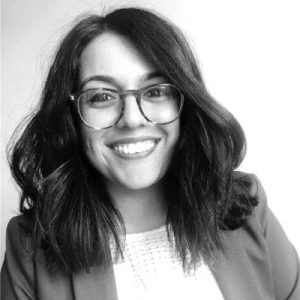


 Yona Isaacs (she/hers) is an Early Childhood Data Analyst for the Kids Count project. After earning her Bachelor of Science in Biopsychology, Cognition, and Neuroscience at the University of Michigan, she began her career as a research coordinator in pediatric psychiatry using data to understand the impacts of brain activity and genetics on children’s behavior and mental health symptoms. This work prompted an interest in exploring social determinants of health and the role of policy in promoting equitable opportunities for all children, families, and communities. She returned to the University of Michigan to complete her Masters in Social Work focused on Social Policy and Evaluation, during which she interned with the ACLU of Michigan’s policy and legislative team and assisted local nonprofit organizations in creating data and evaluation metrics. She currently serves as a coordinator for the Michigan Center for Youth Justice on a project aiming to increase placement options and enhance cultural competency within the juvenile justice system for LGBTQIA+ youth. Yona is eager to put her data skills to work at the League in support of data-driven policies that advocate for equitable access to healthcare, education, economic security, and opportunity for 0-5 year old children. In her free time, she enjoys tackling DIY house projects and trying new outdoor activities with her dog.
 Rachel Richards rejoined the League in December 2020 as the Fiscal Policy Director working on state budget and tax policies. Prior to returning to the League, she served as the Director of Legislative Affairs for the Michigan Department of Treasury, the tax policy analyst and Legislative Director for the Michigan League for Public Policy, and a policy analyst and the Appropriations Coordinator for the Democratic Caucus of the Michigan House of Representatives. She brings with her over a decade of experience in policies focused on economic opportunity, including workforce issues, tax, and state budget.
 Simon Marshall-Shah joined the Michigan League for Public Policy as a State Policy Fellow in August 2019. His work focuses on state policy as it relates to the budget, immigration, health care and other League policy priorities. Before joining the League, he worked in Washington, D.C. at the Association for Community Affiliated Plans (ACAP), providing federal policy and advocacy support to nonprofit, Medicaid health plans (Safety Net Health Plans) related to the ACA Marketplaces as well as Quality & Operations.

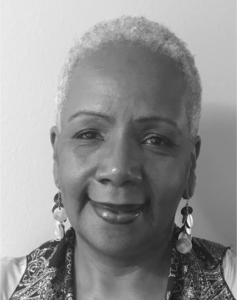 Renell Weathers, Michigan League for Public Policy (MLPP) Community Engagement Consultant. As community engagement consultant, Renell works with organizations throughout the state in connecting the impact of budget and tax policies to their communities. She is motivated by the belief that all children and adults deserve the opportunity to achieve their dreams regardless of race, ethnicity, religion or economic class.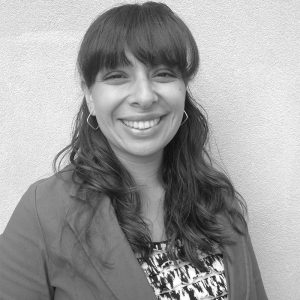

 Emily Jorgensen joined the Michigan League for Public Policy in July 2019. She deeply cares about the well-being of individuals and families and has a great love for Michigan. She is grateful that her position at the League enables her to combine these passions and work to help promote policies that will lead to better opportunities and security for all Michiganders.
 Megan Farnsworth joined the League’s staff in December 2022 as Executive Assistant. Megan is driven by work that is personally fulfilling, and feels honored to help support the work of an organization that pushes for more robust programming and opportunities for the residents of our state. She’s excited and motivated to gain overarching knowledge of the policies and agendas that the League supports.