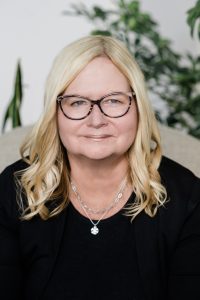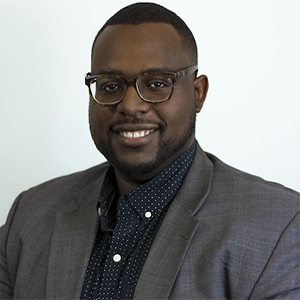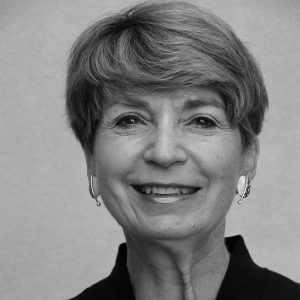
Last week, League CEO Gilda Z. Jacobs shared her memories of how living in the Detroit area in the summer of 1967 ultimately gave her a new perspective. This week, Renell Weathers, our community engagement director, revisits that summer and the way it impacted her.
Can you share a few details about your family?
Well, I was the youngest of 11 children. My father brought my older nine siblings to Michigan in the early 1950s—after living through the Jim Crow era in the south, he wanted a better life for his family. He and his brother moved here a year ahead of the family. They saved money, and he bought a house in the northwest part of Detroit. We were the second Black family on that block. It was rare . . . usually when you first moved north, you joined the community that was predominantly Black, but that’s not what they did.
Could you describe the community where you were raised?
We were three streets from what they called “the wall.” The builders weren’t able to get loans or build on that side [because of the Black population], so they put up a wall to segregate. When I grew up in the early ‘60s, I would walk to school mostly with kids from the Jewish community in the area. Most of my older siblings were married or in college, but I had a twin sister.
I don’t have the experience of living with a lot of family, but my older brothers and sisters were always around, coming home for dinners. And six children on my block were born within four months of each other, so there were lots of kids to play with. We rode bikes, played tag, and as long as we got home by dusk, our parents didn’t mind. But I liked to spend time with my older siblings, who taught me so much. I was so interested in what they did, what they said, and how they treated me as equal even though they had jobs with influence.
What sort of things did you talk about at home?
Well, my father was interesting. He was a minister as well as a machinist. In many families, you didn’t talk about religion or politics. We did. And so my dad would throw out a headline from the paper or something from the news or something from the Bible. He allowed us younger kids to have equal time as the older siblings. We were taught to value what everyone said; we could vigorously state our opinion as long as we respected the other person’s opinion. So it was about listening to them and expecting them to listen to us. I remember hearing these large men that I looked up to, and they’d talk about the mayor and policies that impacted our family and our bottom line. My father was a block club president, very involved in the community and believed in the community coming together.
How would you explain the relationship your family and community had with government or police?
It’s important to look at the history. In earlier decades—the ‘40s and early ‘50s—the Black community in Detroit had an economic base that was thriving. That was destroyed because of urban development. The city just bulldozed those areas, put in highways, and because of redlining we were only able to live in certain communities. Whatever had been built up was taken away. Well, what happens? There was no just compensation when people lost their homes, their neighborhoods. And if you put pressure in a bottle, it’s eventually going to burst.

Marchers for fair housing in Detroit head down Woodward towards Ford Auditorium Sept. 1963. Detroit News Archives
We knew, just from our friends and family and people talking, that police were not kind to the Black community, especially in certain areas. In our neighborhood we didn’t experience that as much, because it was predominantly White. We didn’t have police driving the street looking for things. But a lot of communities did. The police had what was called the “big four”—a cop car with four big police officers in it. They would just cruise the area looking for things. Like, if there was a Black person standing on a corner, they’d say, “N-word, you don’t want to be here when we come back around.” There was a feeling for many of being trapped. Of not being able to breathe. We were always taught to respect police, but we were taught that respect goes both ways.
The police, for example, took on after-hours parties. These parties went on all over the city, of course, but the police targeted the Black community and made arrests. It was easier for them. Just like the war on drugs. They chose to go into communities where arrests were easier, and the people had no resources to seek justice. It was an easy way to build up the coffers of the rich.
The government will invest in prisons vs. people. And sometimes enough is enough.
What were you doing in the summer of 1967?
We lived in the same place, three streets from the wall and two and a half blocks from 8 Mile. I was in elementary school, so we were on summer break. My twin sister and I were home, along with my older brother who was a senior in high school. My other siblings had moved on to college and careers by then. That July, my parents were in California visiting my older sister, so another sister and her husband were staying with us.
What term would you use to describe what happened that summer? Riot? Rebellion? Uprising?
When I kept hearing the word “riot,” even as a child, it didn’t make sense to me—I knew that wasn’t the correct way of looking at the situation, but that was all they said on the news.
Even if you were removed from the unrest logistically, as I was, you really couldn’t escape it as a person of color. Wherever you went, you were seen as a part of it. You were recognized as being part of the community that had supposedly started this.
That was the view: that the “Black community” started it. But no one was looking at the genesis. No person who respected themselves and their community wanted to be treated the way the police were treating African-Americans. Injustice was the genesis.
Uprising is the term.
How did you first hear about the unrest of that summer?
When we started hearing things, we weren’t sure what was happening. I had cousins that were closer to what was going on. So we were hearing things. My parents called a lot from California, making sure my brother, sister and I were staying home. My parents were so concerned because that first 24 hours, everything was word-of-mouth. There was a blackout, you know, so there was no television, no radio . . . all anyone knew was what they heard from people close to it. There was something happening.
After the second day when the news was covering it, you kept hearing from adults, “Stay home, stay home! You don’t want to go over there!” Well, of course as kids, we did not listen. So I’d go up with friends to 8 Mile. And I saw these tanks, these huge trucks full of soldiers. I didn’t know they were National Guard, but I knew what war looked like . . . we’d seen images from Vietnam on TV. Now they’re coming down 8 Mile? What are they doing? Are they coming for people like me? I just remember running home, wondering if we were next, if we had to barricade ourselves in the house.
With my parents out of town, it was scary. For kids to feel safe is so important. And we were feeling unsafe. Unsure. It was so unsettling, and you don’t know where it’s coming from. My neighborhood was becoming more and more Black . . . could I go visit my friends? My cousins? It was emotionally stressful for kids especially. You only heard things here and there.
Something was changing and you don’t feel like it’s ever going to be right again. Now, years later, we know it’s trauma. But that vision of tanks coming to you never goes away. Even if you know your community is one that’s safe, you see this happening and you’re scared.
And when you heard adults talking about it, asking if we’re going to be safe, you really knew something was up. My parents came home, and my father exuded strength. I felt safe as soon as they got back and I felt that I could relax. But my older brother was probably wanting to get out, to be with his friends. I’m not sure how limited he was, but I’m pretty sure he wasn’t allowed to go in certain areas.
What was the impact of the uprising on your neighborhood and community?
Of course, after this all happened, the response from the police department was to become harsher. They added a police unit known as “STRESS.” So that meant more war on people.
Now, some responses were more thoughtful. New Detroit was being developed, things like that. Good intentions, but you really can’t have change unless you address things from a systems level. And there was no one looking at that . . . except the Kerner Commission. It took a while, and then no one did anything with that report. We had proof of the problem, but no one addressed it and no one looked at solutions.
And those are solutions that we still need today. Everyone says, “Why, why, why?” Well, we had a report that told us why, and we didn’t listen. We all should have known that these issues were going to come back. I used to operate a day care, and I’d always tell parents, “if your child doesn’t experience the stages of development naturally, they will hit those stages later and it’s going to be harder on parents and harder on the child.” So if they aren’t allowed to put their hands in their food and explore textures when they’re toddlers, they’re just going to experience that at a later age, which is going to be far more challenging for the child. The problems in Detroit weren’t dealt with at the appropriate stage, either.
So when Detroit—and America—first had these experiences, and we did not come out of it thinking about how to develop the whole community instead of isolating the groups. We should have known the issues would just come back. Another time of rebellion would emerge.
When we have decisions made on fear, we’re not considering how the decisions impact the community or the people. When we protect ourselves and what’s “ours,” we lose sight of protecting an entire community. We have to think more about the community as a whole and how we grow closer instead of isolating ourselves.
Why are you doing the work you do today?
My grandfather always said, “If you can’t find an example, be one.” And so the legacy my parents left me is that of being an example. Part of the work that my father started, always asking questions about what’s happening in the world, in our community, that was his way of introducing us to community engagement. We went to community centers, nursing homes, and there was a major emphasis on thinking about more than ourselves.
One of the quotes that inspires me is from Alice Walker: “The most common way that people give up their power is by thinking they don’t have any.” My work is about helping people see that they have power and that they need to use it.
For more information on the Michigan League for Public Policy’s work on racial equity, please visit the following links.
https://mlpp.org/infant-death-rate-down-statewide-but-significant-risks-persist-for-babies-of-color
https://mlpp.org/parental-incarceration-takes-devastating-toll-on-children
https://mlpp.org/race-place-policy-matter-in-education
https://mlpp.org/a-spotlight-on-race-equity
— Renell Weathers


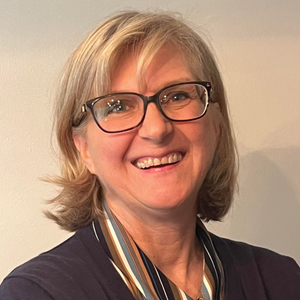 Betsy Zobl-Tar
 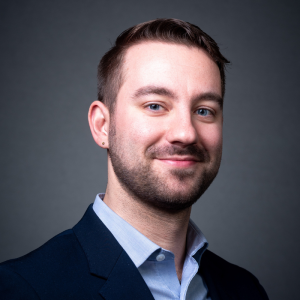 Jay Cutler joined the League in March 2026 as the Kids Count Senior Data Analyst, where he collects, analyzes, and prepares data for Kids Count in Michigan.
 Danielle Taylor-Basemore joined the League as the Development Data and Stewardship Coordinator in June 2025. She brings with her five years of nonprofit experience with a special focus on community engagement, data visualization and strategic programming. Prior to joining the League, Danielle served as the Business District, Safety, and Digital Manager at Jefferson East, Inc.
 Scott Preston is a Senior Policy Analyst with the Michigan League for Public Policy, where he leads the organization’s immigration and criminal justice reform portfolios. In the three years prior to joining the League, Scott facilitated the Southeast Michigan Refugee Collaborative and managed a small business economic development program at Global Detroit. His work included launching Michigan’s first Refugee Film Festival and building on a trusted connector model that linked marginalized communities with crucial resources. Scott’s work at the League is informed by his background in journalism and research. He spent four years covering the Syrian refugee crisis in the Middle East for publications such as The Economist, and later worked with unaccompanied refugee minors through Samaritas. Scott holds a master’s degree in international migration and public policy from the London School of Economics and Political Science.
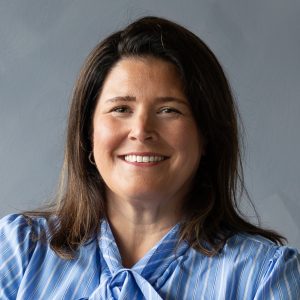 Kate Powers joined the League as the Chief Development Officer in February 2025. Prior to joining the League, Kate held leadership positions at many Michigan nonprofit organizations, most recently serving as the COO and Chief Development Officer of Ele’s Place. Kate has spent the bulk of her career in fundraising, with a short stint in the state Legislature as a legislative aide to members in both chambers. Kate is a graduate of Michigan State University’s James Madison College with a Bachelor of Arts in Social Relations and has a certificate in fundraising management from the Lilly Family School of Philanthropy at Indiana University. Additionally, Kate served on the East Lansing Public Schools Board of Education and is a past President of the Junior League of Lansing. In her free time, she enjoys traveling with her husband and her son and saving outfit of the day and home decor ideas on Pinterest.
  Nicholas Hess joined the League as the Fiscal Policy Analyst in September of 2024. In this role, Nicholas focuses on tax policy, government revenue, and their impact on working families and racial equity, including the effects of the Earned Income Tax Credit (EITC) and Child Tax Credit (CTC). Nicholas values the role that judicious fiscal policy can play in the improvement of people’s lives and the economy, alleviating inequities along the way.
 Audrey Matusz joined the League as the Visual Communications Specialist in September 2024. She supports the team with implementing social media strategies and brainstorming creative ways to talk about public policy. She brings with her nearly a decade of experience in producing digital products for evidence-based social justice initiatives.
 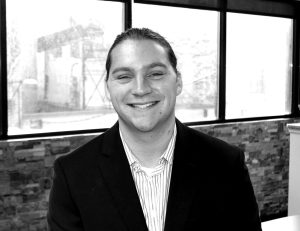 Jacob Kaplan
  Donald Stuckey
  Alexandra Stamm
 Amari Fuller
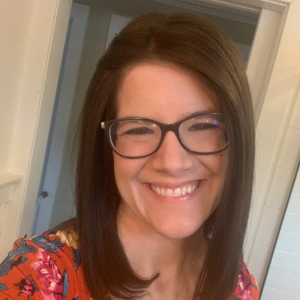 Mikell Frey is a communications professional with a passion for using the art of storytelling to positively impact lives. She strongly believes that positive social change can be inspired by the sharing of data-driven information coupled with the unique perspectives of people from all walks of life across Michigan, especially those who have faced extraordinary barriers.
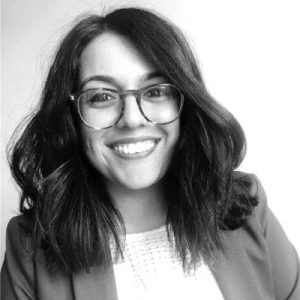


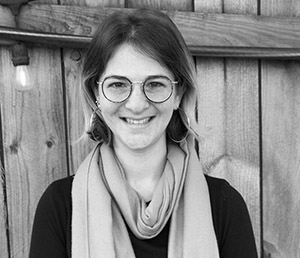 Yona Isaacs (she/hers) is an Early Childhood Data Analyst for the Kids Count project. After earning her Bachelor of Science in Biopsychology, Cognition, and Neuroscience at the University of Michigan, she began her career as a research coordinator in pediatric psychiatry using data to understand the impacts of brain activity and genetics on children’s behavior and mental health symptoms. This work prompted an interest in exploring social determinants of health and the role of policy in promoting equitable opportunities for all children, families, and communities. She returned to the University of Michigan to complete her Masters in Social Work focused on Social Policy and Evaluation, during which she interned with the ACLU of Michigan’s policy and legislative team and assisted local nonprofit organizations in creating data and evaluation metrics. She currently serves as a coordinator for the Michigan Center for Youth Justice on a project aiming to increase placement options and enhance cultural competency within the juvenile justice system for LGBTQIA+ youth. Yona is eager to put her data skills to work at the League in support of data-driven policies that advocate for equitable access to healthcare, education, economic security, and opportunity for 0-5 year old children. In her free time, she enjoys tackling DIY house projects and trying new outdoor activities with her dog.
 Rachel Richards rejoined the League in December 2020 as the Fiscal Policy Director working on state budget and tax policies. Prior to returning to the League, she served as the Director of Legislative Affairs for the Michigan Department of Treasury, the tax policy analyst and Legislative Director for the Michigan League for Public Policy, and a policy analyst and the Appropriations Coordinator for the Democratic Caucus of the Michigan House of Representatives. She brings with her over a decade of experience in policies focused on economic opportunity, including workforce issues, tax, and state budget.
 Simon Marshall-Shah joined the Michigan League for Public Policy as a State Policy Fellow in August 2019. His work focuses on state policy as it relates to the budget, immigration, health care and other League policy priorities. Before joining the League, he worked in Washington, D.C. at the Association for Community Affiliated Plans (ACAP), providing federal policy and advocacy support to nonprofit, Medicaid health plans (Safety Net Health Plans) related to the ACA Marketplaces as well as Quality & Operations.
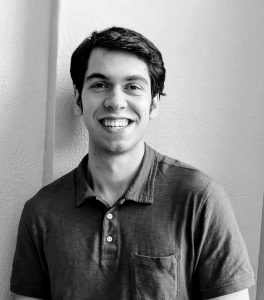

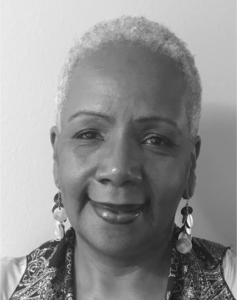 Renell Weathers, Michigan League for Public Policy (MLPP) Community Engagement Consultant. As community engagement consultant, Renell works with organizations throughout the state in connecting the impact of budget and tax policies to their communities. She is motivated by the belief that all children and adults deserve the opportunity to achieve their dreams regardless of race, ethnicity, religion or economic class.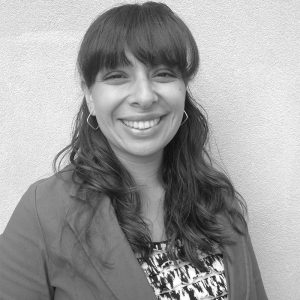

 Emily Jorgensen joined the Michigan League for Public Policy in July 2019. She deeply cares about the well-being of individuals and families and has a great love for Michigan. She is grateful that her position at the League enables her to combine these passions and work to help promote policies that will lead to better opportunities and security for all Michiganders.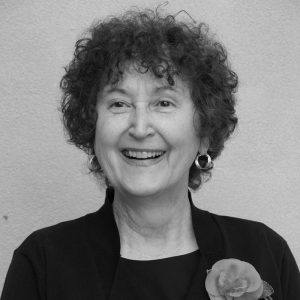
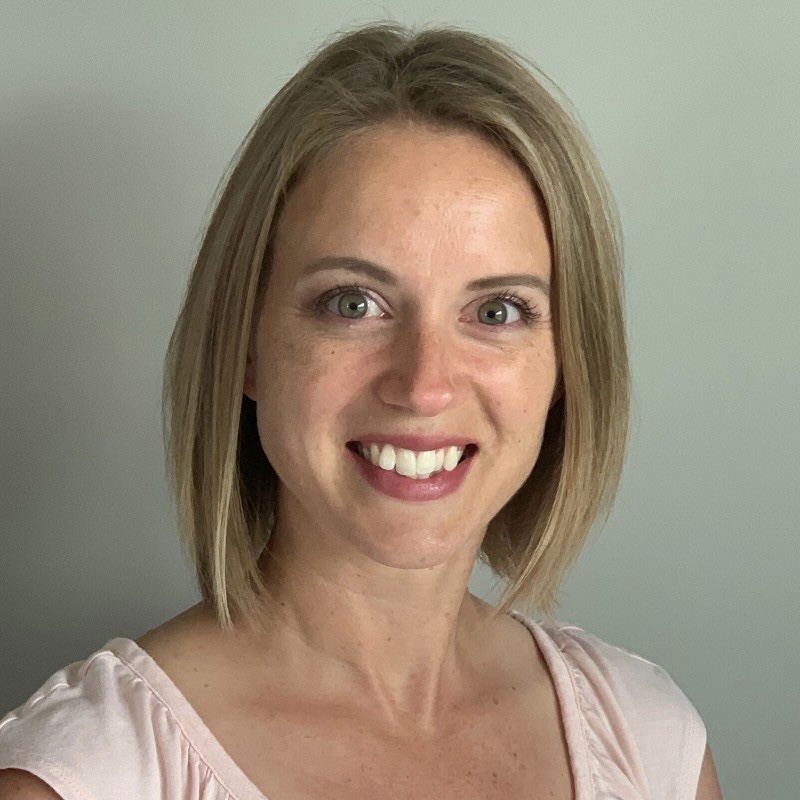 Megan Farnsworth joined the League’s staff in December 2022 as Executive Assistant. Megan is driven by work that is personally fulfilling, and feels honored to help support the work of an organization that pushes for more robust programming and opportunities for the residents of our state. She’s excited and motivated to gain overarching knowledge of the policies and agendas that the League supports.